Contributors

More articles by Textile School

Books

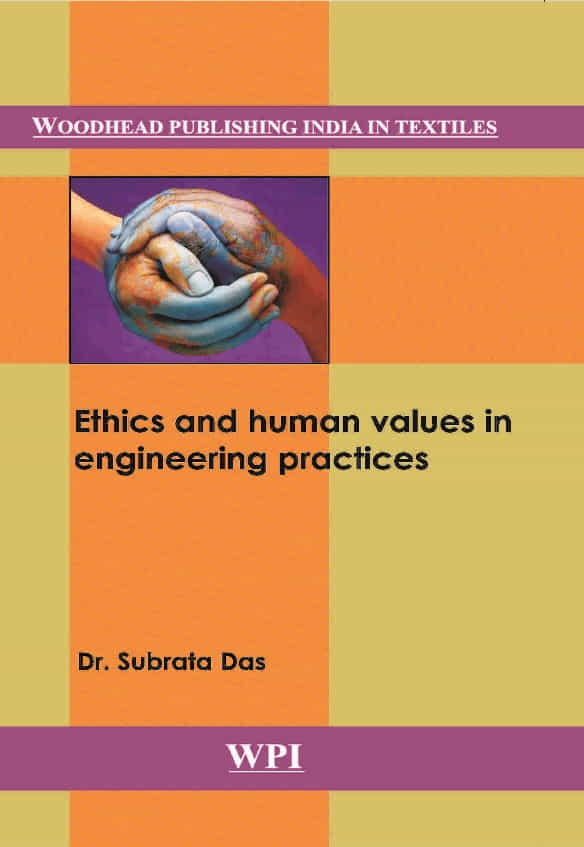
Ethics and Human Values in Engineering Practices

The Book “Ethics and Human Values in Engineering Practices”, emphasis on basic human values and engineering ethics which deal with understanding the moral values that ought to guide the engineering profession, resolve the moral issues in the profession and justify the moral judgment concerning the profession and professionalism which require certain attitudes and typical qualities that are expected from a professional.

Engineering is viewed as an experimental process on a social scale involving human subjects. Human rights are defined in this book as moral entitlements that place obligations on other people to treat one with dignity and respect. Employee rights underlying professional rights, basic human rights, institutional rights, and non-contractual employee rights are discussed . The role of Multinational organizations, ethics in computers, internet functions, military development, and environmental ethics have been emphasized towards sustenance and progress for the engineers.

Ethics and Human Values in Engineering Practices Read More »

Production

Layout/Cutting Marking in Garment Making

After purchasing fabric, pattern, notions, and preparing the fabric (on grain and pre-shrunk / washed), you are ready to do the pattern layout. A layout is a plan for the placement of pattern pieces on the fabric. There are various categories of layout marking like grainlines, place of fold brackets, notches etc. There are also various methods of cutting marking such as single size, multi-size, and cutting in particular body size.

Layout/Cutting Marking in Garment Making Read More »

textile designer

Merchandizing

Designing Textile Products

Textile products are crafted analyzing numerous internal and external factors bound to the end products. Before, during, and after designing a product, a series of factors such as the market trends, market research, quality testing, trials, design patterns, etc. to be arranged or considered by the designer. Here we discuss a few of them.

Designing Textile Products Read More »

cotton plant

Assorted

Textiles: Environmental issues and sustainability

Textile designers and manufacturers are under social pressure to reduce the impact of textiles on the environment. Careful use of raw materials and natural resources in textile production will ensure that they are available to future generations. Textile technologists are constantly seeking to develop new fibres that have improved performance and are sustainable.

Textiles: Environmental issues and sustainability Read More »

textile fabrics

Knitting

Textile Fabric Types by Fiber Sources

Generally, a set number of yarns are used for the formation of fabrics. Also, a number of techniques are used for producing fabrics such as weaving, knitting, and felting. The type of fabrics varies by the fibers, the fabric formation techniques, machinery used for producing them, and finishing techniques. Fabrics also made differently based on the end-usage.

Textile Fabric Types by Fiber Sources Read More »

Scroll to Top