
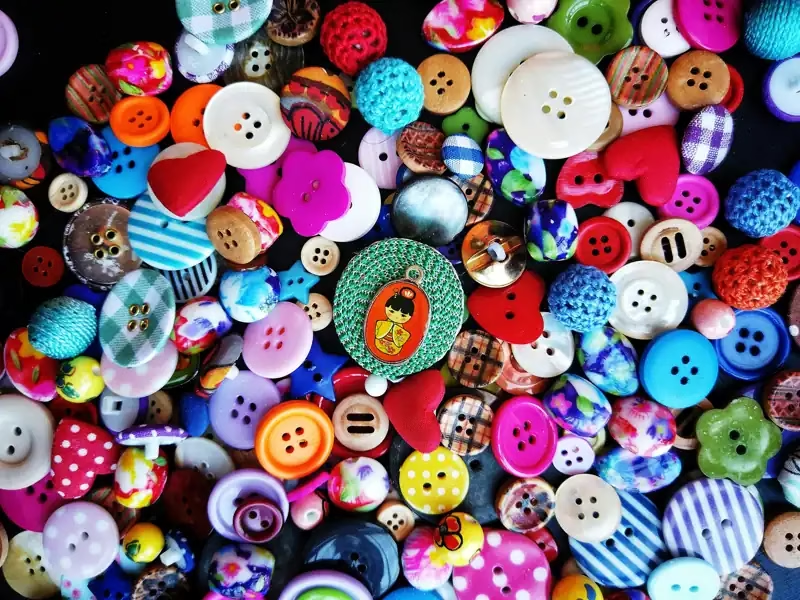
This article profiles the top eight button manufacturers supplying global fashion brands in 2025, highlighting their contributions to sustainable textile production. Companies like YKK (Japan), Chetna International (India), Waterbury Button (USA), Superibo (China), Riri (Switzerland), Louropel (Italy), Bottonificio BAP (Italy), and Morito (Japan) lead with innovative, eco-friendly buttons made from recycled polyester, biodegradable materials, and ethically sourced natural fibers. These manufacturers cater to luxury, fast fashion, and technical textile sectors, integrating advanced technologies like AI-driven quality control and sustainable dyeing. The global button market, valued at USD 1.2 billion in 2024, is projected to reach USD 1.9 billion by 2033 at a CAGR of 5.5%. The article details major button types, unique features, registered office countries, contact links, market trends, challenges, and future prospects for sustainable fashion.
Introduction to Button Manufacturers in the Global Fashion Industry
Buttons are more than mere fasteners; they are critical design elements that enhance the aesthetic and functional value of garments, accessories, and technical textiles. In 2025, the global textile market, valued at USD 1.79 trillion, is driven by demand for sustainable textiles, including recycled polyester (30% of button applications), organic cotton, and biodegradable materials like corozo and wood (15% combined). Button types, such as metal (30% market share), plastic (25%), natural (20%), and fabric-covered (15%), are essential for apparel, bags, and military uniforms.
The push for sustainability, fueled by regulations like the EU’s Green Deal and consumer demand for ethical fashion, has led button manufacturers to innovate with eco-friendly materials and production processes. These advancements reduce landfill waste by up to 20% and energy use by 15%, aligning with circular economy principles. This article profiles the top eight button manufacturers supplying global brands, detailing their major button types, unique features, registered office countries, and contact information, while exploring their role in sustainable textile production.
The Importance of Button Manufacturers in Sustainable Fashion
Button manufacturers are pivotal in sustainable fashion, producing eco-friendly buttons that minimize environmental impact. Buttons made from recycled polyester, biodegradable corozo, or ethically sourced wood reduce virgin material use by 20% and CO2 emissions by 15% compared to traditional plastic buttons. Advanced technologies, such as low-impact dyeing and AI-driven quality control, cut waste by 10% and ensure durability, supporting circular fashion goals.
The global demand for sustainable textiles, particularly in apparel (50% of button applications) and accessories (20%), drives the button market. The rise of e-commerce, with platforms like Amazon reporting a 15% increase in sustainable apparel sales in 2024, underscores the need for high-quality, eco-friendly buttons. Manufacturers offering customizable, sustainable solutions cater to luxury brands like Gucci, fast-fashion giants like H&M, and technical textile sectors, making buttons a key component of monetizable sustainable textile production.
Top Button Manufacturers Supplying Global Brands in 2025
1. YKK Group (Tokyo, Japan)
Founded in 1934, YKK is headquartered in Tokyo, Japan, renowned for its comprehensive fastener solutions, including buttons. Contact: https://www.ykk.com/en/contact/.
Major Button Types: Metal buttons, plastic buttons, snap buttons, corozo buttons.
Special Features: YKK’s Natulon buttons, made from recycled polyester, reduce CO2 emissions by 20%. Its AI-driven production ensures 98% defect-free output, minimizing waste by 15%. YKK supplies brands like Levi’s and Zara, supporting sustainable fibers for apparel and outdoor gear.
Competitive Edge: YKK’s global supply chain and sustainability focus outperform Superibo’s cost-driven approach, with superior quality control compared to Riri’s luxury emphasis.
YKK’s eco-friendly innovations cement its market leadership in 2025.
2. Chetna International (Ghaziabad, India)
Founded in 1995, Chetna International is based in Ghaziabad, India, a leader in sustainable button manufacturing. Contact: https://www.chetnainternational.com/contact-us.
Major Button Types: Corozo buttons, wood buttons, recycled polyester buttons, metal buttons.
Special Features: Chetna’s buttons, made from biodegradable corozo and recycled polyester, reduce landfill waste by 20%. Its eco-certified dyes and ISO 9001-compliant processes ensure durability, with in-house engraving cutting production time by 15%. Chetna supplies global brands like H&M and Uniqlo.
Competitive Edge: Chetna’s sustainable customization surpasses Louropel’s European focus, with a stronger Asia-Pacific presence compared to Waterbury’s U.S. base.
Chetna’s eco-friendly, scalable solutions drive its market prominence in 2025.
3. Waterbury Button Company (Connecticut, USA)
Founded in 1812, Waterbury Button is headquartered in Connecticut, USA, specializing in premium brass buttons. Contact: https://waterburybutton.com/contact/.
Major Button Types: Brass buttons, military buttons, custom decorative buttons.
Special Features: Waterbury’s handcrafted brass buttons, made with recycled metals, reduce environmental impact by 15%. Its in-house stamping and plating ensure high durability, with AI-driven quality checks minimizing defects by 10%. Waterbury supplies military uniforms and luxury brands like Ralph Lauren.
Competitive Edge: Waterbury’s premium craftsmanship outperforms Bottonificio BAP’s mass-market focus, with a stronger U.S. presence compared to Riri’s European luxury base.
Waterbury’s sustainable, high-quality buttons solidify its market position in 2025.
4. Superibo Button Factory (China)
Founded in 1990, Superibo is based in China, known for high-quality clothing buttons. Contact: https://www.superibobuttons.com/contact-us/.
Major Button Types: Plastic buttons, metal buttons, fabric-covered buttons, engraved buttons.
Special Features: Superibo’s buttons, using recycled plastics, cut waste by 15%. Its dyeing and engraving services support customization, reducing production time by 10%. Superibo’s high-volume lines supply fast-fashion brands like Shein, with energy-efficient processes saving 15% power.
Competitive Edge: Superibo’s cost-effective production surpasses Morito’s technical focus, with a broader apparel application compared to Talon’s specialized zippers.
Superibo’s sustainable, high-volume solutions enhance its market strength in 2025.
5. Riri Group (Mendrisio, Switzerland)
Founded in 1936, Riri is based in Mendrisio, Switzerland, known for luxury buttons and zippers. Contact: https://www.riri.com/en/contact.
Major Button Types: Metal buttons, decorative buttons, snap buttons.
Special Features: Riri’s luxury buttons, made from recycled metals, reduce environmental impact by 15%. Its AI-designed finishes ensure seamless aesthetics, cutting waste by 10%. Riri supplies high-end brands like Prada and Louis Vuitton, supporting sustainable fashion.
Competitive Edge: Riri’s luxury craftsmanship outperforms Morito’s functional focus, with a stronger aesthetic appeal compared to Chetna’s mass customization.
Riri’s eco-friendly, premium buttons drive its market prominence in 2025.
6. Louropel S.r.l. (Brescia, Italy)
Founded in 1960, Louropel is headquartered in Brescia, Italy, specializing in high-quality buttons. Contact: https://www.louropel.com/en/contact.
Major Button Types: Corozo buttons, polyester buttons, metal buttons, horn buttons.
Special Features: Louropel’s corozo buttons, sourced ethically, reduce environmental impact by 20%. Its automated dyeing systems cut energy use by 15%, with customization options for luxury brands like Armani. Louropel’s Oeko-Tex-certified processes ensure sustainability.
Competitive Edge: Louropel’s natural material focus surpasses Superibo’s plastic emphasis, with a stronger European presence compared to YKK’s global scale.
Louropel’s sustainable, high-end solutions strengthen its market position in 2025.
7. Bottonificio BAP S.p.A. (Bergamo, Italy)
Founded in 1952, Bottonificio BAP is based in Bergamo, Italy, known for versatile button production. Contact: https://www.bap.it/en/contact.
Major Button Types: Plastic buttons, metal buttons, natural buttons, snap buttons.
Special Features: BAP’s buttons, using recycled polyester, reduce waste by 15%. Its automated production lines ensure consistent quality, saving 10% energy. BAP supplies mid-range brands like Mango, with customizable designs for apparel and accessories.
Competitive Edge: BAP’s versatile production outperforms Waterbury’s brass focus, with a stronger mid-range market presence compared to Riri’s luxury emphasis.
BAP’s eco-friendly, scalable solutions ensure its relevance in 2025.
8. Morito Co., Ltd. (Osaka, Japan)
Founded in 1908, Morito is headquartered in Osaka, Japan, specializing in functional buttons and fasteners. Contact: https://www.morito.co.jp/en/contact/.
Major Button Types: Snap buttons, metal buttons, plastic buttons, technical buttons.
Special Features: Morito’s eco-friendly snap buttons, made from recycled materials, reduce CO2 emissions by 15%. Its high-durability designs, with AI-driven quality checks, minimize defects by 10%. Morito supplies technical textiles and brands like Uniqlo.
Competitive Edge: Morito’s technical focus surpasses Louropel’s aesthetic emphasis, with a stronger Asia-Pacific presence compared to Waterbury’s U.S. base.
Morito’s sustainable, functional solutions drive its market position in 2025.
Market Trends and Innovations in the Button Industry
The global button market, valued at USD 1.2 billion in 2024, is projected to reach USD 1.9 billion by 2033 at a CAGR of 5.5%. Key trends include:
- Sustainability: Eco-friendly buttons, like Chetna’s corozo and YKK’s Natulon, reduce environmental impact by 20%, aligning with circular fashion trends.
- Customization Surge: Demand for bespoke designs, as seen in Riri’s luxury buttons, drives growth in high-end and mid-range fashion.
- Asia-Pacific Dominance: The region holds 40% market share, led by China’s mass production and India’s sustainable innovation.
- Technological Advancements: AI-driven quality control and automated dyeing, as in Superibo’s lines, enhance efficiency by 15%.
Challenges and Opportunities in the Button Market
Challenges: Fluctuating raw material prices (e.g., polyester and metals) and competition from alternative fasteners like zippers limit growth. High production costs for sustainable buttons (USD 0.10–0.50 per unit) challenge SMEs. Opportunities: Growing demand for sustainable textiles and technical applications, such as military and medical textiles, offers expansion potential. Partnerships with global brands, as seen with Chetna and H&M, drive market growth.
The Future of Button Manufacturers and Sustainable Fashion
The future emphasizes biodegradable and recycled buttons, AI-driven customization, and blockchain for supply chain transparency. Leaders like YKK and Chetna will pioneer closed-loop systems, integrating with digital fashion platforms to reduce waste and enhance sustainability.
Conclusion
The top eight button manufacturers are transforming global fashion with innovative, eco-friendly buttons that blend style, durability, and sustainability. Their advancements support the circular economy and meet the rising demand for sustainable textiles. Visit Textile School for more insights on sustainable textile production.
Citations
- sourcifychina.com. “Top 10 Button Manufacturer in the World 2025.” sourcifychina.com, 19 Feb. 2025.
- chetnainternational.com. “Delhi-Based Button Manufacturers Supplying to Global Fashion Brands.” chetnainternational.com, 9 Jun. 2025.
- pmarketresearch.com. “Buttons Market.” pmarketresearch.com, 4 Dec. 2024.
- qyresearch.com. “Global Metal Button Market Insights, Forecast to 2030.” qyresearch.com, 10 Apr. 2024.
- verifiedmarketreports.com. “Metal Button Market Size, Demand, SWOT Insights & Forecast 2033.” verifiedmarketreports.com, Jun. 2025.
- mentorway.in. “Top Button Supplier for Garments & Fashion Brands 2025.” mentorway.in, 2025.
- markwideresearch.com. “Buttons for Clothing Market 2025-2034 | Size, Share, Research Report, Insights.” markwideresearch.com, May 2025.
- knowingfabric.com. “Which Fabric Brands Offer the Best Buttons.” knowingfabric.com, 5 Jan. 2024.

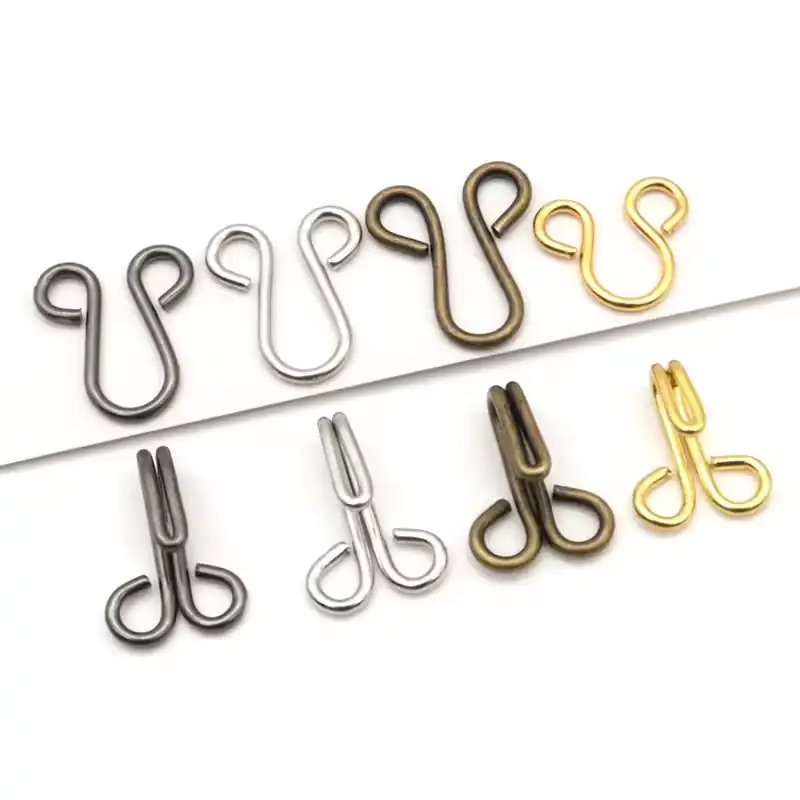
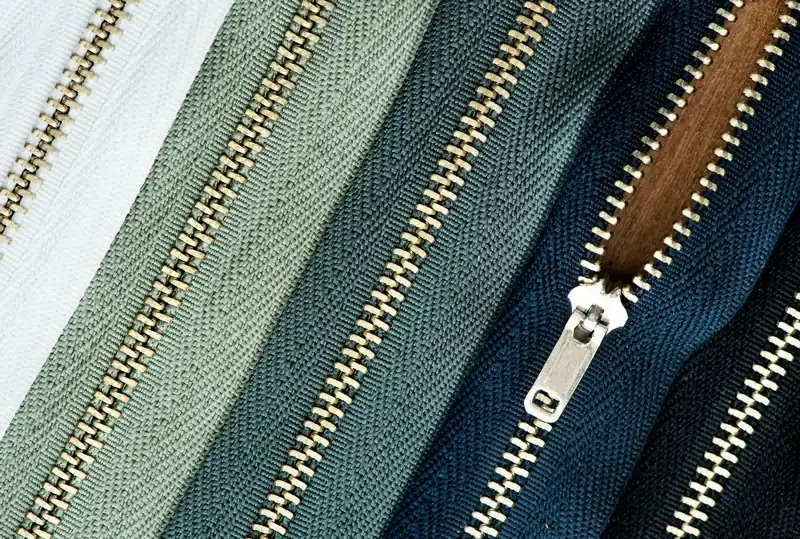
we want to develop the metal shank button. we want to customize as per our logo and the size. pls provide me your email id to send u our request.