Home » Fabric » Page 18

Fabric

Covers fabric constructions from woven and knitted to nonwovens and composites. Details GSM, cover factor, drape, air permeability, pilling resistance, and handle. Includes test methods and how structure drives performance. This section explains practical decision criteria, typical test methods, and failure modes that matter in real production. Readers get checklists, calculation steps, and case examples connecting specifications to cost, reliability, and compliance. Links map core concepts to upstream inputs and downstream processes so choices remain consistent across sourcing, manufacturing, and end-use performance. Each article includes definitions, diagrams where helpful, and plain-language notes to help newcomers ramp quickly while giving experienced professionals the depth needed to troubleshoot and optimize. Standards references are cited with context, and whenever trade-offs exist, we make them explicit so you can defend decisions.

Home » Fabric » Page 18

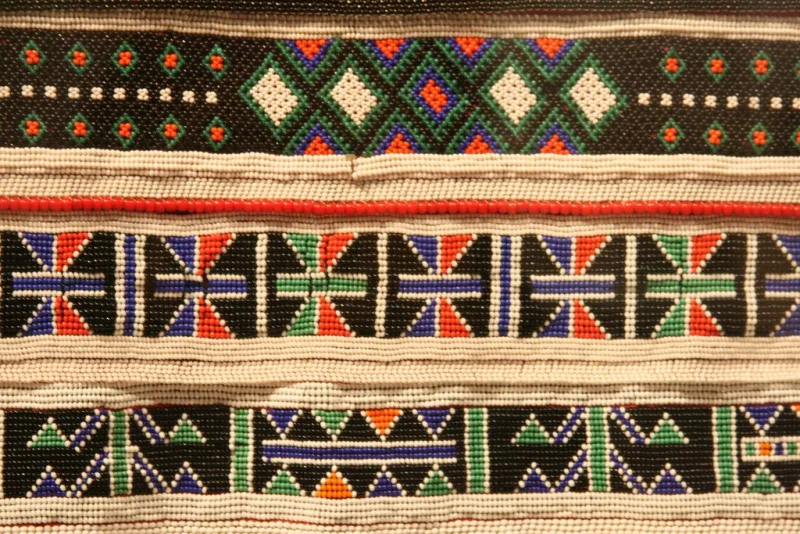
Twill Weaves

Twill is a type of textile weave with a pattern of diagonal parallel ribs. It can be identified by looking at the presence of pronounced diagonal lines that run along the width of the fabric. It has higher resistance to tearing than a plain weave because it has fewer yarn interlacing per area, therefore a greater degree of internal mobility. In addition, two yarns will bear the load when the fabric is torn.

Read more »

Article

weaving patterns

Plain Weaves – weaving pattern

Plain weave is the most common and tightest of basic weave structures in which the filling threads pass over and under successive warp threads and repeat the same pattern with alternate threads in the following row, producing a chequered surface. They do not ravel easily but tend to wrinkle and have less absorbency than other weaves. The plain weave is variously known as Calico or Tabby weave. It is the simplest of all weaves having a repeat size of 2.

Read more »

Article

Drafting Plans in weaving

Drafting Plans in weaving

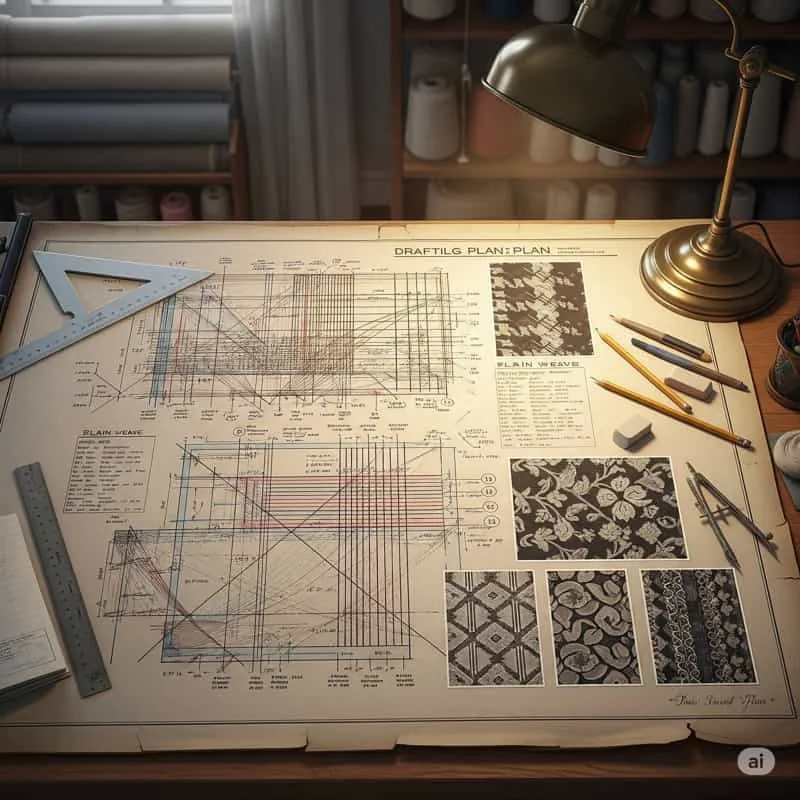
A draft indicates the number of heald shafts used to produce a given design and the order is which warp ends are threaded through the heald eyes of the heald shaft. The principle of drafting (i.e. putting of ends on different healed shafts) is that ends which work in different order require separate heald shafts. To keep matters simple, we can also say that the ends that work alike are put on the same heald shaft.

Read more »

Article

weaving loom motions

Fabric Weaving Basics

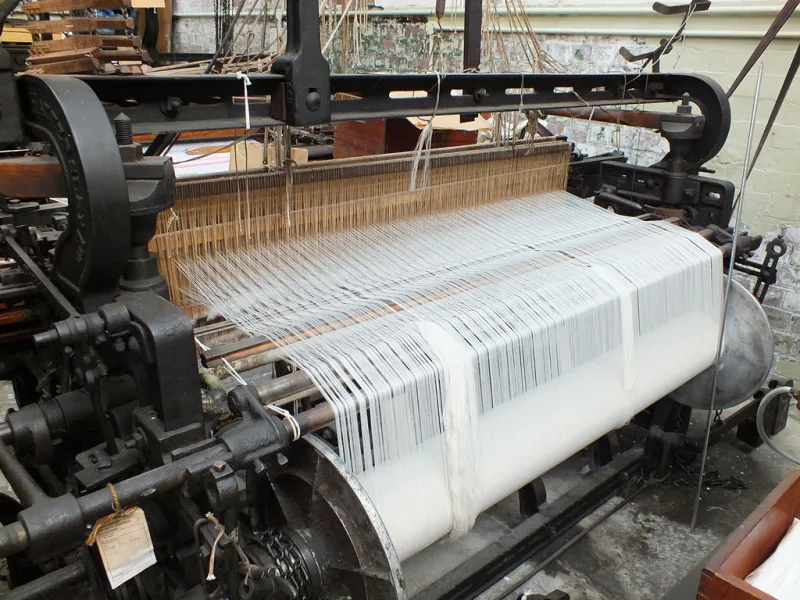
The process of producing a fabric by interlacing warp and weft threads is known as weaving. The machine used for weaving is known as weaving machine or loom. Weaving is an art that has been practiced for thousands of years. The earliest application of weaving dates back to the Egyptian civilization. In order to interlace wrap and weft threads to produce a fabric, the basic mechanisms necessary for any type of looms are Primary, Secondary and Auxiliary mechanisms.

Read more »

Article

fabric weaving machine

Types of Fabric Weaving Looms

Weaving is the process of making fabrics by interlacing the threads lengthwise and widthwise commonly known as warp and weft in a regular order. The operation is performed in a machine called a loom. Two sets of yarns are interlaced, almost always at right angles to each other. One, called the warp, runs lengthwise in the loom; the other, called the filling, weft or woof, runs crosswise. The raising and lowering sequence of warp threads in various sequences give many possible weave structures.

Read more »

Article

substrate formation

Substrate Formation in Textile Manufacturing: Processes and Significance

Substrate formation is the cornerstone of textile manufacturing, transforming raw fibers into yarns or fabrics via spinning, weaving, knitting, or nonwoven techniques. These processes ensure structural integrity, functionality, and versatility, enabling the production of textiles for diverse applications in apparel, home goods, and industrial products.

Read more »

Article

Scroll to Top