Processing & Finishing

Wet and dry processes that deliver the final hand and look. This section explains practical decision criteria, typical test methods, and failure modes that matter in real production. Readers get checklists, calculation steps, and case examples connecting specifications to cost, reliability, and compliance. Links map core concepts to upstream inputs and downstream processes so choices remain consistent across sourcing, manufacturing, and end-use performance. Each article includes definitions, diagrams where helpful, and plain-language notes to help newcomers ramp quickly while giving experienced professionals the depth needed to troubleshoot and optimize. Standards references are cited with context, and whenever trade-offs exist, we make them explicit so you can defend decisions. The coverage also includes metrics, data tables, and example calculations so results are reproducible. Where regulations apply, we highlight jurisdiction, scope, and verification pathways. Tools and templates are provided to speed up daily work without sacrificing rigor.

Embroidery

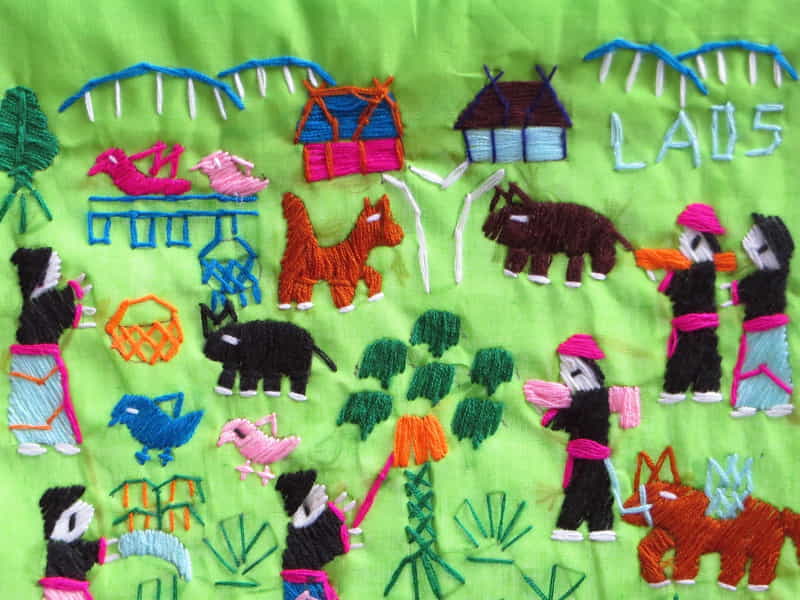
Types of Industrial Embroidery Machines: A Comprehensive Guide

Industrial embroidery machines have come a long way from their historical origins, evolving into sophisticated and versatile tools for various industries. Their enduring role in adding aesthetic value to textiles and products continues to shape modern manufacturing. As technology advances and markets evolve, industrial embroidery machines play a pivotal role in enabling creativity, customization, and innovation. They remain indispensable tools for those seeking to enhance the visual appeal of textiles and products through the art of embroidery.

Read more »

Article

Finishing

Factors Affecting the Dyeing of Yarn: A Comprehensive Exploration

Yarn dyeing is a complex and multifaceted process influenced by a myriad of factors, from fiber properties and dye selection to dyeing methods, machinery, and environmental considerations. Achieving consistent and high-quality dyed yarns requires a deep understanding of these factors and the implementation of precise controls and sustainable practices.

Read more »

Article

Printing/Dyeing

Textile Printing Process, Type of Printing, and Printing Machinery

Textile printing is the process of applying color to fabric in definite patterns or designs. In properly printed fabrics the color is bonded with the fiber, so as to resist washing and friction. Textile printing is related to dyeing, whereas in dyeing proper the whole fabric is uniformly covered with one color, in printing one or more colors are applied to it in certain parts only, […]

Read more »

Article

Finishing

Natural Indigo Blue Dye Origin Dying Procedures Technology and Dye Recipes for Denim Fabrics

Introduction Natural indigo is now being used by several fashion retail giants such as H&M on a large scale to replace synthetic indigo dye for developing safe, green, and sustainable jeans. Since natural indigo originates from natural resources, it is treble the cost of synthetic indigo dye. Clear evidence of dyeing fabrics with natural indigo […]

Read more »

Article

Finishing

Denim Fabrics Finishing

Denim is a quality product and is multipurpose it can be used as a garment and clothing as well as package or covering. It’s a diverse material with multiple types each with a unique quality. Denim has a lot of scopes and if used consciously can create a great scope for humanity. One of the best ways to shop in a sustainable way is to do so within the circular economy, prolonging the life of garments and keeping them out of landfills that much longer. Also since denim is a durable fabric hence, we can easily upcycle denim.

Read more »

Article

Printing/Dyeing

Comparison of Cleaning Treatments for Conservation and Restoration of Cotton, Wool and Silk Fabrics

Cleaning ensures sanitization and thus the safety of the artefact itself and others stored/displayed in its vicinity. At the same time, the process invariably alters the character of textile to a certain extent. Cleaning ensures removal/deactivation of soil and harmful organic matter from the artefact. However, a small number of surface molecules from the textile might be eroded in the process as well. This leads to weakening of the textile and might cause alteration in colour spectrum/ depth etc. Controlled cleaning techniques in conservation laboratories focus on minimizing this damage. However, not much scientific data is available on the efficacy of present cleaning techniques employed in conservation laboratories. Presently aqueous cleaning and solvent cleaning are primary modes utilised as next step to dry tools. Additionally, novel cleaning technologies like enzyme wash and ultrasonic wash provide soil specific methodology that would reduce the threat to the base fabric.

The present paper is a systematic analysis of these cleaning techniques and their impact on aged museum fabrics, i.e., cotton, wool and silk. Change in tensile strength parameters, whiteness index and yellowness index have been used as indicators to test the efficacy of different cleaning techniques on aged museum textiles. Numerical data generated by laboratory experiments clearly indicate that there is no standard cleaning treatment available for the three natural fibres. Each fibre has exhibited suitability to different cleaning treatment while balancing between restored whiteness and minimizing strength loss.

Read more »

Article

Scroll to Top