

Fabric Bowing & Skewing
Bowing & Skewing are defects which are created when there is a distortion in weft laid across the whole with of the fabric.
Fabric Bowing & Skewing Read More »
Bowing & Skewing are defects which are created when there is a distortion in weft laid across the whole with of the fabric.
Fabric Bowing & Skewing Read More »

Weaving is the process of making cloth with two components, a warp, and a weft, and can be done by very simple techniques on a complicated loom.
Basics of Weaving and Woven Fabrics Read More »
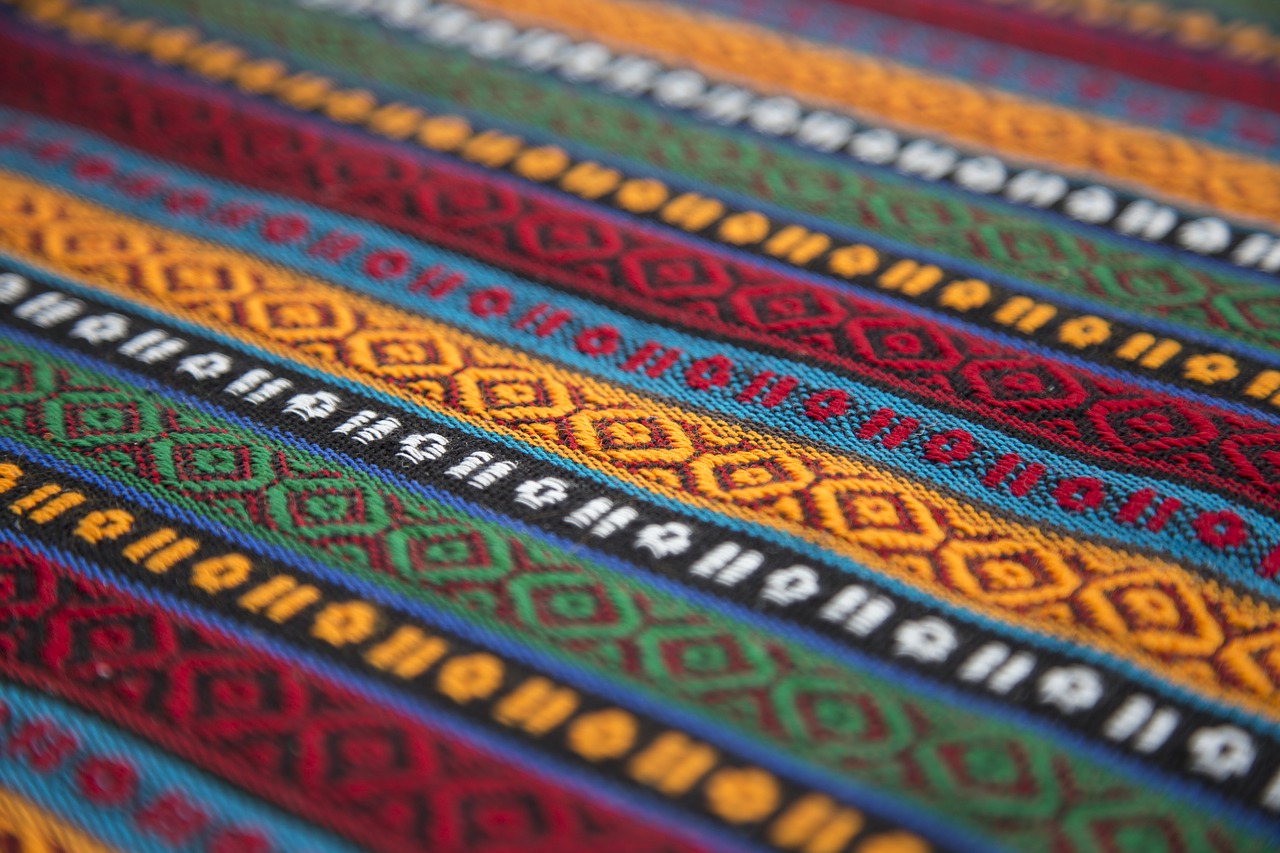
In the simplest weaving arrangement, alternate warp yarns are over or under the shuttle as it moves in one direction and the warp yarn positions are reversed for the return stroke of the shuttle. This weave can be made on a loom with only two harnesses. In other arrangements, several warp yarns may be moved upward or downward together, or several filling picks may take place before the warp yarns change position.
Classification of Fabric Weave Patterns Read More »

Transposed twills are a specialized category of twill weaves in which the standard diagonal pattern is systematically altered or rearranged to create unique visual and textural effects. This article explores the structure, characteristics, production techniques, advantages, and applications of transposed twills, emphasizing their role in enhancing aesthetic appeal and functionality in textiles. By examining their weave construction, design variations, and practical uses, this article serves as a comprehensive resource for textile professionals and designers seeking to incorporate transposed twills into innovative fabric designs.
Transposed Twills in Fabric Weaving: Structure, Characteristics, and Applications Read More »

The process of producing a fabric by interlacing warp and weft threads is known as weaving. The machine used for weaving is known as weaving machine or loom. Weaving is an art that has been practiced for thousands of years. The earliest application of weaving dates back to the Egyptian civilization. In order to interlace wrap and weft threads to produce a fabric, the basic mechanisms necessary for any type of looms are Primary, Secondary and Auxiliary mechanisms.
Fabric Weaving Basics Read More »