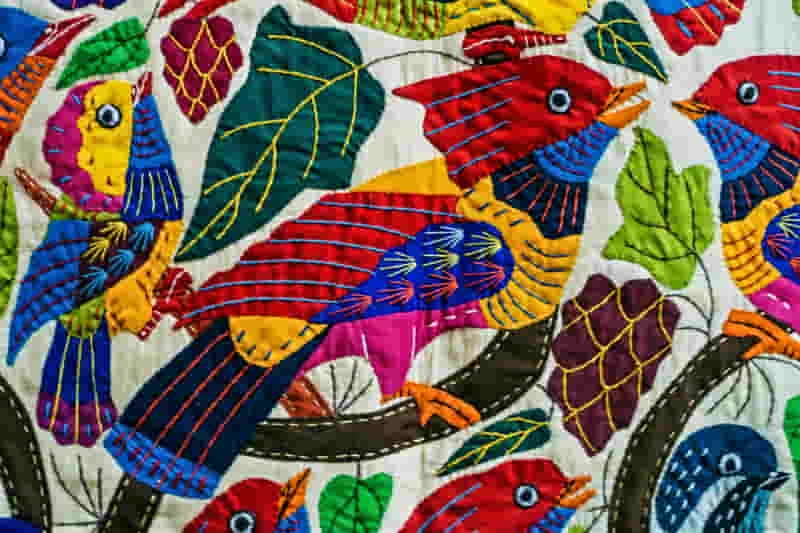
The revival of natural dyes and plant-based colorants in textile manufacturing reflects a growing demand for sustainable, eco-friendly alternatives to synthetic dyes, which contribute significantly to environmental pollution. Derived from plants, roots, berries, bark, leaves, and other organic sources, natural dyes offer biodegradable, non-toxic coloring options with rich, unique hues. This resurgence is driven by consumer awareness, regulatory pressures, and innovations in extraction and application techniques, such as ultrasonic extraction, microbial dyeing, and bioengineered pigments. Key plant-based sources include indigo, madder, weld, and cochineal, each with distinct chemical properties and historical significance. Despite challenges like color inconsistency, limited scalability, and higher costs, advancements in biotechnology and sustainable farming are making natural dyes viable for modern textile production. This article explores the history, processes, benefits, challenges, and future trends of natural dye revival, highlighting its role in sustainable fashion.
Introduction
The textile industry’s reliance on synthetic dyes has long contributed to environmental degradation, with dyeing processes consuming 100–150 liters of water per kilogram of fabric and generating significant wastewater. Natural dyes, derived from plants, insects, and minerals, offer a sustainable alternative, producing vibrant colors without the toxic chemical discharge associated with synthetic dyes. The revival of natural dyes is fueled by consumer demand for eco-friendly products, stricter environmental regulations, and innovations in dye extraction and application. This article provides a comprehensive overview of natural dye revival, detailing key plant-based colorants, their extraction and application processes, environmental benefits, challenges, and future trends in textile manufacturing.
Historical Context
Natural dyes have been used for millennia, with evidence of indigo dyeing in ancient Egypt (circa 2400 BCE) and madder in Indus Valley textiles. Before the invention of synthetic dyes in 1856 by William Henry Perkin, natural dyes from plants like woad, turmeric, and logwood were the primary means of coloring textiles. The shift to synthetic dyes in the 19th century offered brighter colors and easier application but introduced environmental and health concerns. Today, the revival of natural dyes reflects a return to traditional practices, enhanced by modern technology, to meet sustainability goals.
Key Plant-Based Colorants
1. Indigo (Indigofera tinctoria)
Description: Indigo, derived from the leaves of the Indigofera plant, produces a range of blues. It is one of the oldest and most widely used natural dyes, historically significant in cultures like India and Japan.
Chemical Properties: Contains indigotin, a compound that requires fermentation or chemical reduction to become water-soluble for dyeing.
Process:
- Extraction: Leaves are fermented in water, oxidized to form a blue precipitate, and processed into dye cakes or powder.
- Application: Fibers are dipped in a reduced indigo vat, where the dye binds to the fabric and oxidizes to blue upon air exposure.
- Mordanting: Often requires no mordant for cotton but may use alum or tannin for other fibers to enhance colorfastness.
Applications: Denim, traditional textiles, and artisanal clothing.
2. Madder (Rubia tinctorum)
Description: Madder root yields red, pink, and orange hues, historically used in Persian carpets and Indian textiles.
Chemical Properties: Contains alizarin and purpurin, anthraquinone compounds that bind well with mordants.
Process:
- Extraction: Roots are dried, ground, and boiled to extract pigments.
- Application: Fabrics are mordanted with alum or iron, then dyed in a madder bath at controlled temperatures (60–80°C) to achieve desired shades.
- Mordanting: Alum for bright reds, iron for deeper tones.
Applications: Apparel, home textiles, and historical reproductions.
3. Weld (Reseda luteola)
Description: Weld, a flowering plant, produces bright yellows and greens, commonly used in medieval European textiles.
Chemical Properties: Contains luteolin, a flavonoid with excellent lightfastness when mordanted.
Process:
- Extraction: Leaves and stems are boiled to release the yellow pigment.
- Application: Fabrics are mordanted with alum, then dyed in a weld bath.
- Mordanting: Alum enhances brightness; tin can intensify the yellow.
Applications: Sustainable fashion, upholstery, and natural dye workshops.
4. Cochineal (Dactylopius coccus)
Description: Derived from scale insects, cochineal produces vibrant reds and purples, historically valued in Mesoamerican textiles.
Chemical Properties: Contains carminic acid, a strong pigment with good colorfastness.
Process:
- Extraction: Dried insects are crushed and boiled to extract the dye.
- Application: Fabrics are mordanted with alum or tin, then dyed in a cochineal solution.
- Mordanting: Alum for reds, tin for brighter scarlet, iron for purples.
Applications: Luxury textiles, artisanal crafts, and cosmetics.
5. Turmeric (Curcuma longa)
Description: Turmeric roots produce bright yellows, widely used in Indian textiles and food coloring.
Chemical Properties: Contains curcumin, a pigment with poor lightfastness unless mordanted.
Process:
- Extraction: Roots are dried, ground, and boiled or soaked in water or alcohol.
- Application: Fabrics are dyed directly or with mordants like alum to improve durability.
- Mordanting: Alum or tannin enhances color retention.
Applications: Casual apparel, temporary dyes, and eco-conscious fashion.
6. Logwood (Haematoxylum campechianum)
Description: Logwood, from the heartwood of the logwood tree, yields purples, blues, and blacks.
Chemical Properties: Contains hematoxylin, which oxidizes to haematein, offering versatile shades.
Process:
- Extraction: Wood chips are soaked or boiled to release the dye.
- Application: Fabrics are mordanted with iron or alum, then dyed in a logwood bath.
- Mordanting: Iron for blacks, alum for purples.
Applications: Formal wear, historical textiles, and sustainable home decor.
Extraction and Application Processes
Extraction Techniques
- Boiling: Plant materials (roots, leaves, or bark) are boiled in water to release pigments. Temperature and duration vary by plant (e.g., 60–100°C for 1–2 hours).
- Fermentation: Used for indigo, where leaves are soaked in water for 24–48 hours to break down compounds like indican into indigotin.
- Ultrasonic Extraction: Employs ultrasonic waves to enhance dye yield, reducing extraction time and energy use by up to 30% compared to boiling.
- Solvent Extraction: Uses alcohol or other solvents for pigments like turmeric, improving efficiency for water-insoluble compounds.
- Microbial Dyeing: Emerging techniques use bacteria (e.g., Streptomyces) to produce pigments, offering scalable, eco-friendly alternatives.
Mordanting
Mordants are chemicals that fix dyes to fibers, improving colorfastness and shade variety:
- Alum (Potassium Aluminum Sulfate): Most common, safe, and effective for bright colors.
- Iron (Ferrous Sulfate): Produces darker shades, used for madder and logwood.
- Tannin: Derived from plants like oak galls, used for cotton and cellulose fibers.
- Tin: Enhances brightness but is less eco-friendly due to toxicity.
Process: Fabrics are soaked in a mordant solution (e.g., 10–20% alum by weight of fabric) before or during dyeing, ensuring chemical bonding between dye and fiber.
Dyeing Methods
- Immersion Dyeing: Fabrics are submerged in a dye bath at controlled temperatures (40–80°C) for 30 minutes to several hours.
- Vat Dyeing: Used for indigo, where fabrics are dipped in a reduced dye bath and oxidized in air.
- Direct Application: Pigments like turmeric are applied directly to fabrics, often for temporary or artistic effects.
- Digital Printing: Emerging for natural dyes, using inkjet technology to apply plant-based pigments with precision, reducing waste.
Environmental and Economic Benefits
- Reduced Pollution: Natural dyes are biodegradable and non-toxic, eliminating the chemical-laden wastewater produced by synthetic dyes.
- Water Conservation: Require less water than synthetic dyeing (e.g., 50–80 liters per kg vs. 100–150 liters for synthetic dyes).
- Sustainable Sourcing: Plants can be grown regeneratively, supporting biodiversity and local agriculture.
- Cultural Value: Revives traditional knowledge and supports artisanal communities, particularly in regions like India and Central America.
- Economic Opportunities: Creates markets for organic farmers and small-scale dye producers, though higher costs (20–50% more than synthetic dyes) remain a barrier.
Challenges
- Color Consistency: Natural dyes vary due to plant growth conditions, soil, and climate, making uniform shades difficult.
- Scalability: Limited dye yield from plants (e.g., 1 kg of madder yields dye for 1–2 kg of fabric) hinders industrial-scale production.
- Cost: Higher material and labor costs compared to synthetic dyes, with natural dyes costing $5–20 per kg versus $1–5 for synthetics.
- Lightfastness and Durability: Some dyes, like turmeric, fade under light exposure unless mordanted effectively.
- Land Use: Large-scale dye plant cultivation may compete with food crops, raising sustainability concerns.
Solutions and Innovations
- Biotechnology: Companies like Colorifix use genetically modified microbes to produce pigments, offering consistent, scalable natural dyes.
- Ultrasonic Extraction: Enhances dye yield and reduces energy use, making natural dyes more viable for industry.
- Regenerative Agriculture: Integrates dye plant cultivation with food crops, minimizing land use conflicts.
- Improved Mordants: Research into eco-friendly mordants, like plant-derived tannins, enhances colorfastness without environmental harm.
- Digital Dyeing: Alchemie’s natural dye printing systems reduce waste and enable precise application for mass production.
Case Studies
- Colorifix: Uses microbial fermentation to produce natural pigments, adopted by brands like H&M for sustainable collections.
- Stony Creek Colors: Cultivates indigo in the U.S., supplying denim brands like Levi’s with locally sourced, eco-friendly dyes.
- Botanical Colors: Provides organic, fair-trade natural dyes to artisans and brands, promoting sustainable supply chains.
- Rubia Natural Colors: Produces madder and weld dyes for European fashion houses, emphasizing regenerative farming.
Future Trends
- Bioengineered Pigments: Advances in synthetic biology will increase the range and consistency of microbial dyes.
- Circular Economy: Integration of dye plant byproducts into compost or bioenergy, enhancing sustainability.
- Consumer Education: Growing awareness drives demand for natural dye products, encouraging brands to adopt these methods.
- Policy Support: Subsidies for sustainable farming and stricter regulations on synthetic dye pollution will accelerate adoption.
- Hybrid Technologies: Combining natural dyes with waterless dyeing systems (e.g., scCO2) for enhanced efficiency.
Conclusion
The revival of natural dyes and plant-based colorants marks a significant step toward sustainable textile manufacturing, offering eco-friendly alternatives to synthetic dyes. With historical roots and modern innovations, dyes from indigo, madder, weld, and other sources provide vibrant, biodegradable colors while reducing environmental impact. Challenges like scalability and cost are being addressed through biotechnology, ultrasonic extraction, and regenerative agriculture, making natural dyes increasingly viable for industrial use. As consumer demand and regulatory pressures grow, the natural dye revival is poised to transform the textile industry, blending tradition with cutting-edge sustainability.
Citations
- Natural Dyes in Sustainable Textile Production | Textile World
- The Revival of Natural Dyes | Fashion Revolution
- Plant-Based Dyes and Their Applications | Journal of Cleaner Production
- Indigo Dyeing: History and Modern Practices | Textile Research Journal
- Sustainable Dyeing with Natural Colorants | EcoTextile News
- Microbial Dyeing Innovations | Colorifix
- Ultrasonic Extraction of Natural Dyes | Ultrasonics Sonochemistry
- Natural Dye Markets and Challenges | Fibershed
- Regenerative Agriculture for Dye Plants | Stony Creek Colors
- Botanical Colors: Sustainable Dye Supply Chains | Botanical Colors
- Environmental Impact of Textile Dyeing | World Bank
- Advances in Natural Dye Technology | ACS Sustainable Chemistry & Engineering