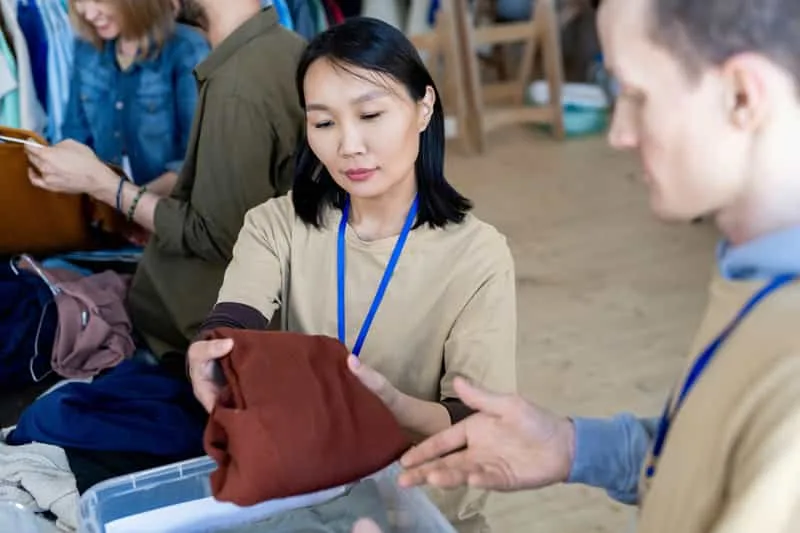
This in-depth article explores the role of textile innovation in disaster relief. It examines material advancements, structural applications, global case studies, and sustainable strategies that position fabrics as critical tools for humanitarian response and climate resilience.
Introduction
When disaster strikes—be it an earthquake, flood, wildfire, or humanitarian crisis—rapid, effective response can make the difference between survival and devastation. Textiles, often overlooked in discussions of emergency relief, play a pivotal role in this context. From temporary shelters and emergency clothing to filtration systems and rescue gear, the demand for lightweight, durable textiles in disaster relief is growing, not just in scope but in sophistication.
As climate change escalates the frequency and severity of natural disasters, textile innovation becomes not just relevant but critical. The textile industry is stepping up by designing fabrics that are resilient, packable, fire-retardant, weather-resistant, and antimicrobial—while remaining easy to transport and deploy. This article explores the cutting-edge technologies, materials, and real-world applications that are transforming disaster relief through textile science.
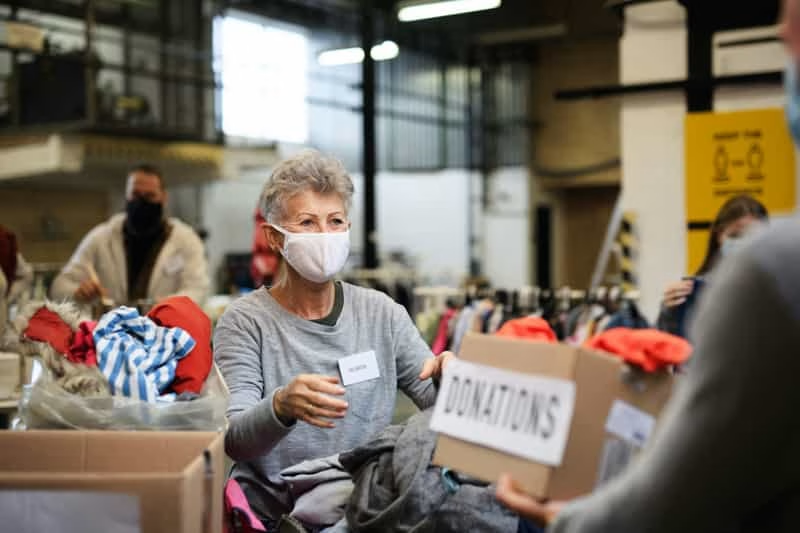
Historical Overview: From Canvas to Composites
Traditionally, disaster relief textiles consisted of heavy canvas tarpaulins, cotton blankets, and wool garments. While these materials provided basic functionality, they lacked adaptability for diverse disaster environments. Moreover, their bulkiness, weight, and degradation in damp conditions posed logistical challenges.
The shift began with the advent of synthetic fibers such as nylon and polyester in the mid-20th century. Their strength-to-weight ratios, water resistance, and low-cost production made them ideal for mass emergency deployment. Over time, textile researchers began developing specialized fabrics that could perform multiple functions simultaneously, leading to the technical textiles used in modern disaster response.
Key Requirements for Disaster Relief Textiles
Any textile developed for disaster relief must satisfy several critical criteria:
| Requirement | Importance |
|---|---|
| Lightweight | Easier transport and faster deployment |
| Durability | Withstand harsh conditions and rough use |
| Water Resistance | Prevent moisture penetration in tents, garments |
| Breathability | Ensure comfort and prevent overheating |
| UV Resistance | Avoid degradation under direct sunlight |
| Fire Retardance | Crucial in wildfire and urban crises |
| Antimicrobial Properties | Prevent infections in high-risk zones |
| Compressibility | Allow compact storage for rapid logistics |
These attributes must be balanced with cost, recyclability, and cultural acceptability across global relief efforts.
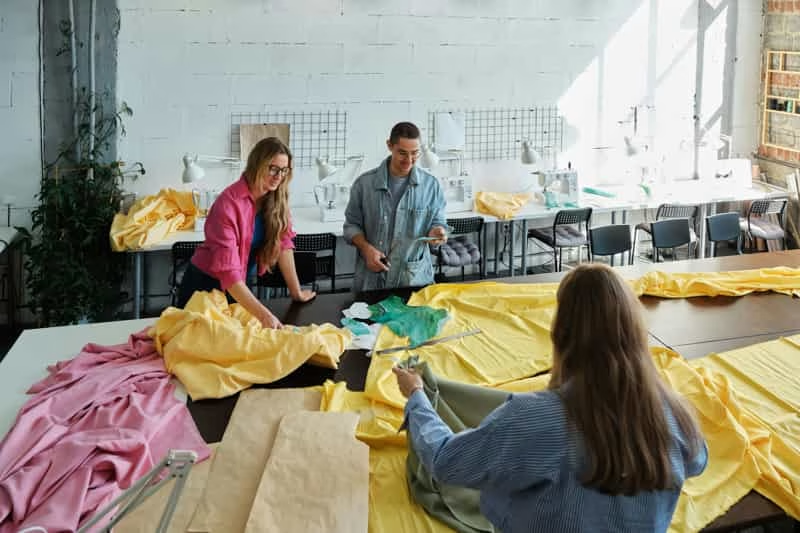
Types of Textiles Used in Disaster Relief
1. Shelter Fabrics
Used in tents, tarpaulins, modular shelters
- Ripstop nylon or polyester coated with polyurethane or silicone
- Aramid blends for fire-prone zones
- Laminated nonwovens for insulation
2. Emergency Clothing and Blankets
- Space blankets made from metallized PET film (Mylar)
- Garments made from stretch-woven softshells for rapid mobility
- Lightweight fleece for thermal regulation
3. Water Filtration Textiles
- Nonwoven polypropylene for pre-filtration
- Carbon-embedded fabrics for odor and pathogen reduction
- Nano-fiber membranes for portable filtration kits
4. Medical and Sanitation Textiles
- Antimicrobial fabrics for field hospitals
- Bio-barrier garments for disease control
- Absorbent pads and wound dressings from hydrogel-impregnated nonwovens
5. Packaging and Logistics Textiles
- Bulk carrier bags (FIBCs) for grain and supplies
- Wrapping cloths made from jute and synthetic blends
Technological Innovations in Relief-Focused Fabrics
A. Phase-Change Materials (PCMs)
- Regulate body temperature in variable climates
- Embedded in linings of emergency shelters and jackets
B. Self-Cleaning and Antimicrobial Coatings
- Silver nanoparticle coatings or copper-infused fibers
- Minimize hygiene-related illnesses in camp settings
C. Solar-Integrated Textiles
- Photovoltaic fabric panels stitched onto tents
- Provide electricity for lighting, charging, medical devices
D. Shape-Memory Polymers
- Can adapt their structure in response to heat or stress
- Applied in morphing shelters or compression wraps
E. Biodegradable Materials
- For single-use or short-term deployment
- Reduce environmental impact post-relief effort
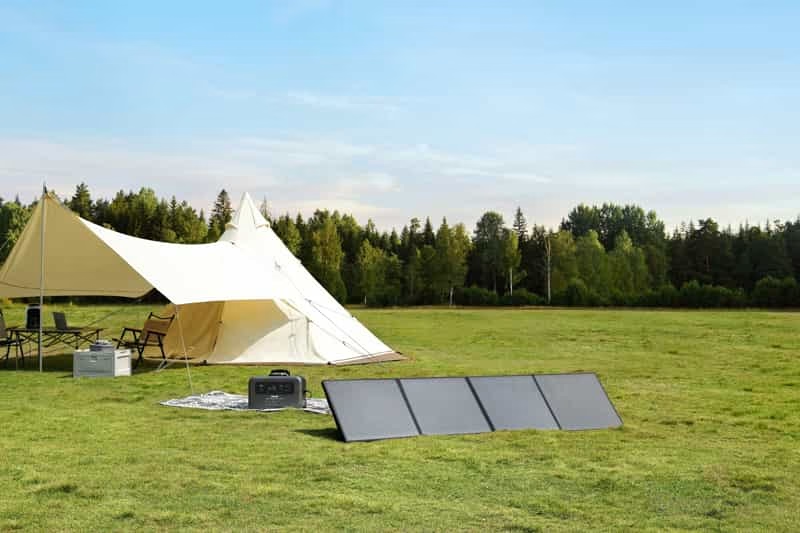
Production and Deployment Logistics
Designing the fabric is only part of the challenge; scaling production and ensuring effective deployment are just as vital.
1. Rapid Manufacturing Systems
- Modular weaving/knitting units
- Roll-to-roll production for nonwovens
- On-demand cutting and sealing
2. Prepacked Relief Kits
- Fabric-based kits for immediate needs (clothing, shelter, sanitation)
- Packaged by disaster type and climate zone
3. Smart Labeling and QR Coding
- Instructions for setup, washing, and disposal
- Logistics tracking and inventory management
4. On-Site Fabrication Units
- 3D knitting pods for garment production
- UV-curable resins and composites for emergency repair patches
Case Studies: Textile Innovation in Action
Haiti Earthquake (2010)
- Tents with UV-stabilized polyethylene tarps
- Community sewing centers repurposed relief fabric into school uniforms
Rohingya Refugee Camps (2017–2023)
- Use of fire-resistant tents and woven jute mats for flooring
- Micro-loans given to local women to sew mosquito-netting apparel
Turkey–Syria Earthquake (2023)
- Thermal wear using PCM-integrated fleece
- Portable shelters with anti-microbial linings and modular walls
Wildfire Relief in California and Australia
- Distribution of fire-retardant blankets and insulated outerwear
- Shelters made with aramid-based layered composites
These case studies show how context-specific textile deployment can support both immediate relief and long-term recovery.
Sustainability and Circular Design
The environmental impact of relief materials is a growing concern. While fast deployment is essential, post-use waste management must be considered.
Strategies include:
- Take-back programs for reuse in future crises
- Recycling fibers into insulation or composite boards
- Upcycling by local communities into livelihood products
- Biodegradable textiles that naturally decompose over time
Sustainability metrics now factor into the procurement policies of major humanitarian agencies.
Challenges and Limitations
- Cost Constraints: Premium materials may be unaffordable for large-scale disasters
- Storage and Shelf-Life: Antimicrobial properties can degrade over time
- Cultural Appropriateness: Designs must consider local customs and gender sensitivities
- Complex Supply Chains: Delays in raw material delivery during crises
Collaborative innovation between NGOs, textile manufacturers, and government bodies is essential to address these constraints.
Key End Users and Market Segments
| User | Application |
|---|---|
| Humanitarian Organizations | UNHCR, Red Cross, MSF emergency response |
| Government Relief Departments | Natural disaster management |
| Military and Defense Forces | Tactical support in disaster zones |
| Private Emergency Brands | Survival gear and first-response kits |
| NGOs and Foundations | Community reconstruction and livelihood support |
Global demand for disaster relief textiles is projected to grow at CAGR 7.5%, reaching $6.3 billion by 2030.
Future Trends: Smart, Sustainable, and Local
- AI-Optimized Supply Chains: Predict needs and pre-position stock
- Smart Textiles: Monitor health indicators like body temp and hydration
- Regenerative Textiles: Cultivate materials like bamboo or kenaf near disaster-prone zones
- Open-Source Design Repositories: Share patterns, specs, and tutorials for localized production
- Modular Shelter Ecosystems: Integrate lighting, sanitation, and connectivity into fabric walls
The vision for disaster relief textiles in the next decade is one of resilience, regeneration, and empowerment.
Summary
Textile innovations are revolutionizing disaster relief by offering solutions that are fast, flexible, and future-proof. As climate emergencies intensify and displacement rises, the demand for fabrics that can withstand extreme environments, support health, and empower local economies becomes even more urgent.
The future of disaster textiles is not only about materials—it’s about systems that adapt, sustain, and heal. From solar tents in refugee camps to fire-retardant blankets in wildfire zones, fabrics are becoming silent heroes in times of crisis.
Citations
- UNHCR Emergency Handbook: https://emergency.unhcr.org
- Journal of Industrial Textiles – Technical Fabric Applications: https://journals.sagepub.com/home/jit
- ReliefWeb Humanitarian Reports: https://reliefweb.int
- World Bank Disaster Risk Management: https://www.worldbank.org/en/topic/disasterriskmanagement