Contributors

More articles by Textile School

textile testing lab

Post-Production

Apparel Testing

Testing is a valuable aid for textile production, distribution, and consumption. During textiles testing the variation of a fibre or fabric i.e. length, colour, fineness, threads per inch, cover factor, is detected properly. Continuous test of the textiles results a enhanced and efficient output of the production. By Apparel Testing we can evaluate and ensure the quality of the garments to be used by the end users.
Apparel Testing Read More »

textile-labelling

Apparel

Labels used on Textile Articles

Symbols are written on labels, attached to textiles to indicate how a particular item should best be cleaned. Textile and apparel labels can help you consider alternative choices and make better buying decisions if you take time to read them. Permanent Care Labels (PCL) use symbols to explain how to care for wearing apparel and home sewing fabrics, so consumers need to learn the basic symbols.

Labels used on Textile Articles Read More »

weaving patterns

Weaving

Plain Weaves – weaving pattern

Plain weave is the most common and tightest of basic weave structures in which the filling threads pass over and under successive warp threads and repeat the same pattern with alternate threads in the following row, producing a chequered surface. They do not ravel easily but tend to wrinkle and have less absorbency than other weaves. The plain weave is variously known as Calico or Tabby weave. It is the simplest of all weaves having a repeat size of 2.

Plain Weaves – weaving pattern Read More »

Drafting Plans in weaving

Weaving

Drafting Plans in weaving

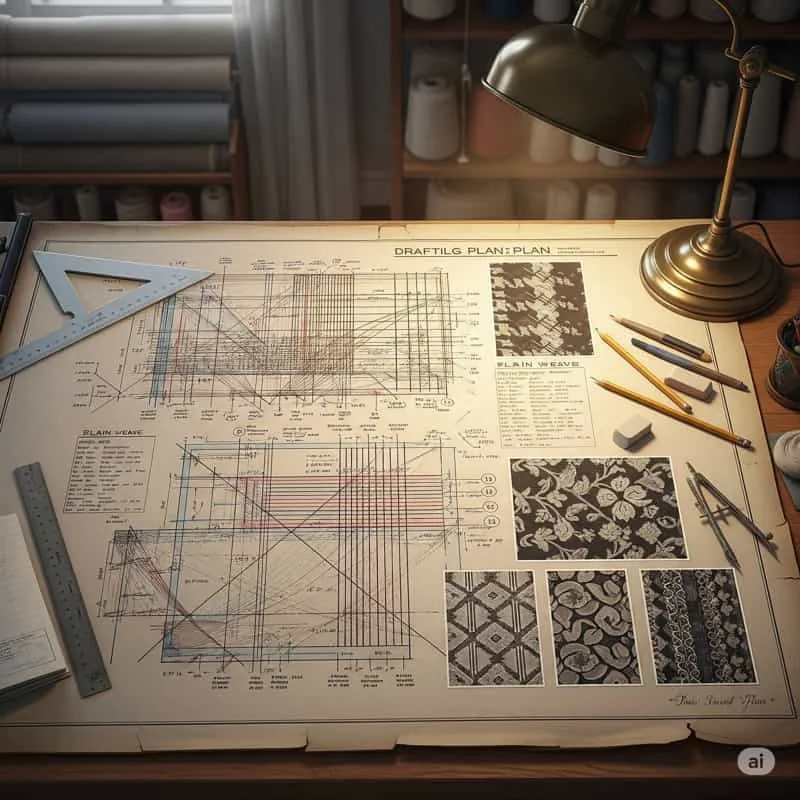
A draft indicates the number of heald shafts used to produce a given design and the order is which warp ends are threaded through the heald eyes of the heald shaft. The principle of drafting (i.e. putting of ends on different healed shafts) is that ends which work in different order require separate heald shafts. To keep matters simple, we can also say that the ends that work alike are put on the same heald shaft.

Drafting Plans in weaving Read More »

weaving loom motions

Weaving

Fabric Weaving Basics

The process of producing a fabric by interlacing warp and weft threads is known as weaving. The machine used for weaving is known as weaving machine or loom. Weaving is an art that has been practiced for thousands of years. The earliest application of weaving dates back to the Egyptian civilization. In order to interlace wrap and weft threads to produce a fabric, the basic mechanisms necessary for any type of looms are Primary, Secondary and Auxiliary mechanisms.

Fabric Weaving Basics Read More »

substrate formation

Weaving

Substrate Formation in Textile Manufacturing: Processes and Significance

Substrate formation is the cornerstone of textile manufacturing, transforming raw fibers into yarns or fabrics via spinning, weaving, knitting, or nonwoven techniques. These processes ensure structural integrity, functionality, and versatility, enabling the production of textiles for diverse applications in apparel, home goods, and industrial products.

Substrate Formation in Textile Manufacturing: Processes and Significance Read More »

fabric weaving machine

Weaving

Types of Fabric Weaving Looms

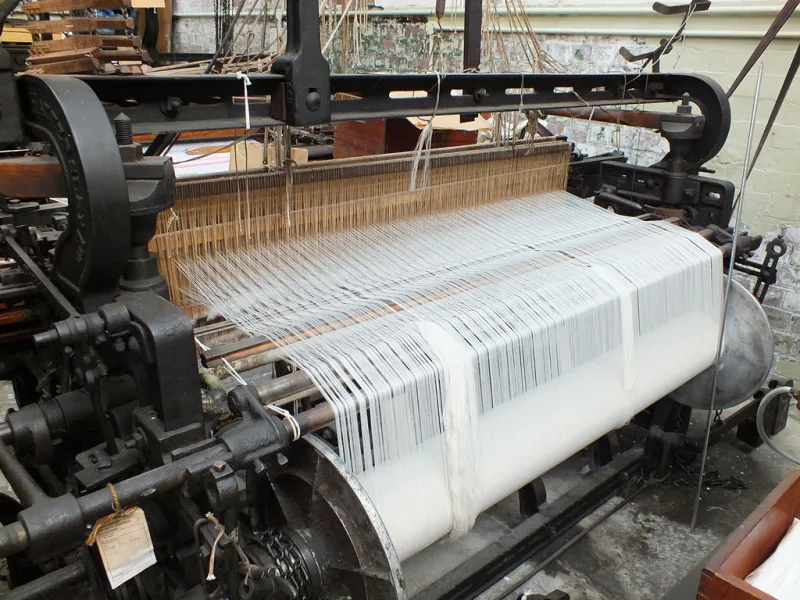
Weaving is the process of making fabrics by interlacing the threads lengthwise and widthwise commonly known as warp and weft in a regular order. The operation is performed in a machine called a loom. Two sets of yarns are interlaced, almost always at right angles to each other. One, called the warp, runs lengthwise in the loom; the other, called the filling, weft or woof, runs crosswise. The raising and lowering sequence of warp threads in various sequences give many possible weave structures.

Types of Fabric Weaving Looms Read More »

rotor spinning machine

Open-End Spinning

Open-end or Carded or Break or Rotor Spinning

The first functioning of rotor spinning, machine was presented at the ITMA in 1967.Yarn spinning according to the rotor spinning principle predominates for all nonconventional spinning methods.It omits the step of forming a roving.After drafting, the sliver is fed into a rotary beater.This device ensures that the fibers are beaten into a thin supply which enters a duct and gets deposited on the sides of the disc(rotor).The transportation of the fibers is achieved through air currents.

Open-end or Carded or Break or Rotor Spinning Read More »

double head rieter draw frame

Yarn

Draw frame Functions

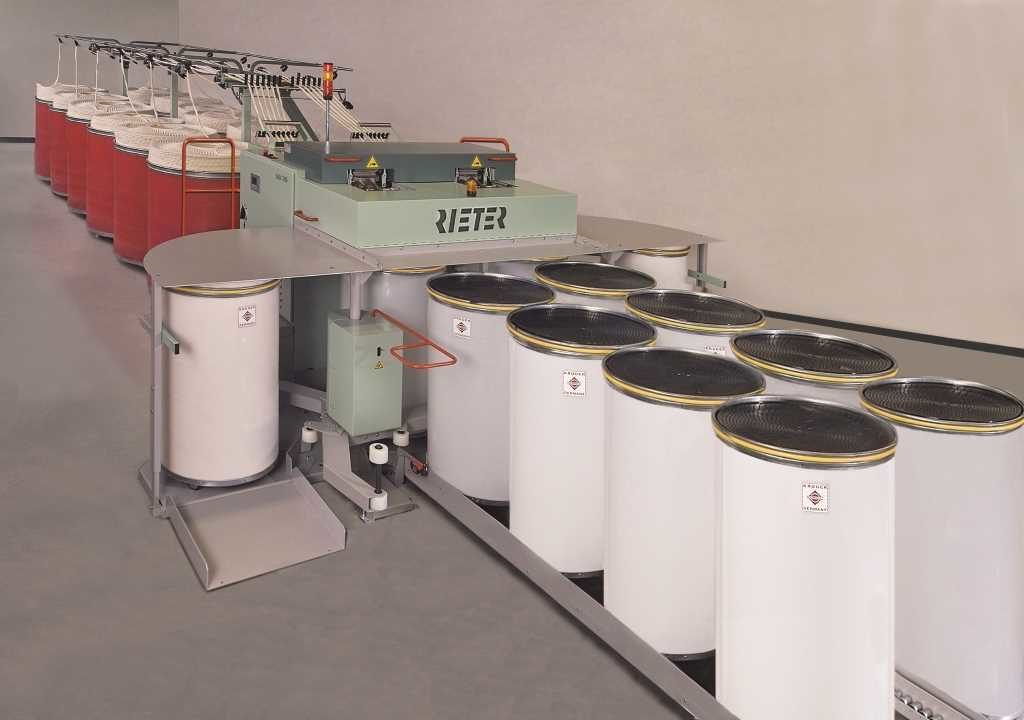
Carded Slivers are fed into the Draw-Frame and are stretched/Straightened and made into a single sliver. Also, fibre blending can be done at this stage. The cans that contain the sliver are placed along the draw-frame feeder rack, usually including eight pairs of cylinders (each pair is above the space occupied by a can),the lower cylinder is commanded positively, while the upper one rests on the lower one in order to ensure movement of the relative sliver that runs between the two.

Draw frame Functions Read More »

Scroll to Top