

Major Seed/Fruit-hair fibers
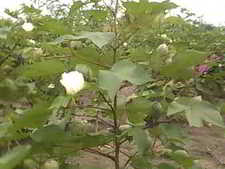
Cotton Fiber
Cotton is a soft, staple fiber that grows in a form known as a boll around the seeds of the cotton plant, a shrub native to tropical and subtropical regions around the world, including the Americas, India, and Africa. The fiber most often is spun into yarn or thread and used to make a soft, breathable textile, which is the most widely used natural-fiber cloth in clothing today. The English name derives from an Arabic word which began to be used circa 1400.
Each cotton fiber is composed of concentric layers. The cuticle layer on the fiber itself is separable from the fiber and consists of wax and pectin materials.
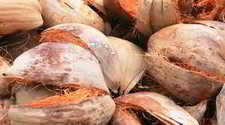
Coir Fiber
This fiber, obtained from husks of the fruit of the coconut palm, Cocos nucifera (palm family, Arecaceae), is mainly produced in India and
Sri Lanka. The fruits are broken by hand or machine, and the fiber extracted from the broken husks from which the coconut has been removed for the copra. The husks are retted in rivers, and the fiber separated by hand beating with sticks or by a decortication machine. The fibers are washed, dried, and hackled, and used in upholstery, cordage, fabrics, mats, and brushes.
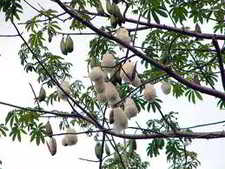
Kapok Fiber
Kapok fiber is obtained from the seed pods of the kapok tree, Ceiba pentandra, of the Kapok tree family (Bombacaceae) which is indigenous
to Africa and southeast Asia; the fiber is produced mainly in Java. The tree
grows to a height of 35 m. The seeds are contained in capsules or pods that are picked and broken open with mallets.
The fioss is dried and the fiber is separated by hand or mechanically. A nondrying oil is produced from the seeds with properties similar to cottonseed oil. The fiber is exceedingly light, with a circular cross-section, thin walls, and a wide lumen. Kapok fibers are moisture resistant, buoyant, resilient, soft, and brittle, but not suitable for spinning.
The traditional uses were in life jackets, sleeping bags, insulation, and upholstery; however, synthetics have replaced most of the applications as filling material and now kapok is mainly used for life preservers. Kapok-filled life preservers can support up to three times the weight of the preserver and do not become waterlogged.
Seed/Fruit-hair Fibers
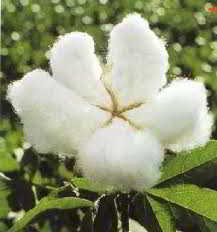
The seeds and fruits of plants are often attached to hairs or fibers or encased in a husk that may be fibrous. These fibers are cellulosic based and of commercial importance, especially cotton,
the most important natural textile fiber.


can you tell me if what I need to do to soften the kapok for paper production?? IM SO CONFFUSED
Looking for sisal or henneken soft fabric sold in bolts for clothing/ pillows etc. Do you make?