
Introduction
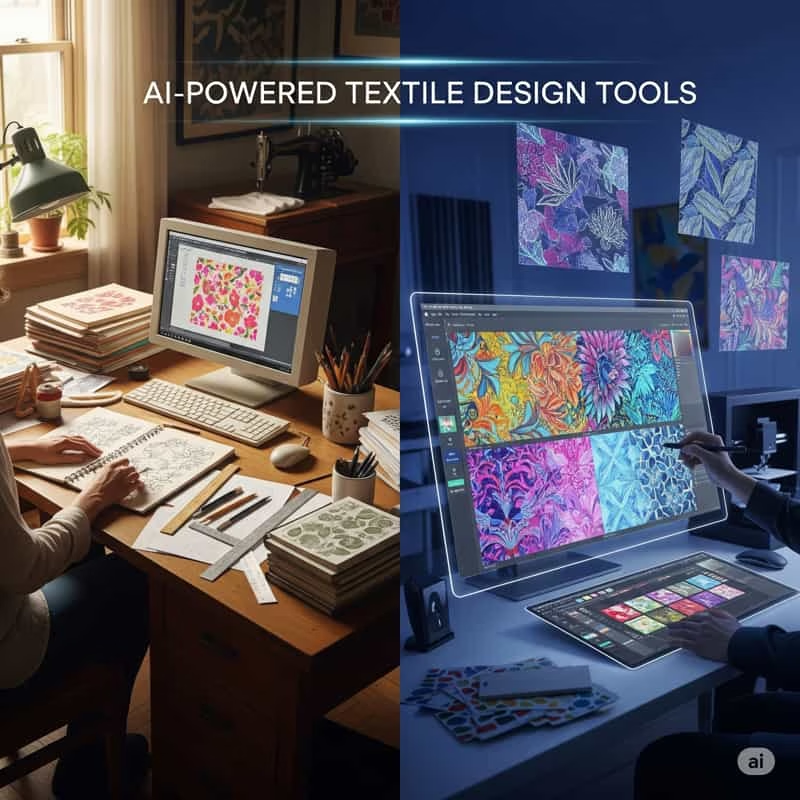
The textile industry is experiencing a technological renaissance. What once relied purely on human intuition and craftsmanship is now evolving rapidly through the influence of artificial intelligence (AI). AI-powered textile design tools are redefining creativity, improving accuracy, and significantly shortening production cycles. These tools are no longer just supplementary; they are becoming essential in every designer’s toolkit.
From automated pattern generation to predictive fashion forecasting, AI is allowing designers to focus more on imagination while machines handle repetitive, data-driven tasks. As brands race to deliver fresh and sustainable collections faster than ever, AI is quietly revolutionizing the creative process.
The Origins of AI in Textile Design
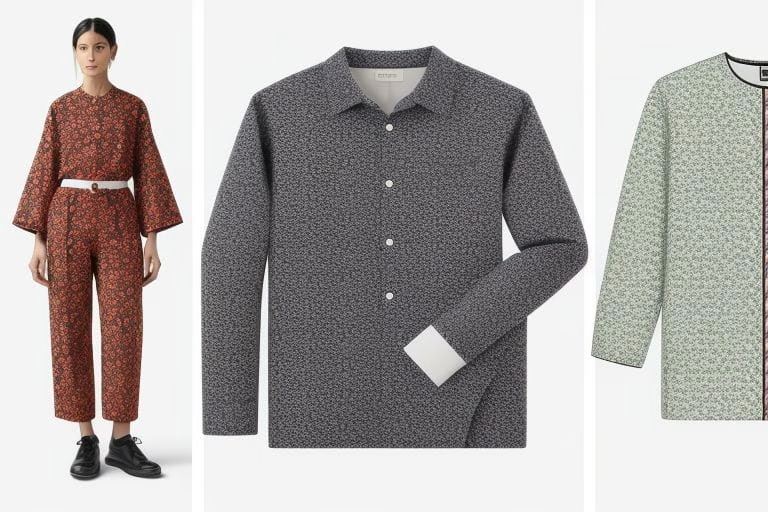
AI’s integration into textiles began subtly in the early 2000s with basic computer-aided design (CAD) enhancements. Initially, designers used algorithms to optimize fabric layouts and reduce waste. Over time, neural networks and machine learning (ML) algorithms were introduced, allowing for advanced visual recognition and data analysis.
By the 2010s, AI systems were able to analyze massive datasets from fashion archives, consumer trends, and social media to generate predictive insights. This foundation paved the way for more sophisticated AI applications in textile design, including color forecasting, print generation, and even emotional analysis to gauge design reception.
Evolution of AI Tools in Textile Design
Today’s AI-powered textile design tools are far more advanced. They can autonomously generate patterns, recommend color palettes, simulate draping effects, and even design entire collections based on brand guidelines.
Key Technological Advancements:
- Generative Adversarial Networks (GANs): Generate original textile prints and patterns
- Natural Language Processing (NLP): Interpret mood boards or textual themes into visual designs
- Computer Vision: Analyze runway trends and convert them into actionable design suggestions
- Predictive Analytics: Suggest trending colors, textures, and materials
These innovations are transforming not just what is created, but how it is created.
AI-Driven Design Workflow Explained
AI has altered the traditional design workflow from concept to production:
| Step | Traditional Workflow | AI-Enhanced Workflow |
|---|---|---|
| 1 | Manual sketching | Automated pattern generation |
| 2 | Color palette selection | AI-driven trend forecasting |
| 3 | Sample development | Digital simulation |
| 4 | Consumer feedback | Sentiment analysis on social media |
| 5 | Final adjustments | Real-time data insights |
This transformation allows designers to iterate more rapidly, make data-informed decisions, and tailor designs to consumer behavior.
Innovations in AI-Powered Textile Tools
Several groundbreaking innovations are driving AI’s impact on textile design:
- AI Pattern Engines: Tools like Adobe Sensei or custom GANs create hundreds of pattern variations from a single input.
- Design Customization Portals: Enable brands to let customers co-create garments with AI suggestions.
- Virtual Fitting with AI Draping: Tools simulate fabric movement on digital avatars for realistic previews.
- Sustainability Dashboards: AI evaluates environmental impact of different design choices in real time.
These innovations not only boost creativity but also promote efficiency and sustainability.
Types and Applications of AI in Textile Design
AI is being integrated in several specific applications within textile design:
- Pattern Generation: Create intricate, never-before-seen textile designs
- Color Trend Forecasting: Predict upcoming color trends based on global data
- Fabric Simulation: Visualize how a design will look and behave on specific fabrics
- Consumer Trend Analysis: Monitor online behavior to influence design strategy
- Automated Design Revision: AI suggests improvements based on feedback loops
Each of these applications replaces a labor-intensive process, allowing teams to scale design efforts without compromising quality.
Real-World Case Studies
Leading fashion and textile companies have already embraced AI to great success:
- Tommy Hilfiger partnered with IBM and the Fashion Institute of Technology to create AI-generated fashion insights.
- Zalando uses AI to predict fashion trends and automate design elements.
- Spoonflower, a textile print-on-demand platform, employs machine learning to offer pattern variations tailored to buyer preferences.
These examples illustrate how AI delivers not just novelty, but measurable performance and engagement benefits.
Industry Adoption and Market Trends
The demand for AI-powered textile design tools is growing globally. According to Fortune Business Insights, the AI in fashion market is projected to grow from $0.65 billion in 2020 to over $4.4 billion by 2028.
Key adopters include:
- Luxury Brands: Seeking exclusive and personalized design inputs
- Fast Fashion Retailers: Looking to speed up design and reduce forecasting errors
- Independent Designers: Leveraging AI for efficiency and differentiation
- Textile Manufacturers: Optimizing fabric yield and reducing sampling costs
Challenges in Implementation
Despite the promise of AI, several challenges hinder widespread adoption:
- Creative Resistance: Some designers fear AI will dilute artistic expression
- Data Dependency: High-quality, structured data is essential for effective AI results
- Training Needs: Designers must learn to collaborate with new tools
- Ethical Concerns: Ownership of AI-generated designs remains a legal gray area
However, ongoing training, clearer IP regulations, and better user interfaces are making AI tools more accessible and accepted.
Sustainability Impact of AI in Textile Design
AI plays a crucial role in promoting sustainable textile design:
- Zero-Waste Pattern Cutting: AI calculates the most efficient layout for minimal waste
- Eco Material Selection: Algorithms suggest low-impact fibers based on design specs
- Fewer Prototypes: Accurate digital simulations reduce the need for physical samples
- Energy Savings: Efficient design processes lead to reduced energy consumption
This makes AI not just a creative ally but an ecological one as well.
AI for Personalized Design and Mass Customization
Mass customization is a growing trend in fashion, and AI makes it scalable:
- Real-Time Design Adjustments: Shoppers can tweak colors, shapes, and patterns via AI interfaces
- Body Scanning Integration: AI tailors garments to user-specific dimensions
- Sentiment-Based Recommendations: Designs shift based on user mood data from wearable devices or browsing behavior
These features drive higher consumer satisfaction and reduce return rates.
The Future of AI in Textile Design
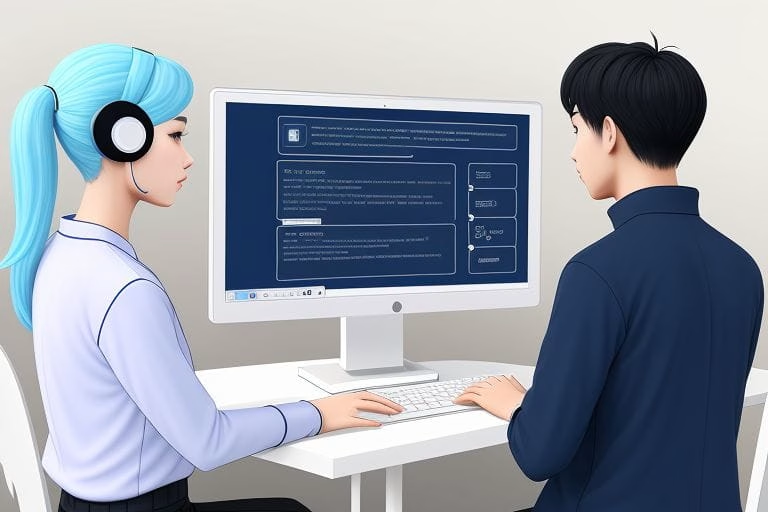
As we look to the future, AI’s influence in textiles will deepen. Key trends include:
- AI + Augmented Reality: Design garments in AI and view them on virtual models in real time
- Emotional AI: Generate designs based on consumer mood tracking and preferences
- Collaborative AI Design Assistants: Co-design with AI agents that learn a designer’s style over time
- Blockchain + AI: Ensure traceability and transparency in AI-designed garments
These trends signal a shift toward a hybrid creative process—where human intuition meets machine intelligence.
Summary
AI is not replacing designers—it’s empowering them. By handling the technical heavy-lifting, AI lets creativity flourish. From concept development and trend forecasting to simulation and sustainability, AI-powered tools are transforming textile design into a smarter, faster, and more responsible discipline.
As the industry evolves, those who embrace AI will lead the charge, merging tradition with technology to craft the fabrics of tomorrow.
The integration of artificial intelligence into textile design marks a turning point in how creativity is conceptualized and realized. With faster design cycles, improved sustainability, and limitless personalization, AI is not just a trend—it’s a transformation. Designers who embrace these tools are setting the stage for the next era of fashion innovation.
Citations:
- Fortune Business Insights: AI in Fashion Market Forecast: https://www.fortunebusinessinsights.com/industry-reports/artificial-intelligence-ai-in-fashion-market-101677
- Adobe Blog: How AI Is Helping Designers Create: https://blog.adobe.com/en/publish/2021/03/30/how-ai-is-helping-designers-create-smarter-faster-better
- SpringerLink: AI Applications in Textile Industry: https://link.springer.com/chapter/10.1007/978-981-16-0674-3_16


