
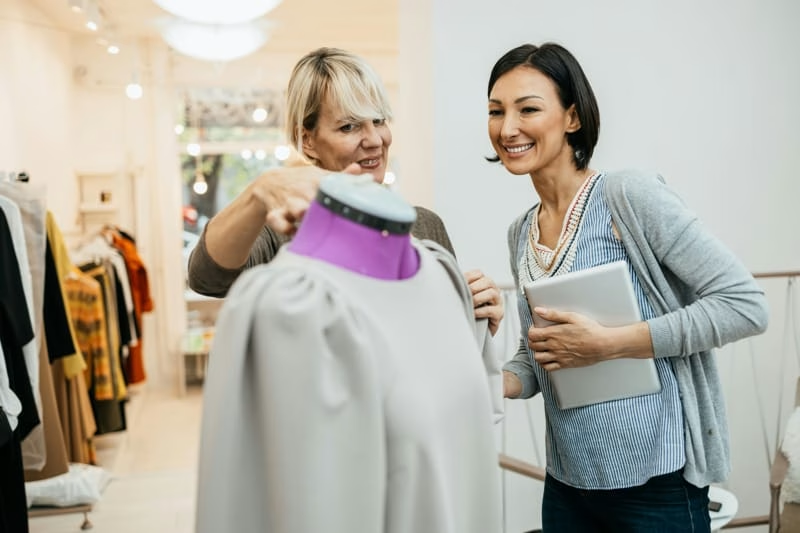
This article examines consumer behavior toward sustainable fashion, analyzing the attitude-behavior gap, the role of knowledge and transparency, generational influences, and social trends. It highlights global and regional initiatives, such as India’s sustainable fashion efforts, and addresses challenges like greenwashing and affordability. The article emphasizes strategies for brands to align with consumer values and drive sustainable purchasing decisions.
The fashion industry is undergoing a transformative shift toward sustainability, driven by growing consumer awareness of environmental and social issues. The textile sector, responsible for approximately 10% of global carbon emissions and significant waste, faces increasing pressure to adopt eco-friendly practices, according to the United Nations Environment Programme (www.unep.org/news-and-stories/story/tackling-textile-industrys-environmental-footprint). However, consumer behavior toward sustainable fashion is complex, shaped by values, practical concerns, and cultural influences. Despite expressed interest in eco-friendly clothing, factors like price, style, and brand reputation often dictate purchasing decisions. This article provides a comprehensive analysis of consumer behavior in sustainable fashion, integrating global trends, regional efforts like India’s initiatives, and strategies to bridge the gap between values and actions.
Understanding Consumer Behavior in Sustainable Fashion
Consumer behavior in sustainable fashion reflects a dynamic interplay of environmental concerns, personal priorities, and external influences. While many consumers express interest in eco-friendly clothing, actual purchases often favor fast fashion due to affordability, accessibility, and trend-driven appeal. The Ellen MacArthur Foundation highlights that less than 1% of textiles are recycled into new garments, underscoring the industry’s reliance on a linear “take-make-waste” model that consumers inadvertently perpetuate (www.ellenmacarthurfoundation.org/a-new-textiles-economy). Understanding the factors driving consumer choices—values, knowledge, and social influences—is critical for brands aiming to promote sustainable fashion and align with the circular economy.
The Attitude-Behavior Gap
A significant barrier to sustainable fashion adoption is the attitude-behavior gap, where consumers express environmental concern but fail to translate it into purchasing decisions. Research indicates that while 66% of global consumers are willing to pay more for sustainable products, only a fraction consistently choose eco-friendly clothing when faced with lower-cost or trendier alternatives (www.nielsen.com). Factors like quality, design, and price often outweigh sustainability in final choices. For example, fast fashion brands like Shein offer affordable, trend-driven garments that appeal to budget-conscious consumers, despite their environmental and ethical drawbacks (www.fairwear.org). Bridging this gap requires brands to make sustainable options more accessible, stylish, and competitively priced.
Knowledge and Transparency
Knowledge and transparency are pivotal in shaping consumer behavior toward sustainable fashion. Consumers who understand the environmental and social impacts of textiles—such as the 2,700 liters of water required to produce a single cotton T-shirt or the labor exploitation in fast fashion supply chains—are more likely to support sustainable brands (textilelearner.net/carbon-footprint-in-textile-industry). Certifications like the Global Organic Textile Standard (GOTS) and OEKO-TEX provide credible proof of eco-friendly and ethical practices, building consumer trust (www.global-standard.org; www.oeko-tex.com). However, skepticism about greenwashing—exaggerated or false sustainability claims—remains a barrier. Brands like Everlane combat this by offering transparent supply chain details, enhancing consumer confidence through digital platforms and QR codes (www.everlane.com/about).
Generational Influences
Generational differences in sustainable fashion behavior are less stark than commonly assumed. While Gen Z and Millennials are often viewed as sustainability champions due to their vocal advocacy on social media, studies show that older generations, such as Gen X and Baby Boomers, also support ethical fashion when provided with clear information and accessible options. A 2023 study found that 60% of consumers across all age groups prioritize sustainability when informed about its benefits (www.mckinsey.com/industries/retail/our-insights/state-of-fashion). Brands like People Tree appeal to diverse demographics by combining sustainable materials with timeless designs, ensuring broad appeal (www.peopletree.co.uk). Tailoring messaging to emphasize quality and value can engage all generations effectively.
Social Influence and Trends
Social influence plays a significant role in shaping consumer behavior toward sustainable fashion. Peer behavior, influencer endorsements, and cultural norms can either reinforce eco-friendly choices or pull consumers toward fast fashion. Influencers who promote sustainable brands, such as those on platforms like Instagram, can shift perceptions by showcasing stylish, eco-conscious outfits. Conversely, fast fashion’s trend-driven appeal, amplified by social media, encourages overconsumption. Brands that combine sustainability with compelling storytelling, like Patagonia’s focus on environmental activism, resonate with consumers by aligning with cultural values (www.patagonia.com/stories/sustainable-materials). Campaigns like Fashion Revolution’s “Who Made My Clothes?” further amplify social influence, encouraging mindful consumption (www.fashionrevolution.org).
Eco-Friendly Materials and Consumer Appeal
Eco-friendly materials are a key driver of sustainable purchasing decisions. Organic cotton, grown without synthetic pesticides, reduces water pollution and appeals to health-conscious consumers, while hemp’s carbon-negative footprint attracts environmentally aware buyers (www.sustainablejungle.com/sustainable-fabrics). TENCEL™ (lyocell) and Piñatex, made from pineapple leaf fibers, offer biodegradable and vegan alternatives, resonating with ethical consumers (www.lenzing.com; sustainablereview.com/31-sustainable-fabrics-for-the-most-eco-friendly-fashion). Brands like Eileen Fisher highlight these materials in marketing campaigns to emphasize durability and sustainability, appealing to consumers seeking long-lasting garments (www.eileenfisher.com/renew). Educating consumers about these materials’ benefits is essential to drive adoption.
Sustainable Production and Consumer Trust
Sustainable production processes, such as waterless dyeing and energy-efficient manufacturing, enhance consumer trust when communicated effectively. Supercritical CO₂ dyeing, used by DyeCoo, eliminates wastewater and reduces energy use, offering a compelling narrative for eco-conscious consumers (www.dyecoo.com). Digital textile printing, adopted by brands like Kornit Digital, minimizes water and dye waste, supporting small-batch production that aligns with consumer demand for customization (www.kornit.com). Highlighting these processes in marketing campaigns, as done by H&M’s Conscious Collection, reinforces brand credibility and attracts sustainability-focused consumers (hmgroup.com/sustainability/circularity).
Circular Economy and Consumer Engagement
The circular economy, which emphasizes keeping materials in use and minimizing waste, resonates with consumers seeking sustainable fashion. Take-back programs, repair services, and recycling initiatives engage consumers by offering practical ways to participate. Patagonia’s Worn Wear program encourages garment repair and resale, reducing landfill waste and appealing to environmentally conscious buyers (www.patagonia.com/stories/worn-wear). Second-hand platforms like ThredUp and rental services like Rent the Runway provide affordable access to sustainable fashion, aligning with consumer values of mindfulness and resourcefulness (www.thredup.com; www.renttherunway.com). These initiatives foster a sense of community and responsibility, driving consumer engagement.
Regional Initiatives: India’s Sustainable Fashion Efforts
India, a global textile powerhouse, is shaping consumer behavior through sustainable fashion initiatives. In the Garo Hills, waste-to-wealth programs transform agricultural byproducts like banana and pineapple fibers into eco-friendly textiles, appealing to consumers who value cultural heritage and sustainability (www.nesfas.org). The National Technical Textiles Mission promotes sustainable materials and processes, encouraging brands to market eco-friendly products to both domestic and global consumers (texmin.nic.in). Organizations like Saahas Zero Waste engage consumers by repurposing textile waste, aligning with circular economy principles and fostering local support for sustainable fashion (saahaszerowaste.com/waste-types/textile-cloth-waste-management).
Policy Frameworks and Consumer Confidence
Policy frameworks play a critical role in shaping consumer behavior by ensuring credible sustainability claims. Extended Producer Responsibility (EPR) schemes, such as those in the European Union’s Strategy for Sustainable and Circular Textiles, hold brands accountable for their products’ lifecycle, encouraging transparent marketing (ec.europa.eu/environment/strategy/textiles-strategy_en). In India, the Solid Waste Management Rules 2016 promote recycling and waste reduction, supporting brands that communicate eco-friendly practices (cpcb.nic.in/solid-waste-management-rules-2016). Certifications like GOTS and bluesign® provide standardized criteria, boosting consumer confidence in sustainable products (www.global-standard.org; www.bluesign.com). These frameworks help brands align with consumer expectations for transparency and accountability.
Challenges to Sustainable Fashion Adoption
The adoption of sustainable fashion faces several challenges. The attitude-behavior gap persists due to the affordability and trend appeal of fast fashion, which competes with higher-priced sustainable options. Greenwashing undermines trust, as consumers struggle to distinguish genuine sustainability claims from marketing hype. Infrastructure gaps, particularly in developing regions, limit access to eco-friendly materials and processes, hindering scalability. Limited consumer knowledge about sustainable fashion’s benefits also slows adoption, as many prioritize convenience over ethics. Addressing these challenges requires education, accessible pricing, and robust anti-greenwashing measures.
Strategies for Brands to Influence Consumer Behavior
Brands can influence consumer behavior by aligning sustainability with style, affordability, and transparency. Offering competitively priced eco-friendly garments, as seen with H&M’s Conscious Collection, makes sustainability accessible (hmgroup.com/sustainability/circularity). Compelling storytelling, like Reformation’s sustainability reports, educates consumers about environmental benefits, fostering emotional connections (www.thereformation.com/pages/sustainability). Collaborations with influencers and NGOs, such as Fashion Revolution, amplify sustainable messaging (www.fashionrevolution.org). Digital transparency tools, like blockchain and QR codes, allow consumers to verify claims, as practiced by Everlane (www.everlane.com/about). These strategies bridge the attitude-behavior gap and drive sustainable purchasing.
The Role of Technology in Shaping Consumer Choices
Technology plays a transformative role in influencing consumer behavior toward sustainable fashion. Blockchain-backed traceability, used by brands like Reformation, provides verifiable supply chain data, enhancing trust (www.thereformation.com/pages/sustainability). AI-driven platforms, such as Greyparrot, improve textile recycling efficiency, supporting circular fashion that appeals to eco-conscious consumers (greyparrot.ai). Digital platforms and social media enable brands to educate consumers about sustainable materials like TENCEL™ and processes like microbial dyeing, as seen with Colorifix (www.colorifix.com). These technologies empower consumers to make informed choices and hold brands accountable.
The Future of Consumer Behavior in Sustainable Fashion
The future of consumer behavior in sustainable fashion is promising, driven by innovation, education, and policy support. Advances in sustainable technologies, such as enzymatic recycling from Carbios, will make eco-friendly fashion more accessible and appealing (www.carbios.com). Growing consumer awareness, particularly among younger demographics, is fueling demand for sustainable models like resale and rental. Policy interventions, such as EPR and incentives for eco-friendly practices, will encourage brands to prioritize sustainability, aligning with consumer values. Collaborative efforts among brands, policymakers, and consumers will shape a future where sustainable fashion becomes the norm, driven by informed and ethical purchasing decisions.
Conclusion
Consumer behavior toward sustainable fashion is shaped by a complex mix of values, knowledge, and social influences, with the attitude-behavior gap, transparency, and trends playing significant roles. Eco-friendly materials, sustainable production, and circular initiatives resonate with consumers when communicated effectively. Regional efforts, like India’s waste-to-wealth programs, and global policies, such as EPR, are driving systemic change. Despite challenges like greenwashing and affordability, brands can influence consumer choices through storytelling, transparency, and accessible pricing. By leveraging technology and collaboration, the fashion industry can foster a future where sustainable choices align with consumer values, creating a greener, more ethical textile sector.
Citations
- United Nations Environment Programme. “Tackling the Textile Industry’s Environmental Footprint.” UNEP, www.unep.org/news-and-stories/story/tackling-textile-industrys-environmental-footprint. Accessed 18 July 2025.
- Ellen MacArthur Foundation. “A New Textiles Economy: Redesigning Fashion’s Future.” Ellen MacArthur Foundation, www.ellenmacarthurfoundation.org/a-new-textiles-economy. Accessed 18 July 2025.
- Nielsen. “The Sustainability Imperative.” Nielsen, www.nielsen.com. Accessed 18 July 2025.
- Fair Wear Foundation. “Improving Working Conditions in the Garment Industry.” Fair Wear, www.fairwear.org/. Accessed 18 July 2025.
- Textile Learner. “Carbon Footprint in Textile Industry.” Textile Learner, textilelearner.net/carbon-footprint-in-textile-industry/. Accessed 18 July 2025.
- Global Organic Textile Standard. “GOTS: The Leading Organic Textile Standard.” GOTS, www.global-standard.org/. Accessed 18 July 2025.
- OEKO-TEX. “Standard 100 by OEKO-TEX.” OEKO-TEX, www.oeko-tex.com. Accessed 18 July 2025.
- Everlane. “Transparency in Fashion.” Everlane, www.everlane.com/about. Accessed 18 July 2025.
- McKinsey & Company. “State of Fashion 2023.” McKinsey, www.mckinsey.com/industries/retail/our-insights/state-of-fashion. Accessed 18 July 2025.
- People Tree. “Sustainable Fashion with Organic Cotton.” People Tree, www.peopletree.co.uk/. Accessed 18 July 2025.
- Patagonia. “Sustainable Materials.” Patagonia, www.patagonia.com/stories/sustainable-materials/. Accessed 18 July 2025.
- Sustainable Jungle. “Sustainable Fabrics for Eco-Friendly Fashion.” Sustainable Jungle, www.sustainablejungle.com/sustainable-fabrics/. Accessed 18 July 2025.
- Lenzing. “TENCEL™ Sustainable Fibers.” Lenzing, www.lenzing.com. Accessed 18 July 2025.
- Sustainable Review. “31 Sustainable Fabrics for Eco-Friendly Fashion.” Sustainable Review, sustainablereview.com/31-sustainable-fabrics-for-the-most-eco-friendly-fashion/. Accessed 18 July 2025.
- DyeCoo. “Waterless Dyeing Technology.” DyeCoo, www.dyecoo.com/. Accessed 18 July 2025.
- Kornit Digital. “Digital Textile Printing.” Kornit Digital, www.kornit.com/. Accessed 18 July 2025.
- H&M Group. “Sustainability: Circularity.” H&M Group, hmgroup.com/sustainability/circularity/. Accessed 18 July 2025.
- Eileen Fisher. “Renew: Circular Design.” Eileen Fisher, www.eileenfisher.com/renew. Accessed 18 July 2025.
- ThredUp. “Secondhand Fashion Marketplace.” ThredUp, www.thredup.com/. Accessed 18 July 2025.
- Rent the Runway. “Fashion Rental for Sustainability.” Rent the Runway, www.renttherunway.com/. Accessed 18 July 2025.
- Fashion Revolution. “Who Made My Clothes?” Fashion Revolution, www.fashionrevolution.org/. Accessed 18 July 2025.
- North East Slow Fashion Network. “Sustainable Textiles in India.” NESFAS, www.nesfas.org/. Accessed 18 July 2025.
- Saahas Zero Waste. “Textile and Cloth Waste Management.” Saahas Zero Waste, saahaszerowaste.com/waste-types/textile-cloth-waste-management/. Accessed 18 July 2025.
- Ministry of Textiles, Government of India. “National Technical Textiles Mission.” Texmin, texmin.nic.in/. Accessed 18 July 2025.
- European Commission. “EU Strategy for Sustainable and Circular Textiles.” European Commission, ec.europa.eu/environment/strategy/textiles-strategy_en. Accessed 18 July 2025.
- Central Pollution Control Board. “Solid Waste Management Rules 2016.” CPCB, cpcb.nic.in/solid-waste-management-rules-2016/. Accessed 18 July 2025.
- Sustainable Apparel Coalition. “Higg Index.” Sustainable Apparel Coalition, apparelcoalition.org/higg-index/. Accessed 18 July 2025.
- Reformation. “Sustainability at Reformation.” Reformation, www.thereformation.com/pages/sustainability. Accessed 18 July 2025.
- Greyparrot. “AI-Driven Waste Sorting Solutions.” Greyparrot, greyparrot.ai/. Accessed 18 July 2025.
- Colorifix. “Microbial Dyeing Technology.” Colorifix, www.colorifix.com/. Accessed 18 July 2025.
- Carbios. “Enzymatic Recycling Technology.” Carbios, www.carbios.com/. Accessed 18 July 2025.
- Nudie Jeans. “Sustainability: Repair Program.” Nudie Jeans, www.nudiejeans.com/sustainability/repair. Accessed 18 July 2025.
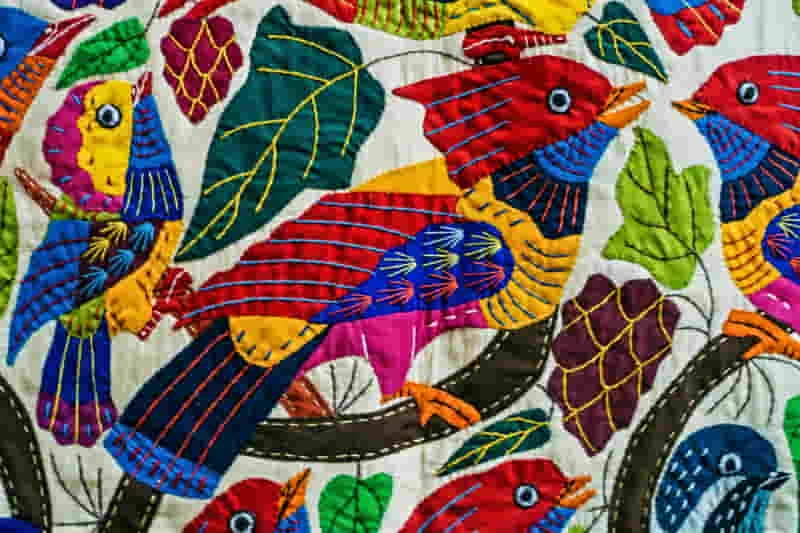



Important reminder that ethical choices in fashion matter and that sustainability should be at the heart of how clothes are made and bought.