Introduction: The Epitome of Textile Luxury
Velvet stands as one of the most recognizable and revered fabrics in textile history, embodying luxury, sophistication, and tactile pleasure in ways that few other materials can match. The term “velvety” means soft, and it takes its meaning from its namesake fabric: velvet. The soft, smooth fabric epitomizes luxury, with its smooth nap and shiny appearance. This distinctive textile has captured human imagination for centuries, from ancient royal courts to modern fashion runways and contemporary interior design.
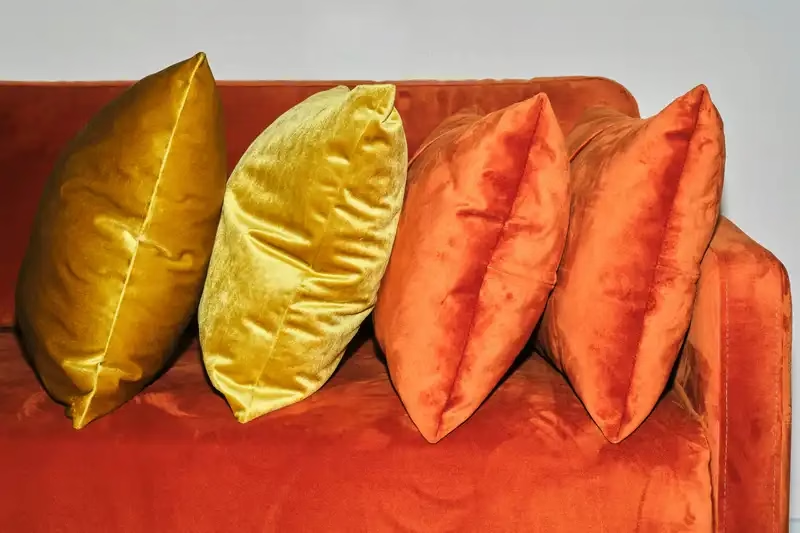
What makes velvet truly extraordinary is not just its sumptuous appearance, but the remarkable engineering that creates its characteristic pile surface. The fabric’s defining feature—its dense, evenly cut pile—results from sophisticated weaving processes that have evolved over millennia while maintaining the fundamental principles that make velvet so distinctive. Each fiber in the pile stands upright, creating a surface that interacts with light in unique ways, producing the lustrous sheen and depth of color that velvet is famous for.
The versatility of velvet extends far beyond its traditional associations with formal wear and luxury furnishings. Modern manufacturing techniques and fiber innovations have created velvet varieties suitable for everything from athletic wear to automotive interiors, while sustainable production methods are making this once exclusively aristocratic fabric more accessible and environmentally responsible.
Understanding velvet requires appreciating both its rich history and its technological complexity. From the ancient silk routes where the finest silk velvets traveled between civilizations, to contemporary laboratories where synthetic fibers are engineered for specific performance characteristics, velvet represents a continuous evolution of human textile achievement.
The Science of Pile: Understanding Velvet’s Unique Structure
The distinctive characteristics that define velvet arise from its pile structure—a three-dimensional textile architecture that creates the fabric’s signature appearance, feel, and performance properties. Understanding this structure is essential to appreciating why velvet behaves differently from conventional flat-woven fabrics and requires specialized manufacturing, care, and application approaches.
Pile Formation and Characteristics
Velvet is characterized by its even pile height, which is usually less than half a centimeter. This uniformity is crucial to velvet’s appearance and performance, as variations in pile height create visual inconsistencies and affect the fabric’s ability to reflect light evenly across its surface.
The pile consists of individual fibers that stand perpendicular to the base fabric, creating a dense forest of fiber ends that interact with light, touch, and environmental conditions in unique ways. These upright fibers create the velvet’s characteristic directional properties—the fabric appears different when viewed from different angles and feels different when stroked in various directions.
The density of the pile—measured in fibers per square inch—directly affects the fabric’s luxury level, durability, and performance characteristics. Higher pile density creates more luxurious appearance and feel but requires more material and more complex manufacturing processes, resulting in higher costs.
Base Fabric Architecture
Beneath the visible pile lies the foundation fabric that anchors the pile fibers and provides structural integrity. This base fabric is typically woven using conventional techniques, often employing plain or twill weaves that provide stability and strength. The relationship between the pile and the base fabric determines many of velvet’s performance characteristics, including durability, dimensional stability, and resistance to pile loss.
The base fabric must be engineered to support the pile under various stress conditions while remaining flexible enough to allow the finished fabric to drape appropriately for its intended applications. This balance requires careful consideration of fiber selection, yarn construction, and weave parameters.
Light Interaction Properties
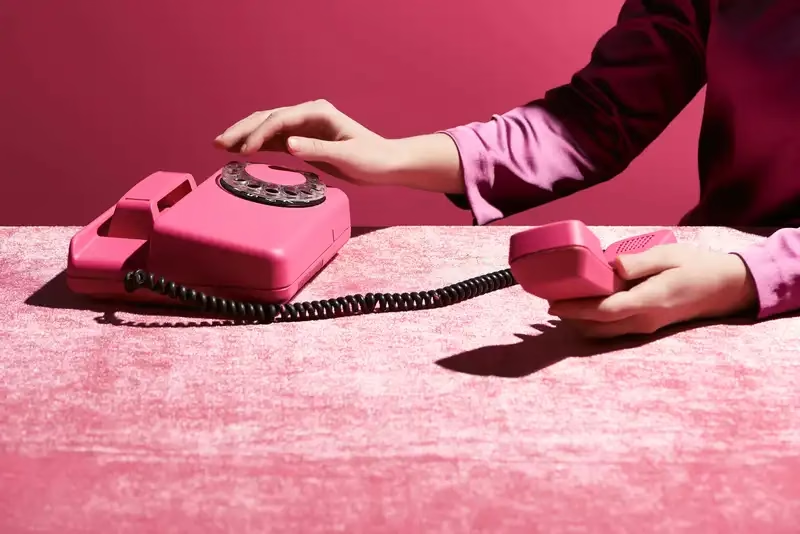
Velvet’s relationship with light creates its most distinctive visual properties. The upright pile fibers act as tiny light guides, capturing and reflecting light in ways that create the fabric’s characteristic luster and depth of color. When pile fibers lie in the same direction, they create smooth, highly reflective surfaces. When they are disturbed or oriented differently, they create variations in light reflection that appear as shading or texture variations.
This light interaction explains why velvet appears to change color when viewed from different angles or when the pile direction is altered through touch or movement. Understanding these optical properties is crucial for applications where consistent appearance is important and for care procedures that maintain the fabric’s visual integrity.
The Art of Double-Weave Manufacturing
The creation of velvet represents one of the most sophisticated processes in textile manufacturing, requiring specialized equipment, precise process control, and considerable technical expertise. The complexity of velvet production historically made it an expensive luxury item, and even modern manufacturing maintains significant technical challenges that distinguish velvet production from conventional fabric manufacturing.
Traditional Double-Cloth Process
Velvet is made on a special loom known as a double cloth, which produces two pieces of velvet simultaneously. This process, known as “face-to-face” weaving, involves creating two separate base fabrics connected by pile yarns that will ultimately form the pile of both pieces. By cutting the pile ends in between the two layers one obtains two separate pile fabrics. With this technique only the cut pile effect can be obtained.
The double-weave process begins with setting up the loom with multiple warp systems: separate warps for each base fabric plus additional warps that will form the connecting pile. As weaving progresses, the pile warps alternate between the two base fabrics, creating loops that connect the two layers. The two pieces are then cut apart to create the fabric’s pile, and the two lengths of fabric are wound on separate take-up rolls.
This cutting process requires extreme precision to ensure uniform pile height across both pieces of fabric. Specialized cutting mechanisms travel along the loom, severing the connecting pile loops at exactly the right position to create even pile surfaces on both resulting fabrics.
Wire Weaving Method
An alternative production method involves weaving over wires inserted during the weaving process. When velvet is woven, wires are woven into the cloth forming loops. The loops are cut with a razor blade sliding on the wire surface to create the pile. This method allows for more precise control of pile height and can accommodate various pile heights within a single fabric.
The wire weaving process typically produces one piece of velvet at a time, making it less efficient than double-weave methods but offering greater flexibility in design and pile characteristics. This method is particularly suited for specialty velvets with varying pile heights or complex patterns.
Modern Manufacturing Innovations
Contemporary velvet manufacturing incorporates advanced technologies that improve efficiency, consistency, and quality while reducing costs. Computer-controlled looms enable precise manipulation of pile formation, while advanced cutting systems ensure uniform pile heights with minimal waste.
The fabric is passed through steam for pile blooming and then heated, this gives bloomed pile. Then the fabric passes through beater to remove any loose fluff. This process may be repeated again in tandem. Then velvet is passed through shearing to cut the surface evenly.
These finishing processes are crucial for achieving the uniform appearance and feel that characterize high-quality velvet. Steam treatment helps the pile fibers achieve their final orientation and density, while shearing ensures perfectly even pile height across the entire fabric surface.
Quality Control and Testing
Modern velvet production incorporates rigorous quality control measures to ensure consistency and performance. Pile height measurements, density assessments, and appearance evaluations are conducted throughout the manufacturing process to identify and correct variations before they affect finished fabric quality.
Advanced testing methods evaluate pile retention, abrasion resistance, and appearance stability under various conditions. These tests help manufacturers optimize production parameters and ensure that finished velvet meets specifications for intended applications.
Fiber Varieties: From Silk Heritage to Modern Innovations
The character of velvet depends fundamentally on the fibers used in its construction, with each fiber type contributing unique properties that affect appearance, performance, durability, and cost. Understanding these fiber characteristics enables informed selection of appropriate velvet types for specific applications and helps explain the wide range of velvet qualities and prices available in the market.
Silk Velvet: The Golden Standard
Silk remains the premier fiber for luxury velvet production, providing unmatched luster, drape, and tactile quality. A very heavy and quite expensive velvet made either entirely with silk or having silk content creates fabrics with exceptional light-reflecting properties and sophisticated appearance.
Silk’s natural protein structure gives it unique properties for velvet applications. The fiber’s natural luster enhances the pile’s light-reflecting capabilities, creating depth and richness that synthetic fibers struggle to match. Silk’s fine diameter allows for dense pile construction while maintaining softness and flexibility.
The molecular structure of silk provides excellent dye affinity, enabling rich, saturated colors that maintain their intensity over time. Silk velvet’s ability to hold deep, complex colors contributes significantly to its luxury appeal and explains its continued preference for high-end applications.
However, silk velvet presents challenges including high cost, sensitivity to moisture and heat, and specialized care requirements. The fiber’s susceptibility to water spotting and its tendency to show wear patterns require careful handling and maintenance.
Cotton Velvet: Accessible Luxury
Cotton velvet offers many of silk’s desirable characteristics at more accessible price points. Cotton’s natural breathability and moisture absorption create comfortable fabrics suitable for garments and furnishings in various climates. The fiber’s structure allows for good dye uptake, producing rich colors with reasonable colorfastness.
This is a cotton fabric with a pile similar to velvet, referring to cotton velveteen, which uses a different construction method but achieves similar aesthetic results. True cotton velvet, manufactured using the double-weave process, provides pile characteristics closer to traditional silk velvet.
Cotton velvet’s durability exceeds that of silk in many applications, particularly for upholstery and heavy-use items. The fiber’s strength and abrasion resistance make it suitable for applications where silk would be impractical or cost-prohibitive.
Care requirements for cotton velvet are generally less stringent than for silk, though the pile structure still requires attention to maintain appearance and prevent crushing or matting.
Synthetic Velvet: Performance and Innovation
Modern synthetic fibers have revolutionized velvet production, offering performance characteristics that natural fibers cannot match while often providing cost advantages. Polyester, rayon, nylon, and specialty synthetic fibers each contribute unique properties to velvet construction.
Polyester Velvet: Polyester provides excellent durability, fade resistance, and dimensional stability. usually of polyester refers to modern panne velvet varieties that utilize polyester’s properties for specific performance characteristics. Polyester’s resistance to moisture, mildew, and many chemicals makes it suitable for challenging applications including outdoor use and commercial installations.
Rayon Velvet: Rayon combines some characteristics of natural fibers with synthetic performance features. The fiber’s silk-like luster and drape provide luxury appearance while offering better cost performance than silk. Rayon’s dye affinity produces rich colors comparable to natural fibers.
Specialty Synthetics: Advanced synthetic fibers designed specifically for textile applications offer targeted performance characteristics. These might include enhanced UV resistance, antimicrobial properties, or improved environmental stability for specialized applications.
Blended Compositions
Modern velvet increasingly utilizes fiber blends that combine the best characteristics of different materials while minimizing individual fiber limitations. Cotton-polyester blends provide comfort and breathability with enhanced durability and easier care. Silk-synthetic blends offer luxury appearance with improved performance and more accessible pricing.
Velour is a blend of cotton and polyester knit. It is stretchy and popular for making sportswear and dance clothing. While technically different from true velvet, velour demonstrates how fiber blending creates materials optimized for specific applications.
Blend ratios significantly affect fabric characteristics, with higher natural fiber content typically providing better appearance and feel, while higher synthetic content offers improved performance and durability. Understanding these relationships helps in selecting appropriate fabrics for specific requirements.
Types and Varieties: A Spectrum of Textures and Applications
The velvet family encompasses numerous distinct varieties, each engineered or processed to achieve specific aesthetic effects, performance characteristics, or application suitability. Understanding these variations helps explain velvet’s versatility and guides appropriate selection for different uses.
Crushed Velvet: Textural Drama
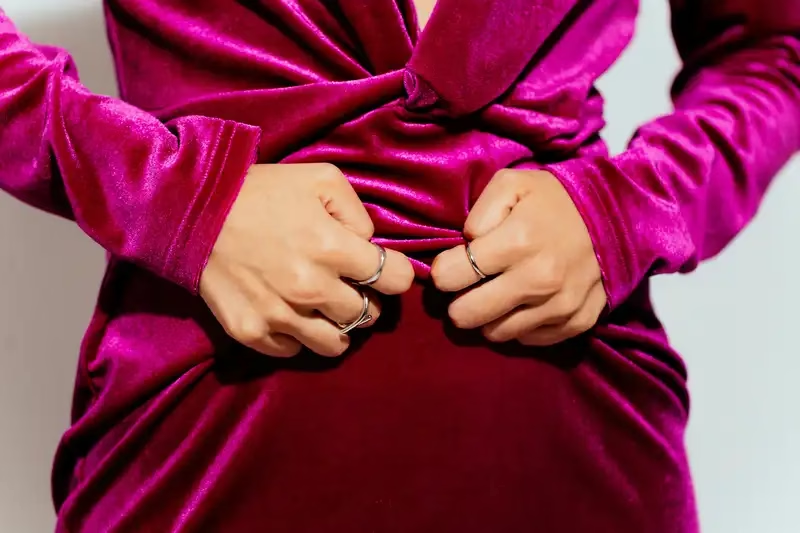
Crushed velvet captivates with its soft, crinkled texture. This is achieved by twisting the fabric during production. Crushed velvet has a irregular moiré aspect. This is due to a fabrication process that twists the fabric and applies heavy pressure to flatten the pile so the nap is facing different directions.
This process creates fabric with varying pile directions across its surface, resulting in areas that reflect light differently and create the characteristic textured appearance. Produced either by twisting the fabric while it’s wet or by pressing the nap in different directions, crushed velvet offers visual interest and texture that works particularly well in theatrical, evening wear, and dramatic interior design applications.
The irregular surface texture of crushed velvet helps camouflage wear and soil, making it practical for applications where maintenance might be challenging. However, the deliberately disturbed pile structure may be less durable than smooth velvet varieties under heavy use conditions.
Panne Velvet: Directional Elegance
Panne velvet is a type of crushed velvet where the pile has been flattened in the same direction. a type of crushed velvet produced by forcing the pile in a single direction by applying heavy pressure. This creates fabric with highly directional properties—it appears dramatically different when viewed from different angles.
Traditional panne velvet creates extremely lustrous surfaces with almost mirror-like reflection properties when viewed from the optimal angle. However, since the 1970s, “panne velvet” as used in ordinary fabric stores has referred to a pile knit, perhaps better called a velour, with a short pile that falls in many directions; usually of polyester.
Modern panne velvet varieties often incorporate stretch properties, making them suitable for form-fitting garments while maintaining the distinctive directional luster that characterizes this velvet type.
Devoré (Burnout) Velvet: Chemical Artistry
Devore velvet represents one of the most sophisticated velvet varieties, created through chemical processes that selectively remove pile fibers in specific patterns. This technique, also known as burnout velvet, creates fabrics with areas of pile alternating with sheer or semi-transparent areas where the pile has been chemically dissolved.
The devoré process requires fabrics constructed with different fiber types that respond differently to chemical treatments. Typically, the base fabric uses fibers resistant to the chemical process, while the pile uses fibers that dissolve when exposed to specific chemicals. This allows precise pattern creation through controlled chemical application.
Devoré velvet offers unique design possibilities, combining the luxury of velvet pile with the transparency and lightness of sheer fabrics within a single material. This makes it particularly valuable for evening wear, decorative applications, and situations where both opacity and transparency are desired.
Stretch Velvet: Performance Meets Luxury
Stretch velvet: The material has a stretchy texture because it incorporates spandex. Stretch velvet is often used for sports applications and form-fitting garments. Modern panne velvet is a type of stretch velvet that has a lot of body and drapes well.
The incorporation of elastomeric fibers like spandex transforms velvet from a traditionally structured fabric into a performance material suitable for active wear, dance costumes, and close-fitting fashion. This is a type of crushed velvet with stretch. In this fabric, heavy pressure is applied to the pile in one direction.
Stretch velvet maintains velvet’s characteristic appearance and feel while providing the freedom of movement required for active applications. The challenge in stretch velvet production lies in maintaining pile integrity and appearance while accommodating the dimensional changes that occur during stretching.
Specialized Velvet Varieties
Embossed Velvet: This velvet is embossed with words, symbols, or other shapes. It is also known as printed velvet. You can feel embossing when you touch the velvet fabric. This variety uses mechanical or chemical processes to create raised patterns within the pile surface, offering three-dimensional design possibilities.
Ciselé Velvet: a particularly luxurious type of velvet woven with piles of differing heights to create a pattern. It is one of the oldest known velvet weaving techniques. This sophisticated variety incorporates varying pile heights during the weaving process to create subtle patterns and textures.
Lyons Velvet: Lyons velvet is a heavy, densely woven, and stiff variety traditionally associated with high-end upholstery and formal applications. Named after the French city of Lyon, historically important in luxury textile production, this velvet type emphasizes durability and formal appearance.
Each velvet variety serves specific market needs and application requirements, demonstrating the fabric’s adaptability to diverse performance and aesthetic demands. Understanding these distinctions helps ensure appropriate fabric selection for intended uses.
Applications Across Industries: From Fashion to Furnishings
Velvet’s unique combination of luxury appearance, distinctive texture, and versatile performance characteristics has established its importance across numerous industries and applications. Each application category takes advantage of different aspects of velvet’s properties while presenting specific requirements that influence fiber selection, construction methods, and finishing treatments.
Fashion and Apparel: Timeless Elegance
Evening and Formal Wear Velvet’s association with luxury and sophistication makes it a natural choice for evening gowns, formal jackets, and special occasion garments. The fabric’s ability to create rich, deep colors combined with its light-reflecting properties produces garments with exceptional visual impact under artificial lighting conditions common in formal settings.
The drape characteristics of different velvet types affect their suitability for various garment styles. Silk velvet’s fluid drape works well for flowing gowns and draped designs, while cotton velvet’s more structured hand suits tailored jackets and fitted garments. Stretch velvet varieties enable form-fitting designs that maintain comfort and freedom of movement.
Contemporary Fashion Applications Modern fashion increasingly incorporates velvet into everyday wear, moving beyond its traditional formal associations. Velvet blazers, pants, and accessories have become mainstream fashion items, supported by advances in velvet manufacturing that provide better durability and easier care characteristics.
The development of washable velvet varieties has significantly expanded fashion applications by addressing traditional concerns about maintenance difficulty and cost. Performance velvets with moisture-wicking properties or antimicrobial treatments enable use in active wear and casual garments previously unsuitable for velvet construction.
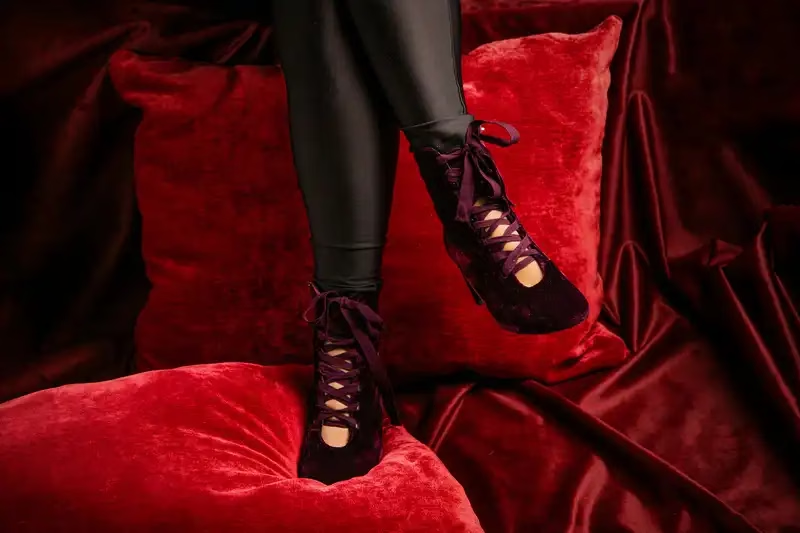
Accessories and Details Velvet’s rich texture and color saturation make it valuable for fashion accessories including shoes, handbags, jewelry displays, and decorative trims. Small-scale applications can incorporate expensive velvet varieties like silk without prohibitive cost implications while providing significant aesthetic impact.
Interior Design and Furnishing
Upholstery Applications Both ‘wire weaving’ and ‘face-to-face’ weaving are used for the manufacturing of upholstery and furnishing velvets, indicating the fabric’s established importance in interior design. Velvet upholstery provides luxury appearance combined with comfort and durability appropriate for residential and commercial applications.
The pile structure of velvet offers natural cushioning properties that enhance seating comfort while providing visual richness that synthetic alternatives struggle to match. However, upholstery velvet must be engineered for durability under repeated compression and abrasion, requiring careful fiber selection and construction optimization.
Drapery and Window Treatments Velvet’s light-absorbing properties and visual weight make it excellent for drapery applications, particularly in formal settings or where light control is important. Heavy velvet draperies provide thermal insulation and acoustic benefits while creating dramatic architectural effects.
The way velvet interacts with light becomes particularly important in drapery applications, where the fabric’s directional properties can create varying effects as natural light conditions change throughout the day. Understanding these characteristics helps in planning installations that maintain consistent appearance.
Decorative Elements Velvet’s tactile appeal and visual richness make it valuable for decorative pillows, throws, wall coverings, and specialty applications like jewelry displays or gift packaging. These applications often utilize smaller quantities of premium velvet varieties to achieve maximum aesthetic impact.
Theatrical and Entertainment Industry
Costume Design Velvet’s dramatic visual properties and rich color capabilities make it essential for theatrical costume design. The fabric’s behavior under stage lighting creates effects that cannot be achieved with other materials, while its historical associations support period costume accuracy.
Different velvet varieties serve specific costume requirements: silk velvet for aristocratic characters requiring authentic luxury appearance, stretch velvet for performance costumes requiring movement freedom, and synthetic varieties for durability under demanding performance conditions.
Set Design and Props Velvet’s light-absorbing properties and rich appearance make it valuable for theatrical set design, particularly for creating formal or intimate environments. The fabric’s ability to reduce light reflection helps control unwanted reflections and glare in stage lighting scenarios.
Specialty and Technical Applications
Automotive Interiors Modern automotive applications increasingly incorporate velvet or velvet-like materials for luxury vehicle interiors. These applications require specialized formulations that provide velvet’s aesthetic appeal while meeting automotive performance standards for durability, flame resistance, and environmental stability.
Automotive velvet must withstand extreme temperature variations, UV exposure, and wear patterns significantly different from traditional textile applications. Advanced synthetic fibers and specialized treatments enable velvet characteristics in these demanding environments.
Medical and Healthcare Specialized velvet applications in healthcare take advantage of the fabric’s softness and comfort properties while incorporating performance features like antimicrobial treatments and enhanced cleanability. These applications might include patient comfort items, therapeutic supports, or medical device interfaces.
Packaging and Display Velvet’s luxury associations and protective properties make it valuable for high-end packaging applications, particularly for jewelry, luxury goods, and collectibles. The fabric’s cushioning properties help protect delicate items while creating appropriate presentation environments.
Care and Maintenance: Preserving Velvet’s Beauty
Proper care is essential for maintaining velvet’s distinctive appearance, texture, and performance characteristics throughout its useful life. The unique pile structure that creates velvet’s desirable properties also makes it more vulnerable to damage from improper handling, cleaning, or storage than conventional flat-woven fabrics.
Understanding Velvet’s Vulnerabilities
Pile Crushing and Flattening The upright pile structure that defines velvet can be permanently damaged by pressure, heat, or moisture. Once pile fibers are crushed or flattened, they may not recover their original orientation, creating permanent appearance changes. Understanding activities and conditions that can cause pile damage helps prevent irreversible fabric deterioration.
Weight, pressure, and compression can gradually flatten pile over time, particularly in frequently used areas like chair arms or cushion centers. This natural wear process can be minimized through proper use practices and periodic maintenance procedures that help restore pile orientation.
Directional Sensitivity Velvet’s directional properties mean that different areas of the same fabric can appear dramatically different if pile orientation varies. This characteristic requires special attention during cleaning, handling, and storage to maintain uniform appearance across the entire fabric surface.
Moisture Sensitivity Many velvet varieties, particularly those containing natural fibers, are sensitive to moisture and can develop permanent water spots or rings if exposed to liquids. This sensitivity affects both cleaning procedures and storage requirements, particularly in humid environments.
Professional vs. Home Care
When Professional Care is Essential Valuable velvet items, those with significant soil or stains, or garments with complex construction should generally receive professional care. Professional cleaners have specialized equipment and expertise for handling velvet’s unique requirements while minimizing damage risks.
Silk velvet almost always requires professional care due to the fiber’s sensitivity to moisture and chemicals. Even minor cleaning mistakes can cause permanent damage to expensive silk velvet items.
Safe Home Care Practices Light maintenance and minor spot cleaning can often be performed at home using appropriate techniques and tools. Understanding which home care procedures are safe and which should be avoided helps maintain velvet between professional cleanings.
Regular brushing with appropriate brushes helps maintain pile orientation and removes surface soil before it becomes embedded in the fabric structure. Specialized velvet brushes or soft-bristled brushes used in the correct direction help restore pile appearance.
Cleaning Techniques and Considerations
Dry Cleaning Preferences Most velvet varieties respond better to dry cleaning than wet cleaning methods. Dry cleaning solvents clean effectively without introducing moisture that can damage pile structure or cause color bleeding. However, not all dry cleaning processes are appropriate for all velvet types.
Communication with professional cleaners about specific velvet characteristics and any special treatments or finishes helps ensure appropriate cleaning procedures. Different velvet varieties may require different solvents or processes for optimal results.
Spot Cleaning Procedures Immediate attention to spills and spots often prevents permanent staining while minimizing cleaning intervention required. Blotting rather than rubbing helps remove liquids without disturbing pile structure or spreading stains.
Different stain types require different treatment approaches, and improper spot cleaning can cause more damage than leaving stains for professional treatment. Understanding which stains can be safely treated at home and which require professional intervention helps prevent cleaning damage.
Storage and Preservation
Proper Storage Techniques Velvet storage requires attention to pile protection and environmental conditions. Hanging storage with adequate support prevents crushing while allowing air circulation. Folding should be avoided when possible, as creases can permanently damage pile structure.
Climate control helps prevent moisture damage, mildew growth, and dimensional instability. Cedar blocks or other natural moth deterrents protect natural fiber velvets from insect damage without introducing chemicals that might affect fabric properties.
Long-term Preservation Museum-quality storage techniques may be appropriate for valuable or historical velvet items. This might include acid-free storage materials, controlled environments, and periodic inspection and maintenance procedures.
Understanding which preservation techniques are appropriate for specific velvet varieties and applications helps ensure long-term fabric integrity while avoiding preservation methods that might cause damage.
Preventive Care Strategies
Environmental Protection Protecting velvet from environmental damage extends its useful life and maintains appearance. UV protection prevents color fading and fiber degradation, while humidity control prevents dimensional changes and biological growth.
Usage Considerations Understanding how different activities affect velvet helps minimize wear and damage. Rotating usage patterns, using protective covers during high-risk periods, and implementing appropriate handling procedures all contribute to extended fabric life.
Regular Maintenance Schedules Establishing regular maintenance routines helps identify developing problems before they become serious while maintaining fabric appearance through preventive care rather than corrective treatments.
Sustainability and Environmental Impact
The luxury textile industry, including velvet production, faces increasing scrutiny regarding environmental impact and sustainability practices. Understanding these issues helps consumers, designers, and manufacturers make informed decisions that balance performance requirements with environmental responsibility.
Traditional Production Challenges
Resource Intensity This complicated process meant that velvet was expensive to make before industrial power looms became available, and well-made velvet remains a fairly costly fabric. The complexity of velvet production inherently requires significant resources including energy, materials, and specialized equipment.
The double-weave process that creates traditional velvet is inherently less material-efficient than single-layer fabric production, as it requires essentially twice the amount of pile fiber to create the same fabric area. This material intensity affects both cost and environmental impact.
Chemical Usage Velvet finishing processes often involve chemicals for pile treatments, dye fixation, and performance enhancement. These chemicals require careful handling and disposal to minimize environmental impact while ensuring worker safety and product quality.
Traditional fiber production, particularly for natural fibers like silk, involves significant resource usage and environmental impact. Silk production requires mulberry cultivation, silkworm rearing, and processing steps that affect land use, water consumption, and chemical usage.
Sustainable Fiber Innovations
Recycled and Upcycled Materials Advanced recycling technologies enable creation of high-quality synthetic fibers from post-consumer waste materials. Recycled polyester velvet can achieve performance levels comparable to virgin material while reducing waste streams and energy consumption.
Upcycling initiatives convert textile waste into new velvet products, reducing the need for virgin materials while addressing waste management challenges in the textile industry.
Bio-based Alternatives Research into bio-based synthetic fibers offers potential alternatives to petroleum-derived materials. New materials derived from agricultural waste, algae, or other renewable sources could provide velvet characteristics while reducing environmental impact.
Responsibly Sourced Natural Fibers Sustainable silk production initiatives emphasize environmental stewardship, fair labor practices, and reduced chemical usage. Organic cotton production for cotton velvet eliminates synthetic pesticides and fertilizers while promoting soil health and biodiversity.
Production Process Improvements
Energy Efficiency Modern velvet manufacturing increasingly emphasizes energy efficiency through process optimization, equipment upgrades, and renewable energy integration. These improvements reduce the carbon footprint of velvet production while often reducing manufacturing costs.
Water Management Advanced manufacturing processes minimize water usage through closed-loop systems, water recycling, and process modifications that reduce water requirements. This is particularly important in regions where water resources are limited or where textile production competes with other water uses.
Waste Reduction Optimization of cutting processes and manufacturing efficiency reduces material waste while improving cost performance. Advanced planning systems minimize off-cuts and enable better utilization of expensive velvet materials.
End-of-Life Considerations
Recyclability Design Designing velvet products for end-of-life recyclability requires consideration of fiber combinations, construction methods, and finishing treatments that facilitate material recovery. Mono-material designs or easily separable constructions enable more effective recycling.
Durability and Longevity Creating velvet products with extended useful lives reduces replacement frequency and total environmental impact. Higher-quality materials and construction may have higher initial environmental costs but lower total impact through extended use periods.
Disposal Options Understanding appropriate disposal methods for different velvet types helps ensure responsible end-of-life handling. Some velvet varieties can be composted under appropriate conditions, while others require specialized recycling or disposal procedures.
Color Theory and Aesthetic Properties
Velvet’s unique interaction with light and color creates aesthetic properties that distinguish it from all other fabric types. Understanding these properties helps designers, manufacturers, and consumers optimize velvet’s visual impact while making informed decisions about color selection, lighting considerations, and application appropriateness.
Light Interaction and Color Perception
Pile Direction Effects The directional nature of velvet pile creates dramatic variations in color appearance depending on viewing angle and pile orientation. When pile leans toward the viewer, colors appear deep and saturated. When pile leans away, colors appear lighter and more reflective, sometimes with a silvery or metallic quality.
This directional property affects how velvet should be used in applications where consistent color appearance is important. Understanding pile direction and its visual effects helps predict how velvet will appear in different lighting conditions and viewing angles.
Light Absorption and Reflection Velvet’s pile structure creates complex light interaction patterns that affect color perception and visual impact. The dense arrangement of upright fibers creates multiple surfaces for light interaction, resulting in depth and richness that flat fabrics cannot achieve.
Different fiber types interact with light differently, affecting color appearance and intensity. Silk’s natural luster enhances light reflection, while cotton’s matte finish creates softer color effects. Synthetic fibers can be engineered for specific light interaction properties.
Color Selection Considerations
Psychological Impact Velvet’s rich texture amplifies color psychology effects, making color selection particularly important for intended emotional and aesthetic responses. Deep, saturated colors available in velvet create dramatic, luxurious effects appropriate for formal or intimate environments.
Light colors in velvet can appear ethereal and sophisticated, while dark colors create richness and depth that other fabrics struggle to match. Understanding these psychological effects helps guide color selection for specific applications and environments.
Practical Considerations Light-colored velvets show soil and wear more readily than dark colors, affecting maintenance requirements and useful life in different applications. However, light colors can make spaces appear larger and brighter, providing aesthetic benefits that may justify additional maintenance.
Dark velvets hide wear and soil better but may absorb heat and appear to reduce space size. These practical considerations must be balanced against aesthetic preferences and performance requirements.
Color Coordination and Design
Interior Design Applications Velvet’s rich color properties make it effective for creating focal points and adding visual weight to interior design schemes. Understanding how velvet colors interact with other materials, lighting, and spatial elements helps create cohesive design solutions.
The way velvet appears under different lighting conditions affects color coordination decisions. Natural daylight, incandescent lighting, and LED lighting can all create different color appearances in the same velvet fabric.
Fashion Coordination Velvet’s color richness and texture make it effective for creating visual interest in fashion applications while requiring careful consideration of color harmony and proportion. Understanding how velvet coordinates with other fabric types and textures helps create successful fashion designs.
Future Innovations and Trends
The velvet industry continues to evolve through technological advances, changing consumer preferences, and environmental considerations. Understanding emerging trends helps predict future developments and identify opportunities for innovation in both product development and application approaches.
Smart Textile Integration
Electronic Integration Research into incorporating electronic components into velvet structures opens possibilities for heated velvet, color-changing properties, or health monitoring capabilities. The challenge lies in maintaining velvet’s distinctive texture and appearance while accommodating electronic components.
Conductive fibers woven into velvet pile or base structures could enable touch-sensitive surfaces, LED integration, or thermal regulation without compromising the fabric’s luxury characteristics. These innovations could revolutionize automotive interiors, healthcare applications, and interactive design installations.
Responsive Materials Phase change materials incorporated into velvet construction could provide automatic temperature regulation, making the fabric more comfortable across varying environmental conditions. Shape memory fibers might enable velvet that automatically maintains optimal pile orientation despite use and handling.
Advanced Manufacturing Technologies
3D Weaving Innovations Emerging three-dimensional weaving technologies could enable creation of velvet with varying pile heights, integrated patterns, or performance zones within single fabric pieces. These advances could eliminate the need for separate finishing processes while creating more complex and functional velvet varieties.
Precision Manufacturing Laser cutting and automated handling systems could improve consistency and reduce waste in velvet production. Advanced monitoring systems could provide real-time quality control, ensuring uniform pile characteristics across entire fabric lengths.
Sustainable Production Methods New manufacturing approaches emphasizing reduced water usage, renewable energy, and closed-loop chemical systems could significantly reduce velvet’s environmental impact while maintaining quality standards. Bio-based dyes and finishing treatments offer alternatives to traditional chemical processes.
Market Evolution and Consumer Trends
Accessible Luxury Technological advances are making velvet characteristics more accessible through improved synthetic fibers and more efficient manufacturing processes. This democratization of velvet enables broader application while maintaining quality standards.
Performance Enhancement Consumer demand for fabrics that combine luxury appearance with practical performance drives development of velvet varieties with enhanced stain resistance, antimicrobial properties, UV protection, or moisture management capabilities.
Customization Capabilities Digital manufacturing technologies enable cost-effective custom velvet production, allowing personalized patterns, colors, or performance characteristics without the traditional minimum order quantities required for specialty fabrics.
Selection Guide: Choosing the Right Velvet
Selecting appropriate velvet requires systematic consideration of multiple factors including intended application, performance requirements, aesthetic preferences, budget constraints, and maintenance capabilities. This comprehensive approach helps ensure that velvet choices meet both immediate needs and long-term expectations.
Application-Based Selection
Fashion and Apparel Considerations Garment type, wearing conditions, and care requirements significantly influence velvet selection. Evening wear may prioritize appearance and luxury feel over durability, while everyday clothing requires fabrics that withstand regular use and cleaning.
Stretch requirements, drape characteristics, and weight preferences affect both comfort and appearance in fashion applications. Understanding how different velvet varieties behave in garment construction helps predict fit, comfort, and longevity.
Interior Design Applications Upholstery applications require velvet with appropriate durability ratings, while decorative uses may prioritize appearance over performance. Traffic levels, environmental conditions, and maintenance capabilities all influence selection decisions.
Light conditions, room size, and coordination with other materials affect color and texture selection for interior applications. Understanding how velvet interacts with different lighting types helps ensure satisfactory appearance across various conditions.
Performance Requirements
Durability Expectations High-traffic applications require velvet with superior abrasion resistance and pile retention characteristics. Understanding expected use patterns helps identify appropriate performance levels while avoiding over-specification that increases costs unnecessarily.
Environmental factors including humidity, temperature variations, and UV exposure affect velvet performance and longevity. Selecting materials appropriate for specific environmental conditions helps ensure satisfactory service life.
Maintenance Considerations Care requirements significantly affect total ownership costs and user satisfaction. Understanding maintenance demands helps balance initial costs against long-term care expenses and convenience factors.
Professional cleaning requirements, spot cleaning capabilities, and storage needs all influence practical suitability for specific applications and users.
Budget and Value Optimization
Initial Cost vs. Lifecycle Value Higher-quality velvet may provide better value through extended useful life, reduced maintenance costs, and sustained appearance. Understanding the relationship between initial investment and total ownership costs helps optimize budget allocation.
Quality Indicators Pile density, uniformity, fiber quality, and construction methods all affect velvet performance and longevity. Understanding quality indicators helps evaluate options and justify premium pricing for superior products.
Summary
Velvet represents one of textile manufacturing’s most sophisticated achievements, combining complex production processes with luxurious aesthetic properties that have captivated humans for centuries. From its intricate double-weave construction to its unique light-interacting pile structure, velvet demonstrates the remarkable possibilities that emerge when advanced technology meets artistic vision.
The evolution of velvet continues through innovative fibers, sustainable production methods, and expanding applications that extend far beyond its traditional luxury associations. Modern velvet varieties serve diverse performance requirements while maintaining the distinctive characteristics that make this fabric so desirable across multiple industries and applications.
Understanding velvet requires appreciating both its technical complexity and its aesthetic properties. The pile structure that creates velvet’s signature appearance also determines its care requirements, performance characteristics, and application suitability. This knowledge enables informed decisions that optimize velvet’s benefits while managing its unique requirements.
As the textile industry continues to evolve toward greater sustainability and performance integration, velvet adapts through new materials, improved manufacturing processes, and innovative applications. These developments ensure that velvet will remain relevant and valuable for future generations while addressing contemporary concerns about environmental responsibility and functional performance.
The future of velvet lies in successfully balancing traditional luxury characteristics with modern performance requirements and environmental considerations. This evolution promises to expand velvet’s applications while preserving the distinctive qualities that have made it one of the world’s most cherished luxury textiles.
Citations
- Textile Research Journal – Pile Fabric Manufacturing
- International Textile and Apparel Association – Velvet Production Standards
- Journal of the Textile Institute – Velvet Fiber Analysis
- Fashion and Textiles – Sustainable Velvet Production
- Textile World Magazine – Modern Velvet Manufacturing
FAQ – Velvet Fabrics
A: Velvet is created through a double-weave process that cuts pile loops to create an even, upright pile surface. Velour is typically a knitted fabric with a brushed surface that creates a velvet-like appearance. True velvet generally has a denser, more uniform pile and higher quality appearance than velour.
A: Most velvet should not be machine washed, as the agitation and moisture can permanently damage the pile structure. Some modern synthetic velvets are designed for machine washing, but always check care labels and test inconspicuous areas first. When in doubt, professional dry cleaning is safer.
A: Velvet’s pile consists of upright fibers that reflect light differently depending on their orientation. When pile leans toward you, colors appear deep and rich. When pile leans away, colors appear lighter and more reflective. This directional property is characteristic of quality velvet.
A: Pressure, heat, and moisture can cause velvet pile to flatten permanently. Once the upright pile structure is compromised, the fabric loses its characteristic appearance and texture. This is why velvet requires careful handling and appropriate storage methods.
A: Silk velvet offers superior luster, drape, and luxury appearance that synthetic alternatives struggle to match. However, it also requires more careful handling and professional cleaning. The choice depends on your specific application, budget, and willingness to provide appropriate care.
A: Crushed velvet is deliberately processed to create its textured appearance, so “uncrushing” it would change its intended character. However, accidentally flattened regular velvet can sometimes be restored through professional steaming or specialized brushing techniques, though results vary.
A: Professional steaming is the safest method for removing wrinkles from velvet. Never iron directly on velvet, as this will flatten the pile permanently. If professional treatment isn’t available, hanging in a steamy bathroom may help minor wrinkles, but avoid getting the fabric wet.
A: Quality velvet has dense, even pile that stands upright uniformly across the fabric surface. The pile should feel soft and plush without excessive shedding. Higher-quality velvet also shows more dramatic color variations when pile direction changes, indicating proper pile construction and fiber quality.