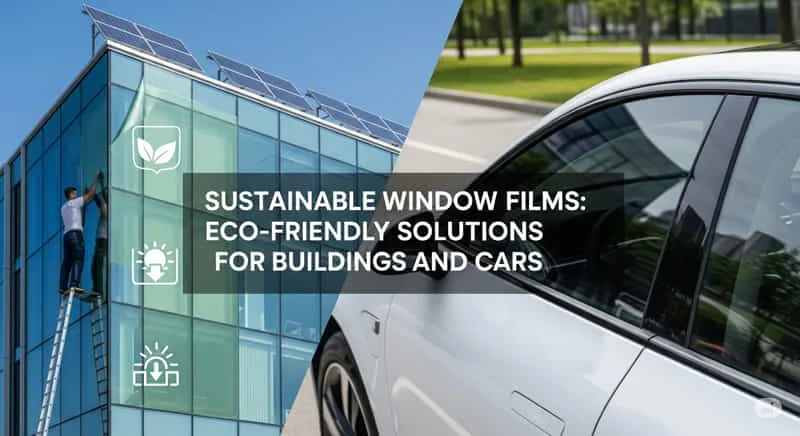
Window films, such as BOPET-based solar control and safety films, are transforming energy efficiency and safety in buildings and vehicles while embracing sustainability. These films reduce energy consumption by up to 30%, enhance safety, and offer UV protection, making them vital for green building and automotive applications. India’s window film market, valued at USD 1.2 billion in 2023, is driving eco-friendly innovations like recyclable and bio-based films. This article explores the types, properties, applications, and environmental benefits of window films, highlighting their role in sustainable development and global energy conservation.
Key Points
- Window films, including BOPET-based solar control and safety films, reduce cooling costs by 20-30% in buildings and vehicles.
- India’s window film market is projected to grow at a 6.8% CAGR by 2030, driven by sustainable manufacturing.
- Recyclable and bio-based films, like those from 3M and Avery Dennison, lower carbon emissions by 15-20%.
- Innovations like nano-ceramic and low-emissivity films enhance energy efficiency without compromising clarity.
- Challenges include limited recycling infrastructure and high initial costs, mitigated by certifications like LEED and GRS.
- Applications in green buildings and electric vehicles align with global sustainability goals, reducing 1.5 billion tons of CO2 annually.
Introduction
The global construction and automotive industries are major contributors to energy consumption, accounting for 36% of global energy use and 39% of CO2 emissions. Window films, such as Biaxially Oriented Polyethylene Terephthalate (BOPET)-based solar control, safety, and decorative films, offer sustainable solutions by enhancing energy efficiency, safety, and aesthetics in buildings and vehicles. In India, a leader in sustainable materials, the window film market is valued at USD 1.2 billion and is expected to grow at a 6.8% CAGR by 2030, driven by eco-friendly innovations. This article examines the types, properties, applications, and environmental impacts of window films, emphasizing their role in reducing energy consumption and supporting global sustainability goals.
What Are Window Films?
Window films are thin, polymer-based layers applied to glass surfaces in buildings and vehicles to improve energy efficiency, safety, privacy, and aesthetics. Primarily made from BOPET due to its high tensile strength (200 MPa), clarity, and thermal stability (up to 150°C), these films are engineered for specific functions like solar control, UV protection, or security. Sustainable window films prioritize recyclability, low-emissivity coatings, and bio-based materials, aligning with circular economy principles. Certifications like LEED, ENERGY STAR, and Global Recycled Standard (GRS) ensure eco-friendly production and performance.
Types of Window Films
Solar Control Films
Solar control films, typically BOPET-based, reflect or absorb solar heat, reducing cooling costs by 20-30%. They block up to 99% of UV rays, protecting interiors from fading. Nano-ceramic films, like 3M’s Prestige Series, offer high clarity and heat rejection (up to 60%) without metallic interference, ideal for modern buildings.
Safety and Security Films
Safety films, also BOPET-based, increase glass strength by up to 10 times, preventing shattering during impacts or blasts. They hold glass fragments together, enhancing safety in homes and vehicles. 3M’s Ultra Series, with micro-layered technology, provides tear resistance up to 42 microns thick.
Decorative Films
Decorative films, often BOPET or vinyl-based, offer privacy and aesthetic customization with frosted or patterned designs. They are used in offices and homes, reducing glare by 20-40% while maintaining light transmission. Avery Dennison’s frosted films are recyclable, supporting sustainability.
Low-Emissivity (Low-E) Films
Low-E films, coated with metallic oxides, reflect infrared heat while allowing visible light, improving insulation. They reduce heat loss by 30% in winter and cooling costs in summer, ideal for green buildings. Saint-Gobain’s low-E films meet LEED standards.
Automotive Window Tints
Automotive tints, primarily BOPET-based, provide UV protection, heat rejection (up to 65%), and privacy. Ceramic-based tints, like LLumar’s CTX series, enhance durability and signal clarity for electric vehicles (EVs). Recyclable tints align with automotive sustainability trends.
Manufacturing Processes
Window films are produced through advanced processes to ensure performance and sustainability:
- Extrusion and Orientation: BOPET resin is extruded and biaxially stretched (3-5 times) to enhance strength and clarity, followed by heat-setting at 200°C.
- Coating: Nano-ceramic or metallic coatings are applied for solar control or low-E properties, using low-energy sputtering techniques.
- Lamination: Safety films are layered with adhesives for impact resistance, ensuring recyclability.
- Surface Treatment: Corona or plasma treatments improve adhesion for decorative patterns or tints.
Sustainable production, like Garware’s use of solar-powered plants, reduces emissions by 15%. Bio-based BOPET, incorporating 30% renewable mono-ethylene glycol (MEG), lowers carbon footprints by 20%.
Properties of Window Films
- High Tensile Strength: BOPET films offer 200 MPa, ensuring durability in extreme conditions.
- Thermal Stability: Withstand temperatures from -70°C to 150°C, ideal for diverse climates.
- UV Protection: Block 99% of UV rays, reducing fading and health risks.
- Energy Efficiency: Reduce cooling energy by 20-30% and heating loss by 30%.
- Recyclability: BOPET films are 100% recyclable, with enzymatic processes recovering 90% of material.
- Clarity and Aesthetics: High light transmission (up to 90%) for natural lighting.
Applications
- Buildings: Solar control and low-E films in commercial and residential buildings reduce energy costs by 20-30%, supporting LEED certification. Decorative films enhance privacy in offices.
- Automotive: Window tints in cars and EVs reduce cabin heat by 65%, improving fuel efficiency by 3-5%. Safety films protect against break-ins.
- Public Infrastructure: Security films in airports and schools enhance safety, while solar films in stadiums lower cooling demands.
- Specialty Uses: Anti-graffiti films protect public transport windows, and UV films preserve museum artifacts.
In India, green buildings like Infosys’ Hyderabad campus use solar control films to achieve 40% energy savings.
Environmental Impact and Sustainability
Window films contribute significantly to environmental sustainability:
- Energy Savings: Reduce building energy consumption by 20-30%, saving 1.5 billion tons of CO2 annually globally.
- Recyclability: BOPET films are fully recyclable, with India’s recycling initiatives targeting 80% recovery by 2030.
- Bio-Based Innovations: Green BOPET films with 30% bio-MEG reduce emissions by 20%.
- Reduced Material Use: Lightweight films (0.9-1.38 g/cm³) lower transportation emissions by 15%.
- UV Protection: Extend the lifespan of furnishings, reducing replacement waste.
Challenges include:
- Microplastic Pollution: BOPET films may shed microplastics during degradation, requiring filtration solutions.
- Recycling Infrastructure: Only 14% of global plastic films are recycled due to limited facilities.
- High Costs: Sustainable films cost 10-20% more, limiting adoption in developing markets.
Certifications like LEED, ENERGY STAR, and GRS ensure eco-friendly production, combating greenwashing.
India’s Role in Sustainable Window Films
India’s window film market, valued at USD 1.2 billion in 2023, is a global leader, driven by:
- Green Finance: USD 400 million supports SMEs for sustainable upgrades, as seen in Garware’s bio-based BOPET production.
- Policy Support: PM MITRA parks and Plastic Waste Management Rules (2022) promote recycling, with USD 541.82 million invested in eco-friendly infrastructure.
- Industry Leaders: Garware Hi-Tech Films and 3M India produce recyclable and low-E films, exporting to 50+ countries.
- Market Growth: Projected to grow at 6.8% CAGR by 2030, driven by demand for green buildings and EVs.
Global Impact
- Energy Efficiency: Window films in green buildings reduce global energy use by 10-15%, supporting Paris Agreement goals.
- Circular Economy: Europe and India recover 15-20% of plastic films, aligning with EU’s 65% recycling target by 2025.
- Automotive Sustainability: Tints in EVs improve battery efficiency by 3-5%, supporting global EV adoption.
- Export Influence: India’s USD 300 million window film exports meet demand in the US and EU.
Innovations and Future Trends
- Nano-Ceramic Films: 3M’s ceramic films reject 60% of solar heat without signal interference, ideal for 5G-enabled buildings.
- Bio-Based BOPET: Incorporating 30% renewable MEG, reducing emissions by 20%.
- Enzymatic Recycling: Carbios’ enzymes recover 90% of BOPET, scalable by 2027.
- Smart Films: Switchable films (e.g., Gauzy’s SPD films) adjust opacity for energy savings, growing at 8% CAGR.
- Low-E Advancements: Saint-Gobain’s films improve winter insulation by 30%.
India’s R&D investments, reaching INR 1.1 trillion in 2017-18, support these innovations, positioning it as a global hub.
Conclusion
Window films like BOPET-based solar control, safety, and decorative films are revolutionizing energy efficiency and safety in buildings and vehicles. India’s leadership in sustainable production, driven by bio-based innovations and green finance, is shaping a greener future. Despite challenges like microplastic pollution and recycling gaps, certifications and advancements ensure progress. As global demand for eco-friendly solutions grows, window films will play a pivotal role in reducing energy consumption and supporting sustainability. For more insights on sustainable materials, visit Textile School.
Citations
- India Brand Equity Foundation. “Plastics Industry in India.” IBEF, 15 Oct. 2024, www.ibef.org/industry/plastics.
- Invest India. “Plastics Sector: Shaping a Sustainable Future.” Invest India, 12 Aug. 2023, www.investindia.gov.in/sector/plastics.
- Garware Hi-Tech Films. “Window Films for Buildings and Automobiles.” Garware, www.garwarehitechfilms.com.
- 3M India. “Window Films for Energy Efficiency and Safety.” 3M, www.3mindia.in.
- Saint-Gobain. “Low-E Window Films for Green Buildings.” Saint-Gobain, www.saint-gobain.com.
- Avery Dennison. “Decorative Window Films.” Avery Dennison, www.averydennison.com.
- LLumar. “Automotive Window Tints.” LLumar, www.llumar.com.
- Textile Exchange. “Preferred Fiber and Materials Market Report.” Textile Exchange, 2023, textileexchange.org/knowledge-center/reports/preferred-fiber-and-materials-market-report/.
- European Commission. “Packaging and Packaging Waste Directive.” European Commission, environment.ec.europa.eu/topics/waste-and-recycling/packaging-waste_en.