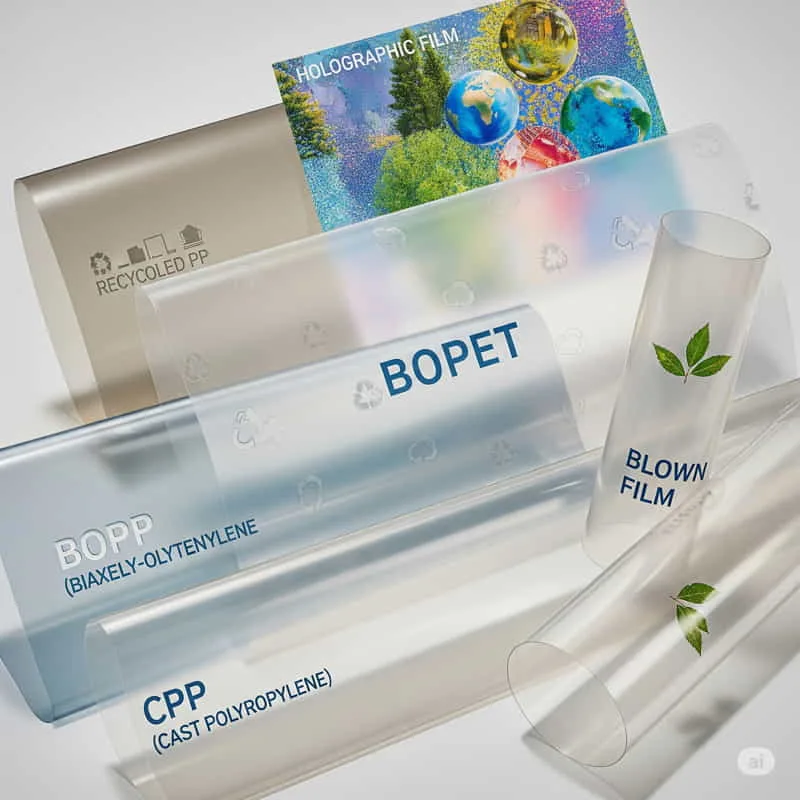
Plastic films like BOPET, BOPP, CPP, blown, and holographic films are transforming industries with their versatility and sustainability. These films, widely used in packaging, agriculture, and textiles, offer significant environmental benefits through recyclability, reduced material use, and bio-based innovations. India’s plastic film market, valued at USD 10.2 billion in 2023, is driving global sustainability with initiatives like bio-based BOPET and recyclable CPP films. This article explores their properties, production processes, applications, and environmental impacts, highlighting how these films align with global sustainability goals while addressing challenges like microplastic pollution and recycling infrastructure.
Key Points
- BOPET, BOPP, and CPP films are recyclable, lightweight, and durable, reducing environmental impact compared to traditional plastics.
- Blown films offer flexibility for agriculture and packaging, with biodegradable options emerging.
- Holographic films enhance security and aesthetics while supporting recyclability.
- India’s film industry leverages green finance and policies like PM MITRA to promote sustainable production.
- Innovations like bio-based BOPET and enzymatic recycling achieve up to 90% material recovery.
- Challenges include microplastic shedding and limited recycling infrastructure, mitigated by certifications like ISCC PLUS and GRS.
Introduction
The global plastics industry, valued at USD 609 billion in 2023, faces mounting pressure to adopt sustainable practices due to its contribution to 3.4% of global greenhouse gas emissions and significant waste. Plastic films like Biaxially Oriented Polyethylene Terephthalate (BOPET), Biaxially Oriented Polypropylene (BOPP), Cast Polypropylene (CPP), blown films, and holographic films are at the forefront of this shift, offering eco-friendly solutions for packaging, agriculture, and textiles. In India, a leader in plastic film production, sustainable innovations like bio-based films and advanced recycling are driving growth, with the market projected to reach USD 15 billion by 2030. This article examines these films’ properties, applications, and sustainability impacts, emphasizing their role in shaping a greener future.
What Are Plastic Films?
Plastic films are thin, flexible sheets made from polymers like polyethylene terephthalate (PET), polypropylene (PP), or polyethylene (PE). They are produced through extrusion, orientation, or blowing processes, tailored for applications requiring strength, clarity, or barrier properties. Sustainable films prioritize recyclability, reduced resource use, and eco-friendly production, aligning with circular economy principles. Certifications like ISCC PLUS and Global Recycled Standard (GRS) ensure ethical and sustainable practices.
Types of Plastic Films
BOPET Films
Biaxially Oriented Polyethylene Terephthalate (BOPET) films, often known as Mylar®, are made by stretching PET resin in two directions, enhancing strength and clarity. With a tensile strength of 200 MPa and thermal stability up to 150°C, BOPET films are ideal for food packaging, electronics, and industrial applications. They offer excellent gas barrier properties, reducing oxygen transmission by 90% compared to non-oriented films. Green BOPET films, like those from UFlex, use 30% bio-based mono-ethylene glycol (MEG), cutting carbon emissions by 20%.
BOPP Films
Biaxially Oriented Polypropylene (BOPP) films are produced by stretching PP resin, resulting in a density of 0.9 g/cm³ and tensile strength of 100-150 MPa. Known for clarity, moisture resistance, and recyclability, BOPP films dominate food packaging and labeling. Sustainable variants, like TPL’s ultra-high barrier BOPP, comply with EU’s Packaging Waste Directive, enabling 65% recyclability by 2025. India’s BOPP capacity, at 1.2 million TPA, is led by companies like Vacmet.
CPP Films
Cast Polypropylene (CPP) films are extruded without orientation, offering flexibility and heat-sealability. With high tear resistance and transparency, they are used in pouches and agriculture. CPP films reduce water evaporation in soil management by 30%, supporting sustainable farming. Recyclable CPP films, like Coveris’ high-performance variant, combine stiffness and protection, enhancing recyclability.
Blown Films
Blown films, primarily polyethylene-based, are created by extruding molten polymer through a circular die, forming a bubble. They offer flexibility for shrink wraps and agricultural mulch films. Biodegradable blown films, with additives like d2w, degrade in 2-5 years, reducing soil pollution. BOPE (Biaxially Oriented Polyethylene) films, a subset, achieve 50% thickness reduction, enhancing sustainability.
Holographic Films
Holographic films, typically BOPP or BOPET-based, feature embossed patterns for anti-counterfeiting and aesthetics. Used in packaging for cosmetics and tobacco, they are recyclable and enhance brand appeal. CloudFilm’s BOPP holographic films block oxygen and moisture, extending shelf life while supporting sustainability.
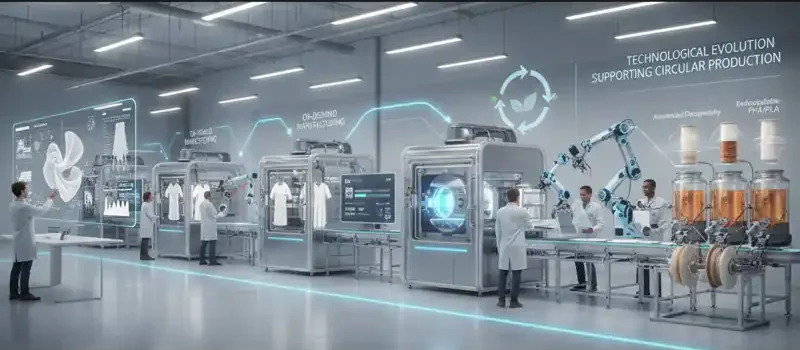
Manufacturing Processes
- BOPET and BOPP: Extruded resin is stretched biaxially (3-5 times) to align polymer chains, followed by heat-setting at 200°C for stability. Sustainable processes use renewable energy, reducing emissions by 15%.
- CPP: Molten PP is cast onto a chilled roll, ensuring flexibility without orientation. Eco-friendly extrusion lines minimize energy use.
- Blown Films: Polymer is extruded through a circular die, inflated, and cooled. BOPE films use advanced stretching for enhanced properties.
- Holographic Films: BOPP or BOPET films are embossed with holographic patterns, often metallized for barrier properties, using low-energy processes.
India’s adoption of solar-powered plants, like those by Jindal Poly Films, reduces production emissions by 20%.
Applications
- Packaging: BOPET, BOPP, and CPP films are used in food packaging (e.g., snack wrappers, pouches) for their barrier properties and recyclability. Holographic films enhance premium packaging for cosmetics.
- Agriculture: CPP and blown films serve as mulch films, reducing water use by 30% and supporting organic farming.
- Textiles: Non-woven PP films are used in reusable bags, with biodegradable options reducing waste.
- Electronics: BOPET films insulate circuits and touchscreens due to their dielectric strength.
- Security: Holographic films prevent counterfeiting in labels and packaging.
Environmental Impact and Sustainability
These films offer significant environmental benefits:
- Recyclability: BOPET, BOPP, and CPP films are 100% recyclable, with enzymatic recycling recovering 90% of material. India aims for 80% recycling by 2030.
- Reduced Material Use: BOPE films use 50% less material than traditional PE films, lowering emissions.
- Bio-Based Options: Green BOPET films with 30% bio-MEG reduce carbon emissions by 20%.
- Lower Emissions: PP-based films emit 1.7 kg CO2e/kg, less than PET’s 2.3 kg CO2e/kg.
- Deforestation Reduction: Cosmo Synthetic Paper (BOPP-based) replaces wood-pulp paper, reducing deforestation.
Challenges include:
- Microplastics: PP and PET films shed microplastics, requiring filtration solutions.
- Recycling Infrastructure: Only 14% of global plastic films are recycled due to limited facilities.
- Cost: Bio-based films are 10-20% more expensive, limiting adoption in developing markets.
Certifications like ISCC PLUS and GRS ensure sustainable production, combating greenwashing.
India’s Role in Sustainable Films
India’s plastic film industry, valued at USD 10.2 billion in 2023, is a global leader, with exports to over 70 countries. Key initiatives include:
- Green Finance: Over USD 400 million supports SMEs for sustainable upgrades.
- Policy Support: PM MITRA parks and Plastic Waste Management Rules (2022) promote recycling and eco-friendly production.
- Industry Leaders: Vacmet, UFlex, and Cosmo Films pioneer bio-based and recyclable films, with Vacmet’s 120,000 TPA BOPP capacity.
Global Impact
- Circular Economy: Europe and India recover 15-20% of plastic films annually, supporting global recycling goals.
- Regulatory Compliance: BOPP films meet EU’s PPWR targets for 65% recyclability by 2025.
- Market Growth: The global sustainable film market is projected to grow at a 6.5% CAGR, driven by demand for eco-friendly packaging.
Innovations and Future Trends
- Bio-Based Films: UFlex’s green BOPET uses 30% bio-MEG, with similar properties to virgin PET.
- Enzymatic Recycling: Carbios’ enzymes recover 90% of PP and PET, scalable by 2027.
- Biodegradable Additives: d2w additives enable PP films to degrade in 2-5 years.
- Smart Packaging: Holographic films with QR codes enhance traceability, supporting consumer demand for transparency.
Conclusion
BOPET, BOPP, CPP, blown, and holographic films are revolutionizing industries with their sustainability and versatility. India’s leadership, driven by innovations like bio-based films and green finance, positions it as a global hub for eco-friendly plastics. Despite challenges like microplastic pollution and recycling gaps, certifications and technological advancements ensure progress. As the global sustainable film market grows, these films will play a critical role in reducing environmental impact and fostering a circular economy. For more insights on sustainable materials, visit Textile School.
Citations
- India Brand Equity Foundation. “Plastics Industry in India.” IBEF, 15 Oct. 2024, www.ibef.org/industry/plastics.
- Cosmo Films. “Sustainable Packaging, Eco Friendly Packaging Solutions.” Cosmo Films, www.cosmofilms.com.
- UFlex. “BOPET Films, BOPP Films, CPP Films, Metalized Films.” UFlex, www.uflexltd.com.
- Vacmet India. “Flexible Packaging Films.” Vacmet, www.vpipl.co.in.
- Kingchuan Packaging. “Sustainable CPP Films for Crop Protection & Soil Management.” Kingchuan Packaging, 2 Feb. 2024, www.kingchuanpackaging.com.
- Transparent Paper Ltd. “BOPP Films to Meet PPWR Requirements.” Sustainable Packaging News, 8 Apr. 2025, spnews.com.
- CloudFilm. “BOPP Holographic Film.” CloudFilm, www.cloudflexfilm.com.
- Chalvo Packaging Film. “4 Types of BOPE Film You Need to Know.” Chalvo, 18 Apr. 2025, chalvo.com.
- Textile Exchange. “Preferred Fiber and Materials Market Report.” Textile Exchange, 2023, textileexchange.org/knowledge-center/reports/preferred-fiber-and-materials-market-report/.