1. Introduction
The healthcare sector demands materials that are safe, hygienic, reliable, and effective. These materials must perform flawlessly in life-critical situations, whether in operating rooms, wound care, or medical implants.
Meditech—short for Medical Technical Textiles—includes all textile-based materials designed for medical, surgical, dental, and hygienic applications.
These textiles range from simple disposable bandages to complex implantable fabrics that integrate with human tissue. In addition to biocompatibility, Meditech products must meet strict regulatory standards for performance, sterility, and safety.
2. What is Meditech?
Meditech is one of the 12 recognized categories of technical textiles. It covers nonwoven, woven, knitted, and composite fabrics engineered for:
- Preventing infection and contamination
- Assisting in treatment and recovery
- Providing structural support in surgical procedures
- Serving as implantable medical devices
3. Functions of Meditech Products
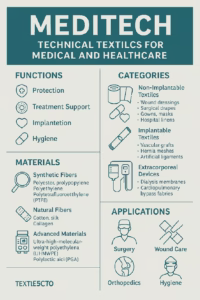
Meditech products serve diverse roles in healthcare:
- Protection: Barrier fabrics to protect patients and medical staff from infection.
- Treatment Support: Materials used in wound healing, drug delivery, and orthopedic applications.
- Implantation: Long-term textiles integrated into the body (vascular grafts, meshes).
- Hygiene: Disposable products to maintain sanitary conditions.
- Monitoring: Smart textiles for patient health tracking.
4. Categories of Meditech Products
Meditech products can be grouped into non-implantable, implantable, and extracorporeal categories.
4.1 Non-Implantable Textiles
- Wound Dressings: Nonwoven and hydrogel-coated fabrics for healing.
- Bandages: Elastic and compression bandages.
- Surgical Drapes and Gowns: Sterile, fluid-repellent fabrics.
- Face Masks and Respirators: Filtration media for infection control.
- Hospital Linens: Antimicrobial-treated bed sheets and curtains.
4.2 Implantable Textiles
- Vascular Grafts: Knitted or woven polyester or PTFE.
- Artificial Ligaments and Tendons: High-strength PET or UHMWPE fibers.
- Hernia Meshes: Polypropylene or composite meshes.
- Artificial Skin: Collagen or polymer-based scaffolds.
4.3 Extracorporeal Devices
- Dialysis Membranes: Hollow-fiber membranes for blood purification.
- Cardiopulmonary Bypass Fabrics: Filters and tubing covers.
5. Materials Used in Meditech
Synthetic Fibers:
- Polyester (PET) – Strong, stable, biocompatible.
- Polypropylene (PP) – Lightweight, hydrophobic, chemically resistant.
- Polyethylene (PE) – Flexible, chemical-resistant.
- Polytetrafluoroethylene (PTFE) – Non-reactive, used in vascular grafts.
Natural Fibers:
- Cotton – Soft, breathable, used in bandages.
- Silk – Biocompatible, used in sutures.
- Collagen – Used in regenerative medicine.
Advanced Materials:
- Polyurethane (PU) – Flexible films and coatings.
- Ultra-High-Molecular-Weight Polyethylene (UHMWPE) – High strength for orthopedic use.
- Biodegradable polymers (PLA, PGA) – Resorbable implants.
6. Manufacturing Techniques
- Nonwoven Technology: For disposable masks, gowns, drapes.
- Weaving: Durable fabrics for implants and orthopedic supports.
- Knitting: Elastic medical supports, implant meshes.
- Electrospinning: Nanofiber scaffolds for tissue engineering.
- Coating & Laminating: Barrier layers for surgical and protective textiles.
- 3D Knitting and Printing: Custom medical devices and supports.
7. Functional Properties
Meditech textiles are engineered for:
- Biocompatibility: Non-toxic, non-allergenic, and non-carcinogenic.
- Sterilization Compatibility: Withstanding steam, gamma radiation, or ethylene oxide.
- Barrier Protection: Preventing bacterial or viral penetration.
- Moisture Control: Managing wound exudate and maintaining healing environments.
- Strength & Flexibility: Supporting movement without failure.
8. Applications
| Area | Products |
|---|---|
| Surgery | Gowns, drapes, masks, sterile packaging |
| Wound Care | Dressings, compression bandages |
| Orthopedics | Braces, supports, artificial ligaments |
| Implants | Vascular grafts, meshes, heart valves |
| Hygiene | Disposable sheets, protective clothing |
| Medical Devices | Filtration fabrics, sensor-embedded wearables |
9. Advantages of Meditech
- Improves patient safety and recovery.
- Protects medical staff from infection.
- Enables advanced surgical techniques.
- Offers custom solutions for specific treatments.
- Supports hygiene and infection control in healthcare.
10. Global Market Overview
- Market size (2024): USD 25–30 billion.
- CAGR: 5–6% growth expected.
- Drivers: Aging population, rising chronic diseases, demand for infection control.
- Top regions: North America, Europe, Asia-Pacific.
11. Innovations in Meditech
- Smart Wound Dressings: Sensors for monitoring healing.
- Biodegradable Implants: Eliminating the need for removal surgery.
- Antiviral Coatings: Added protection in high-risk environments.
- 3D-Printed Medical Textiles: Customized implants and supports.
12. Sustainability in Meditech
- Use of biodegradable and compostable materials.
- Recycling nonwoven production waste.
- Minimizing single-use plastics in healthcare.
13. Challenges
- High regulatory compliance costs.
- Disposal of contaminated medical waste.
- Need for rapid innovation during pandemics.
- Balancing cost with performance in developing markets.
14. Future of Meditech
Expect growth in:
- Wearable medical textiles for continuous health monitoring.
- Regenerative medicine scaffolds for organ and tissue repair.
- Personalized implantable textiles produced via 3D printing.
- Wider adoption of biodegradable surgical materials.
15. Conclusion
Meditech textiles are life-saving innovations that combine science, engineering, and medicine. They protect patients and medical staff, enable advanced treatments, and improve healthcare outcomes. As technology advances, Meditech will continue to shape the future of medical care with smarter, safer, and more sustainable solutions.
Frequently Asked Questions (FAQ) – Meditech Technical Textiles
Meditech refers to technical textiles designed for medical, surgical, dental, and healthcare applications. These fabrics are engineered for biocompatibility, safety, and performance in critical healthcare environments.
Examples include:
Surgical gowns, drapes, and masks
Wound dressings and bandages
Hospital linens and antimicrobial curtains
Vascular grafts and hernia meshes
Artificial ligaments and tendons
Dialysis membranes and cardiopulmonary bypass fabrics
Synthetic fibers: Polyester, polypropylene, polyethylene, PTFE
Natural fibers: Cotton, silk, collagen
Advanced materials: UHMWPE, biodegradable polymers (PLA, PGA)
They protect patients and medical staff from infection, aid in treatment and recovery, enable advanced surgical techniques, and ensure hygiene in healthcare environments.
Many manufacturers are adopting sustainable options such as biodegradable implants, compostable nonwovens, and recycling of medical textile waste.
They are used in:
Operating rooms and hospitals
Outpatient clinics
Dental practices
Rehabilitation centers
Home healthcare settings
Trends include smart wound dressings with sensors, 3D-printed custom implants, fully biodegradable surgical materials, and regenerative medicine scaffolds for tissue repair.