
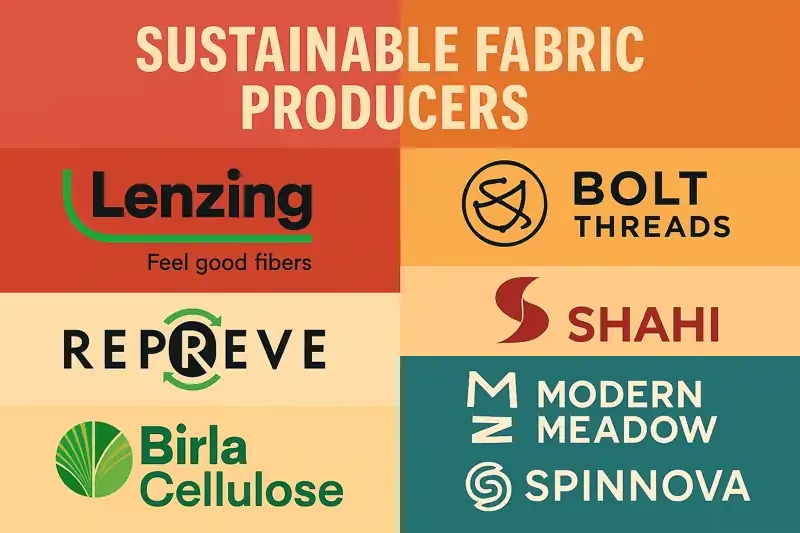
Sustainable fabric producers are transforming the textile industry through innovative organic, recycled, and biodegradable materials. Companies like Bolt Threads, Unifi, and Aquafil lead with breakthrough technologies including bio-fabricated leather, recycled polyester from plastic bottles, and infinitely recyclable nylon from ocean waste. These producers achieve significant environmental improvements—including 70-95% water reduction and 80% carbon footprint cuts—while maintaining or exceeding conventional fabric performance standards.
The textile industry stands at a transformative crossroads. As environmental concerns intensify and consumer awareness grows, sustainable fabric producers are revolutionizing how we think about textiles. These pioneering companies are developing organic, recycled, and biodegradable materials that promise to reshape the future of fashion and industrial textiles.
Understanding Sustainable Textile Production
Sustainable fabric production encompasses three primary approaches that address the industry’s environmental challenges. Organic materials eliminate harmful pesticides and chemicals from the growing process, protecting both soil health and worker safety. Recycled content transforms waste streams into valuable new fibers, reducing landfill burden and virgin material demand. Biodegradable alternatives ensure materials can safely return to natural cycles at their end-of-life.
Traditional textile production consumes enormous quantities of water—up to 2,700 liters for a single cotton t-shirt—while releasing toxic chemicals into waterways. Sustainable producers are fundamentally reimagining these processes, achieving remarkable environmental improvements while maintaining or exceeding performance standards.
Leading Sustainable Fabric Producers
Organic and Natural Fiber Champions
Organic Cotton Plus (India) has emerged as a global leader in GOTS-certified organic cotton production. The company works directly with farming communities to implement sustainable agricultural practices, achieving 70% water reduction compared to conventional cotton while improving soil fertility. Their integrated approach includes farmer education, seed development, and supply chain transparency that serves major international fashion brands.
European Flax Group dominates the sustainable linen market across France and Belgium. As the world’s largest linen producer, they’ve achieved complete traceability from farm to fabric. Their zero-waste production philosophy utilizes every part of the flax plant—fibers for textiles, seeds for food products, and stems for construction materials. The naturally biodegradable fibers require minimal processing and no irrigation in their European growing regions.
Lenzing Group (Austria) produces TENCEL™ lyocell and modal fibers from sustainably sourced wood pulp. Their closed-loop production process recovers 99% of solvents used in manufacturing, while the resulting fibers offer superior moisture management and natural antibacterial properties. Lenzing’s commitment to responsible forestry ensures no ancient or endangered forests are used in their supply chain.
Recycled Content Innovators
Unifi (USA) revolutionized recycled textiles with their REPREVE® polyester, transforming over 27 billion plastic bottles annually into high-performance fibers. Their patented process creates recycled polyester with identical properties to virgin material while reducing energy consumption by 30%. Major brands including Nike, Patagonia, and Ford Motor Company rely on REPREVE for everything from athletic wear to automotive interiors.
Aquafil (Italy) developed the groundbreaking ECONYL® regenerated nylon system, which transforms fishing nets, fabric scraps, and industrial plastic waste into nylon fiber identical to virgin material. The closed-loop process allows infinite recycling without performance degradation, reducing CO₂ emissions by 80% compared to virgin nylon production. Their technology addresses ocean plastic pollution while creating high-value textile materials.
Renewcell (Sweden) pioneered chemical recycling of cotton-rich textile waste through their Circulose® pulp technology. Unlike mechanical recycling, which degrades fiber quality, chemical recycling returns materials to their molecular building blocks. This enables production of new fibers with virgin-equivalent properties while diverting textile waste from landfills.
Bio-Material Pioneers
Bolt Threads (USA) represents the cutting edge of biofabricated materials. Established in 2009 by three specialists who gained expertise in silk production while conducting research at university, they’ve developed multiple breakthrough materials including Mylo™ mushroom leather and biofabricated silk proteins. Their materials can hold onto color better and are more breathable, softer, more durable and hold up in standard washers and dryers. Rather than competing directly in manufacturing, Bolt builds products powered by Bolt Threads instead of branded by them.
Orange Fiber (Italy) transforms citrus industry byproducts into silk-like textiles, creating a circular economy solution that addresses food waste while producing high-quality fabrics. Their patented process extracts cellulose from citrus peels, resulting in fabrics that can be enriched with vitamins and essential oils for skincare benefits. This innovation demonstrates how agricultural waste streams can become valuable textile inputs.
AlgiKnit (USA) harnesses marine algae and kelp to create biodegradable fibers that actually improve ocean health during production. Kelp farming absorbs excess nutrients that cause harmful algal blooms while sequestering carbon. Their fibers biodegrade completely in marine environments, offering a true solution to microplastic pollution from synthetic textiles.
Modern Meadow (USA) grows leather materials in laboratories using biotechnology, eliminating animal agriculture from leather production. Their Bio-VERA™ materials offer design flexibility impossible with traditional leather while dramatically reducing water usage, greenhouse gas emissions, and land requirements.
Regional Powerhouses
Lenzing (Austria) extends beyond their TENCEL products to include innovative REFIBRA™ technology, which combines wood pulp with recycled cotton textile waste. This hybrid approach addresses the growing challenge of textile waste while maintaining the performance characteristics that make lyocell fibers valuable for high-quality applications.
Spinnova (Finland) collaborates with Renewcell, a textile recycling firm, to produce fiber using recycled textile waste. Their mechanical process requires no chemicals, creating cotton-like fibers from various cellulosic waste streams including textile leftovers and agricultural residues.
Environmental Impact and Performance Metrics
Water Conservation Achievements
Sustainable producers demonstrate remarkable water efficiency improvements. Organic cotton production eliminates synthetic fertilizer runoff while reducing irrigation needs through improved soil health. TENCEL production uses 95% less water than conventional cotton, while recycled polyester reduces water consumption by 30% compared to virgin material production.
Carbon Footprint Reductions
The carbon benefits vary significantly by material type and production method. ECONYL regenerated nylon achieves 80% lower CO₂ emissions than virgin nylon. Organic hemp actually provides carbon-negative production, absorbing more CO₂ during growth than the entire production process releases. Bio-materials like Piñatex pineapple leather demonstrate 75% lower carbon footprints compared to traditional leather.
Biodegradability Standards
Modern sustainable materials address end-of-life environmental impact through enhanced biodegradability. Natural organic fibers decompose within 2-6 months in industrial composting systems. TENCEL fibers biodegrade in 6-8 weeks in marine environments, while bio-based polyesters complete degradation in 2-3 years compared to 200+ years for conventional synthetics.
Innovation in Production Methods
Precision Fermentation Technology
Bolt Threads uses large-scale 4,000-liter fermentation tanks to produce engineered proteins that can be processed into various textile applications. This biotechnology approach offers unprecedented control over material properties, enabling designers to specify exact characteristics like strength, flexibility, and color retention.
Closed-Loop Chemical Systems
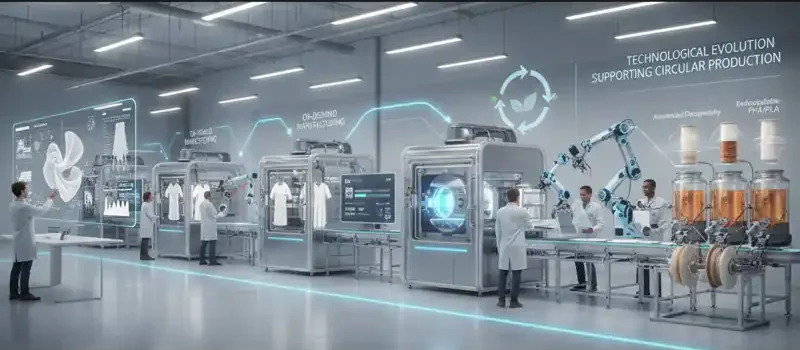
Advanced chemical recycling systems break materials down to their molecular components, enabling infinite recycling without quality degradation. These systems require significant initial investment but offer long-term economic advantages through eliminated waste streams and reduced raw material costs.
Agricultural Waste Utilization
Companies like Orange Fiber and Ananas Anam (Piñatex) demonstrate how agricultural byproducts can become valuable textile inputs. This approach addresses multiple sustainability challenges simultaneously: reducing agricultural waste, creating new revenue streams for farmers, and producing novel materials with unique properties.
Business Models for Sustainable Scale
Technology Licensing Strategy
Bolt works with the Michigan Biotechnology Institute for fermentation and Unifi for spinning fibers into textiles, demonstrating how specialized technology companies can achieve scale through strategic partnerships rather than vertical integration. This model accelerates market penetration while requiring lower capital investment.
Vertical Integration Approach
Companies like Patagonia and Eileen Fisher invest directly in sustainable supply chain development, from organic farming partnerships to recycling infrastructure. This approach provides greater control over quality and sustainability standards but requires substantial long-term investment.
Circular Economy Models
Advanced producers design business models around material recovery and reuse. Aquafil’s ECONYL system creates value from what was previously waste, while companies like Renewcell position themselves as essential infrastructure for textile circularity.
Future Outlook and Emerging Trends
Technology Convergence
Artificial intelligence increasingly drives material design, reducing development timelines from five years to 18 months for new sustainable materials. Machine learning optimizes production processes for maximum efficiency and minimal environmental impact.
Regulatory Acceleration
The European Union’s 2025 textile waste collection mandate and proposed Extended Producer Responsibility legislation create strong incentives for sustainable material adoption. Similar regulations emerging globally will further accelerate market transformation.
Investment and Market Growth
Biomaterial companies attracted $2.4 billion in funding during 2024, with 60% specifically targeting textile applications. This investment surge indicates strong market confidence in sustainable textile technologies reaching commercial viability.
Performance Parity Achievement
Leading sustainable materials increasingly match or exceed conventional fabric performance characteristics. This performance parity, combined with growing sustainability requirements, positions sustainable producers for rapid market share growth in the coming decade.
Conclusion: The Sustainable Textile Revolution
The sustainable fabric producers highlighted here represent more than environmental improvement—they’re pioneering entirely new approaches to material creation and use. From biotechnology labs growing leather without animals to chemical processes that infinitely recycle nylon, these companies are proving that sustainability and performance excellence can coexist.
For textile professionals, students, and researchers, understanding these producers and their innovations provides essential insight into the industry’s trajectory. The convergence of environmental necessity, technological capability, and economic viability is creating unprecedented opportunities for sustainable textile production to move from niche alternative to industry standard.
The future of textiles lies not in choosing between sustainability and performance, but in the innovative companies that are proving both are achievable simultaneously. As these producers continue scaling their technologies and reducing costs, sustainable textiles are positioned to become the foundation of a truly circular and environmentally responsible textile industry.



Excellent overview of the sustainable textile industry. It’s encouraging to see so many companies developing innovative materials that reduce environmental impact while delivering the quality and performance the market expects.
Sprunki
Great insights here! Fabric Solutions like these really help brands improve both quality and efficiency.