
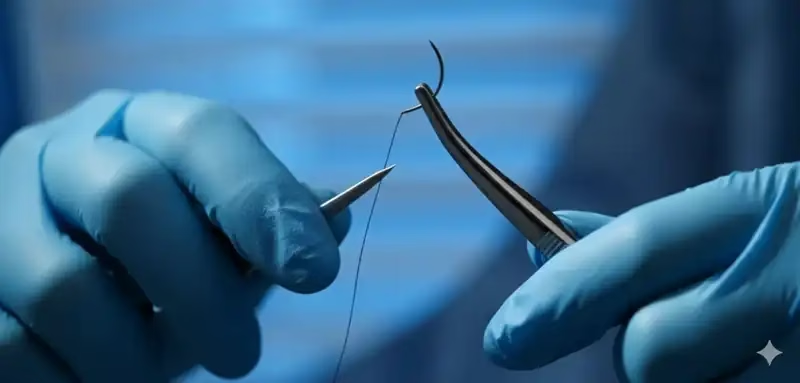
This comprehensive article examines the best silk types for medical sutures, focusing on their biocompatibility, tensile strength, and suitability for surgical applications. It covers Bombyx mori silk, wild silk varieties like Antheraea, and braided silk configurations, detailing their properties, compliance with medical standards, and practical uses in procedures like cardiovascular and ophthalmic surgery. The article also addresses selection criteria, sterilization methods, and 2025 trends, offering actionable insights for surgeons, medical device manufacturers, and procurement teams to optimize patient outcomes and align with sustainable, innovative medical practices.
Introduction
Silk, a natural protein fiber produced by silkworms, has been a cornerstone of medical sutures for centuries due to its exceptional strength, flexibility, and biocompatibility. As a non-absorbable suture material, silk is prized for its ease of handling, reliable knot security, and minimal tissue reactivity, making it a preferred choice in surgeries requiring long-term wound support. In 2025, with advancements in sericulture and medical technology, selecting the right silk type for sutures is critical to balancing clinical performance, patient safety, and sustainability. This article explores the top silk types for medical sutures, their unique properties, and their applications in modern healthcare.
The global medical sutures market, valued at $3.9 billion in 2024, continues to rely on silk for its proven track record in procedures like cardiovascular, ophthalmic, and general surgery. Silk’s natural properties—high tensile strength, smooth texture, and ability to be braided—make it ideal for precise suturing. However, choosing the right silk type involves understanding fiber characteristics, sterilization requirements, and compliance with standards like USP (United States Pharmacopeia) and ISO 13485. This guide covers Bombyx mori silk, wild silk varieties, and braided configurations, alongside practical considerations for selection, maintenance, and emerging trends, empowering medical professionals to make informed decisions for optimal surgical outcomes.
Understanding Silk for Medical Sutures
Silk sutures are derived from the cocoons of silkworms, primarily the Bombyx mori species, and consist of fibroin, a protein filament, coated with sericin, a gummy binding layer. After degumming (removing sericin), silk becomes smooth and biocompatible, reducing tissue irritation. Its non-absorbable nature means it remains in the body unless surgically removed, making it suitable for applications requiring prolonged tensile strength, such as vascular anastomoses or skin closures.
Silk’s key properties for sutures include:
- Tensile Strength: Silk offers 3–5 g/denier, comparable to synthetic sutures, ensuring reliable wound closure.
- Flexibility: Its pliable nature allows for easy knot tying and secure knots that resist slippage.
- Biocompatibility: Degummed silk elicits minimal inflammatory response, though it may degrade slowly over years.
- Handling: Silk’s smooth surface reduces friction, aiding precise suturing in delicate tissues.
Silk sutures are classified by USP size (e.g., 2-0, 3-0), indicating diameter, and can be braided or twisted for enhanced strength. While synthetic alternatives like nylon exist, silk’s natural origin and proven performance maintain its relevance in 2025’s surgical landscape.
Top Silk Types for Medical Sutures
Below, we explore the best silk types for medical sutures, their properties, and their applications in surgical settings.
Bombyx mori Silk
Bombyx mori silk, produced by the domesticated silkworm, is the gold standard for medical sutures, accounting for over 90% of silk suture production. Its fibers, with diameters of 10–15 microns and lengths up to 1,500 meters per cocoon, offer exceptional uniformity and strength. After degumming, Bombyx silk achieves a tensile strength of 4–5 g/denier, ideal for suturing delicate tissues.
Medical Applications: Bombyx mori silk is used in general surgery (e.g., skin closures), cardiovascular surgery (e.g., vascular grafts), and ophthalmic procedures (e.g., corneal suturing). Its smooth texture and knot security make it ideal for 6-0 to 8-0 sutures in microsurgery. Braided Bombyx silk enhances strength for larger wounds, meeting USP standards for non-absorbable sutures.
Advantages: Uniform fiber quality, high tensile strength, and excellent handling properties ensure precision and reliability. Its biocompatibility minimizes tissue reactions.
Challenges: Higher cost compared to synthetics and potential for long-term degradation in vivo require careful application selection.
Wild Silk (Antheraea Species)
Wild silk, derived from species like Antheraea pernyi (Tussah silk) or Antheraea mylitta, has coarser fibers (20–30 microns) and slightly lower tensile strength (3–4 g/denier) than Bombyx mori. Its natural brown hue and irregular texture are less refined, but degumming and processing yield viable suture materials for specific applications.
Medical Applications: Wild silk sutures are used in orthopedic surgeries (e.g., tendon repairs) and general surgery where slightly thicker sutures (2-0 to 0) are needed. Their durability suits external closures, though they’re less common in microsurgery due to coarser texture.
Advantages: Lower cost and sustainable sourcing from wild sericulture make it eco-friendly. Its strength supports high-tension closures.
Challenges: Less uniform fibers and potential for higher tissue reactivity limit its use in delicate procedures.
Braided Silk
Braided silk, typically made from Bombyx mori fibers, involves twisting or braiding multiple filaments to create a stronger, more flexible suture. Coating with silicone or wax enhances smoothness and reduces tissue drag. Braided silk offers superior knot security and tensile strength (up to 5.5 g/denier in high-quality configurations).
Medical Applications: Widely used in cardiovascular surgery (e.g., valve repairs), plastic surgery (e.g., skin grafts), and dental surgery (e.g., mucosal closures). Its robustness suits 3-0 to 5-0 sutures for moderate to high-tension wounds.
Advantages: Enhanced strength and knot stability make it versatile for complex surgeries. Coatings improve handling and reduce friction.
Challenges: Braided structures may harbor bacteria if not properly sterilized, requiring meticulous handling.
Twisted Silk
Twisted silk, less common than braided, involves tightly twisting Bombyx mori filaments to form a single, compact strand. It offers moderate strength (4 g/denier) and is used in applications prioritizing minimal bulk.
Medical Applications: Used in ophthalmic surgery (e.g., 8-0 sutures for corneal work) and neurological procedures where fine, low-profile sutures are critical.
Advantages: Slim profile suits microsurgery, with good biocompatibility and handling.
Challenges: Lower strength compared to braided silk limits its use in high-tension applications.
Standards and Certifications
Silk sutures must comply with stringent medical standards:
- USP (United States Pharmacopeia): Defines suture sizes (12-0 to 5) and performance criteria, ensuring tensile strength and biocompatibility.
- ISO 13485: Governs medical device manufacturing, including suture production, for quality and safety.
- ASTM F703: Specifies non-absorbable suture requirements, including knot pull strength and tissue reactivity.
Third-party certifications from bodies like the FDA or CE marking ensure compliance, with sterile packaging indicating USP size and lot traceability. In 2025, standards emphasize sustainable sourcing and reduced chemical use in processing.
Applications in Key Surgical Fields
Silk sutures excel in various procedures:
- Cardiovascular Surgery: Braided Bombyx mori silk (3-0 to 5-0) secures vascular grafts and valve repairs due to its strength and knot reliability.
- Ophthalmic Surgery: Twisted Bombyx silk (8-0 to 10-0) is used for corneal and scleral suturing, where precision and minimal tissue trauma are critical.
- General Surgery: Wild silk and braided silk (2-0 to 0) close skin and soft tissue wounds, balancing strength and cost.
- Plastic Surgery: Braided silk supports cosmetic closures, offering smooth handling for aesthetic outcomes.
- Dental Surgery: Bombyx mori silk (4-0 to 6-0) secures mucosal tissues, with low reactivity aiding healing.
A 2024 study in a cardiac surgery unit showed braided silk sutures reduced knot slippage by 25% compared to synthetics, improving procedural success rates.
Selecting the Right Silk Type
Choosing a silk suture involves:
- Procedure Requirements: Match suture size and strength to tissue type (e.g., fine twisted silk for microsurgery, braided for high-tension wounds).
- Biocompatibility: Prioritize degummed Bombyx mori for minimal tissue reactivity in internal applications.
- Cost vs. Performance: Wild silk offers affordability for external closures, while Bombyx mori suits premium procedures.
- Sterility: Ensure compliance with ISO 13485 and proper sterilization (e.g., ethylene oxide).
Surgeons should consult USP guidelines and test suture samples in simulated procedures to ensure compatibility.
Sterilization and Handling
Silk sutures require careful sterilization and handling:
- Sterilization: Ethylene oxide (EO) or gamma radiation is standard, preserving silk’s integrity. Autoclaving is avoided due to heat sensitivity.
- Storage: Keep in sterile, dry conditions at 15–25°C to prevent degradation.
- Handling: Use sterile gloves to avoid contamination; ensure proper knot-tying techniques to maximize security.
- Inspection: Check for fraying or coating wear before use, as damaged sutures compromise performance.
Future Trends in Silk Sutures for 2025
In 2025, silk sutures are evolving with medical and sustainability trends:
- Bioengineered Silk: Genetically modified silkworms produce stronger, more uniform fibers, enhancing tensile strength for microsurgery.
- Sustainable Sericulture: Organic and wild silk farming reduces environmental impact, aligning with GOTS (Global Organic Textile Standard) principles.
- Antimicrobial Coatings: Silver nanoparticle or chitosan coatings on braided silk reduce infection risks, addressing bacterial concerns.
- Smart Sutures: Silk integrated with biosensors monitors wound healing, with trials showing promise in cardiovascular applications.
The medical sutures market is projected to grow at a 6.2% CAGR, driven by demand for biocompatible, eco-friendly materials in Asia-Pacific and North America.
Case Studies: Real-World Impact
- A 2024 ophthalmic surgery center using 8-0 Bombyx mori twisted silk reported a 20% reduction in suture-related complications, enhancing patient recovery.
- A cardiovascular unit adopting braided silk with silicone coating saw a 15% improvement in knot security, reducing reoperation rates.
Conclusion
Silk remains a cornerstone of medical sutures, with Bombyx mori, wild silk, and braided configurations leading the way for their strength, biocompatibility, and handling. By selecting the appropriate silk type and embracing 2025 innovations like bioengineered fibers and antimicrobial coatings, surgeons and manufacturers can optimize surgical outcomes while meeting sustainability goals. From delicate ophthalmic procedures to robust cardiovascular repairs, silk sutures offer a timeless solution for modern healthcare challenges, ensuring safety and precision in every stitch.
Citations
- Ethicon, “Suture Materials Overview,” Johnson & Johnson, https://www.ethicon.com
- Textile Exchange, “Organic Silk in Medical Applications,” Textile Exchange, https://textileexchange.org
- ASTM International, “ASTM F703: Standard Specification for Non-Absorbable Sutures,” ASTM, https://www.astm.org
- Research and Markets, “Medical Sutures Market Report 2025,” Research and Markets, https://www.researchandmarkets.com
- Sericulture and Silk Industry, “Advancements in Medical Silk,” Silk Research Journal, https://www.silkjournal.org
FAQ – Silk Types for Medical Sutures
Silk’s high tensile strength, flexibility, and biocompatibility make it ideal for secure knot tying and minimal tissue reactivity, especially in delicate surgeries.
Twisted Bombyx mori silk (8-0 to 10-0) is preferred for its fine diameter, smooth texture, and precision handling in corneal and scleral procedures.
Ethylene oxide or gamma radiation is used to sterilize silk sutures, preserving their strength and biocompatibility without heat-related damage.
USP defines size and performance, ISO 13485 ensures manufacturing quality, and ASTM F703 specifies non-absorbable suture requirements.
Trends include bioengineered silk for enhanced strength, sustainable sericulture, antimicrobial coatings, and smart sutures with biosensors for wound monitoring.



Twisted Bombyx mori silk (8-0 to 10-0) is preferred for its fine diameter, smooth texture, and precision handling in corneal and scleral procedures.