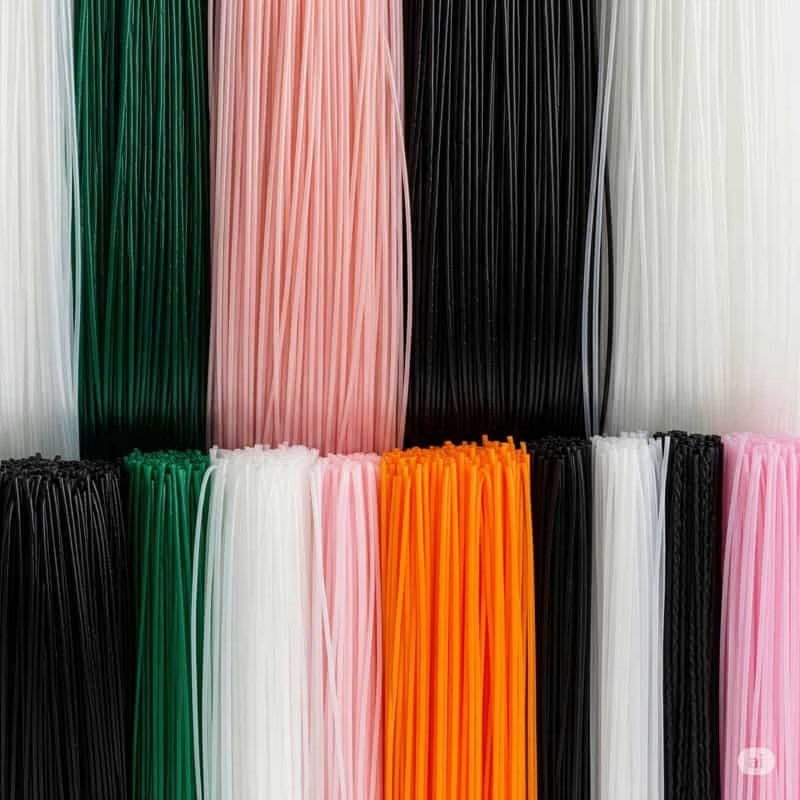
The article examines polymer fibers, highlighting their exceptional properties, such as high tensile strength, flexibility, and chemical stability. It details manufacturing techniques, including melt spinning, solution spinning, electrospinning, and gel spinning, which enable tailored applications. Key uses span textiles, protective gear, aerospace, medical devices, and industrial systems. Environmental challenges, particularly non-biodegradability, are addressed, alongside future prospects like nanotechnology, smart fibers, and sustainable materials. The article underscores the pivotal role of polymer fibers in advancing technology and sustainability.
Polymer fibers are long, chain-like molecules engineered to exhibit exceptional strength, flexibility, and durability. These materials, derived from synthetic or natural polymers, have transformed industries ranging from textiles to aerospace due to their unique physical and chemical properties. This article explores the characteristics, manufacturing processes, applications, and future potential of polymer fibers.
Properties of Polymer Fibers
Polymer fibers possess a combination of properties that make them highly versatile:
- High Tensile Strength: Fibers such as aramids (e.g., Kevlar) and ultra-high-molecular-weight polyethylene (UHMWPE) exhibit remarkable strength-to-weight ratios, surpassing many metals.
- Flexibility and Lightweight: Their low density allows for applications where weight reduction is critical, such as in aerospace and automotive industries.
- Chemical and Thermal Stability: Fibers like polytetrafluoroethylene (PTFE) resist harsh chemicals and extreme temperatures, ensuring durability in challenging environments.
- Customizable Properties: By altering polymer composition or processing techniques, fibers can be tailored for specific attributes, such as elasticity or conductivity.
These properties stem from the molecular structure of polymers, where long chains are aligned and oriented during processing to enhance strength and stability.
Manufacturing Processes
The production of polymer fibers involves several sophisticated techniques:
- Melt Spinning: Thermoplastic polymers, such as nylon and polyester, are melted, extruded through a spinneret, and cooled to form fibers. This cost-effective method is widely used for mass production.
- Solution Spinning: Used for polymers that decompose before melting, such as acrylics and aramids. The polymer is dissolved in a solvent, extruded, and solidified by evaporating the solvent (dry spinning) or coagulating in a liquid bath (wet spinning).
- Electrospinning: This technique produces nanofibers by applying an electric field to a polymer solution, enabling applications in filtration and biomedical fields.
- Gel Spinning: Employed for high-performance fibers like UHMWPE, where a gel-like precursor is extruded and drawn to achieve ultra-high strength.
Each method allows precise control over fiber diameter, orientation, and properties, catering to diverse industrial needs.
Applications of Polymer Fibers
Polymer fibers are integral to numerous sectors:
- Textiles and Apparel: Polyester, nylon, and spandex dominate clothing and home furnishings due to their durability, elasticity, and ease of care.
- Protective Gear: Aramid fibers (e.g., Kevlar) are used in bulletproof vests, helmets, and fire-resistant clothing, leveraging their high strength and thermal stability.
- Aerospace and Automotive: Carbon fibers and UHMWPE reinforce composites in aircraft, spacecraft, and vehicles, reducing weight while maintaining structural integrity.
- Medical Applications: Biocompatible fibers, such as polylactic acid (PLA), are used in sutures, scaffolds for tissue engineering, and drug delivery systems.
- Industrial Uses: Fibers like PTFE and glass-reinforced polymers are employed in filtration systems, conveyor belts, and insulation due to their chemical resistance and durability.
Environmental Considerations
Despite their advantages, polymer fibers pose environmental challenges. Most synthetic fibers are derived from petroleum-based sources and are non-biodegradable, contributing to microplastic pollution. Recycling processes for fibers like polyester are improving, but challenges remain in scaling and maintaining quality. Research is underway to develop bio-based and biodegradable fibers, such as those derived from cellulose or PLA, to mitigate environmental impact.
Future Prospects
The future of polymer fibers is promising, driven by advancements in materials science and sustainability:
- Nanotechnology: Nanofibers with enhanced properties, such as increased surface area and conductivity, are poised to revolutionize filtration, sensors, and energy storage.
- Smart Fibers: Integration of conductive polymers and sensors into fibers enables applications in wearable electronics and health monitoring.
- Sustainable Materials: Bio-based polymers and recycling innovations aim to reduce reliance on fossil fuels and address end-of-life disposal issues.
- Additive Manufacturing: 3D printing with polymer fibers could enable customized, high-performance composites for niche applications.
Conclusion
Polymer fibers represent a cornerstone of modern materials science, offering unparalleled versatility across industries. Their unique properties, coupled with ongoing innovations in manufacturing and sustainability, ensure their continued relevance. As research advances, polymer fibers are expected to play a pivotal role in addressing global challenges, from lightweight transportation to eco-friendly materials, shaping a more sustainable and technologically advanced future.