Introduction to Digital Tools
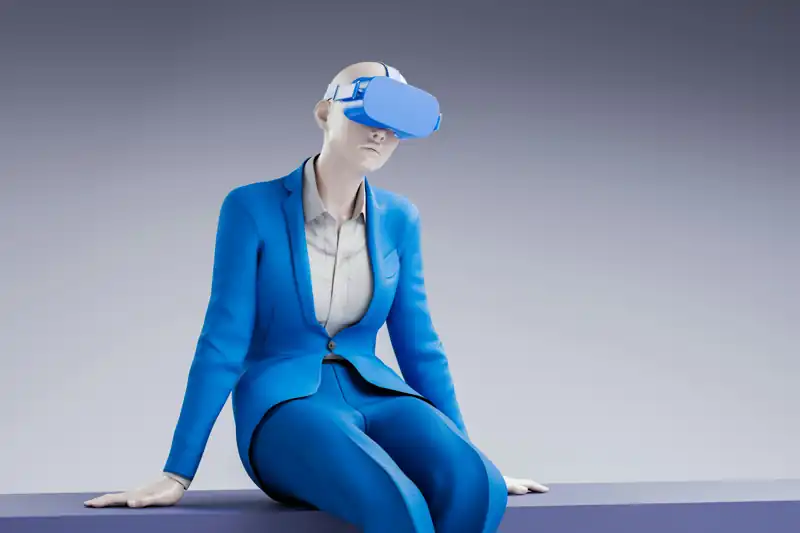
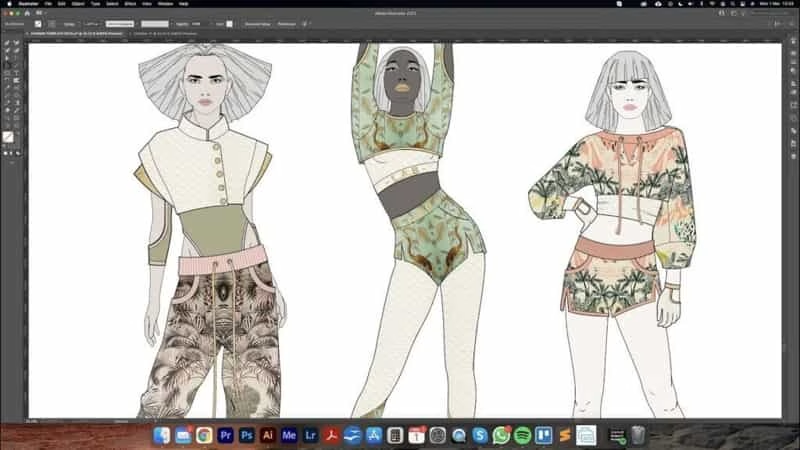
Digital tools for fashion and textile design, especially 3D design and virtual prototyping software, are revolutionizing the industry. These tools allow designers to create, visualize, and refine garments in a virtual environment, reducing the need for physical samples and enhancing sustainability. Key players include CLO 3D, VStitcher, Adobe Substance 3D, Tuka3D, MarvelousDesigner, and Optitex, each offering unique features for different user needs.
Availability and Accessibility
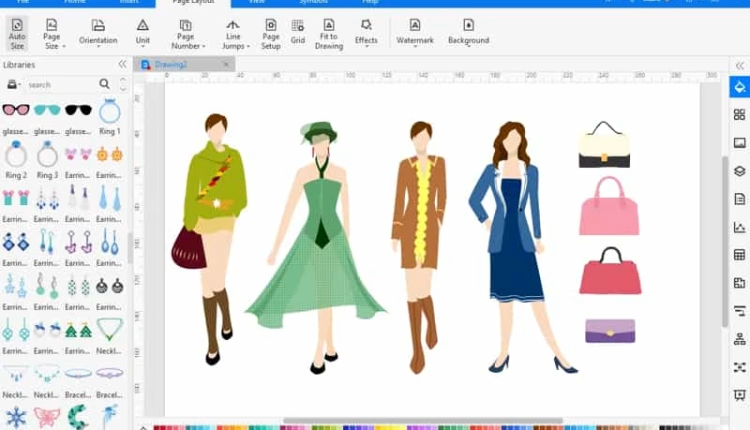
Most software is available through subscription models, with pricing varying by user type. For example, CLO 3D offers individual, team, and enterprise plans, while many providers offer free trials and educational discounts, making them accessible for students and small businesses. These tools are generally global, supporting multiple languages for international use.
Impact on Industry
These digital tools streamline design processes, reduce fabric waste, and speed up time-to-market. They enable virtual fittings, pattern making, and tech pack generation, benefiting designers, manufacturers, and retailers. The market is growing, with a projected value of USD 1.2 billion in 2020, expected to grow at a CAGR of 10.8% from 2021 to 2028[^i^].
Historical Context and Evolution
The fashion and textile industry is undergoing a profound transformation, driven by technological advancements that redefine how designs are created, prototyped, and brought to market. This analysis delves into digital tools for 3D design and virtual prototyping, focusing on software solutions like CLO 3D, VStitcher, Adobe Substance 3D, Tuka3D, MarvelousDesigner, and Optitex. These tools are reshaping the industry for designers, students, and professionals, offering efficiency, sustainability, and creativity. The following sections explore their history, evolution, features, challenges, and future trends, ensuring a thorough understanding for industry stakeholders.
Historical Context and Evolution
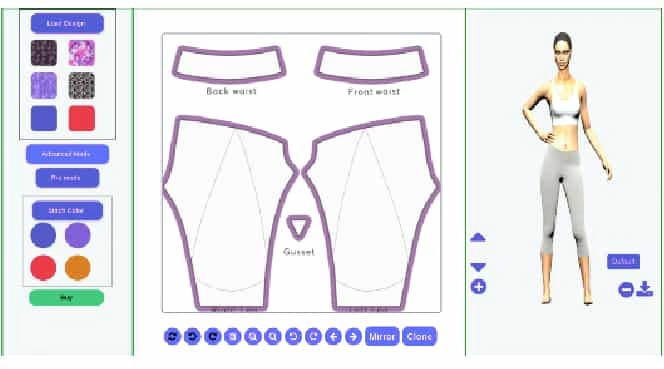
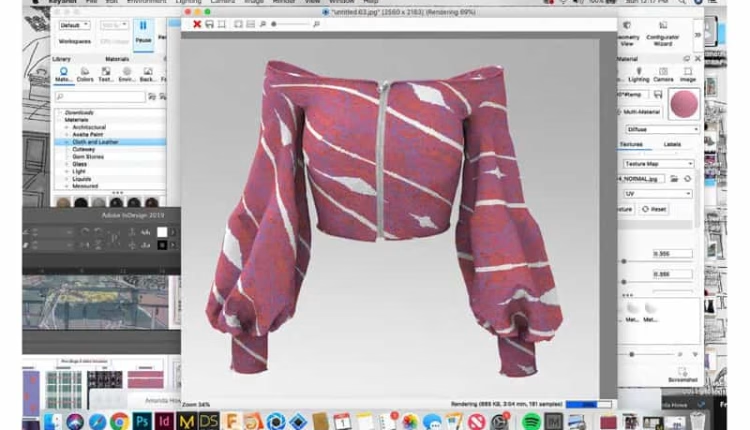
The journey of digital tools in fashion design began in the 1980s with 2D CAD software, revolutionizing pattern making and grading by enabling digital modifications and scaling. However, as fashion complexity grew, 2D tools reached their limits, prompting the development of 3D design software in the early 2000s. Early versions were rudimentary, limited by computational power, but advancements in simulation technology, led by companies like MarvelousDesigner and CLO 3D, introduced realistic cloth simulation. Today, these tools are standard in fashion education and professional practice, with institutions like Parsons School of Design integrating them into curricula.
Technological Advancements
The evolution of 3D fashion design software is marked by several key developments:
- Advanced Simulation Algorithms: Modern software simulates fabric properties like stiffness and elasticity, ensuring accurate garment visualization.
- Real-Time Rendering: Powerful GPUs enable real-time visualization, enhancing design intuitiveness.
- Integration with Other Tools: Seamless integration with 2D CAD, PLM systems, and e-commerce platforms improves workflow efficiency.
- Cloud-Based Collaboration: Cloud technology allows global teams to collaborate, fostering communication and decision-making.
- AI and Machine Learning: These technologies automate tasks like pattern generation and fit prediction, leveraging historical data.
- Virtual and Augmented Reality: VR and AR enhance design visualization and consumer experiences, such as virtual fittings.
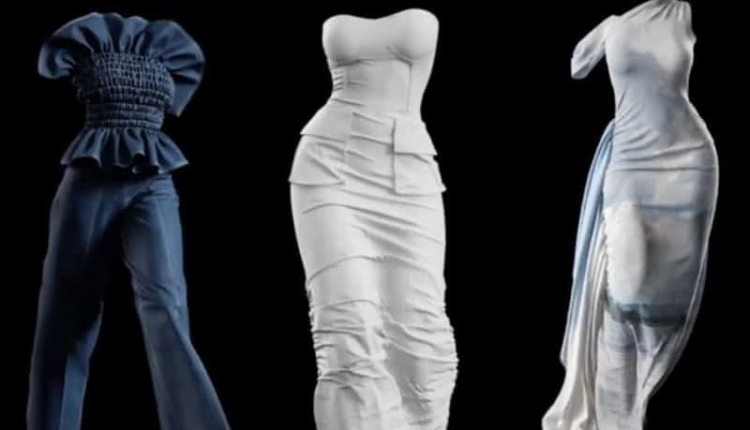
These advancements have expanded creative possibilities, allowing experimentation with unconventional materials and complex constructions without physical constraints.
Detailed Software Overview
The market features several leading software solutions, each with unique capabilities:
| Software | Key Features | Target Users | Unique Selling Point |
|---|---|---|---|
| CLO 3D | Virtual garment simulation, pattern making, fabric library | Fashion designers, apparel brands | Highly realistic fabric simulation |
| VStitcher | 2D to 3D conversion, tech pack generation, animations | Pattern makers, manufacturers | Comprehensive workflow with collaboration |
| Adobe Substance 3D | Material creation, texturing, integration with CLO 3D | Designers needing material visualization | Part of Adobe Creative Cloud, familiar interface |
| Tuka3D | 3D fit analysis, motion simulation, grading | Apparel manufacturers, fit-focused designers | Advanced fit analysis with real-time animations |
| MarvelousDesigner | Realistic cloth simulation, pattern generation | Fashion designers, game developers | Widely used in entertainment for character clothing |
| Optitex | 2D/3D CAD/CAM, virtual prototyping, cloud collaboration | Full production cycle users | End-to-end solution covering all stages |
- CLO 3D: Offers virtual prototyping with features like avatar customization and colorway management, ideal for apparel design. It runs on both Windows and macOS, with educational discounts available[^i^].
- VStitcher: Focuses on seamless 2D to 3D transitions, with a vast fabric library and animation tools, enhancing production efficiency[^i^].
- Adobe Substance 3D: Provides material creation with 8K resolution capabilities, integrating with CLO 3D for enhanced realism[^i^].
- Tuka3D: Specializes in fit analysis with motion simulation, using 3D body scans for accurate models, reducing physical fit sessions[^i^].
- MarvelousDesigner: Known for realistic cloth modeling, used in gaming and film, with pattern-making based on sewing principles[^i^].
- Optitex: Offers end-to-end solutions with 2D/3D CAD/CAM, supporting cloud collaboration for global teams[^i^].
Source and Availability
Most software operates on subscription models, with pricing scaling by user type. CLO 3D offers individual to enterprise plans, while VStitcher provides tiered pricing. Adobe Substance 3D is part of Creative Cloud subscriptions, and Tuka3D is within Tukatech’s suite. MarvelousDesigner offers both subscription and perpetual licenses, and Optitex provides flexible models, including pay-per-use. Free trials and educational discounts are common, enhancing accessibility for students and small businesses.
Innovations and Production Process
Recent innovations include improved fabric simulation, photorealistic rendering, and AR integration for virtual try-ons. In production, these tools streamline workflows by enabling virtual experimentation, digital approvals, and optimized cutting plans, reducing fabric waste and speeding time-to-market. For example, virtual fittings on avatars minimize physical sample needs, aligning with sustainability goals.
Challenges and Real-World Applications
Challenges include a steep learning curve, high costs, and hardware requirements. Data security and lack of standardization also pose issues. Real-world applications show brands like Adidas using CLO 3D to reduce samples, Levi’s employing Tuka3D for fit, and Gucci showcasing virtual collections. Educational institutions like FIT integrate these tools, preparing students for industry demands.
End-Users and Market Dynamics
End-users include fashion designers, pattern makers, product developers, manufacturers, and students, each benefiting from tailored features. The market, valued at USD 1.2 billion in 2020, is expected to grow at a CAGR of 10.8% from 2021 to 2028[^i^], driven by sustainability and efficiency needs. North America and Europe lead, with Asia Pacific growing fastest due to its textile industry.
Future Trends and Summary
Future trends include AI for automated design, VR/AR for immersive experiences, and integration with smart textiles. Blockchain may enhance supply chain transparency. In summary, digital tools like CLO 3D, VStitcher, and others are transforming fashion design, offering efficiency, sustainability, and creativity. They are essential for modern designers, with endless possibilities as technology advances.
Key Points
- Research suggests that digital tools like CLO 3D, VStitcher, and Tuka3D are transforming fashion and textile design with 3D capabilities.
- It seems likely that these tools enhance efficiency, sustainability, and creativity through virtual prototyping.
- The evidence leans toward these software solutions being accessible via subscriptions, with educational discounts for students.
- An unexpected detail is how AI and VR are increasingly integrated, offering new ways for virtual fittings and consumer experiences.
Key Citations
- [CLO 3D Fashion Design Software Features](https://www.clo3d.com/en/clo/features)
- [VStitcher Leading 3D Fashion Design Software](https://browzwear.com/products/v-stitcher)
- [Adobe Substance 3D in Fashion Design](https://www.adobe.com/products/substance3d/discover/3d-in-fashion.html)
- [TUKA3D 3D Fit Fashion Technology](https://tukatech.com/tuka3d/)
- [Marvelous Designer Official Site Overview](https://www.marvelousdesigner.com/product/overview)
- [Optitex End-to-End Fashion Design Solutions](https://optitex.com/products/)
- [Grand View Research Fashion Design Software Market Analysis](https://www.grandviewresearch.com/industry-analysis/fashion-design-software-market)