Home » Articles

Textile engineering articles

Page 62 of 84

bead finished dress

Bead Finishes in Garment making

Beading is a form of Fabric decoration add texture and a feeling of luxury to apparel and non-apparel. Beading is a wonderful way to liven up your wardrobe and have a collection of clothing that is unique and individual. Most of the fabrics can be beaded except extremely sheer fabrics or fabrics that are easily crushed, as it’s hard to press the beadwork. For a more dynamic effect combine beads of different finishes.

Read more »

Article

knitted fabric

Yarn guide in Knitted fabric formation

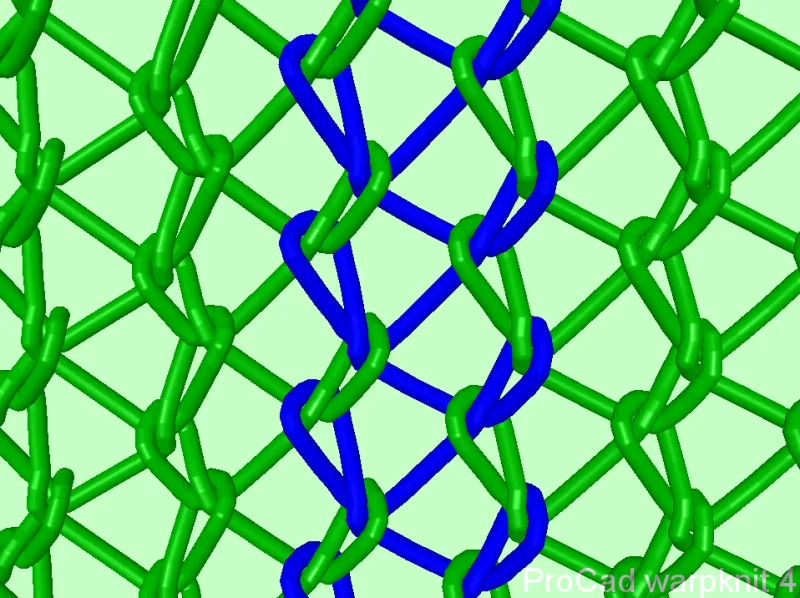
In warp knitting a yarn guide wraps the yarn around the needle hook, thus forming a loop. However, to form a fabric, the yarn guide must wrap the yarn around a different needle during the next course. The yarn guides, therefore, must be displaced laterally during knitting. Different warp knitted structures are produced by varying the magnitude of their lateral displacement. Therefore warp knitted structures can be described by noting the guide bar displacement.

Read more »

Article

warp knitting

Warp Knitting

Warp knitting is the sequential formation and interlinking of loops in an axial direction on a lateral array of needles with at least one separate thread being supplied to each needle. The loops are joined together in a width-wise direction by moving the threads back and forth between adjacent needles.

Read more »

Article

Geocomposite_drain

Raw materials for the production of nonwovens

Cellulosic chemical fibers of all lengths and degrees of refinement and with clearly different properties are at the disposal of the industry of nonwoven bonded fabrics. They are all characterized by the ability to absorb a fairly high amount of moisture. That recommends their use wherever this property is useful for the production of nonwoven bonded fabrics and/or the use of nonwoven bonded fabrics is even a precondition.

Read more »

Article

non-woven

Non-Woven Fabrics

Nonwovens do not depend on the interlacing of yarn for internal cohesion. Intrinsically they have neither an organized geometrical structure. They are essentially the result of the relationship between one single fiber and another. This provides nonwoven fabrics with characteristics of their own, with new or better properties (absorption, filtration) and therefore opens them up to other applications.

Read more »

Article

garment factory

Textile Product Liability and Safety Regulations

Governments enforce very strict regulations about the safety standards on consumer products in order to ensure the well being of its people. When a consumer is hurt, or killed due to the fault of the product of the product or malfunction of the product, the consumer or his/her relatives may sue the retailer who sold the goods and/or the importer who imported the goods and /or the manufacturer who made the goods for a very large amount of money.

Read more »

Article

Scroll to Top