Home » Articles

Textile engineering articles

Page 78 of 84

textile fashion

Understanding Textile Fashion

Fashion is not defined solely by clothing choices, but it is also conveyed through the way we carry ourselves, our personalities and our views of the world.In addition to the actual items of clothing we wear, there are other features that we have come to accept as part of ‘dress’. Among these are hairstyles, makeup, and accessories such as jewelry. Additionally, body decoration such as tattoos and piercings have come to be considered part of the contemporary vocabulary of dress.

Read more »

Article

block printing

Textile Finishing

Textile Finishing is any operation (other than preparation and colouring) that improves the appearance and/or usefulness of fabric after it leaves the loom or knitting machine. Finishing is the final series of operations that produces finished textile fabric from grey goods. Textile finishing usually includes treatments such as scouring, bleaching, dyeing and/or printing, the final mechanical or chemical finishing operations etc.

Read more »

Article

broken twill

Broken Twills – Weaving: A Deep Dive into Design, Technique, and Innovation

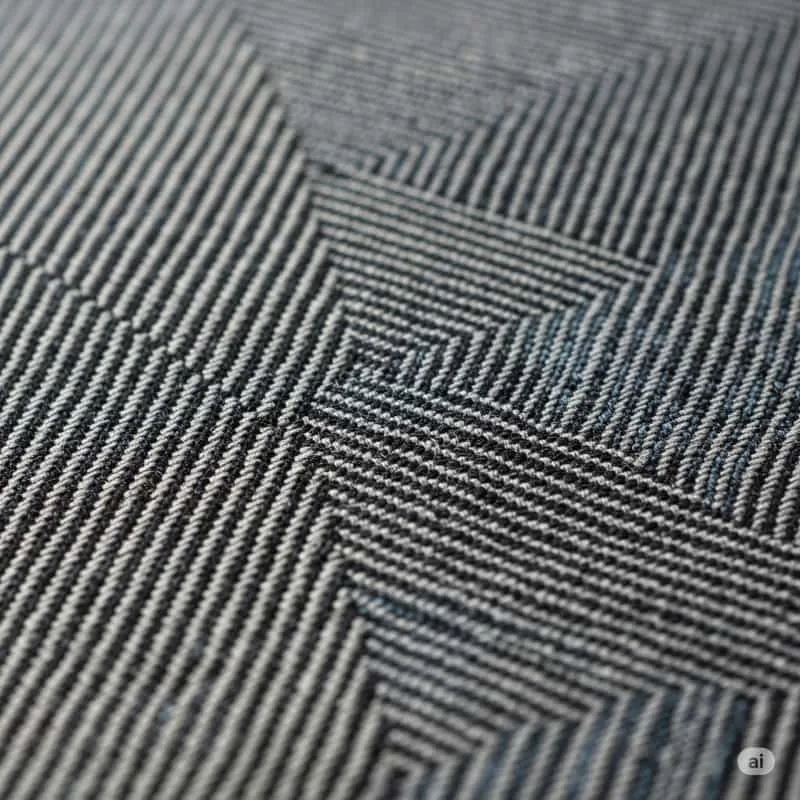
A broken twill weave composed of vertical sections which are alternately right hand and left hand in direction. In Broken Twills, twills are constructed by breaking the continuity of any continuous twill weave. They are formed by reversing the pattern part way through the repeat. The Break can be achieved in different ways.

Broken twill weaving transforms traditional patterns into intricate designs that balance aesthetics with performance. Advanced techniques, modern machinery, and sustainable practices drive this dynamic textile innovation.

Read more »

Article

weaving loom

Weaving Loom Mechanisms

The basic mechanisms in any type of looms can be classified into Primary (shedding, picking & beat up), secondary and Auxiliary motions. Shedding opens the warp sheet into layers. The picking causes the shuttle carrying weft to be propelled from one end of the loom to another. The beat-up motion lays the previously laid weft to the fell of the cloth. The secondary motion comprises of take-up and let-off motions. The auxiliary motions consist of the warp stop, weft stop, and warp protector motions.

Read more »

Article

combination twill weave

Combination twill weaving

Combination twills find extensive use in the worsted industry in the production of garment fabrics, as these weaves are capable of producing compact textures. These twills are constructed by two methods 1. End and end combination 2.Pick and pick combination. In the first method the twill weaves are combined end way and in the second method twill weaves are combined in pick way. In combination with twill weaves two different types of continuous twills are combined together alternately.

Read more »

Article

containerization

Containerization and dispatch of textile goods

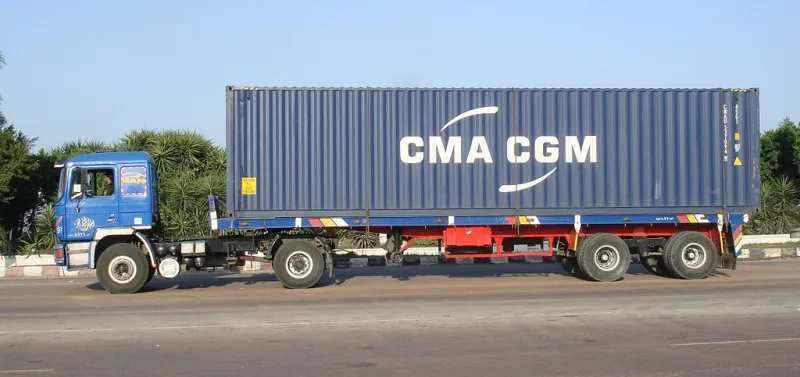
Containerization is a system of intermodal freight cargo transport, using standard ISO containers (known as shipping containers or isotainers) that can be loaded and sealed intact onto container ships, railroad cars, planes, and trucks. The introduction of containers resulted in vast improvements in port handling efficiency, thus lowering costs and helping lower freight charges and, in turn, boosting trade flows.

Read more »

Article

Box-on-pallet-strapped

Carton Box Strapping

A wide variety of tool and machine systems are available to strap cartons, eventual choice often being determined by through put and/or cost. Generally the easiest way to strap cartons is with a semi automatic machine that has a cycle time per strap of just over 2.0 seconds. Automatic and automated machines are frequently used for continuous bulk usage. Polypropylene (PP) strapping is an economical packaging solution designed for light to medium duty unitizing, palletizing and bundling.

Read more »

Article

corrugated board

Carton Boxes made up of corrugated boards

A carton is one of those everyday items you might take for granted, or perhaps you have asked yourself as you push your shopping cart past aisle after aisle of products on the shelves. It is a standard sheet of corrugated board is made from three components; a sheet of corrugated fluted paper sandwiched between an outside liner.

Read more »

Article

Plastic Polythene bags

Plastic bags are made from polyethylene. During processing, the polyethylene might be treated with any number of additives. For perfect presentation at the point of sale and protection against dirt and moisture garments are individually packed in a polybag, or multipacks or assorted packs.

Read more »

Article

Scroll to Top