Natural Fiber

Focus on cotton, wool, silk, flax, hemp, jute, and regional fibers. Agronomy, harvesting, ginning, scouring, and lifecycle impacts. This section explains practical decision criteria, typical test methods, and failure modes that matter in real production. Readers get checklists, calculation steps, and case examples connecting specifications to cost, reliability, and compliance. Links map core concepts to upstream inputs and downstream processes so choices remain consistent across sourcing, manufacturing, and end-use performance. Each article includes definitions, diagrams where helpful, and plain-language notes to help newcomers ramp quickly while giving experienced professionals the depth needed to troubleshoot and optimize. Standards references are cited with context, and whenever trade-offs exist, we make them explicit so you can defend decisions.

Sheep/Merino Wool Fibers

Sheep and Merino wool fibers drive textile innovation by offering unmatched comfort, durability, and sustainability. This comprehensive guide explores the evolution, processing techniques, quality control measures, and emerging digital technologies in wool production. It delves into economic trends, environmental impacts, and career opportunities, highlighting the crucial role of sustainable practices and advanced digital integration in shaping the future of wool textiles.

Sheep/Merino Wool Fibers Read More »

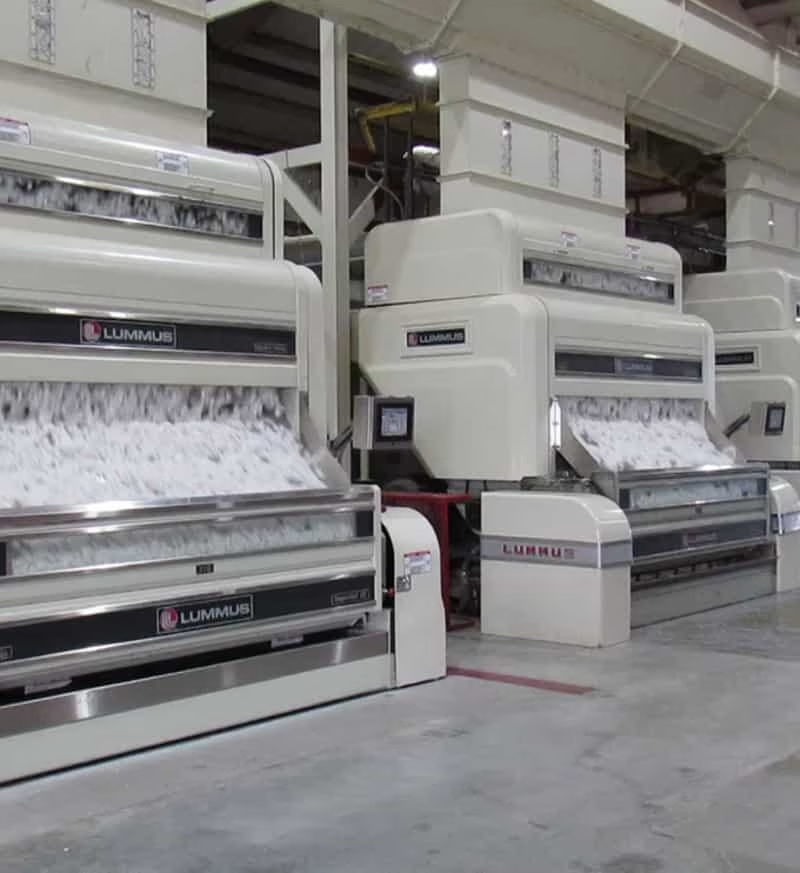
cotton ginning machine

Cotton Ginning: Processing Fiber for Textile Manufacturing

Cotton ginning separates cotton fibers from seeds and impurities, ensuring clean, high-quality fibers for textile production. Through processes like seed separation, cleaning, lint preservation, and waste management, ginning lays the foundation for efficient spinning and weaving, critical to the textile industry.

Cotton Ginning: Processing Fiber for Textile Manufacturing Read More »

hemp plant

Natural Cellulose Fibers – natures own fibers

Cellulose is a fibrous material of plant origin and the basis of all natural and man-made cellulosic fibers. The natural cellulosic fibers include cotton, flax, hemp, jute, and ramie. Cellulose is a polymeric sugar polysaccharide) made up of repeating 1,4-8-an hydro glucose units connected to each other by 8-ether linkages. Strong intermolecular forces between chains, coupled with the high linearity of the cellulose molecule, account for the crystalline nature of cellulosic fibres.

Natural Cellulose Fibers – natures own fibers Read More »

fabrics

Natural Fibers – fibers from the nature

All fibers which come from natural sources (animals, plants, etc.) and do not require fiber formation or reformation are classed as natural fibers. The natural fibers are vegetable, animal, or mineral in origin. Some of the natural fibers like vegetable fibers are obtained from the various parts of the plants. They are provided by nature in ready-made form. It includes the protein fibers such as wool and silk, the cellulose fibers such as cotton and linen, and the mineral fiber asbestos.

Natural Fibers – fibers from the nature Read More »

Scroll to Top