Cotton ginning is a critical process in textile manufacturing that separates cotton fibers from seeds and impurities, preparing them for spinning and weaving. This article explores the objectives, methods, and significance of cotton ginning, including seed separation, cleaning, fiber quality preservation, and waste management, highlighting its role in producing high-quality cotton fibers.
Introduction
Cotton ginning is the initial step in processing raw cotton, transforming harvested cotton bolls into clean fibers ready for textile manufacturing. This mechanical process separates cotton fibers (lint) from seeds, sticks, leaves, and other impurities, ensuring the fibers are suitable for spinning into yarn. The efficiency and precision of ginning directly impact the quality of the cotton fibers and, consequently, the final textile products. This article examines the objectives, methods, and importance of cotton ginning in textile production [1].
Objectives of Cotton Ginning
Cotton ginning serves several critical functions to prepare raw cotton for further processing. These objectives are outlined below:
1. Seed Separation
The primary objective of cotton ginning is to separate cotton fibers from seeds. Raw cotton, as harvested, contains seeds embedded within the fiber mass. Ginning machines, such as roller gins or saw gins, mechanically remove seeds by pulling fibers through narrow slots or using rotating saws, ensuring clean lint is extracted without damaging the fibers [2].
2. Cleaning of Fibers
Cleaning is a vital objective, as raw cotton contains impurities such as leaves, twigs, dirt, and hulls. Ginning systems incorporate cleaning mechanisms, including air separators, screens, and cylinder cleaners, to remove 50–80% of these impurities. Effective cleaning enhances fiber purity, improving its suitability for spinning and reducing defects in yarn production.
3. Preservation of Fiber Quality
Preserving the quality of cotton fibers is essential during ginning. This includes maintaining fiber length, strength, and cleanliness to ensure high-quality yarn. Modern ginning machines are designed to minimize fiber damage, such as cutting or nepping (forming small fiber knots), by using precise settings and gentle handling. Proper ginning preserves the intrinsic properties of cotton, such as its softness and tensile strength [1].
4. Waste Management and By-Product Recovery
Ginning generates waste, including seeds, hulls, and short fibers (linters). An important objective is to manage this waste effectively, recovering valuable by-products. Cotton seeds are used for oil extraction and animal feed, while linters are repurposed for products like paper or regenerated cellulose fibers. Efficient waste management enhances the economic viability and sustainability of the ginning process.
Importance of Cotton Ginning
Cotton ginning is foundational to textile manufacturing, as it directly affects the quality and usability of cotton fibers. Effective seed separation and cleaning ensure clean, spinnable lint, while preserving fiber quality enhances yarn strength and uniformity. Waste management and by-product recovery contribute to cost-efficiency and environmental sustainability. Poor ginning practices can lead to fiber damage, contamination, or excessive waste, resulting in lower-quality yarn and increased production costs. Thus, g ginning is a critical determinant of textile quality and efficiency.
Key Components and Methods in Cotton Ginning
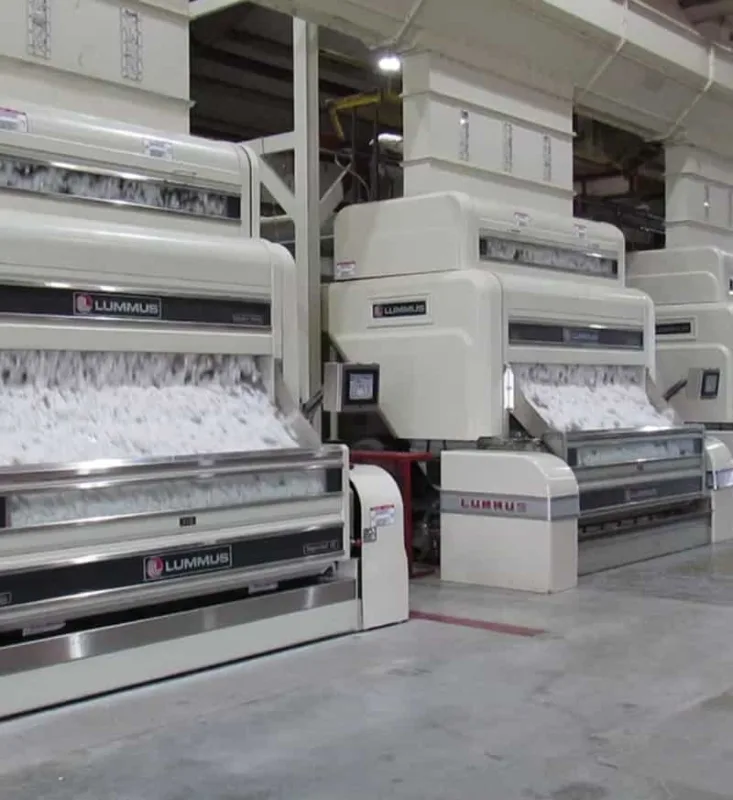
Cotton ginning involves specialized machines and methods to achieve its objectives:
- Saw Gins: Use rotating saws to pull fibers through ribs, separating them from seeds; ideal for upland cotton.
- Roller Gins: Employ rollers to gently extract fibers, suitable for long-staple cotton like Pima or Egyptian varieties.
- Cleaning Systems: Include air separators, stick removers, and cylinder cleaners to remove impurities.
- Lint Cleaners: Further refine lint by removing fine trash and dust.
- Baling Press: Compresses cleaned lint into bales for storage and transport.
These components work sequentially to produce clean, high-quality cotton lint ready for textile processing [2].
Challenges and Considerations
Cotton ginning presents several challenges that require careful management:
- Fiber Damage: Excessive ginning speed or improper settings can cause fiber breakage or nepping, reducing quality.
- Impurity Removal: Incomplete cleaning can leave contaminants, affecting yarn quality.
- Moisture Content: Improper moisture levels in raw cotton can hinder ginning efficiency, requiring controlled drying.
- Waste Management: Balancing impurity removal with minimal loss of usable fibers is critical for cost-effectiveness.
Regular maintenance, precise machine settings, and adherence to best practices mitigate these challenges, ensuring optimal ginning performance.
Conclusion
Cotton ginning is a vital process in textile manufacturing, transforming raw cotton into clean, high-quality fibers through seed separation, cleaning, fiber quality preservation, and waste management. By producing spinnable lint and valuable by-products, ginning supports efficient and sustainable textile production. Leveraging advanced ginning technologies and addressing operational challenges ensures the delivery of superior cotton fibers, laying the foundation for high-quality yarn and textiles.