Cross-overs, multi-domain notes, and uncategorized yet useful guides. Curated to avoid noise and preserve discovery. This section explains practical decision criteria, typical test methods, and failure modes that matter in real production. Readers get checklists, calculation steps, and case examples connecting specifications to cost, reliability, and compliance. Links map core concepts to upstream inputs and downstream processes so choices remain consistent across sourcing, manufacturing, and end-use performance. Each article includes definitions, diagrams where helpful, and plain-language notes to help newcomers ramp quickly while giving experienced professionals the depth needed to troubleshoot and optimize. Standards references are cited with context, and whenever trade-offs exist, we make them explicit so you can defend decisions.
Today, the textile industry is one of the most important industries in the world. Over 17 million tons of all clothing sold in America is produced by it. This $70billion industry exports several million worths annually to other countries and employs over 529,000 workers. Prior to the Industrial Revolution, many people were engaged in handlooms […]
Technical textile end-usage on heat and flame protection fabrics, waterproof fabrics, geotextiles, implantable and non-implantable medical textile materials, extracorporeal devices with technical textiles, and new developments in Technical Textiles
The technical textiles supply chain is a long and complex one, stretching from the manufacturers of polymers for technical fibers, coating, and specialty membranes through to the converters and fabricators who incorporate technical textiles into finished products or use them as an essential part of their industrial operations.
The textile industry is one of the leading sectors in the economy as it contributes to total industrial production. The untreated textile wastewater can cause rapid depletion of dissolved oxygen if it is directly discharged into the surface water sources due to its high BOD value. The effluents with high levels of BOD and COD values are highly toxic to biological life.
The high alkalinity and traces of chromium which is employed in dyes adversely affect the aquatic life and also interfere with the biological treatment processes. The quality of such effluent can be analyzed by their physicochemical and biological analysis. Monitoring of the environmental parameters of the effluent would allow having, at any time, a precise idea on performance evaluation of ETP and if necessary, appropriate measures may be undertaken to prevent adverse impact on the environment. The obtained results will be very much useful in the identification and rectification of operational and maintenance problems and they can be also utilized to establish methods for improvement.
The Indian retail industry is one of the most dynamic and fastest-growing sectors in the world. Visual merchandising performs a key role in enticing the customers in the retail store, thereby. helps in increasing the sales of the store and to succeed in the competitive marketplace. Impulse buying is an important factor in visual merchandising. It arouses the consumers’ desire to buy the product which has been presented in an exciting & impressive manner.
In this investigation, the impact of visual merchandising on the impulse buying behavior of consumers is studied in the Coimbatore region, Tamil Nadu, India, and the results are interpreted statistically to understand the significance of various factors affecting the attitude of the customers in buying. The results of this work suggest that all the elements of visual merchandising – window displays, store interior, mannequin display, and signage have a positive impact on impulse buying according to the perceptions of the people in the Coimbatore region, Tamil Nadu, India. Among all the four elements, store interior has the highest positive impact on impulse buying behavior.
Nanotechnology continues to grow as an interdisciplinary technology, and many people consider it the start of a new industrial revolution. This technology deals mainly in studying materials with 1-100 nanometers in length. It is fundamentally based on the fact that some materials have properties that change drastically when the dimensions are cut down to a […]
ELECTROSPINNING PROCESS Electrospinning is from the academic as well as technical perspective presently the most versatile technique for the preparation of continuous nanofibers obtained from numerous materials including polymers, metals, and ceramics. Electrospinning is a physical process used for the formation of thin fibers in which a viscous liquid is subjected to electrical shear stress […]
Even after the basic training, it is difficult for an average salesperson to come up with the exact measurements. It is here that the 3D technology proves to be a boon. The development of three-dimensional body-scanning technology has immense potential for use in the apparel industry, particularly for customization or mass customization strategies to be […]
Today’s fashion industry is at a crossroads. Fast fashion, the industry’s moneymaker, is heavily criticized while sustainable materials are emphasized – and all of this under the persistent craving for novelty in wear and design. Even working conditions in the fashion industry are undergoing a revolution. Whereas before, groups of designers would spend feverish hours […]
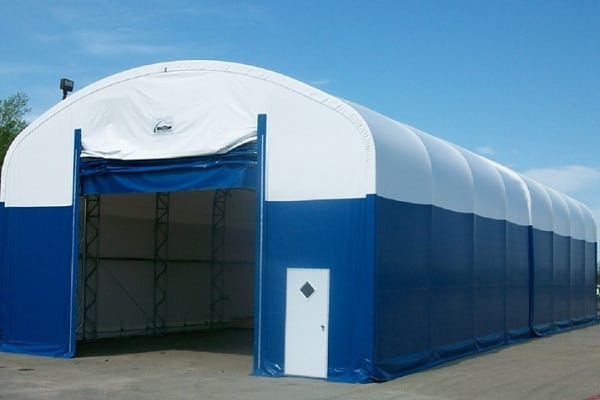
Tarpaulins are large fabric sheet of super heavy duty and reinforced, tightly woven with high fabric cover factor, flexible hard wearing, breathable water resistant or water proof, fire retardant coated material uses as protective covering against moisture.