1. Introduction
With global challenges such as pollution, waste accumulation, climate change, and resource depletion, industries and governments are under increasing pressure to adopt sustainable solutions. Materials that can help prevent, manage, and mitigate environmental damage are more important than ever.
Oekotech—short for Ecological Technical Textiles—refers to fabrics and textile-based products used for environmental protection and conservation. These materials combine engineering performance with eco-friendly design, playing a crucial role in waste management, water purification, soil stabilization, and pollution control.
2. What is Oekotech?
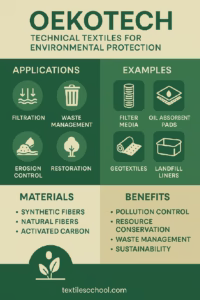
Oekotech is one of the 12 recognized categories of technical textiles. It encompasses textile materials specifically designed for:
- Environmental protection projects
- Pollution control systems
- Resource conservation
- Ecological restoration
Key characteristics:
- Durability in outdoor and industrial environments
- Resistance to chemicals and weather
- Long-term performance with minimal maintenance
- In some cases, biodegradability for eco-friendly disposal
3. Functions of Oekotech Textiles
- Filtration: Removing contaminants from air, water, and soil.
- Containment: Preventing leakage or spread of pollutants.
- Erosion Control: Stabilizing soil in vulnerable landscapes.
- Waste Management: Assisting in collection, separation, and recycling.
- Water Management: Ensuring clean water supply and preventing water loss.
- Restoration: Supporting reforestation, vegetation growth, and habitat recovery.
4. Key Oekotech Products
4.1 Environmental Filtration Textiles
- Air Filtration: Nonwoven filter media for industrial emissions and HVAC systems.
- Water Filtration: Membrane fabrics for municipal and industrial water treatment.
- Oil Absorbent Mats: Nonwoven PP pads for oil spill cleanup.
4.2 Waste Management Textiles
- Bags and liners for collecting hazardous and non-hazardous waste.
- Separation fabrics for recycling facilities.
- Geomembranes for landfill lining and leachate control.
4.3 Erosion Control and Landscaping
- Coir and jute mats for soil stabilization.
- Geotextiles for slope reinforcement.
- Vegetation blankets to promote plant growth.
4.4 Containment Systems
- Geomembranes for hazardous liquid containment.
- Floating booms with textile barriers for oil spill control.
4.5 Other Applications
- Shade nets for plant nurseries.
- Weed control fabrics.
- Acoustic barriers for noise pollution reduction.
5. Materials Used in Oekotech
Synthetic Fibers:
- Polypropylene (PP) – Lightweight, chemical-resistant.
- Polyester (PET) – Strong, UV-resistant.
- Polyethylene (PE) – Flexible, water-resistant.
- PTFE – Non-reactive, long-lasting for filtration.
Natural Fibers:
- Coir – Biodegradable, used in erosion mats.
- Jute – Breathable, eco-friendly soil covers.
- Cotton – Used in absorbent cleaning products.
Special Materials:
- Activated carbon fabrics for odor and gas filtration.
- Biodegradable polymers for compostable applications.
6. Manufacturing Techniques
- Nonwoven Production: Filtration media, absorbent pads.
- Weaving: Strong, durable geotextiles.
- Knitting: Flexible erosion control fabrics.
- Coating & Laminating: Adding waterproof and chemical resistance.
- Needle-Punching: For drainage and soil separation fabrics.
7. Functional Properties
- High strength-to-weight ratio.
- Resistance to chemicals and microbial attack.
- UV stability for outdoor use.
- Controlled permeability for filtration and drainage.
- Eco-friendly disposal options in some products.
8. Applications
| Sector | Applications |
|---|---|
| Air Pollution Control | Filter fabrics, dust collection systems |
| Water Management | Filtration membranes, oil absorbents |
| Waste Management | Landfill liners, separation fabrics |
| Soil & Erosion Control | Geotextiles, biodegradable mats |
| Ecological Restoration | Vegetation blankets, shade nets |
9. Advantages of Oekotech
- Protects air, water, and soil from contamination.
- Improves efficiency in environmental protection systems.
- Supports sustainable development goals.
- Offers both reusable and biodegradable options.
10. Global Market Overview
- Market size (2024): USD 10–12 billion.
- CAGR: 5–6% growth expected.
- Drivers: Stricter environmental regulations, industrial growth, climate change mitigation efforts.
- Top markets: Europe, North America, Asia-Pacific.
11. Innovations in Oekotech
- Biodegradable geotextiles for eco-sensitive projects.
- Nanofiber filtration fabrics for ultra-fine particle capture.
- Smart environmental monitoring textiles with embedded sensors.
- Recycled polymer erosion mats reducing waste.
12. Sustainability in Oekotech
- Use of recycled PET bottles for geotextiles.
- Compostable coir and jute erosion control mats.
- Closed-loop recycling for industrial filtration fabrics.
- Reduced energy consumption in production.
13. Challenges
- Balancing performance with biodegradability.
- Managing cost for large-scale environmental projects.
- Disposal of contaminated synthetic textiles.
14. Future of Oekotech
- Greater integration of smart environmental textiles.
- Expanded use of biodegradable and compostable fibers.
- Widespread adoption in climate adaptation projects.
- Increased demand for recycled-content fabrics.
15. Conclusion
Oekotech textiles are essential to global environmental protection efforts. Whether preventing oil spills, cleaning air and water, or restoring damaged ecosystems, these advanced fabrics are at the heart of sustainable environmental engineering.
Frequently Asked Questions (FAQ) – Oekotech Technical Textiles
Oekotech refers to technical textiles used for environmental protection, resource management, and ecological sustainability. These fabrics are designed for applications such as air and water filtration, waste management, erosion control, and ecological restoration.
Examples include:
Nonwoven filter media for air and water purification
Oil absorbent pads and booms for spill control
Geotextiles and biodegradable mats for erosion prevention
Landfill liners and leachate control fabrics
Shade nets and weed control fabrics
Synthetic fibers: Polypropylene, polyester, polyethylene, PTFE
Natural fibers: Coir, jute, cotton
Special materials: Activated carbon fabrics, biodegradable polymers
They help reduce pollution, protect natural resources, manage waste more efficiently, support soil and water conservation, and promote sustainable ecological restoration.
Many Oekotech solutions are eco-friendly, using recycled materials, biodegradable natural fibers, and compostable fabrics for minimal environmental impact.
They are used in environmental engineering projects, industrial pollution control, municipal waste management, agriculture, landscaping, and disaster recovery operations.
Trends include smart environmental monitoring textiles, advanced nanofiber filtration fabrics, biodegradable geotextiles, and increased use of recycled-content materials for large-scale ecological projects.