This comprehensive article explores the resurgence of natural indigo dyeing and its impact on sustainable textile production. From plant sources and traditional techniques to modern innovations and global case studies, it offers a rich narrative on how indigo is redefining ethical fashion.
Introduction
In a world grappling with climate change, resource depletion, and chemical pollution, the textile industry is reevaluating its relationship with nature. At the heart of this movement is the revival of natural indigo dyeing—an ancient craft that fuses history, chemistry, artistry, and sustainability. This traditional technique, once overshadowed by synthetic dyes, is regaining global attention for its eco-friendly properties, cultural legacy, and exquisite aesthetic.
From Japanese shibori to Indian resist dyeing and West African adire, indigo has long been more than just a color. It is a symbol of identity, a tool of resistance, and a product of generations of artisan knowledge. Today, as designers, researchers, and consumers seek meaningful alternatives to synthetic coloration, natural indigo dyeing techniques are experiencing a renaissance across continents.

Historical Background of Natural Indigo
Indigo is one of the oldest known dyes in the world, with use dating back over 6,000 years. Cultures in Egypt, Mesopotamia, India, China, and West Africa cultivated various indigo-yielding plants for textiles and rituals.
Key Historical Milestones:
- Indigofera tinctoria in India became the most widely known plant source.
- The El Salvadoran Maya used Indigofera suffruticosa for ritual clothing.
- West Africa’s adire tradition used cassava paste with indigo dye for resist-dyed fabrics.
- Japan’s aizome (indigo dyeing) became a national craft during the Edo period.
With colonization and trade, indigo gained a reputation as “blue gold,” sparking plantations and conflicts. The invention of synthetic indigo by Adolf von Baeyer in 1880 led to a sharp decline in natural indigo farming.
However, the late 20th century saw small-scale revivals, and by the 21st century, global interest in sustainable dyeing rekindled natural indigo’s allure.
Science of Natural Indigo: Plant Sources and Chemistry
Natural indigo is derived from plant leaves through a process that ferments and reduces indigotin, the pigment responsible for the blue hue.
Common Indigo Plant Varieties:
| Species | Region | Notes |
|---|---|---|
| Indigofera tinctoria | India, Africa | Most traditional and widely cultivated |
| Persicaria tinctoria | Japan, China | Also known as Polygonum or “dyer’s knotweed” |
| Isatis tinctoria | Europe | Also known as woad; lower indigotin yield |
| Indigofera suffruticosa | Central and South America | Used by ancient Maya |
Chemical Composition:
- Indican: Precursor compound in fresh leaves
- Indoxyl: Produced via fermentation
- Indigotin (C16H10N2O2): Insoluble blue pigment that adheres to fabric via oxidation
The unique vat dyeing process involves reducing insoluble indigotin to a soluble yellow-green form, then re-oxidizing it in the air to create vibrant blue.

Traditional Indigo Dyeing Techniques
Dyeing with natural indigo involves a meticulous, labor-intensive process that requires fermentation, temperature control, and precise timing.
General Steps:
- Harvest and dry leaves
- Ferment leaves in alkaline solution to extract indoxyl
- Mix with reducing agents (e.g., natural sugars or lime)
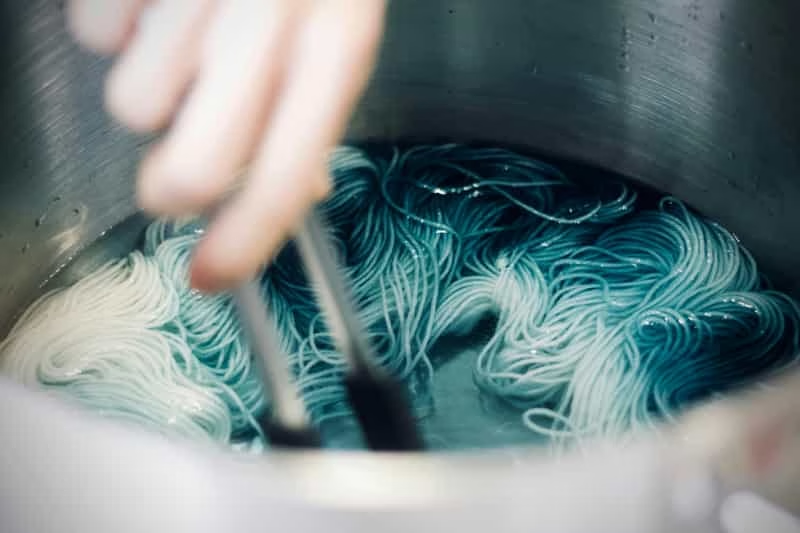
- Submerge textiles in the dye vat
- Remove and expose to oxygen
- Repeat dipping for deeper hues
Regional Techniques:
- Shibori (Japan): Fold-and-bind resist patterns
- Adire (Nigeria): Starch-resist motifs using cassava paste
- Bandhani (India): Tie-dye method using small bindings
- Batik Indigo (Indonesia): Wax-resist patterning
Each culture contributes a distinct visual language to indigo, reinforcing its global diversity.
Revival in the 21st Century: Factors Driving the Comeback
The return of natural indigo is driven by both environmental urgency and cultural appreciation.
1. Eco-Conscious Consumerism
- Demand for chemical-free, biodegradable dyes
- Concerns over water contamination from synthetic dyes
2. Artisan Revival Movements
- NGOs and design schools reviving hand dyeing traditions
- Collaborations between indigenous artisans and contemporary brands
3. Luxury and Slow Fashion Trends
- High-end designers using indigo to emphasize craftsmanship
- Limited edition and bespoke indigo collections
4. Scientific Research and Education
- Botanical research into indigo yield optimization
- Workshops and open-source manuals democratizing access to knowledge

Environmental Benefits of Natural Indigo Dyeing
Compared to synthetic dyes, natural indigo offers several sustainability advantages:
| Factor | Synthetic Indigo | Natural Indigo |
|---|---|---|
| Origin | Petrochemical-based | Plant-derived, renewable |
| Water pollution | High chemical load | Biodegradable waste |
| Energy use | High | Lower with solar drying |
| Soil regeneration | None | Crop rotation and regenerative farming |
| Worker exposure | Toxic chemical risks | Minimal with traditional methods |
That said, scalability and water use must be managed responsibly. Some programs combine indigo cultivation with permaculture and rainwater harvesting to offset impact.
Applications in Modern Textiles
Natural indigo has found new expression across several textile categories:
- Apparel: Denim, dresses, scarves, jackets
- Home textiles: Cushion covers, curtains, table runners
- Art and installations: Wall hangings, textile sculptures
- Accessories: Bags, shawls, handkerchiefs
Key Market Segments:
- Ethical fashion brands
- Artisan lifestyle brands
- Textile museums and collectors
- Eco-conscious consumers

Challenges in Scaling Natural Indigo
Despite its appeal, natural indigo dyeing faces several barriers:
- Lower Color Consistency: Natural indigo requires skill and conditions to maintain uniformity
- Longer Processing Time: Fermentation vats take weeks to prepare
- Labor-Intensive: Artisanship cannot be rushed without compromising quality
- Crop Sensitivity: Yield depends on climate, soil, and pest conditions
- Lack of Awareness: Misconceptions about colorfastness or product care
To overcome these, hybrid models combining artisan skill with technological support (e.g., controlled fermentation, digital pattern design) are being developed.
Innovations and Modern Adaptations
A. Bioengineered Indigo
- Using genetically modified microbes to produce indigo without plants
- Reduces land and water use
B. Natural Fermentation Controllers
- IoT devices that maintain optimal pH and temperature for dye vats
C. Eco-Denim Technologies
- Combining natural indigo with laser finishing and ozone washing
- Major denim brands are now reintroducing natural indigo in heritage lines
D. Carbon Sequestration Indigo Farms
- Studies show well-managed indigo farms can sequester carbon and improve biodiversity
These technologies aim to scale up natural dyeing without sacrificing its values.
Real-World Case Studies
Khamir (India)
- Promotes indigenous indigo cultivation and Ajrakh dyeing in Kutch
- Partners with designers to co-create export collections
Buaisou (Japan)
- Entire process from farming to dyeing to selling
- Uses traditional sukumo fermentation for premium aizome products
Beyond Surface Technologies (Switzerland)
- Researching algae- and indigo-based dye systems for commercial brands
American Indigo Revival
- U.S. designers sourcing from Carolina-grown indigo and building dye education networks
These examples illustrate the intersection of heritage, innovation, and sustainability.
Economic Potential and Market Demand
Natural indigo appeals to growing markets:
- Global natural dye market projected to reach $5.2 billion by 2027
- Indigo accounts for over 15% of the artisan dye segment
- Premium prices earned through branding, storytelling, and certification
End consumers are willing to pay 20–40% more for garments with transparent dye origins and low-impact credentials.

Future Trends in Natural Indigo Dyeing
- Digital dye archives for recipe standardization and replication
- Smart dye vats that automate fermentation phases
- Virtual dye education for global artisans and fashion students
- Fashion-tech collabs exploring biosensor-reactive indigo textiles
- Global indigo alliances for biodiversity protection and trade ethics
These trends suggest a shift toward distributed, tech-enhanced artisanal ecosystems.
Summary
The revival of natural indigo dyeing is more than a nostalgic return to tradition—it is a necessary reimagining of color, craft, and culture for a sustainable future. As the textile industry seeks alternatives to environmentally damaging synthetics, natural indigo offers a compelling solution rooted in ecological balance and human connection.
From regenerative farms and zero-waste workshops to wearable artworks and high-fashion runways, indigo is once again rising to its rightful place—as a symbol not only of blue, but of resilience, revival, and responsibility.
Citations:
- International Journal of Textile Science – https://www.sciencepublishinggroup.com/journal/textile
- Khamir Indigo Project – https://khamir.org
- Buaisou Indigo Farm – https://www.buaisou-i.com
- World Textile Information Network (WTiN) – https://www.wtin.com
- Natural Dyes: Sources, Chemistry, Application and Sustainability – https://link.springer.com/book/10.1007/978-3-030-86943-6