Home » Articles

Textile engineering articles

Page 76 of 84

weaving machine

Weaving Equipments

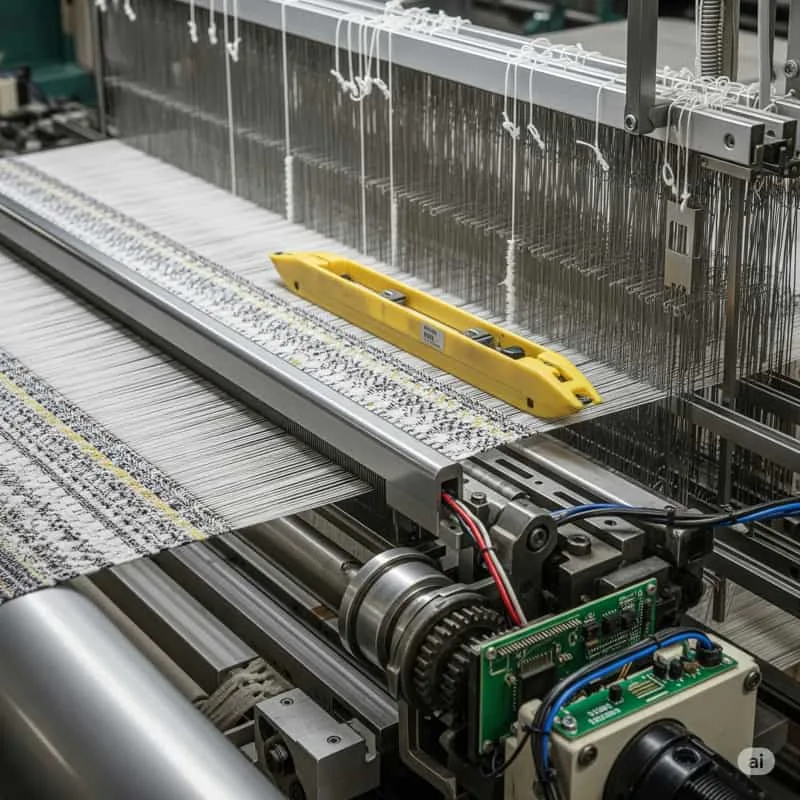
Special equipments to improve efficiency and accuracy of weaving machines, reducing manual work are required. With a view to increase the efficiency and the flexibility of the weaving machines, the manufacturers have made considerable efforts to find solutions capable of simplifying and speeding up the operations and the machine settings at style changing and to permit coping better with particular production requirements.

Read more »

Article

Drive and control of weaving machines

Drive and control of weaving machines

The latest weaving machines are equipped with microprocessor or PLC units which ensure continuously the control, the drive and the monitoring of the various machine members and of the various functions. One of the ways to increase production is to design and manufacture particular weaving machines which can offer very high weft insertion rates.

Read more »

Article

Shedding in Weaving machines

Shedding in Weaving machines

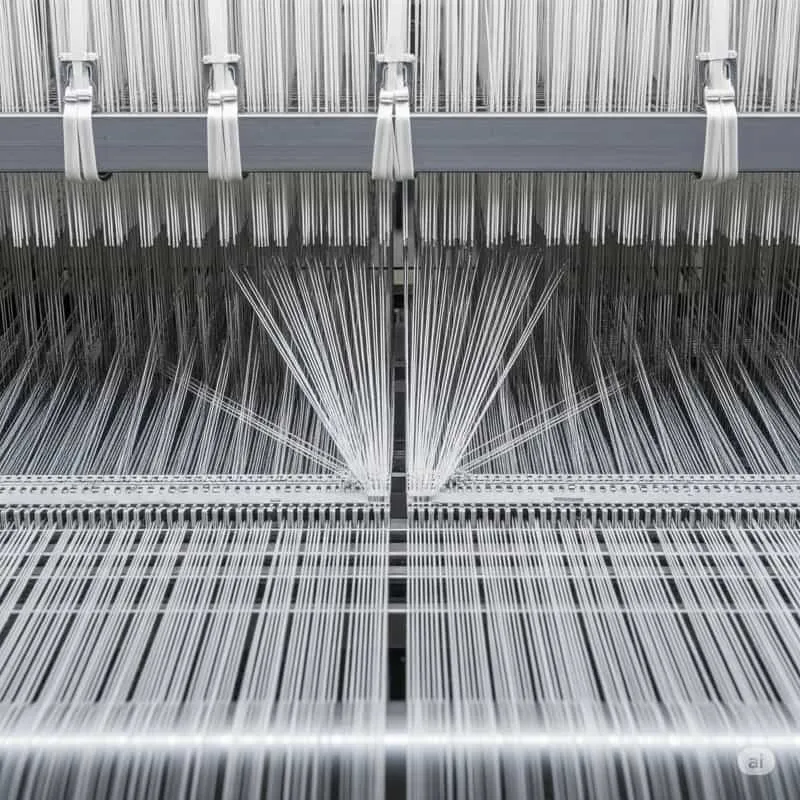
The angle which is formed by the raising threads with the threads remaining in low position is called shed. The shed must be as wide open as to permit the easy passage of the weft insertion element. The shed can be obtained by either moving the heald frames or by directly moving the heald frames through. The machines used to form the shed are cam machines, dobbies, and Jacquard machines.

Read more »

Article

Weaving – warp let-off and fabric take-up motions

Warp let-off system has a frequency converter, which is intended for letting off from warp beam or feeding unit. The drive is mounted either on the weaving machine or on a frame positioned behind the weaving machine. The let-off starts with a machine running signal; the speed of the let-off motor is controlled by a proximity switch mounted on the whip roller system and an internal speed memory. An alarm signal switches the weaving machine off in case of over tightened warp or any other error.

Read more »

Article

Bearing Structure of a Weaving Machine

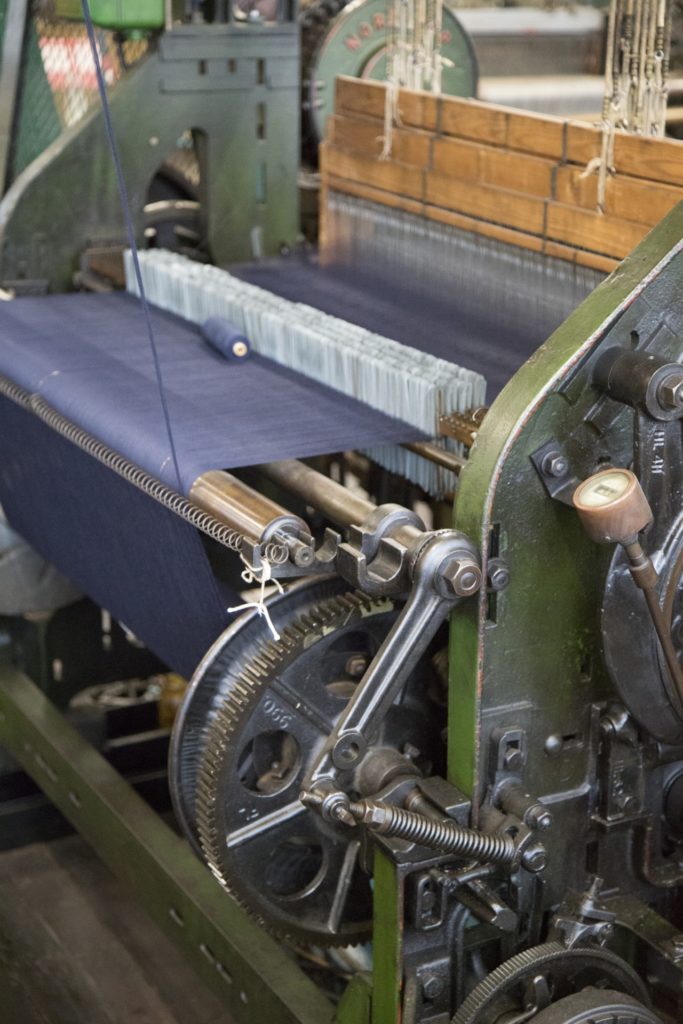
The weaving machines are composed of two side frames in cast iron or steel, which are connected each other by cross members so as to create a firm bearing structure which can limit the vibrations and offer a good stability. The bearing structure of a weaving machine is a critical component that provides support and stability to various moving parts involved in the weaving process. Weaving machines are complex pieces of equipment used in the textile industry to interlace warp and weft yarns to create fabric. The bearing structure ensures the proper alignment and functioning of these moving parts, which is essential for producing high-quality textiles.

Read more »

Article

Water Jet Weaving Machines

Water Jet machines are extensively used in East Asia. They are characterized in particular by high insertion performance and low energy consumption. These machines are produced only by few companies and are used for the manufacture of light and medium weight fabrics with standard characteristics and in water-repellent fiber materials, primarily multi-filament synthetic yarns. They are characterized in particular by high insertion performance and low energy consumption.

Read more »

Article

Yarn Count Conversions: A Comprehensive Guide to Formulas, Calculations, and Conversion Factors

Yarn count is a critical parameter in the textile industry, defining the fineness or coarseness of yarn. Various yarn count systems, such as Tex, Denier, English Cotton Count (Ne), and Metric Count (Nm), are used globally, necessitating accurate conversion methods for standardization and compatibility. This article provides an elaborate exploration of yarn count systems, their conversion formulas, detailed calculations, and comprehensive conversion tables. By addressing direct and indirect count systems, the article equips textile professionals with the tools to perform precise conversions, ensuring consistency in production, quality control, and international trade.

Read more »

Article

Scroll to Top