

Basics of Weaving and Woven Fabrics
Weaving is the process of making cloth with two components, a warp, and a weft, and can be done by very simple techniques on a complicated loom.
Basics of Weaving and Woven Fabrics Read More »
Weaving is the process of making cloth with two components, a warp, and a weft, and can be done by very simple techniques on a complicated loom.
Basics of Weaving and Woven Fabrics Read More »
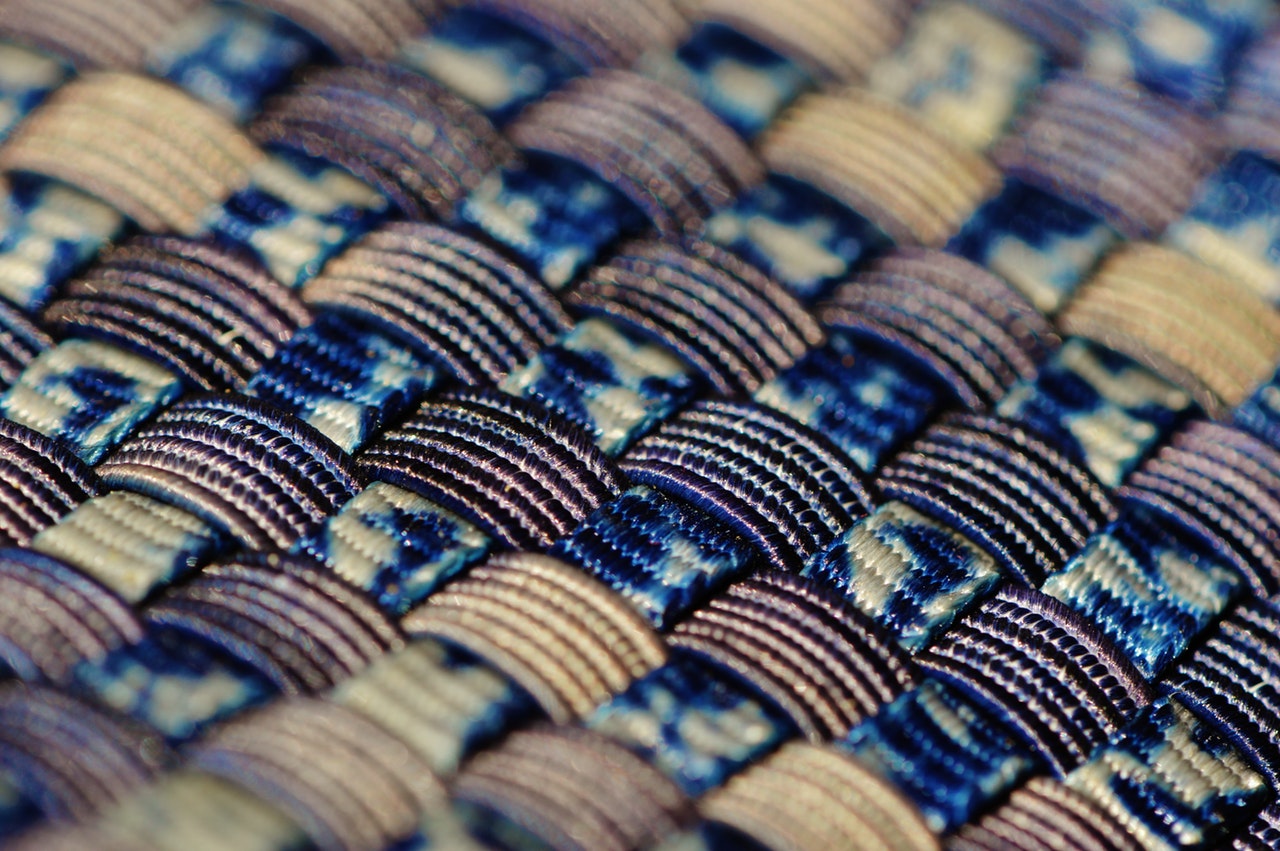
Fabrics can be constructed in a variety of ways, ranging from the matting together of fibrous materials to the intricate interlacing of complex yarn systems.
Woven Fabric Construction Read More »
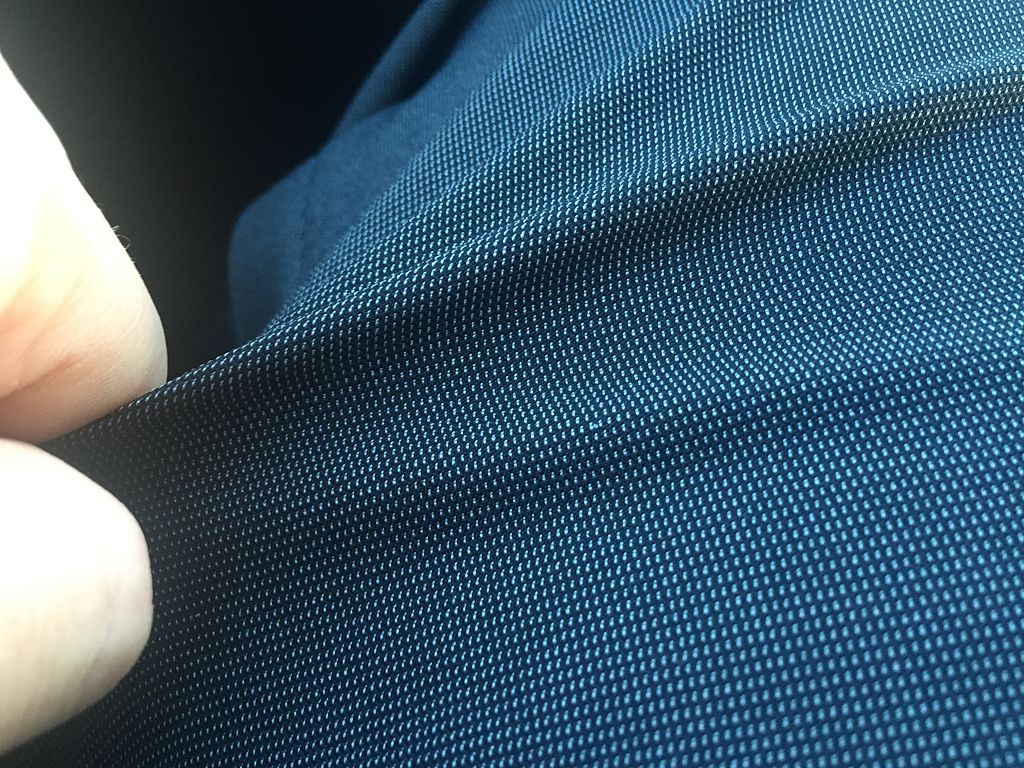
Polyester fibers, the synthetic fibers, are long-chain polymers derived from coal, air, water, and petroleum. They are formed through a chemical reaction between an acid and alcohol. Polyester is often blended with other fibers like cotton to get the best of both worlds.
Polyester Fiber and its uses Read More »

Silkworms, which are really caterpillars, are fed mulberry leaves, mulberry leaves, and only mulberry leaves. They never stop eating. That means feedings every four hours.
Basics of Silk Fiber Read More »

Diagonal weave are basically type of twill weaves confined to bold twills running at angles greater than 45°, although often regular 45° twills are spoken of as diagonals; regular diagonals are generally formed by combining two regular 45° twills in their picks or ends.Diamond weaves are type of twill weave which forms the shape of a perfect diamond.
Diamond and Diagonal Weaves Read More »
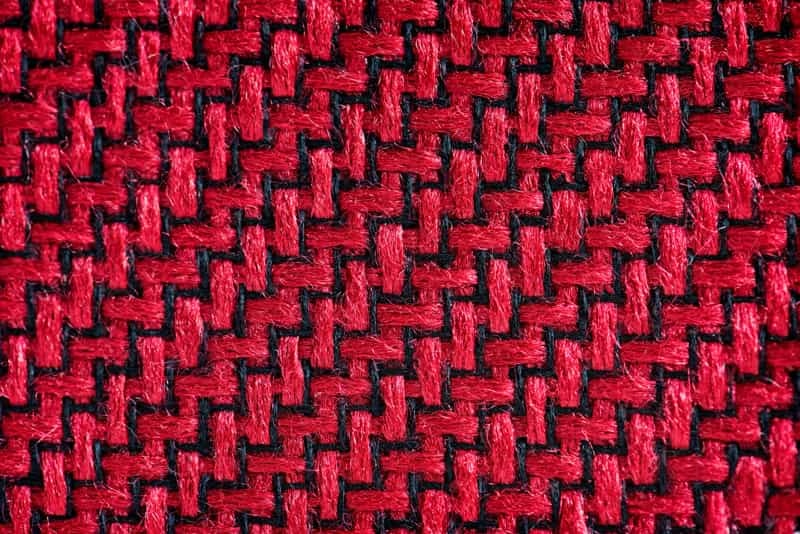
Derivatives Formed by Rearranging Ends or Picks- The number of what may be termed fundamental weaves is comparatively small, but the weaves that may be derived from them are innumerable. Thus, if a simple twill weave is shown out in design paper, several other weaves may be obtained from it by rearranging either the ends or the picks. Designs thus obtained are termed derivatives.
Derivatives of twill Weaves Read More »
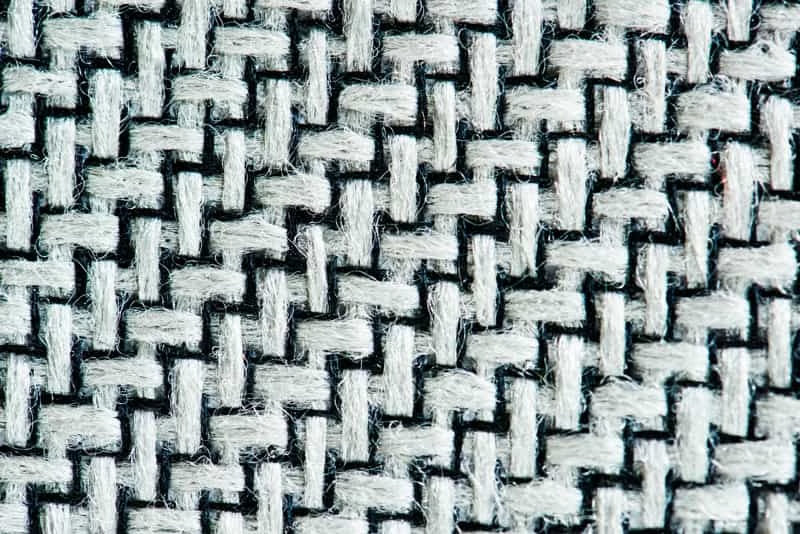
The angle of twill weave is determined by the amount of shift in the points of interlacing.A one pick one end shift twill weaves called 45-degree will.A twill weave which has more than one pick shift and one end shift is called steep twill; if the shift is more than one end and one pick it is called reclining twill.
Angles of twill weave Read More »

Although most orders for garments are placed by buyers on FOB basis, with buyers to pay for freight at the shipping destination, it is still necessary for the shipper or the agent to know how to calculate sea freight and air freight as buyers always need to know how much freight the merchandise cost per dozen. If you are required to sell on CIF basis, (with the shipper to prepay for freight at the shipping port) you will need to calculate the freight accurately for your own costing
Sea and Air Freight Read More »

The emphasis on productivity and quality has developed the weaving technology very much and as a result the working hours required to weave fabric from loom have been reduced from about 20 to 0.25 during the last 125 years, and in the last 50 years there has been a reduction of 95% inoperative hours per standard unit produced.
Advancements in Fabric Weaving Technologies Read More »

If top measurement wants good quality and displays leadership in quality concerns, measurement and production supervisors will follow through. Without leadership from the top, there is often little or no improvement in quality no matter what system is used.
Essentials of Quality Control Programme in Textiles Read More »