Yarn Spinning

Home » Yarn Spinning » Page 2

Speed Frame in Yarn Spinning

The speed frame process in yarn spinning converts slivers into roving through drafting, twisting, and winding, preparing fibers for ring spinning. By ensuring uniformity, strength, and quality, this process is critical for producing high-quality yarn. Advanced speed frame machines achieve these objectives, enhancing textile production efficiency.

Speed Frame in Yarn Spinning Read More »
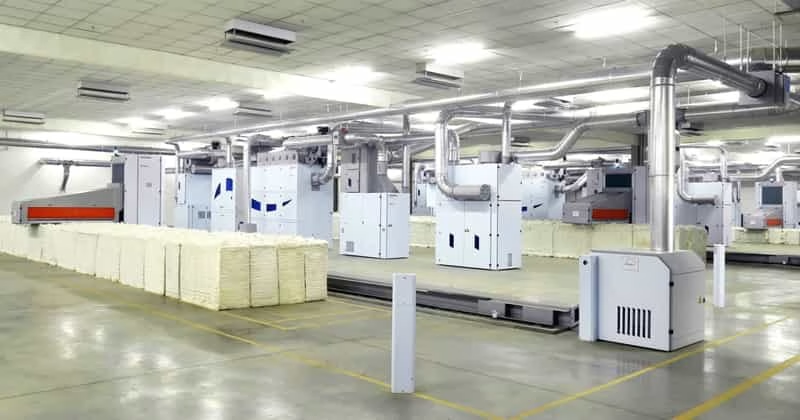
blowroom machine

Objectives of blow room in yarn spinning

The blow room is the foundational step in yarn spinning, where raw fibers undergo opening, cleaning, blending, dust removal, uniform feeding, and waste management. Using specialized machines, this process ensures fibers are prepared for carding, minimizing impurities and ensuring consistent, high-quality yarn production.

Objectives of blow room in yarn spinning Read More »

fabrics

Blended Fabrics: Engineering Superior Textiles Through Fiber Integration

Blended fabrics represent the pinnacle of textile engineering, combining different fibers to create materials with superior performance characteristics. This comprehensive guide explores the science behind fiber blending, manufacturing processes, popular blend combinations, and their applications in modern textile production.

Blended Fabrics: Engineering Superior Textiles Through Fiber Integration Read More »

substrate formation

Substrate Formation in Textile Manufacturing: Processes and Significance

Substrate formation is the cornerstone of textile manufacturing, transforming raw fibers into yarns or fabrics via spinning, weaving, knitting, or nonwoven techniques. These processes ensure structural integrity, functionality, and versatility, enabling the production of textiles for diverse applications in apparel, home goods, and industrial products.

Substrate Formation in Textile Manufacturing: Processes and Significance Read More »

Scroll to Top