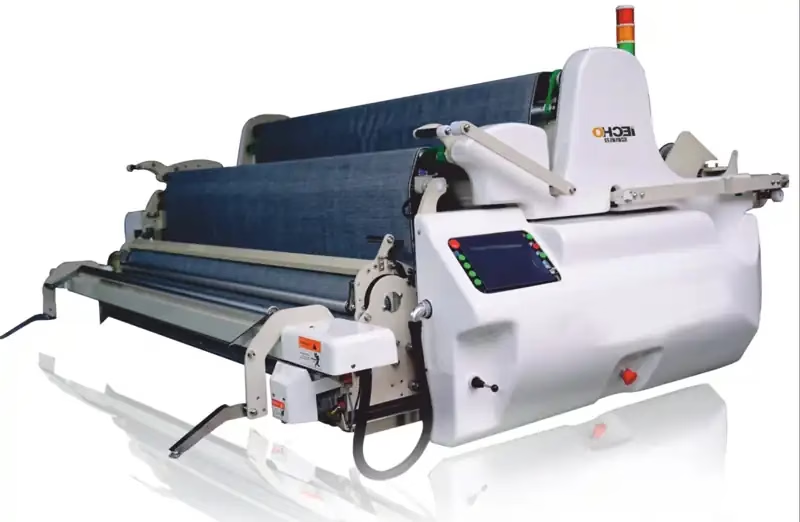
This article profiles the top eight textile CAD/CAM system providers leading the global market in 2025, emphasizing their role in sustainable textile production. Companies like Lectra (France), Gerber Technology (USA), CLO Virtual Fashion (South Korea), Optitex (Israel), Tukatech (USA), Browzwear (Singapore), Assyst (Germany), and Style3D (China) excel in AI-driven design, 3D visualization, and automated pattern-making. These providers support eco-friendly textiles like recycled polyester and organic cotton, reducing waste and enhancing efficiency. The global textile CAD/CAM market, valued at USD 2.8 billion in 2025, is projected to reach USD 4.5 billion by 2032 at a CAGR of 7.1%. The article details major system types, unique features, registered office countries, contact links, market trends, challenges, and future prospects for sustainable textile design.
Introduction to Textile CAD/CAM Systems in the Textile Industry
Textile CAD/CAM (Computer-Aided Design/Computer-Aided Manufacturing) systems are pivotal in modern textile production, enabling designers to create precise patterns, visualize 3D garments, and streamline manufacturing processes. In 2025, the global textile market, valued at USD 1.79 trillion, is driven by demand for sustainable textiles, including recycled polyester (30% of CAD/CAM applications), organic cotton (20%), and biodegradable fibers (15%). CAD/CAM systems, such as 2D pattern-making (40% market share), 3D visualization (30%), and automated cutting (20%), reduce material waste by up to 20% and production time by 25%, supporting eco-friendly fashion.
The push for sustainability, fueled by regulations like the EU’s Green Deal and consumer demand for ethical apparel, has driven innovation in CAD/CAM systems. These technologies integrate AI, IoT, and cloud-based platforms to enhance design accuracy and production efficiency. This article profiles the top eight textile CAD/CAM system providers worldwide, detailing their major system types, unique features, registered office countries, and contact information, while exploring their contributions to sustainable textile production.
The Importance of Textile CAD/CAM Systems in Sustainable Textile Production
Textile CAD/CAM systems are essential for sustainable textile production, reducing fabric waste by 15–20% through precise pattern nesting and minimizing physical sampling by up to 50% with 3D visualization. They support sustainable materials like recycled polyester and organic cotton, aligning with circular economy principles. AI-driven features, such as automated grading and fit analysis, improve design accuracy by 20%, while cloud-based collaboration cuts production lead times by 25%.
The global demand for sustainable textiles, particularly in apparel (50% of CAD/CAM applications) and technical textiles (20%), drives the adoption of these systems. The rise of e-commerce, with platforms like Amazon reporting a 15% increase in sustainable apparel sales in 2024, underscores the need for efficient design tools. CAD/CAM providers integrating Industry 4.0 technologies, like AI and IoT, enable real-time collaboration and data-driven decision-making, making these systems critical for monetizable sustainable textile production.
Top Textile CAD/CAM System Providers in 2025
1. Lectra (Paris, France)
Founded in 1973, Lectra is headquartered in Paris, France, a leader in integrated CAD/CAM solutions. Contact: https://www.lectra.com/en/contact.
Major System Types: 2D/3D pattern-making (Modaris), CNC cutting software (Kaledo), PLM software (Kubix Link).
Special Features: Modaris V8 offers AI-driven pattern grading, reducing fabric waste by 15% and design time by 20%. Kubix Link integrates IoT for real-time collaboration, boosting efficiency by 25%. Lectra’s systems support sustainable fibers like recycled polyester, with 3D visualization cutting physical samples by 50%.
Competitive Edge: Lectra’s integrated CAD/CAM and PLM solutions outperform Gerber’s standalone focus, with stronger Industry 4.0 capabilities compared to Optitex’s 3D emphasis.
Lectra’s smart, sustainable solutions drive its market leadership in 2025.
2. Gerber Technology (Tolland, USA)
Founded in 1968, Gerber Technology is based in Tolland, Connecticut, USA, known for robust CAD/CAM systems. Contact: https://www.gerbertechnology.com/contact/.
Major System Types: Pattern design software (AccuMark), automated cutting systems, nesting software (AccuNest).
Special Features: AccuMark’s AI-powered nesting reduces fabric waste by 15% and supports eco-friendly fibers like organic cotton. Its 3D module cuts physical sampling by 50%, saving 20% in production costs. Gerber’s cloud-based YuniquePLM enhances collaboration, reducing lead times by 25%.
Competitive Edge: Gerber’s comprehensive CAD/CAM suite surpasses Tukatech’s affordability focus, with a stronger U.S. presence compared to Browzwear’s Asia-Pacific base.
Gerber’s eco-friendly innovations solidify its market position in 2025.
3. CLO Virtual Fashion (Seoul, South Korea)
Founded in 2009, CLO Virtual Fashion is headquartered in Seoul, South Korea, specializing in 3D garment visualization. Contact: https://www.clo3d.com/en/contact.
Major System Types: 3D design software (CLO 3D), fabric digitization systems (zFab Kit), rendering tools.
Special Features: CLO 3D’s physics engine offers ultra-realistic fabric draping, reducing physical samples by 50% and waste by 20%. The zFab Kit, launched in 2024, uses AI to digitize fabrics with 98% accuracy, saving 15% in energy. CLO supports sustainable fibers like recycled polyester.
Competitive Edge: CLO’s 3D visualization outperforms Optitex’s 2D/3D integration, with a stronger focus on digital fashion compared to Assyst’s PLM emphasis.
CLO’s innovative, eco-friendly solutions enhance its market strength in 2025.
4. Optitex (Ramat Gan, Israel)
Founded in 1988, Optitex is based in Ramat Gan, Israel, known for integrated 2D/3D CAD solutions. Contact: https://www.optitex.com/contact-us/.
Major System Types: 2D/3D pattern-making (O/Dev), marker-making software, 3D visualization tools.
Special Features: O/Dev streamlines 2D-to-3D workflows, reducing design time by 20% and fabric waste by 15%. Its AI-driven fit analysis supports sustainable fibers like recycled cotton, cutting sampling costs by 40%. Optitex’s cloud-based platform enhances global collaboration.
Competitive Edge: Optitex’s seamless 2D/3D integration surpasses Tukatech’s 2D focus, with stronger technical capabilities compared to Style3D’s fabric library emphasis.
Optitex’s sustainable technology drives its market relevance in 2025.
5. Tukatech (Los Angeles, USA)
Founded in 1995, Tukatech is headquartered in Los Angeles, California, USA, specializing in affordable CAD/CAM solutions. Contact: https://www.tukatech.com/contact/.
Major System Types: 2D pattern-making (TUKAcad), 3D design software, automated marker-making.
Special Features: TUKAcad’s automated grading reduces design time by 25% and fabric waste by 15%. Its cloud-based 3D tools support sustainable fibers like organic cotton, cutting physical samples by 40%. Tukatech’s affordability makes it ideal for SMEs.
Competitive Edge: Tukatech’s cost-effective solutions outperform Assyst’s premium systems, with a stronger apparel focus compared to Browzwear’s 3D visualization emphasis.
Tukatech’s eco-friendly, accessible solutions drive its market growth in 2025.
6. Browzwear (Singapore)
Founded in 1999, Browzwear is headquartered in Singapore, known for advanced 3D visualization. Contact: https://browzwear.com/contact/.
Major System Types: 3D design software (VStitcher), pattern-making tools, fit validation systems.
Special Features: VStitcher’s true-to-life 3D visualization reduces physical sampling by 50% and waste by 20%. Its AI-driven fit tools support sustainable fibers like recycled polyester, enhancing accuracy by 15%. Browzwear’s cloud platform enables global collaboration.
Competitive Edge: Browzwear’s advanced 3D tools surpass Style3D’s fabric focus, with a stronger Asia-Pacific presence compared to Lectra’s European base.
Browzwear’s sustainable innovations strengthen its market position in 2025.
7. Assyst – Human Solutions GmbH (Kaiserslautern, Germany)
Founded in 1985, Assyst is based in Kaiserslautern, Germany, specializing in integrated CAD/PLM solutions. Contact: https://www.assyst.de/en/contact.
Major System Types: 2D/3D pattern-making (Cad.Assyst), PLM software, 3D body scanning.
Special Features: Cad.Assyst’s 3D body scanning reduces fit errors by 20% and supports sustainable fibers like organic cotton. Its PLM integration cuts lead times by 25%, with IoT-enabled collaboration saving 15% in energy. Assyst’s systems streamline production workflows.
Competitive Edge: Assyst’s PLM integration outperforms CLO’s visualization focus, with a stronger technical textile portfolio compared to Tukatech’s apparel emphasis.
Assyst’s smart, sustainable solutions ensure its prominence in 2025.
8. Style3D (Shanghai, China)
Founded in 2015, Style3D is headquartered in Shanghai, China, known for digital fabric libraries and 3D design. Contact: https://www.style3d.com/en/contact.
Major System Types: 3D design software, digital fabric libraries, collaborative platforms.
Special Features: Style3D’s extensive fabric library supports realistic simulations, reducing physical samples by 40% and waste by 15%. Its AI-driven tools enhance design accuracy by 20%, supporting sustainable fibers like recycled polyester. Cloud-based collaboration boosts efficiency.
Competitive Edge: Style3D’s fabric library outperforms Browzwear’s fit focus, with a stronger Asia-Pacific presence compared to Gerber’s U.S. base.
Style3D’s eco-friendly, smart solutions drive its market relevance in 2025.
Market Trends and Innovations in Textile CAD/CAM Systems
The global textile CAD/CAM market, valued at USD 2.8 billion in 2025, is projected to reach USD 4.5 billion by 2032 at a CAGR of 7.1%. Key trends include:
- Sustainability: Virtual sampling and waste-reducing nesting, as in Lectra’s Modaris, cut environmental impact by 20%.
- Industry 4.0 Integration: AI and IoT, as in Gerber’s YuniquePLM, enhance efficiency by 25% through real-time collaboration and predictive analytics.
- Asia-Pacific Dominance: The region holds 40% market share, driven by China and India’s apparel production.
- Digital Twins: Virtual replicas, as in CLO’s zFab Kit, reduce prototyping costs by 30%.
Challenges and Opportunities in the Textile CAD/CAM Market
Challenges: High initial costs (e.g., USD 30,000–100,000 for premium systems) and skilled operator shortages limit adoption, particularly for SMEs. Opportunities: Growing demand for sustainable textiles and technical applications, like automotive fabrics, offers expansion potential. Regulatory support for eco-friendly production and the rise of digital fashion create new market opportunities.
The Future of Textile CAD/CAM Systems and Sustainable Textiles
The future emphasizes AI-driven automation, blockchain for supply chain transparency, and virtual fashion shows. Innovations like CLO’s zFab Kit and Lectra’s Kubix Link will drive closed-loop design processes, enhancing sustainability with biodegradable materials and zero-waste workflows.
Conclusion
The top eight textile CAD/CAM system providers are transforming the industry with AI, 3D visualization, and automation, advancing sustainable textile production. Their technologies reduce waste, enhance efficiency, and meet global demand for eco-friendly textiles. Visit Textile School for more insights on sustainable textile production.
Citations
- Textile Learner. “List of CAD/CAM Software Used in Textile and Apparel Industry.” textilelearner.net, 9 Oct. 2021.
- The Pattern Cloud. “What Are the Top 8 CAD Software Programs for Fashion Design in 2025?” thepatterncloud.com, 20 Feb. 2025.
- Apparel Resources. “10 Popular CAD Solution Providers.” in.apparelresources.com, 19 May 2017.
- Textile Network. “AI-Powered Fabric Digitization System.” textile-network.com, 14 Aug. 2025.
- Mordor Intelligence. “Textile CAD/CAM Market Size & Share Analysis – Growth Trends.” mordorintelligence.com, 2025.
- DataInsightsMarket. “Textile CAD/CAM Systems Market Trends and Forecast 2025-2032.” datainsightsmarket.com, 2025.