Introduction
The textile industry has long relied on mechanization and labor-intensive processes to deliver high-volume production. But as the industry faces increasing pressure for speed, precision, customization, and cost-efficiency—especially in a post-pandemic, supply chain-disrupted world—automation is stepping into the spotlight. Among the most transformative technologies are collaborative robots (cobots): intelligent, adaptable, and designed to work side-by-side with humans.
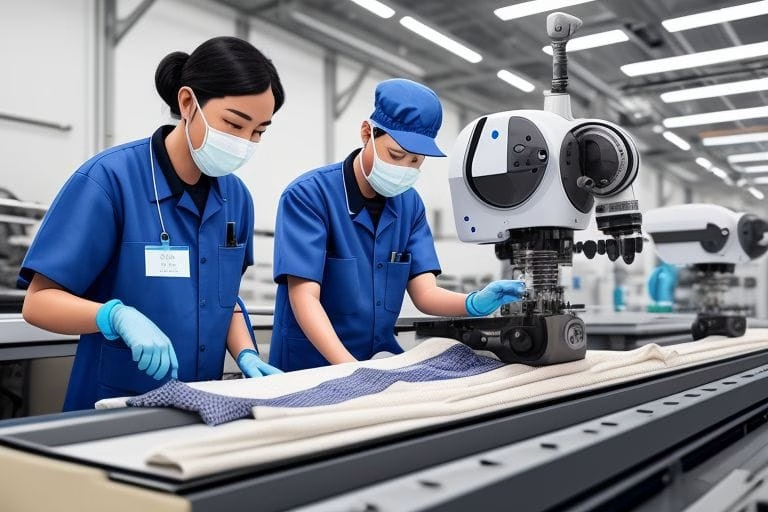
Unlike traditional industrial robots that require isolation and complex programming, cobots are designed for flexibility, ease of use, and safety, making them well-suited to textile environments that demand constant change. From fabric inspection to packaging and even sewing assistance, cobots are revolutionizing workflows in modern textile factories.
This article explores the integration of cobots in the textile industry—covering historical context, technological capabilities, real-world use cases, benefits, limitations, and future outlook.
Historical Context: Automation in the Textile Sector
The textile industry has a long history of automation, dating back to the spinning jenny and the power loom of the industrial revolution. In the 20th century, programmable knitting machines, automated dyeing units, and CAD/CAM design software enabled faster, more consistent production.
However, automation in textile manufacturing often hit a wall when it came to tasks requiring:
- Dexterity (e.g., folding or sewing)
- Judgment (e.g., quality control)
- Customization (e.g., made-to-order sizing)
That’s where cobots enter the scene—blending the strengths of automation with the nuance of human collaboration.
What Are Collaborative Robots (Cobots)?
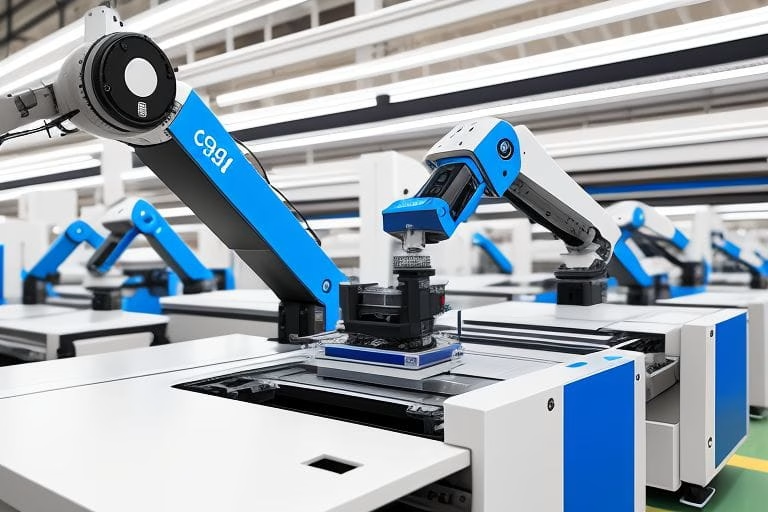
Cobots are robotic systems equipped with advanced sensors, AI algorithms, and safety mechanisms that allow them to work directly with human operators without barriers. Unlike traditional robots that follow rigid commands, cobots can learn and adapt to dynamic environments.
Key Features of Cobots:
- Safety-rated stop functions
- Force-limited joints to prevent injury
- Machine vision for object recognition
- Plug-and-play programming
- Mobile or fixed mounting options
These features make cobots especially useful in textile factories, where space, variability, and human oversight are common.
Applications of Cobots in Textile Manufacturing
1. Fabric Handling and Loading
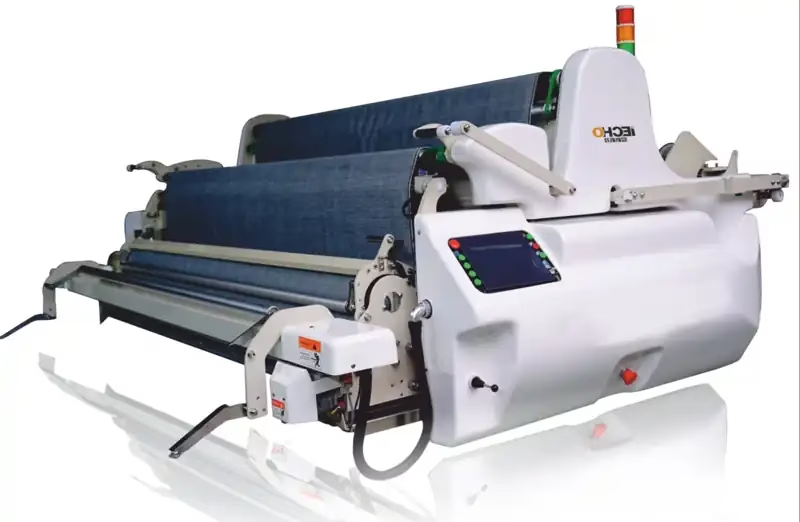
Cobots can assist with picking, positioning, and loading fabric rolls onto machines—tasks that often cause repetitive strain injuries in humans. They can also aid in unrolling, folding, and spreading fabric with minimal distortion.
2. Sewing Assistance
Although sewing remains a complex task, cobots can:
- Guide fabric under sewing machines
- Hold layers in place
- Collaborate with skilled seamstresses for enhanced throughput
3. Material Inspection and Quality Control
Using machine vision and AI, cobots can detect:
- Weaving defects (e.g., knots, holes, misalignments)
- Color inconsistencies
- Print registration errors
4. Cutting and Pattern Placement
Cobots equipped with precision cutters or laser guidance can assist in laying out fabric patterns accurately—especially in small-batch or customized production.
5. Finishing and Packaging
Tasks like labeling, stacking, boxing, and shrink-wrapping are ideal for cobots, particularly in logistics-heavy export operations.
Advantages of Using Cobots in Textile Factories
A. Flexibility and Customization
Cobots can be reprogrammed within hours to adapt to different products, materials, or workflows.
B. Labor Optimization
Rather than replacing jobs, cobots augment human capability—taking over repetitive tasks and freeing workers for skilled functions.
C. Space Efficiency
Compact and mobile, cobots require no safety cages, making them ideal for crowded factory floors.
D. Enhanced Quality and Repeatability
Precision movements reduce defects and ensure consistent stitching, folding, or cutting.
E. Cost-Effectiveness
Cobots are more affordable than traditional robots and offer a faster ROI due to their lower installation and maintenance costs.
| Benefit | Traditional Robot | Cobot |
|---|---|---|
| Cost | High | Moderate |
| Safety Cage Required | Yes | No |
| Programming Time | Weeks | Hours |
| Human Collaboration | Not feasible | Designed for it |
Integration and Workflow Design
1. Initial Assessment
- Identify pain points in the production chain (e.g., bottlenecks, labor shortages)
- Determine tasks suitable for automation (fabric handling, cutting, QC)
2. Selecting the Right Cobot
- Choose based on payload, reach, precision, and end-effector compatibility
3. Pilot Implementation
- Start with a limited trial (e.g., cobot-assisted folding station)
- Involve operators early for feedback and training
4. Data Integration
- Connect cobots to MES (Manufacturing Execution Systems) or ERP software for analytics and performance monitoring
5. Scaling
- Expand to other departments like finishing or warehousing based on ROI and feedback

Technical Considerations
- End Effectors: Custom grippers, vacuum pads, or sewing guides needed for textile-specific tasks
- Machine Vision: Cameras and sensors calibrated for fabric colors and textures
- IoT Compatibility: Real-time data sharing with human-machine interfaces
- Training and Upskilling: Operators should be trained in cobot handling, programming, and safety
Case Studies in Cobot-Driven Textile Operations
Case 1: European Knitwear Factory
Problem: Repetitive manual folding and boxing caused errors and injury
Solution: Cobot integrated with conveyor system for auto-folding
Outcome: 30% increase in throughput, 95% accuracy in folds
Case 2: South Asian Denim Manufacturer
Problem: Labor shortage in fabric loading and transport
Solution: Cobot-assisted roll handling with AGVs (automated guided vehicles)
Outcome: Reduced ergonomic strain, shortened roll setup time by 40%
Case 3: Smart Factory Pilot in Japan
Problem: Quality inconsistencies in finishing lines
Solution: Vision-enabled cobots flagged defective seams and mislabeling
Outcome: Improved defect detection by 60%
Limitations and Challenges
- Upfront Investment: While lower than traditional robots, cobots still require capital
- Task Complexity: Tasks involving extreme dexterity or unstructured environments remain challenging
- Cultural Barriers: Workers may perceive automation as a threat to job security
- Maintenance and Downtime: Regular calibration and servicing needed
These can be mitigated by involving workers in the transition process, phasing in adoption, and offering upskilling opportunities.
Market Landscape and Adoption Trends
- The global cobot market is expected to reach $11.8 billion by 2030, with textiles projected as a high-growth segment
- Southeast Asia and Europe lead adoption in garment manufacturing
- Key cobot players: Universal Robots, FANUC, ABB, Yaskawa, Techman Robot
- Growing trend in “cobot-as-a-service” subscription models for SMEs
Sustainability and the Role of Cobots
Cobots can support sustainable textile goals by:
- Reducing waste through precision cutting
- Lowering energy use via optimized operation
- Minimizing overproduction through demand-driven workflows
- Improving working conditions by reducing ergonomic strain
Future Outlook
The next frontier includes:
- AI-driven cobots that learn from experience and suggest improvements
- Human-cobot co-design interfaces for real-time feedback
- Mobile cobots navigating flexible factory layouts
- Tactile sensors that adapt to soft fabrics or complex garment geometry
- Cloud-connected cobots for centralized programming and performance analytics
The future of textile manufacturing is not just automated—it’s collaborative, responsive, and intelligent.
Summary
Collaborative robots are reshaping textile manufacturing by merging machine efficiency with human creativity. As demand for flexible, scalable, and sustainable production grows, cobots offer a pathway to transformation. From handling and inspection to packaging and beyond, cobots represent a new chapter in factory innovation—one defined by adaptability, co-creation, and progress.
By investing in cobot technologies today, textile manufacturers can unlock higher productivity, better working conditions, and a competitive edge in the digital-industrial era.
This detailed guide explores the transformative role of cobots in textile manufacturing, covering applications, benefits, integration strategies, and future innovations. Discover how cobots are redefining factory operations in a competitive, digital-first textile industry.
Citations
- International Federation of Robotics – https://ifr.org
- Textile World – Smart Factory Automation Reports: https://www.textileworld.com
- McKinsey & Company – Future of Textile Production: https://www.mckinsey.com
- Robotics Business Review – https://www.roboticsbusinessreview.com