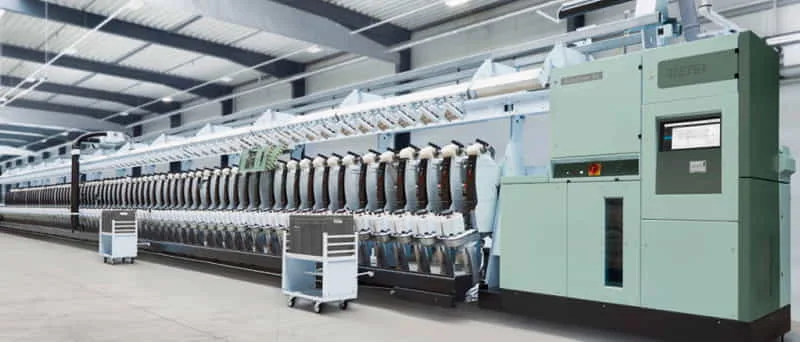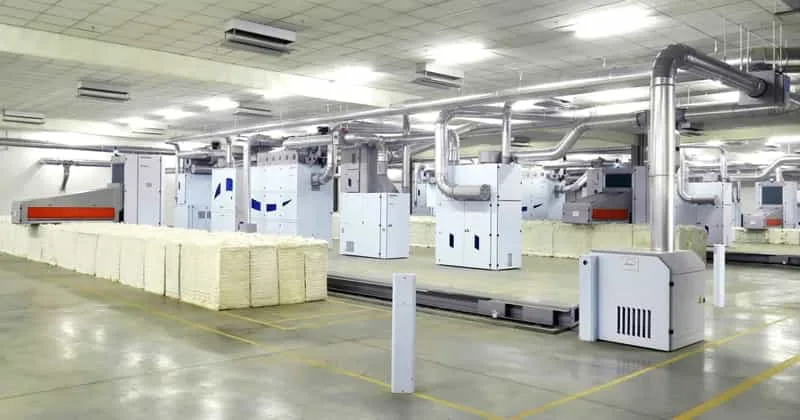
The blow room, as the initial stage of yarn spinning, prepares raw fibers through opening, cleaning, blending, dust removal, uniform feeding, and waste management. These objectives ensure that compressed fiber bales are transformed into clean, uniform fibers suitable for carding, directly impacting yarn quality and production efficiency.
Introduction
The blow room represents the first stage in the yarn spinning process, where raw fibers, typically cotton, are conditioned for subsequent processing. Through a series of mechanical operations, compressed fiber bales are transformed into a clean, uniform, and well-opened state suitable for carding. The effectiveness of the blow room significantly influences the quality of the final yarn, making its objectives critical to the spinning process. This article details the primary objectives of the blow room, emphasizing their role in achieving high-quality yarn production.
Objectives of the Blow Room
The blow room performs several essential functions to prepare raw fibers for spinning. These objectives are outlined below:
1. Opening of Compressed Fiber Bales
The primary objective is to open densely packed fiber bales into smaller, manageable tufts. Raw fibers, such as cotton, are delivered in compressed bales to optimize storage and transportation. Bale openers and pluckers gently break these bales apart, reducing tuft size to approximately 0.1–1 mg [1]. This process increases fiber volume while preserving fiber integrity, ensuring suitability for further processing.
2. Cleaning of Fibers
Cleaning is a vital objective, as raw fibers contain impurities like dust, dirt, seed coats, and leaves. The blow room removes 40–70% of these contaminants using machines equipped with beaters, grid bars, and suction systems. Cleaning efficiency depends on the trash content and machine settings, ensuring cleaner fibers for subsequent stages [1].
3. Blending and Mixing of Fibers
The blow room facilitates the blending and mixing of different fiber grades or types to achieve a homogeneous composition. This process ensures consistent yarn quality and cost-effectiveness by combining fibers with varying properties, such as strength or fineness. Mixers and blending boxes promote uniform integration, reducing variability in the final yarn.
4. Dust Removal
Dust removal is essential to eliminate fine particles trapped within fiber tufts, which can affect yarn quality and machinery performance. Suction units and dust-removing machines extract approximately 64% of microdust, with smaller tuft sizes enhancing efficiency. This contributes to a cleaner working environment and improved yarn quality.
5. Uniform Feeding to the Carding Machine
The blow room ensures fibers are delivered to the carding machine in a consistent form, either as a lap or loose tufts via a chute feed system. Uniform feeding is crucial for producing consistent carded slivers, directly impacting yarn properties. Automated chute feed systems are commonly used to maintain a steady fiber flow [2].
6. Waste Management and Recovery
The blow room generates waste, including impurities and usable fibers (40–70% of waste may be reusable). Effective waste management involves recovering good fibers for re-blending or use in coarser yarns, enhancing cost-efficiency and supporting sustainable practices.
Importance of Blow Room Objectives
The blow room’s objectives are foundational, as they set the stage for subsequent spinning processes. Effective opening and cleaning reduce the load on carding machines, improving efficiency and output quality. Proper blending ensures yarn uniformity, while dust removal enhances machinery longevity. Uniform feeding prevents processing irregularities, and waste recovery promotes sustainability. Inadequate blow room performance can lead to issues like low cleaning efficiency or uneven yarn, compromising the final product.
Key Machines and Actions in the Blow Room
The blow room employs a sequence of machines, including:
- Bale Openers/Pluckers: For initial bale opening.
- Cleaners (e.g., Step Cleaner, Axiflow Cleaner): For impurity removal via beating and grid bars.
- Mixers/Blending Boxes: For homogeneous fiber blending.
- Dust Removal Units: For microdust extraction via suction.
- Hopper Feeders: For regulating fiber flow to the carding machine.
These machines use opposing spikes, beaters, grid bars, air currents, and regulators to achieve opening, cleaning, and blending.
Challenges and Considerations
Achieving blow room objectives requires addressing challenges such as:
- Low Cleaning Efficiency: Caused by improper settings or high trash content.
- Fiber Damage: Excessive opening or cleaning may cause fiber rupture or neps.
- Uneven Feeding: Inconsistent flow can lead to irregular slivers.
- Waste Management: Balancing impurity removal with minimal fiber loss is critical.
Regular maintenance and precise machine settings are essential to mitigate these issues.
Conclusion
The blow room is a pivotal stage in yarn spinning, with objectives that include opening, cleaning, blending, dust removal, uniform feeding, and waste management. These processes ensure raw fibers are transformed into a clean, uniform state for carding, directly influencing yarn quality. By leveraging specialized machines and addressing operational challenges, the blow room lays the foundation for efficient, high-quality yarn production.