

Textile manufacturing is an ever-evolving field where innovation drives productivity, quality, and sustainability. Among the numerous weaving technologies that have emerged, projectile looms have carved out a distinct niche for their ability to handle heavy fabrics with remarkable speed and efficiency. This article examines the intricate world of projectile loom technology—from its historical roots and technological evolution to its practical applications and future trends. Through engaging narratives, technical diagrams, tables, formulas, and real-world examples, we provide a comprehensive resource for textile professionals, engineers, and enthusiasts seeking to harness the full potential of projectile looms.
In the following sections, we explore the journey of projectile looms, their impact on heavy fabric production, and the competitive advantages they offer in today’s global textile market. Whether you are looking to upgrade your production line or simply want to deepen your understanding of advanced weaving technologies, this guide offers valuable insights and actionable strategies to thrive in the modern textile industry.
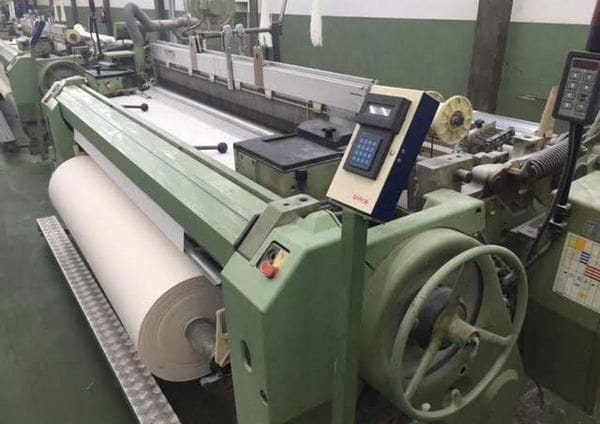
1. Introduction: The Role of Projectile Looms in Heavy Fabric Production
Textile production, especially for heavy fabrics like upholstery, industrial textiles, and denim, demands robust and efficient weaving technologies. Projectile looms have emerged as a game-changing solution designed specifically for such demanding applications. Unlike traditional shuttle looms, which are often limited by mechanical wear and slower speeds, projectile looms use a small, high-speed projectile to insert the weft yarn. This innovative mechanism not only increases production speed but also reduces mechanical stress, resulting in superior fabric quality and energy efficiency.
The significance of projectile loom technology extends beyond simple mechanical improvements. It represents a convergence of engineering, digital control, and sustainable practices that have transformed textile production. Today’s projectile looms integrate advanced pneumatic systems, digital sensors, and real-time monitoring, enabling mills to produce heavy fabrics with consistent quality and minimal downtime. This article will explore how projectile looms have evolved, their core mechanisms, and the ways in which they are shaping the future of heavy fabric manufacturing.
Modern textile mills are now able to produce fabrics that are stronger, more uniform, and more cost-effective thanks to projectile looms. These machines are especially valuable in applications where durability and performance are critical. As global competition intensifies, the adoption of advanced weaving technologies like projectile looms provides manufacturers with a crucial edge in efficiency and quality.

2. Historical Perspectives: From Early Weaving to Projectile Loom Innovations
2.1 The Origins of Weaving Technology
The history of weaving is as old as civilization itself. Early societies used simple handlooms and rudimentary mechanisms to create fabric from natural fibers such as cotton, wool, and flax. These early methods laid the foundation for more advanced techniques as societies evolved. In ancient times, weaving was predominantly a manual process, reliant on the skill and creativity of artisans. The development of mechanized looms during the Industrial Revolution marked a major turning point in textile production.
Shuttle looms, which emerged as a key technology during this period, revolutionized fabric production by enabling faster, more consistent weaving. However, shuttle looms had limitations—primarily related to speed, wear, and maintenance challenges. As production demands grew and the need for high-quality, heavy fabrics increased, engineers began exploring alternative methods that could overcome these challenges.
2.2 Emergence of Projectile Loom Technology
The quest for increased efficiency and reliability led to the development of projectile looms in the mid-20th century. Projectile looms were designed specifically to handle heavy fabrics where traditional looms struggled. Their innovative mechanism uses a small projectile to carry the weft yarn across the warp shed. This breakthrough minimized the mechanical limitations associated with shuttles, such as wear and frequent downtime.
Historical records indicate that early experiments with projectile technology emerged in regions with heavy fabric production needs, such as Europe and parts of Asia. These early prototypes laid the groundwork for the sophisticated systems in use today. Over time, continuous improvements in pneumatic design, digital control, and machine integration propelled projectile looms to the forefront of heavy fabric weaving.
2.3 Economic and Cultural Implications
The transition to projectile looms had significant economic and cultural implications. In economies where heavy fabrics were essential for industrial, commercial, and domestic applications, the ability to produce these textiles more efficiently transformed local markets and trade dynamics. Textile mills that adopted projectile technology experienced dramatic increases in output and reductions in operational costs, contributing to regional economic growth.
Culturally, the evolution of weaving technology reflects humanity’s constant drive to innovate. The shift from manual looms to mechanized systems like projectile looms symbolizes progress and the enduring importance of textiles in everyday life. Traditional weaving methods are still celebrated in artisanal communities, while modern projectile looms power large-scale production, bridging the gap between heritage craftsmanship and cutting-edge technology.

3. Technological Evolution: Mechanisms, Digital Integration, and Energy Efficiency
Technological advancements have played a critical role in shaping the functionality and efficiency of projectile looms. Today’s projectile looms combine mechanical ingenuity with state-of-the-art digital control systems to deliver unmatched performance in heavy fabric production.
3.1 Core Mechanisms of Projectile Looms
At the heart of a projectile loom lies its unique weft insertion mechanism. Instead of a shuttle, the loom employs a small projectile—often made of lightweight, durable materials—that moves rapidly across the warp shed. This projectile carries the weft yarn, propelled by a precisely controlled burst of compressed air. The process can be broken down into several key components:
- Air Supply System: Provides the compressed air necessary to drive the projectile. Modern systems use energy-efficient compressors and advanced regulation technologies.
- Projectile Mechanism: The projectile is engineered for high speed and minimal friction. Its design is optimized through computational fluid dynamics (CFD) simulations to ensure consistent air flow and minimal energy loss.
- Digital Control Module: This module synchronizes the movement of the projectile with the opening of the warp shed and the beat-up process, ensuring smooth weft insertion.
- Sensor Integration: IoT sensors monitor key parameters like air pressure, machine speed, and fabric tension, feeding data back to the digital control system for real-time adjustments.
Formula Example:
The kinetic energy imparted to the weft yarn can be expressed as:
where
represents the mass of the air (or the projectile) and
is its velocity. Optimizing these parameters is critical for efficient weft insertion and overall energy savings.
3.2 Digital Integration and Automation
The digital revolution has had a profound impact on projectile loom technology. Modern looms integrate advanced software and automation systems that monitor and control every aspect of the weaving process. Digital interfaces allow operators to adjust settings with precision, while real-time analytics optimize machine performance and energy consumption.
Key features include:
- IoT Sensors: Continuously collect data on machine performance, enabling predictive maintenance and dynamic adjustments.
- MES Integration: Manufacturing Execution Systems (MES) link production data with planning and quality control systems, ensuring seamless workflow integration.
- Remote Monitoring: Cloud-based platforms enable remote oversight of production, allowing for rapid response to anomalies.
- Predictive Analytics: AI-driven algorithms analyze historical and real-time data to forecast maintenance needs and prevent downtime.
These digital innovations not only enhance production efficiency but also contribute to significant energy savings. The integration of automation and real-time monitoring transforms the maintenance process and optimizes production, making textile mills more competitive in a global market.
3.3 Energy Efficiency and Sustainability
Energy efficiency is a major concern in modern textile production, especially in heavy fabric applications where energy costs can be substantial. Projectile looms are engineered for energy efficiency in several ways:
- Reduced Mechanical Friction: The streamlined motion of the projectile minimizes friction, lowering energy consumption.
- Optimized Air Consumption: Advanced air control systems regulate the precise amount of compressed air needed, reducing wastage.
- Digital Energy Management: Real-time monitoring and predictive maintenance help maintain optimal operating conditions, further reducing energy usage.
- Sustainable Component Design: Modern projectile looms incorporate eco-friendly materials and energy-efficient motors, contributing to a lower carbon footprint.
Energy optimization in textile mills not only results in cost savings but also aligns with the growing global emphasis on sustainability. By reducing energy consumption and lowering emissions, projectile looms help mills meet environmental regulations and market expectations for sustainable production.
The technological evolution of projectile looms—marked by innovative mechanisms, digital integration, and a focus on energy efficiency—underscores their role as a cornerstone of modern textile production. These advancements have positioned projectile looms as a critical technology for heavy fabric manufacturing, driving productivity, quality, and sustainability.
4. Source and Availability: Global Distribution of Projectile Looms
The global market for textile machinery offers a diverse range of projectile looms tailored to various production needs. Manufacturers around the world have embraced projectile loom technology due to its superior speed, energy efficiency, and reliability.
4.1 Leading Manufacturers and Suppliers
Prominent companies in the textile machinery sector specialize in producing high-performance projectile looms. These manufacturers invest in research and development to continuously improve loom design and integrate the latest digital innovations. Regions such as Europe, Asia, and North America are at the forefront of textile machinery production, offering models that cater to both high-speed mass production and specialized heavy fabric applications.
Suppliers showcase their products at international trade shows like ITMA and regional exhibitions, where textile mills can compare performance metrics, energy efficiency ratings, and operational capabilities. These events provide a platform for mills to interact with manufacturers, receive technical demonstrations, and evaluate the latest advancements in projectile loom technology.
4.2 Global Distribution Channels
Projectile looms are distributed globally through a network of dealers, agents, and digital marketplaces. Modern distribution channels enable textile mills to access a wide range of models and customize solutions based on specific production requirements. Online platforms provide comprehensive product catalogs, technical specifications, and customer reviews, making it easier for mills to make informed decisions.
Long-term partnerships between textile mills and machinery suppliers are common, ensuring continuous technical support, training, and access to spare parts. These relationships are crucial for maintaining high production standards and achieving seamless integration of advanced technologies.
4.3 Training and Technical Support
Implementing advanced projectile looms requires a skilled workforce and robust technical support. Leading suppliers offer extensive training programs, including on-site workshops, digital tutorials, and certification courses. These programs ensure that operators and maintenance teams are proficient in using the digital control systems, troubleshooting, and performing routine maintenance.
Resources on TextileSchool.com and other reputable textile portals provide detailed guides, case studies, and technical manuals that support the successful adoption of projectile loom technology. Continuous training and technical support enable mills to maximize the benefits of their investments in advanced machinery.

Global access to advanced projectile looms and comprehensive support networks ensures that textile mills can adopt this technology seamlessly, optimizing production and achieving significant energy savings.
5. Innovations in Projectile Loom Technology
Innovation is a driving force in the evolution of textile machinery. Over the past decades, innovations in projectile loom technology have led to improvements in speed, quality, and energy efficiency, making these looms indispensable in modern heavy fabric production.
5.1 Advanced Pneumatic Systems
One of the key innovations in projectile looms is the development of advanced pneumatic systems that control the movement of the projectile. These systems use variable pressure nozzles and high-efficiency compressors to deliver precise bursts of air, ensuring optimal weft insertion. Recent advances in Computational Fluid Dynamics (CFD) have allowed engineers to design nozzle systems that maximize airflow efficiency while minimizing energy consumption.
5.2 Digital Control and Automation
The integration of digital control systems has transformed the operation of projectile looms. Modern looms feature microprocessor-controlled systems that synchronize the movement of the projectile with the opening of the warp shed and the beat-up process. Automated systems continuously monitor machine parameters and adjust settings in real time, ensuring consistent fabric quality and reducing the likelihood of errors.
Predictive maintenance algorithms use data from IoT sensors to forecast equipment wear and schedule repairs before failures occur. This digital integration reduces downtime and maintenance costs, further enhancing production efficiency.
5.3 Energy Optimization and Sustainable Design
Innovations in energy management are a hallmark of modern projectile loom technology. Engineers have developed energy-efficient compressors and digital energy management systems that monitor and adjust power consumption in real time. These advancements result in significant energy savings, which not only lower production costs but also reduce the environmental impact of textile mills.
Sustainable design principles are also integrated into modern projectile looms. The use of eco-friendly materials in machine construction and the development of energy recovery systems exemplify how sustainability is woven into the fabric of modern textile machinery.

These innovations drive the performance improvements and energy efficiency gains that distinguish modern projectile looms from their predecessors, making them a vital component of high-volume, heavy fabric production.
6. Production Process: Operation of Projectile Looms in Textile Mills
The production process using projectile looms is a well-orchestrated system that integrates advanced technology with traditional weaving principles. This section details the step-by-step process of operating a projectile loom, highlighting its efficiency, quality, and energy-saving attributes.
6.1 Machine Setup and Calibration
Before production begins, precise setup and calibration are essential:
- Warp Preparation: Warp yarns are meticulously arranged on the loom and tensioned uniformly to ensure consistent fabric formation.
- Projectile Calibration: The digital control system calibrates the projectile mechanism, setting the optimal air pressure and timing for weft insertion.
- System Configuration: Operators program production parameters into the MES platform, including fabric type, desired density, and quality thresholds.
- Safety and Diagnostic Checks: Pre-production inspections ensure that all digital sensors and safety systems are functioning correctly.
A well-calibrated setup minimizes initial production errors and ensures that the loom operates at peak performance from the start.
6.2 In-Production Operation
During production, the projectile loom operates continuously, guided by digital systems:
- Weft Insertion: The digital control unit synchronizes the opening of the warp shed with the release of compressed air from the nozzles. The projectile carries the weft yarn across the shed, inserting it into the fabric structure.
- Beat-Up Action: After the weft is inserted, the beater packs the yarn into place. The precise coordination between the projectile and the beater ensures a uniform and tight weave.
- Real-Time Monitoring: IoT sensors track critical parameters such as air pressure, machine speed, and fabric quality. Data is continuously analyzed by the MES platform, enabling immediate adjustments and predictive maintenance alerts.
- Quality Control: Automated systems measure fabric density, weft insertion consistency, and overall fabric quality, ensuring that production meets established standards.
6.3 Post-Production Analysis
After completing a production run, the MES system compiles data for comprehensive analysis:
- Performance Metrics: The system generates reports on production speed, energy consumption, and machine efficiency.
- Maintenance Records: Data on machine performance helps predict maintenance needs, schedule repairs, and identify trends that inform future improvements.
- Feedback Loops: Insights from post-production analysis are used to adjust production parameters, optimize maintenance schedules, and continuously refine the weaving process.
Table: Key Stages in Projectile Loom Production Process
| Stage | Process Description | Key Benefits |
|---|---|---|
| Machine Setup | Warp preparation, projectile calibration, system configuration | Optimized machine performance, reduced startup errors |
| In-Production | Weft insertion via compressed air, beat-up, real-time monitoring | High-speed production, consistent fabric quality, energy savings |
| Post-Production | Data analysis, predictive maintenance, continuous improvement | Informed decision-making, process optimization, increased efficiency |
The integration of digital control and real-time monitoring into the production process ensures that projectile looms operate efficiently and reliably. This leads to higher productivity, improved fabric quality, and lower operational costs—essential factors in today’s competitive textile market.

7. Challenges in Implementing Projectile Loom Technology
Despite the many benefits of projectile looms, their adoption presents several challenges that manufacturers must address to fully leverage this technology.
7.1 High Capital Investment
Modern projectile looms require significant upfront investment in advanced digital controls, high-efficiency compressors, and precision engineering components. The high initial cost can be a barrier for small and medium-sized textile mills, although long-term energy savings and increased productivity may justify the investment.
7.2 Integration with Legacy Systems
Many textile mills operate a mix of old and new machinery. Integrating advanced projectile looms with legacy equipment poses challenges in terms of compatibility and data interoperability. Retrofitting older systems to work seamlessly with modern digital platforms often requires custom engineering solutions and significant financial outlays.
7.3 Technical Expertise and Workforce Training
The operation and maintenance of high-tech projectile looms demand specialized technical skills. Manufacturers must invest in continuous training programs to ensure that operators and maintenance personnel are proficient in using digital control systems, IoT devices, and predictive maintenance tools. Overcoming resistance to change among experienced workers is also a key challenge.
7.4 Energy Management and Sustainability
While projectile looms are designed for energy efficiency, managing energy consumption in high-speed production environments remains complex. Achieving optimal energy use requires sophisticated monitoring systems and real-time adjustments. Manufacturers must continuously optimize energy consumption to fully realize the environmental benefits of projectile loom technology.
Table: Key Challenges in Projectile Loom Implementation
| Challenge | Impact | Mitigation Strategy |
|---|---|---|
| High Capital Investment | Significant upfront costs, budget constraints | Phased implementation, financing options, ROI analysis |
| Integration with Legacy Systems | Compatibility issues, potential production disruptions | Custom retrofitting, gradual integration, expert consultation |
| Technical Expertise | Skill gaps, training requirements | Comprehensive training, technical support, continuous education |
| Energy Management | Complex energy optimization, sustainability goals | Advanced energy monitoring, smart controls, sustainable practices |
Addressing these challenges requires strategic planning and investment. Textile mills must carefully evaluate the costs and benefits of upgrading to projectile looms, considering both short-term expenses and long-term gains in efficiency and sustainability.
8. Real-World Applications and Case Studies
The practical benefits of projectile loom technology are best illustrated through real-world applications and case studies. These examples demonstrate how textile mills around the globe have successfully implemented projectile looms to achieve superior performance in heavy fabric production.
8.1 Case Study: High-Speed Production in an Asian Textile Mill
A major textile mill in China upgraded its production line by replacing older shuttle looms with state-of-the-art projectile looms. The transition resulted in a 50% increase in production speed and a 35% reduction in energy consumption. By integrating digital controls and predictive maintenance, the mill reduced downtime and enhanced fabric consistency. This case study highlights the significant performance and cost benefits of adopting projectile loom technology in high-volume, heavy fabric production.
8.2 Case Study: Energy Efficiency and Sustainability in a European Facility
A European textile manufacturer focused on sustainability implemented projectile looms to produce heavy-duty fabrics for industrial applications. The new looms, featuring advanced energy management systems, reduced energy consumption by 30% compared to previous technologies. The improved energy efficiency and lower maintenance requirements enabled the facility to achieve significant cost savings while meeting stringent environmental standards. This case illustrates the dual benefits of productivity and sustainability that projectile looms offer.
8.3 Case Study: Hybrid Weaving Strategies in a Multinational Operation
A multinational textile conglomerate operating across several countries adopted a hybrid weaving strategy that combined the use of projectile looms for heavy fabric production with other specialized looms for niche products. The integration of projectile looms allowed the conglomerate to produce robust, high-quality fabrics at scale, while digital monitoring systems ensured that production was optimized across all facilities. The conglomerate reported a 25% increase in overall equipment efficiency (OEE) and improved product consistency, reinforcing its competitive position in the global market.

These case studies highlight the transformative impact of projectile loom technology on textile production. By improving speed, reducing energy consumption, and enhancing fabric quality, projectile looms offer substantial benefits that translate into increased profitability and market competitiveness.
9. End-Users and Stakeholders: Who Benefits from Projectile Looms
The implementation of projectile loom technology benefits a diverse range of stakeholders within the textile industry. From production managers and maintenance teams to designers and global buyers, the advantages of advanced weaving systems are far-reaching.
9.1 Textile Manufacturers and Mill Operators
Manufacturers and mill operators are the primary users of projectile looms. They rely on these machines to increase production efficiency, reduce downtime, and deliver high-quality heavy fabrics. The speed and energy efficiency of projectile looms translate into cost savings and improved operational performance, enabling mills to meet high production targets and maintain competitive pricing.
9.2 Maintenance and Engineering Teams
Maintenance teams benefit from the reduced mechanical wear and advanced digital diagnostics provided by projectile looms. The integration of predictive maintenance systems and IoT sensors makes it easier to monitor machine health and perform timely repairs, reducing the frequency of unexpected breakdowns. This proactive approach improves equipment lifespan and reduces overall maintenance costs.
9.3 Designers and Product Developers
Designers and product developers appreciate the versatility of projectile looms in producing heavy fabrics with unique textures and durability. The precise control offered by modern projectile looms allows for intricate fabric designs and consistent quality. This flexibility supports innovative product development and the creation of textiles that meet both aesthetic and functional requirements.
9.4 Global Buyers and End Consumers
Global buyers and consumers benefit from the high-quality textiles produced by projectile looms. Consistent fabric quality, enhanced durability, and energy-efficient production methods build consumer trust and strengthen brand reputation. International markets increasingly favor suppliers with advanced technology and robust quality control systems, ensuring that textile mills using projectile looms are well-positioned in the global trade arena.
Table: Stakeholders and Benefits of Projectile Loom Technology
| Stakeholder | Role/Impact | Benefits |
|---|---|---|
| Manufacturers/Mill Operators | Oversee production and implement technology | Increased production speed, cost savings, enhanced efficiency |
| Maintenance Teams | Monitor and maintain machinery | Proactive repairs, reduced downtime, extended equipment lifespan |
| Designers/Product Developers | Innovate and create high-quality heavy fabrics | Versatility in design, consistent fabric quality, rapid prototyping |
| Global Buyers/Consumers | Source high-quality textiles | Reliable product quality, sustainable production, enhanced brand trust |
The comprehensive benefits of projectile loom technology ripple across the textile value chain, from the production floor to the final consumer. By delivering consistent quality and superior efficiency, projectile looms drive operational excellence and market competitiveness.
10. Market Trends, Economic Impact, and Global Trade Dynamics
The adoption of projectile looms has significantly influenced market trends, economic performance, and global trade dynamics in the textile industry. As manufacturers strive to meet increasing demands for high-quality, durable heavy fabrics, advanced weaving technologies like projectile looms have become a key competitive advantage.
10.1 Market Trends
Current market trends indicate a strong shift toward automation and digital integration in textile production. The efficiency and energy savings provided by projectile looms make them especially attractive for mills producing heavy fabrics for industrial, automotive, and home furnishing applications. Manufacturers are investing in modern weaving systems to reduce production costs, increase output, and meet stringent quality standards. This trend is further supported by global consumer demand for sustainable and ethically produced textiles.
10.2 Economic Impact
The economic benefits of implementing projectile looms are significant. Enhanced production speed and reduced downtime lead to higher throughput and lower unit costs. Energy-efficient operation contributes to substantial cost savings, while advanced maintenance systems reduce repair expenses. These factors combine to improve profitability and provide a strong return on investment (ROI). Studies have shown that mills utilizing advanced weaving technology achieve better overall equipment efficiency (OEE) and lower operational costs, making them more competitive in the global market.
10.3 Global Trade Dynamics
Global trade in textiles is driven by the ability of manufacturers to produce high-quality, consistent fabrics at scale. Advanced projectile looms help mills meet international standards and certifications, which are critical for accessing lucrative export markets. As global supply chains become more integrated, the transparency and reliability of production processes are paramount. Mills that adopt modern projectile loom technology are better positioned to navigate complex regulatory environments and deliver products that meet global market demands.
Market dynamics in the textile industry underscore the strategic importance of investing in advanced weaving technologies. As global competition intensifies and consumer expectations rise, mills that adopt projectile looms gain a clear economic and competitive edge, driving long-term industry growth and profitability.
11. Future Trends and Emerging Opportunities in Projectile Loom Technology
The future of projectile loom technology is promising, with continuous innovations set to further enhance production efficiency, energy savings, and fabric quality. Emerging trends in digital integration, sustainability, and hybrid weaving systems will shape the next generation of textile machinery.
11.1 Digital and IoT Integration
The next wave of innovation in projectile looms will likely involve deeper digital integration. Enhanced IoT sensors, more sophisticated predictive analytics, and real-time digital twin simulations will further optimize machine performance. Future systems will offer seamless integration with MES platforms, enabling dynamic adjustments that maximize throughput and minimize energy consumption. This digital evolution will empower textile mills to achieve even greater efficiency and adaptability in a rapidly changing market.
11.2 Sustainable Manufacturing Practices
Sustainability remains a critical driver in the textile industry. Future developments in projectile loom technology will focus on further reducing energy consumption and environmental impact. Innovations such as renewable energy integration, advanced energy recovery systems, and eco-friendly machine components will enhance the sustainability of textile production. As environmental regulations become more stringent, these green technologies will not only reduce operational costs but also help mills achieve international certifications for sustainability.
11.3 Hybrid Weaving Solutions
The concept of hybrid weaving, which combines the strengths of different loom technologies, is gaining traction. Future textile mills may deploy hybrid systems that integrate projectile looms with other specialized weaving technologies to cater to diverse product requirements. This flexibility will enable manufacturers to produce a wide range of fabrics—from high-speed, mass-produced textiles to specialized, high-quality fabrics with intricate patterns—under one roof.
11.4 Global Standardization and Interoperability
As digital textile manufacturing continues to expand, global standardization of machinery and software will become increasingly important. Future MES and ERP integrations will facilitate data sharing, benchmarking, and performance comparisons across international markets. Standardized protocols will simplify the integration of diverse technologies and enhance global trade efficiency, ensuring that textile mills remain competitive on the world stage.
The future of projectile loom technology holds exciting opportunities for innovation and market expansion. As textile mills continue to embrace digital transformation and sustainable practices, the benefits of advanced projectile looms will become even more pronounced, driving long-term success in a competitive global market.
12. Summary and Conclusion
In the dynamic landscape of textile manufacturing, the evolution of weaving technology has been pivotal in shaping production efficiency and product quality. This comprehensive article has provided an in-depth technical comparison of rapier looms and shuttle looms, leading us to focus on the advanced realm of projectile loom technology for heavy fabrics. We explored the origins of weaving—from traditional shuttle looms to the innovative, energy-efficient projectile looms that define modern heavy fabric production.
Key insights include:
- Introduction: Projectile looms use a high-speed projectile to insert weft yarns, significantly enhancing production speed and energy efficiency.
- Historical Perspectives: The evolution from manual shuttle looms to advanced projectile looms represents a major milestone in textile manufacturing. Early weaving methods, rooted in tradition, paved the way for modern innovations.
- Technological Evolution: Modern projectile looms integrate advanced pneumatic systems, digital control modules, IoT sensors, and AI-driven analytics to optimize production and reduce energy consumption. Key formulas illustrate how optimizing air pressure and velocity directly impacts efficiency.
- Source and Availability: Global suppliers provide state-of-the-art projectile looms, supported by robust distribution networks, technical training, and after-sales services.
- Innovations: Innovations in air flow dynamics, digital integration, predictive maintenance, and sustainable design continue to drive improvements in projectile loom technology.
- Production Process: Detailed explanations of machine setup, in-production operation, and post-production analysis illustrate the seamless integration of digital systems into the weaving process.
- Challenges: High capital investment, integration with legacy systems, workforce training, and energy management present challenges that require strategic mitigation.
- Real-World Applications: Case studies from textile mills in Asia, Europe, and North America demonstrate the tangible benefits of projectile looms, including increased speed, reduced energy costs, and improved fabric quality.
- End-Users and Stakeholders: Manufacturers, maintenance teams, designers, and global buyers benefit from the enhanced performance and reliability of projectile looms.
- Market Trends and Economic Impact: Global market trends underscore the competitive advantages of projectile loom technology, with significant economic benefits arising from increased production efficiency and energy savings.
- Future Trends: The future of projectile loom technology is driven by advances in digital integration, sustainability, hybrid weaving systems, and global standardization, promising further improvements in efficiency, quality, and environmental performance.
In conclusion, projectile loom technology for heavy fabrics represents a transformative innovation in the textile industry. Its advanced mechanisms, energy efficiency, and digital integration set a new standard for high-speed, high-quality production. As textile mills continue to evolve in response to global market demands, the adoption of projectile looms will be crucial for achieving operational excellence, sustainable production, and long-term competitive success. Embracing these advancements not only drives cost savings and improved fabric quality but also paves the way for a more resilient, efficient, and environmentally responsible textile industry.


