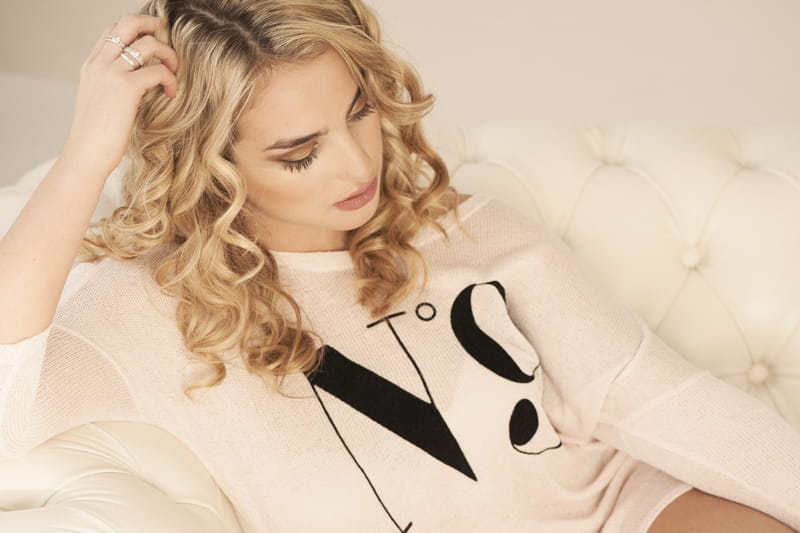
Minimalist fashion design reduces a garment to what it needs: a clean line and a clear silhouette, a narrow and usually neutral palette, and little or no surface decoration, so that the cut, the fabric and the construction carry the design. The Museum at FIT, which staged the first exhibition on minimalism and maximalism in fashion in 2019, sums it up as the aesthetic of “less is more”, one that prioritises reduction and function and uses clean lines to accentuate the relationship between body and garment. Ornament is not banned; where a minimalist designer uses it, it often serves the structure. Because a plain garment hides nothing, minimalism moves the work into fabric choice, pattern cutting, seam finishing and quality control.
Last verified: 17 October 2026. Design history on this page comes from The Museum at FIT and the Tate; the waste and clothing-use figures come from a university thesis and the Ellen MacArthur Foundation. All are listed at the end.
Minimalist apparel design at a glance
| Principle | What it means on the garment | Where the work moves to |
|---|---|---|
| Reduction | No detail that does not do a job: few seams, pockets, trims and fastenings, and none that are only decoration | Design and pattern cutting |
| Clean line and silhouette | The outline and proportion are the design; a seam is placed where it shapes the body | Pattern cutting and seam placement |
| Restrained palette | One colour or a few neutrals per garment or outfit; little or no print | Shade matching and colour fastness |
| Fabric as the surface | The cloth’s weight, drape and handle replace pattern and embellishment | Fabric selection and fabric weight |
| Exact construction | Clean insides, flat seams, invisible or hidden closures | Seams and finishes |
| Longevity | Pieces meant to be worn often and for years | Slow fashion and use |
Minimalist fashion design principles
Every garment is built from the same elements, colour, fabric, line and shape (set out in the site’s guide to the elements of garment design). Minimalism is a way of choosing among them: it keeps line and shape doing the work and holds colour and surface decoration back. The FIT exhibition quoted Calvin Klein, the American designer it names as known for fashion minimalism, describing it as “a philosophy that involves an overall sense of balance, knowing when to take away, subtract”, and the artist Donald Judd calling it the “simple expression of a complex thought” (The Museum at FIT, Minimalism/Maximalism).

- Take away before adding. Start from the garment’s function and remove each detail that does not serve it. A pocket stays if it is used; a second row of topstitching goes if it only decorates.
- Let the cut speak. Proportion, the length of a hem, the width of a shoulder and the fall of a sleeve carry the design, so they are worked out in the pattern rather than added later.
- Use ornament as structure. FIT notes that minimalist designs do not reject ornament outright but often use it to enhance structure and construction: a dart, a pleat or a seam line can be the only “detail” a garment has.
- Keep the palette narrow. White, black, grey, navy, camel and undyed tones dominate, but a single strong colour used without pattern is just as minimal.
- Make the inside as good as the outside. With nothing on the surface to distract, a puckered seam, a show-through allowance or a mismatched shade is the first thing seen.
| Minimalism | Maximalism | |
|---|---|---|
| Motto in the FIT exhibition | “Less is more” | Eighteenth-century Rococo fashion’s “more is best” |
| Values | Purity and restraint; truth, order and harmony | Spectacle, excess and eclecticism |
| Silhouette | Clean lines that show the relation of body and garment | Often exaggerated silhouettes |
| Ornament | Used, if at all, to serve structure and construction | Intricate; varied visual references |
Where minimalism in fashion comes from
The word comes from art. Minimalism was an extreme form of abstract art that developed in the USA in the 1960s, built on simple geometric shapes; the Tate names Carl Andre, Dan Flavin, Donald Judd, Sol LeWitt, Agnes Martin, Robert Morris and Frank Stella among its artists (Tate, art term “Minimalism”). Restraint in dress is older than the word. FIT reads fashion history as a swing between excess and restraint, each movement answering what came before, and places minimalist moments at several points in the twentieth century.
| When | Designer or house | What FIT says about it |
|---|---|---|
| Early 20th century | Coco Chanel | Modernist jersey knitwear (alongside the period’s streamlined wartime fashions) was a reaction against the extreme silhouettes and ornament of Belle Epoque dress |
| Circa 1945 | Adrian (Gilbert Adrian) | Broad-shouldered suits based on the austere lines of menswear, in which pattern was manipulated to hold the viewer’s interest |
| 1960s | André Courrèges | A white Space Age dress with the streamlined silhouette and single-colour palette associated with minimalist fashion |
| Circa 1968 | Michael Mott, for the boutique Paraphernalia | A black-and-white minidress that echoed the reductive approach of Minimalist art |
| 1990s | Helmut Lang, Martin Margiela, Prada | The austerity of Lang and Margiela and the “invisible luxury” of Prada countered the extravagance of the 1980s |
| 1996 | Calvin Klein | An evening dress from the designer FIT names as known for fashion minimalism |
| Spring/summer 2011 | Jil Sander, designed by Raf Simons | A collection that explored the line between minimalism and maximalism |
| Before 2019 (Céline ensemble, fall 2015) | Phoebe Philo, formerly of Céline | Named as a champion of the “decidedly minimalist movement” that came before the maximalist revival FIT saw in 2019 |
Two things follow from that history. First, minimalism in fashion is not one movement with a founding date but a recurring response to excess. Second, the designers in FIT’s history worked in high fashion, where the quality of cloth and making could carry a plain garment. FIT closed its 2019 exhibition by noting a maximalist revival, while observing that fashion trendsetters were already predicting the return of minimalism.
Which fabrics suit minimalist clothing?
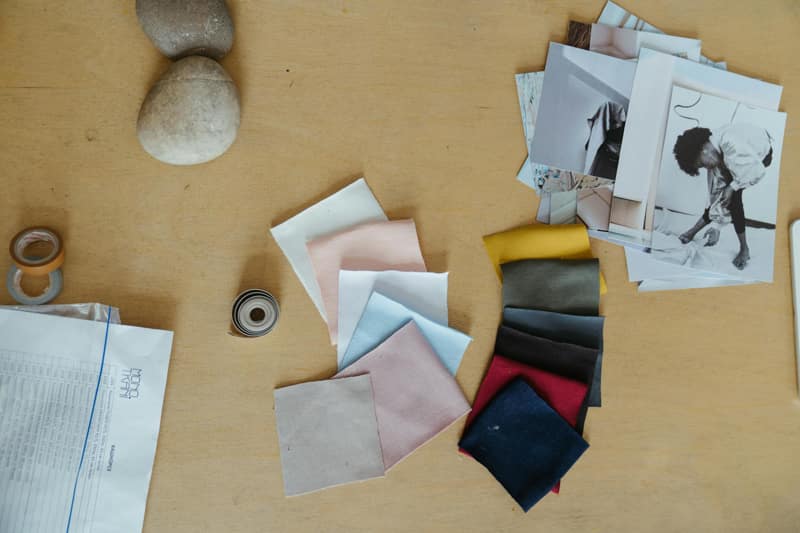
A fabric suits minimalist clothing when it holds the line the pattern gives it and looks good without help from print or trim. That points to cloths with a clear character in weight, drape or surface, made evenly enough that a large plain area does not show faults. The table below is a designer’s shortlist, with what to check in each before it is cut.
| Fabric | Why it suits a minimal design | What to check |
|---|---|---|
| Wool suiting, gabardine and crepe | Holds a tailored line and presses to a sharp crease; crepe drapes without clinging | Shade match between panels; seam slippage on loose weaves |
| Cotton poplin and shirting | A smooth, tight surface that takes a crisp collar and a flat seam | Shrinkage, so the cut stays true after washing |
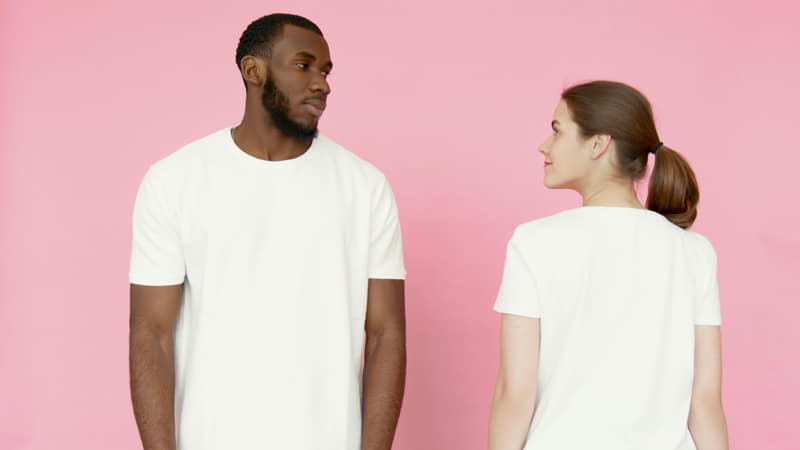
| Cotton single jersey | The plain T-shirt, the basic of most minimalist wardrobes | Weight, barré (horizontal shade bands), spirality (twisted side seams) and pilling |
| Linen | A natural slub texture gives interest without pattern | Creasing and shrinkage; the slub must look intended, not faulty |
| Silk crepe and satin | Fluid drape for bias-cut and slip shapes | Seam slippage and puckering on fine seams |
| Knitted wool and cashmere | Soft structure for jumpers and dresses with no seams to hide | Pilling and dimensional change in washing |
Knit structure matters as much as fibre: single jersey curls at the edges and can twist, while double-knit structures lie flat and hold a cleaner edge. The site’s guide to knit structures compares them.
Worked example: what a plain T-shirt’s weight tells you
When a garment has no print or trim, its fabric weight is one of the few numbers that tell you what you are getting: a heavier jersey of the same yarn has more loops of yarn in every square metre. You can predict the weight of a knitted fabric from four counts, then check it on a cut sample.
- Count the fabric. On a relaxed sample of a single-jersey T-shirt fabric we take, as an example, 50 courses per inch and 36 wales per inch, a stitch (loop) length of 2.8 mm, and a 30s Ne cotton yarn.
- Count the loops. 50 × 39.3701 courses per metre × 36 × 39.3701 wales per metre = 2,790,006 loops in one square metre.
- Find the yarn length. 2,790,006 loops × 2.8 mm = 7,812 m of yarn per square metre.
- Weigh it. 30s Ne is 590.5 ÷ 30 = 19.683 tex, or 19.683 g per 1,000 m. So 7,812 m × 19.683 ÷ 1,000 = 153.8 g/m².
- Check on the fabric. A 100 cm² disc cut from this fabric should weigh about 1.54 g (153.8 g/m² ÷ 100). Weight per unit area is measured this way under ISO 3801 for woven fabrics and ASTM D3776 for fabrics in general.
Open the example in the site’s knitted fabric GSM predictor: it shows 153.77 g/m², 7,812.02 m of yarn per square metre and 19.68 tex. Change the counts to match a fabric of your own. Count and cut on a fully relaxed sample: fabric measured straight off the machine reads low on courses and gives a light prediction.
What fabrics signal quality in minimalist fashion?
In a plain garment, quality shows as the absence of faults over time: the colour stays, the surface stays smooth, the garment keeps its size and the seams stay closed. Each of those can be measured, so a designer or buyer can write them into a specification instead of trusting a handle in the showroom.
| What a wearer notices | What is measured | Test method on this site |
|---|---|---|
| A black or navy piece goes grey after washing | Colour fastness to laundering | ISO 105-C06 |
| Dark colour rubs onto a light bag or sofa | Colour fastness to rubbing | ISO 105-X12 |
| A neutral fades on the shoulders | Colour fastness to light | ISO 105-B02 |
| A shirt or T-shirt shrinks out of its cut | Dimensional change in washing and drying | ISO 5077, with the washing procedures of ISO 6330 |
| A knit goes fuzzy and bobbled | Pilling resistance (Martindale) | ASTM D4970/D4970M; results compare in the pilling index calculator |
| A seam in a fine woven pulls open | Seam slippage | ISO 13936-1 |
| A T-shirt feels thin | Mass per unit area | ISO 3801, ASTM D3776 |
The site’s introduction to textile testing standards explains how ISO, AATCC and ASTM methods relate and how to choose between them.
Construction: pattern, seams and finishes
Minimal design is not simple to make. With fewer seams, each one has to shape the garment, so the pattern does more of the work; see the site’s guide to pattern making and grading. The construction choices that keep a plain garment clean are mostly about hiding raw edges and fastenings:
- Enclosed seams. A French seam encloses the raw edges inside a second seam, which suits sheer and fine fabrics; a flat-felled seam folds the allowances under and stitches them flat, which suits shirts and workwear. Bias-bound edges give a clean finish to unlined jackets.
- Facings and linings instead of visible bindings, so the neckline and armhole show only the fold of the fabric.
- Hidden fastenings: concealed zips, a fly-front placket that covers the buttons, or no fastening at all where the shape allows it.
- Darts, pleats and seam lines placed as the design’s only lines, which is the “ornament as structure” in the principles above.
The site’s guide to garment construction techniques describes the French and flat-felled seams, bias binding, darts and pleats.

Reducing what is cut away. A clean design is not the same as a low-waste one. Rissanen’s doctoral thesis on zero-waste fashion design found that conventional design approaches waste approximately 15 per cent of the fabric used to design and make a cut-and-sew garment, and observed that responsibility for this waste is placed on manufacture, although manufacture is constrained by what has already been designed and pattern cut (Rissanen, University of Technology Sydney, 2013). Zero-waste pattern cutting fits the pieces of a garment into the fabric width so that little or nothing is left over, an approach that can suit the straight lines and simple shapes of minimal design. The site’s zero-waste studio guide covers the practice, and the marker efficiency calculator measures how much of a conventional lay ends up in the garment.
Minimalism, slow fashion and ethics
Minimalism and slow fashion meet on one point: a garment that is worn many times. The Ellen MacArthur Foundation’s 2017 report A New Textiles Economy found that clothing production had approximately doubled in the previous 15 years while clothing utilisation, the average number of times a garment is worn before it stops being used, fell by 36% over the same period; it also found that less than 1% of the material used to make clothing is recycled into new clothing (Ellen MacArthur Foundation, 2017, summary of findings).
This is the usual argument for pairing slow fashion with minimalist design. A plain, well-cut piece in a neutral colour goes with more of a wardrobe and does not date with a season’s print, so it can earn more wears. But the look alone does not make a garment sustainable. A minimalist T-shirt that pills, fades or shrinks after a few washes is discarded as fast as any trend piece, and a plain design can still waste 15% of its fabric on the cutting table. The ethical case rests on the checks above: durable fabric, sound making, efficient cutting and a supply chain that can be shown. The site compares the two business models in fast fashion vs slow fashion.
Minimalist sportswear and athleisure
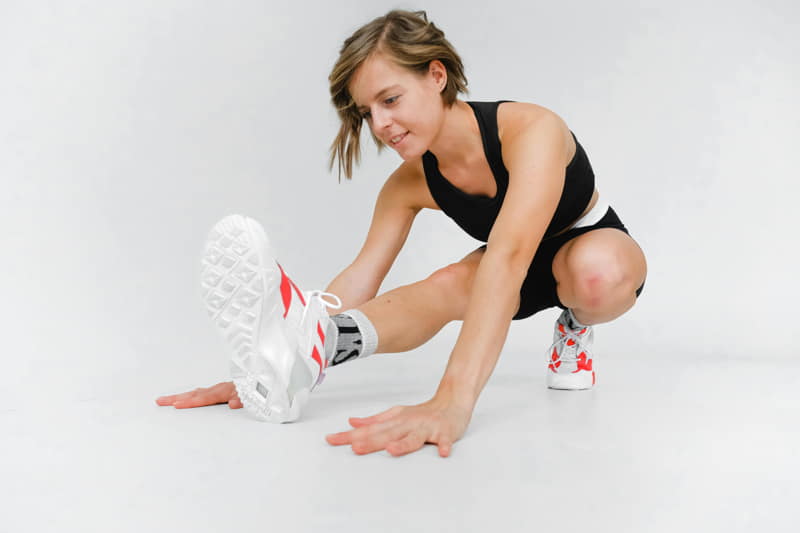
Sportswear sits close to minimalism because function leads its design: a running top needs stretch, a flat seam against the skin and a fabric that dries, not decoration. Lifestyle apparel with athletic roots keeps that plain, functional look for everyday wear: black, white and grey stretch jersey, few seams, and bonded or flat-locked seams that lie flat. The checks are the same as for any plain knit, with stretch recovery and pilling resistance at the top of the list.
Building a minimalist wardrobe
A minimalist wardrobe applies the same reduction to a whole collection of clothes: fewer pieces, each chosen to combine with the rest. Most start from foundations in one or two neutral colours (plain T-shirts and shirts, a knit, straight trousers or jeans, a jacket or coat) and add a few pieces with more character. Cost per wear is the useful arithmetic: in any currency, a coat bought for 200 and worn 100 times costs 2 a wear, while a jacket bought for 40 and worn 5 times costs 8 a wear. That comparison only holds if the dearer piece lasts, which is the case for checking its fabric weight, colour fastness, shrinkage and pilling before buying.
Questions about minimalist fashion
What is minimalism in fashion design?
It is design by reduction: clean lines and silhouettes, a restrained palette and little or no decoration, so that cut, fabric and construction carry the garment. The Museum at FIT describes it as the aesthetic of “less is more”, which prioritises reduction and function.
Who are the best-known minimalist fashion designers?
The Museum at FIT’s 2019 exhibition names Calvin Klein as known for fashion minimalism, the 1990s austerity of Helmut Lang and Martin Margiela and the “invisible luxury” of Prada, Jil Sander under Raf Simons, and Phoebe Philo at Céline. Earlier, it traces restraint to Coco Chanel’s jersey knitwear and an André Courrèges Space Age dress.
Which fabrics are suitable for minimalist clothing?
Fabrics that hold a line and look good without print: wool suiting and crepe, cotton poplin, good single jersey, linen, silk crepe and fine knitted wool. Choose them by weight, drape and evenness, because a large plain area shows every fault.
What fabrics signal quality in minimalist fashion?
Ones that stay as bought: colour fast to washing, rubbing and light, stable in size after washing, slow to pill and with seams that do not slip. Each is measured by a standard test method, so ask for results to ISO 105-C06, ISO 5077 and a Martindale pilling test, and check the fabric weight.
Why do slow-fashion brands favour minimalist design?
The argument is that plain, versatile pieces can be worn more often and for longer, and the Ellen MacArthur Foundation found that the average number of wears per garment fell by 36% in the 15 years to its 2017 report. The design only helps if the garment is also durable and efficiently made.
Is minimalist clothing automatically sustainable?
No. A plain look says nothing about the fibre, the dyeing, the cutting waste or how long the garment lasts. Conventional cut-and-sew design wastes about 15% of the fabric, according to Rissanen’s 2013 thesis.
Sources
- Definition, the minimalism and maximalism comparison, the designers and dates: The Museum at FIT, Minimalism/Maximalism, exhibition of 28 May to 16 November 2019, organised by Melissa Marra-Alvarez.
- Minimalism as an art movement: Tate, art term “Minimalism”.
- Fabric waste in cut-and-sew design: T. Rissanen, Zero-waste fashion design: a study at the intersection of cloth, fashion design and pattern cutting, PhD thesis, University of Technology Sydney, 2013.
- Clothing production, use and recycling: Ellen MacArthur Foundation, A New Textiles Economy: Redesigning fashion’s future, 2017, and its summary of findings (PDF), which gives the 36% and less-than-1% figures.
- Test methods: the site’s records for each standard linked in the quality table. The worked example uses the site’s knitted fabric GSM predictor as it stood on 17 October 2026.
How this page is kept
Last verified: 17 October 2026. The design history is taken from The Museum at FIT’s exhibition text and object list, and the art-movement definition from the Tate; dates and attributions are quoted as those institutions give them. The fabric-waste figure is from Rissanen’s 2013 thesis and the clothing-use figures from the Ellen MacArthur Foundation’s 2017 report. The worked example uses the site’s knitted fabric GSM predictor, and the prefilled link was opened to check that it shows the figures quoted. This page was rewritten on this date; the earlier version’s unsourced case studies, market claims and history were removed. Spotted an error? Tell us through the contact page and it will be corrected.