Textile machinery has come a long way since the early days of manual weaving and spinning. Today, the evolution of textile machinery is at the heart of a modern, highly automated, and sustainable industry. From the clack-clack of handlooms in ancient workshops to the digital precision of today’s computerized systems, each technological leap tells a story of innovation, resilience, and a quest for efficiency. This article offers a deep dive into the evolution of textile machinery, presenting its history, technological transformation, key innovations, and the future of this dynamic industry.
1. Introduction to Textile Machinery Evolution
Textile machinery evolution is not merely a chronicle of mechanical progress—it is the narrative of an industry in constant adaptation. The transformation of textile machinery reflects broader economic, technological, and social shifts. Early machines were simple, manually operated tools that slowly evolved into complex systems integrating advanced electronics and digital technologies. Today, textile machinery forms the backbone of a multi-billion-dollar global industry, driving innovations in production speed, quality, and sustainability.
In every thread and fabric, there’s a story of innovation. From the earliest looms that required human skill and endurance to modern automated systems that operate with minimal intervention, the evolution of textile machinery mirrors our journey from artisanal craft to industrial modernity. Our understanding of this evolution not only honors the ingenuity of past pioneers but also inspires future advancements.
Modern textile machinery incorporates robotics, computer-aided design (CAD), artificial intelligence (AI), and sustainable practices. These advancements enable manufacturers to optimize production, reduce waste, and produce textiles that meet rigorous quality standards. Educational resources on TextileSchool.com offer detailed courses on textile technology and machinery, providing a bridge between traditional techniques and cutting-edge innovation.
2. Historical Perspectives and the Dawn of Textile Machinery
The history of textile machinery spans centuries, with each era marked by significant milestones. Early civilizations relied on simple handlooms and spinning wheels to create fabrics, but the advent of mechanization in the Industrial Revolution dramatically transformed production.
2.1 Early Beginnings
The roots of textile machinery can be traced back to ancient civilizations where handlooms were the primary tool for weaving. In regions like ancient Egypt, India, and China, artisans used basic tools to spin and weave natural fibers into cloth. Although these early techniques were labor-intensive, they laid the foundation for more complex machinery.
As societies advanced, inventions like the spinning jenny in the 18th century revolutionized yarn production. Invented by James Hargreaves, the spinning jenny allowed a single worker to spin multiple spools of thread simultaneously. This innovation marked a significant leap in efficiency and productivity, paving the way for subsequent inventions.
2.2 The Industrial Revolution
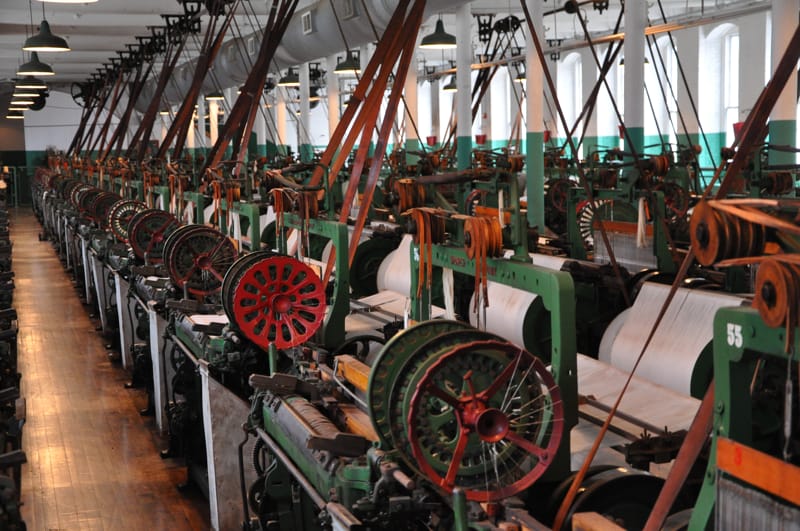
The Industrial Revolution heralded a new era in textile production. Machines such as the water frame, mule spinners, and power looms dramatically increased output and reduced manual labor. These machines, powered by steam and later electricity, transformed small workshops into large-scale factories.
For example, Richard Arkwright’s water frame in the late 18th century mechanized the spinning process, while Edmund Cartwright’s power loom in the early 19th century revolutionized weaving. These innovations not only increased productivity but also set standards for quality and uniformity. Historical documents and research papers from this era detail how these machines reshaped the textile landscape, laying the groundwork for the modern industry.
2.3 Transition to Modern Machinery
The transition from mechanical to electrical and eventually digital machinery was marked by incremental innovations. The mid-20th century saw significant improvements in machine design, incorporating electronic controls that increased precision and reduced human error. As computers became integral to manufacturing, textile machinery evolved into highly automated systems that could operate continuously with minimal oversight.
This historical evolution highlights the industry’s relentless pursuit of efficiency, quality, and innovation. Each phase—from handlooms to automated systems—represents a significant chapter in the story of textile machinery. The lessons learned from these early innovations continue to influence modern production processes, ensuring that the textile industry remains competitive and forward-thinking.
3. Technological Evolution in Textile Machinery
Advancements in technology have revolutionized textile machinery, transforming traditional methods into state-of-the-art processes. Digital tools, robotics, and smart systems now drive every stage of textile production.
3.1 Digital Revolution in Textile Machinery
The digital revolution has redefined how textile machinery is designed, operated, and maintained. Computer-Aided Design (CAD) and Computer-Aided Manufacturing (CAM) systems allow designers to create intricate patterns and simulate fabric behavior before production. These digital tools help optimize machine settings, reduce material waste, and improve product quality.
For instance, modern weaving machines integrate digital controls that monitor thread tension, speed, and density in real time. AI-driven analytics predict potential faults and optimize production parameters, ensuring that the fabric meets quality standards. These systems also facilitate remote monitoring and maintenance, reducing downtime and increasing overall efficiency.

3.2 Robotic Automation and Smart Machinery
Robotics has had a transformative impact on textile production. Automated systems now perform tasks such as loading, unloading, and quality inspection, significantly reducing labor costs and human error. Smart machinery equipped with sensors and IoT connectivity continuously monitors production parameters, providing real-time data that can be used to adjust processes dynamically.
For example, robotic arms in weaving and spinning mills handle delicate tasks that require precision and speed. These robots work alongside humans to ensure that the production process remains efficient and consistent. The integration of robotics not only enhances productivity but also improves workplace safety by minimizing human exposure to hazardous conditions.
3.3 Sustainable and Energy-Efficient Technologies
The demand for sustainable production methods has spurred innovations in energy efficiency and environmental compliance. Modern textile machinery incorporates features that reduce energy consumption, minimize waste, and utilize recycled materials. Energy-efficient motors, regenerative braking systems, and automated power management systems are now standard in many modern mills.
Technologies such as digital twin modeling enable manufacturers to simulate production scenarios and optimize energy use before implementing changes on the shop floor. These advances not only contribute to environmental sustainability but also result in significant cost savings over time.

The technological evolution in textile machinery is an ongoing process. Continuous research and development ensure that new innovations are regularly integrated into production lines, driving improvements in efficiency, quality, and sustainability.
4. Source and Availability of Textile Machinery
The global textile machinery market is vast and diverse. Manufacturers source machinery from specialized suppliers across the world, including Europe, Asia, and North America. The availability of advanced textile machinery is crucial for maintaining competitiveness in an industry driven by innovation.
4.1 Global Suppliers and Manufacturers
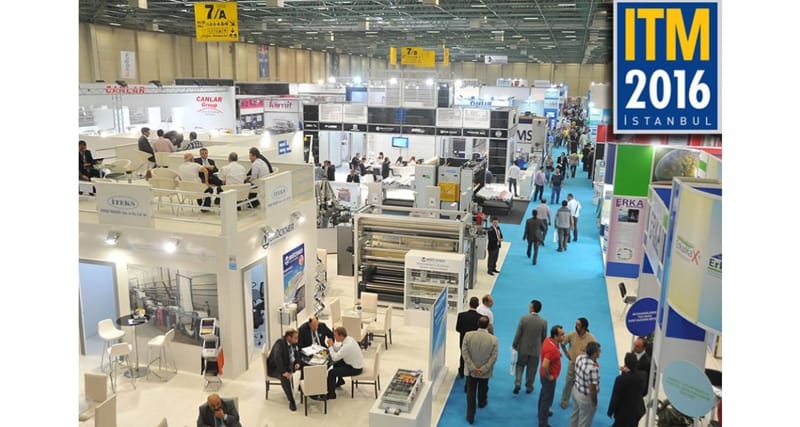
Key players in the textile machinery industry include companies known for producing high-quality, reliable, and innovative equipment. These suppliers offer a wide range of machines—from spinning and weaving looms to dyeing, printing, and finishing systems. Global trade fairs and industry exhibitions, such as ITMA (International Textile Machinery Association), provide platforms for suppliers to showcase the latest technologies.
Manufacturers often choose machinery based on specific production needs, capacity requirements, and technological features. For instance, European suppliers are renowned for precision engineering and robust machine design, while Asian manufacturers offer cost-effective solutions with cutting-edge technology. Industry reports on platforms like Textile World provide detailed analyses of market trends and supplier performance.
4.2 Availability and Lead Times
The availability of textile machinery can vary based on market demand, production capacity, and technological complexity. Modern machinery often requires extensive customization to meet specific production requirements. Lead times for state-of-the-art systems can range from a few months to over a year, depending on the level of automation and integration needed.
Companies often establish long-term relationships with suppliers to secure access to the latest machinery and ensure consistent supply. Digital marketplaces and trade portals facilitate the procurement process, allowing manufacturers to compare products, negotiate prices, and track orders in real time. This digital transformation has streamlined the sourcing process, making it easier for companies to stay competitive.
4.3 Access to Information and Training
In addition to physical machinery, access to technical information and training is vital for effective use. Many suppliers offer comprehensive technical support, online training modules, and after-sales services to help manufacturers operate their equipment efficiently. Platforms like TextileSchool.com provide valuable resources, tutorials, and case studies on the latest textile machinery and production techniques.
Availability of such resources ensures that operators and engineers are well-trained and capable of maximizing machine performance. Continuous education and technical support drive innovation and improve overall production quality.
5. Innovations Driving Textile Machinery
Innovations in textile machinery have revolutionized the industry by enhancing productivity, quality, and sustainability. These breakthroughs have transformed traditional production processes and paved the way for modern automated systems.
5.1 Advanced Control Systems and Digital Integration
One of the most significant innovations in textile machinery is the integration of advanced control systems. Modern machines use microprocessors, sensors, and digital controllers to monitor and adjust production parameters in real time. These systems ensure that every process—from yarn feeding to fabric inspection—operates at optimal efficiency.
Digital integration enables the use of predictive maintenance, where sensors detect wear and potential failures before they cause downtime. This proactive approach not only minimizes disruptions but also extends the lifespan of expensive machinery. The incorporation of Industry 4.0 principles has paved the way for smart factories that continuously adapt to changing production demands.
5.2 Energy Efficiency and Sustainability
Environmental sustainability has become a key focus in textile machinery innovation. Manufacturers are increasingly adopting energy-efficient designs and sustainable production methods. Modern machinery incorporates energy recovery systems, efficient motors, and automated controls that reduce power consumption. These innovations not only lower operational costs but also help textile companies meet stringent environmental regulations.
Innovative processes such as waterless dyeing and digital printing further contribute to sustainability. By reducing water and chemical usage, these technologies lessen the environmental impact of textile production. Manufacturers that invest in sustainable machinery often gain a competitive edge in markets where eco-friendly practices are highly valued.
5.3 Robotic and Automation Technologies
Robotic automation has transformed textile production. Automated systems now handle repetitive tasks, such as loading, unloading, and quality inspections. This integration reduces labor costs and minimizes human error. Robots equipped with advanced vision systems perform intricate tasks with precision, ensuring consistent product quality.
Automation also extends to logistics, with automated guided vehicles (AGVs) and conveyor systems streamlining material handling and shipment processes. These technologies contribute to a seamless production flow and enhance overall factory efficiency.

5.4 Innovative Materials and Adaptive Machinery
Textile machinery has evolved to work with a broader range of materials. Innovations in material science have led to the development of high-performance fibers and eco-friendly substrates. Machinery now adapts to process synthetic, natural, and recycled materials with equal efficiency.
Adaptive machinery equipped with adjustable tension systems and real-time monitoring can handle variable material properties. These systems ensure that regardless of fiber type, the production process remains consistent and high quality. Innovations in both machinery and materials continue to drive the textile industry’s progress, making it more versatile and sustainable.
6. Production Process and Machinery Integration
The production process in modern textile mills is a highly integrated operation where machinery from different stages works in concert. From spinning and weaving to dyeing, printing, and finishing, each stage relies on specialized equipment designed to meet exacting standards.
6.1 Spinning and Yarn Preparation
Spinning machinery converts fibers into yarn. Modern spinning frames, ring spinning machines, and open-end spinning systems have evolved to produce finer, stronger yarns with minimal waste. Automated control systems in these machines regulate fiber feed, twist levels, and winding speeds, ensuring uniformity across the production lot.
6.2 Weaving and Loom Operations
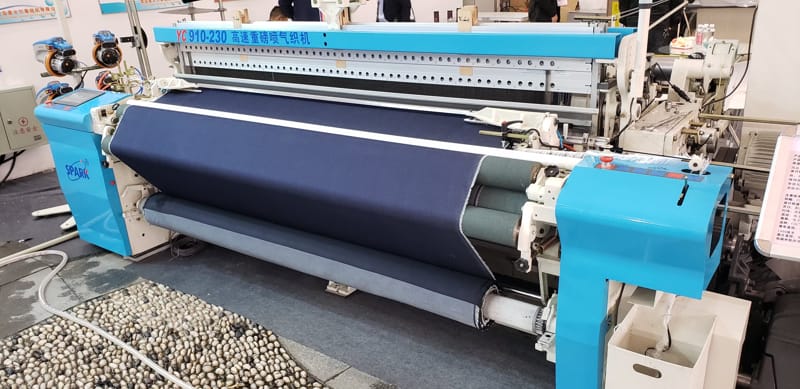
Weaving machines have seen dramatic improvements in speed, efficiency, and quality. Modern power looms and rapier looms use digital controls to maintain precise warp tension, weaving density, and pattern accuracy. The integration of computerized systems allows for quick changeovers between designs and efficient production scheduling.
Table: Key Production Stages and Machinery
| Production Stage | Machinery Involved | Key Innovations |
|---|---|---|
| Spinning | Ring Spinning, Open-End Spinning | Automated fiber feeding, AI-driven quality control |
| Weaving | Power Looms, Rapier Looms | Digital control, computerized pattern adjustments |
| Dyeing & Finishing | Continuous Dyeing Machines, Finishing Machines | Energy-efficient designs, waterless dyeing, digital monitoring |
| Printing | Digital Textile Printers | High-resolution, fast setup times, reduced chemical usage |
6.3 Dyeing, Printing, and Finishing
Dyeing and finishing machines have become more precise and environmentally friendly. Continuous dyeing systems with automated monitoring ensure consistent color application and minimal water usage. Digital textile printers allow for rapid prototyping and customization, supporting short-run production and on-demand manufacturing. Finishing machines that incorporate softening, calendaring, and compacting produce textiles with improved hand feel and durability.
6.4 Integration and Workflow Automation
Modern textile production lines use integrated manufacturing systems to synchronize processes from start to finish. Software platforms link various machinery and control systems, enabling real-time monitoring and data exchange. This digital ecosystem enhances productivity and provides detailed analytics that drive continuous improvement. Cloud-based systems and IoT sensors create a seamless workflow, reducing downtime and optimizing resource usage.

The integration of production processes through advanced machinery and digital systems represents a major leap in operational efficiency. Manufacturers can now achieve higher output with better quality control while reducing waste and energy consumption. This holistic approach to production underscores the importance of machinery evolution in driving industry success.
7. Challenges in Textile Machinery Evolution
Despite the significant advancements, the evolution of textile machinery presents several challenges. These challenges affect not only the technical aspects of production but also economic, environmental, and human factors.
7.1 Technological Adaptation and Integration
Integrating new technologies into existing production lines can be challenging. Upgrading machinery requires significant capital investment and can lead to temporary production slowdowns. Companies must balance the benefits of innovation with the costs and complexities of implementation. Furthermore, adapting to rapid technological changes demands continuous training for the workforce, ensuring that operators are proficient with digital and automated systems.
7.2 Sustainability and Environmental Concerns
As the textile industry faces increased pressure to reduce its environmental footprint, manufacturers must adopt sustainable machinery and processes. Transitioning to energy-efficient, eco-friendly systems often involves re-engineering production lines and sourcing new materials. Regulatory pressures and consumer demand for green products add further complexity to the modernization process. Balancing sustainability goals with production efficiency remains a significant challenge.
7.3 Global Competition and Market Dynamics
The global nature of the textile market means that companies must continuously innovate to remain competitive. Technological advancements in textile machinery occur at a rapid pace, and firms that fail to adapt risk falling behind. Moreover, fluctuating trade policies, tariffs, and economic uncertainties can disrupt supply chains and affect machinery procurement. Companies must remain agile and responsive to maintain their market position.
7.4 Operational and Maintenance Issues
Even state-of-the-art machinery requires regular maintenance and calibration. The complexity of modern textile equipment can lead to higher maintenance costs and operational challenges. Downtime due to technical issues can severely impact production schedules. Ensuring high uptime while managing maintenance expenses is a constant struggle for manufacturers.
Table: Major Challenges in Textile Machinery Evolution
| Challenge | Impact | Mitigation Strategy |
|---|---|---|
| Technological Adaptation | High capital investment, training requirements | Continuous education, phased upgrades, robust support |
| Sustainability Pressures | Increased costs, process re-engineering | Invest in energy-efficient systems, adopt green technologies |
| Global Competition | Need for constant innovation | Collaborate with R&D, monitor global trends, agile management |
| Operational & Maintenance Issues | Downtime, high maintenance costs | Preventive maintenance, digital monitoring, skilled technicians |
Addressing these challenges requires strategic planning, investment in innovation, and a commitment to continuous improvement. The journey of textile machinery evolution is ongoing, and companies that navigate these hurdles successfully will lead the industry into a more efficient, sustainable future.
8. Real-World Applications and Case Studies
The impact of textile machinery evolution is best understood through real-world examples and case studies. Numerous textile manufacturers have successfully integrated advanced machinery into their production lines, achieving remarkable improvements in efficiency, quality, and sustainability.
8.1 Case Study: Automation in Weaving Mills
A prominent weaving mill in Southeast Asia upgraded its production line by incorporating state-of-the-art power looms with digital controls and automated monitoring systems. The mill witnessed a 35% increase in productivity and a 25% reduction in waste. Real-time data allowed operators to adjust warp tension and density on the fly, ensuring consistent fabric quality. The success of this transformation has positioned the mill as a leader in innovation and sustainability.
8.2 Case Study: Sustainable Dyeing Processes
An eco-conscious textile manufacturer in Europe adopted continuous dyeing machines that use waterless dyeing technology. The transition not only reduced water consumption by 70% but also improved color consistency and reduced production time. The digital integration of dyeing systems allowed for precise control of dye application, resulting in fabrics that met strict environmental standards. This case demonstrates how machinery evolution supports sustainable practices and cost savings.
8.3 Case Study: Integration of Robotics and AI
A North American textile producer integrated robotic systems and AI-driven analytics into its spinning and weaving operations. These systems automated routine tasks, detected potential defects, and optimized machine settings in real time. The integration resulted in a 40% boost in overall equipment efficiency (OEE) and significant improvements in product quality. Detailed performance metrics were captured through digital dashboards, enabling continuous improvement. The case study illustrates the transformative potential of combining robotics with advanced analytics in textile production.
Real-world applications of advanced textile machinery demonstrate how embracing innovation leads to tangible benefits. These case studies provide valuable insights for companies looking to invest in new technologies, improve operational efficiency, and reduce their environmental footprint.
9. End-Users, Stakeholders, and Their Impact
The evolution of textile machinery impacts a wide range of stakeholders, from manufacturers and operators to end-users and regulatory bodies. Each group plays a critical role in driving the industry forward.
9.1 Manufacturers and Operators
Manufacturers invest heavily in modern machinery to increase productivity, ensure quality, and reduce costs. Operators benefit from digital training programs and automated systems that simplify complex tasks. The synergy between human expertise and machine efficiency enhances overall performance and drives competitive advantage.
9.2 End-Users and Consumers
Consumers benefit from improved product quality and consistency resulting from advanced machinery. Enhanced production techniques lead to textiles that are more durable, eco-friendly, and aesthetically appealing. End-users—ranging from fashion designers to industrial clients—demand high-performance materials that meet stringent standards, a requirement that modern machinery reliably delivers.
9.3 Regulatory Bodies and Industry Associations
Regulatory agencies and industry associations play an essential role in standardizing machinery performance and safety. They develop guidelines and conduct audits that ensure machines meet quality and environmental standards. This regulatory framework protects consumers and promotes fair competition, further driving innovation and modernization in the textile industry.
Table: Key Stakeholders in Textile Machinery Evolution
| Stakeholder | Role/Impact | Benefits |
|---|---|---|
| Manufacturers/Operators | Invest in, operate, and maintain modern machinery | Increased efficiency, reduced costs, improved quality |
| End-Users/Consumers | Purchase high-quality, sustainable textiles | Enhanced product performance, durability, and sustainability |
| Regulatory Bodies | Set standards, monitor compliance, ensure safety | Consumer protection, fair trade practices, industry credibility |
| Industry Associations | Provide training, resources, and advocacy | Knowledge sharing, standardization, global market integration |
Collaboration among these stakeholders fosters an environment where continuous improvement and innovation are prioritized. Their combined efforts drive the textile industry toward a future that balances efficiency, quality, and sustainability.
10. Market Trends, Economic Impact, and Global Dynamics
The global textile machinery market is a dynamic ecosystem characterized by rapid technological advancements and intense competition. Market trends reflect the increasing demand for automated, energy-efficient, and sustainable production systems. Companies that invest in modern machinery not only reduce production costs but also enhance their market positioning.
10.1 Market Trends
Current trends indicate a shift toward digital integration and smart manufacturing. As Industry 4.0 principles permeate textile production, companies are adopting technologies such as AI, robotics, and IoT to drive efficiency. Sustainability is also a major focus, with environmental regulations pushing manufacturers to adopt energy-saving and eco-friendly technologies. These trends have a profound effect on market dynamics and consumer expectations.
10.2 Economic Impact
The economic benefits of modern textile machinery are significant. Enhanced automation leads to higher production speeds, lower labor costs, and reduced waste. Energy-efficient machines lower operational costs, contributing to improved profitability. Market analyses suggest that companies leveraging advanced machinery tend to outperform competitors in terms of productivity and cost management.
Moreover, efficient machinery facilitates access to international markets by ensuring compliance with stringent quality and environmental standards. This global competitiveness opens new avenues for trade and investment, driving economic growth in the textile sector.
10.3 Global Trade Dynamics
Global trade in textiles is influenced by complex regulatory environments and international agreements. Harmonization of standards across regions has facilitated smoother cross-border transactions. Advanced machinery that meets global standards helps manufacturers gain access to high-value markets. Trade fairs, international exhibitions, and digital marketplaces further drive global integration, making state-of-the-art textile machinery a critical asset for companies worldwide.

The interplay between market trends, economic impact, and global trade dynamics underscores the strategic importance of investing in modern textile machinery. Companies that remain agile and adopt cutting-edge technologies secure a competitive advantage and contribute to the industry’s long-term growth.
11. Future Trends and Emerging Opportunities
The future of textile machinery evolution is poised for exciting developments. Emerging technologies and evolving market demands will continue to shape production processes and drive innovation.
11.1 Digital and Smart Manufacturing
The future lies in further digital integration. Advances in AI, machine learning, and IoT will lead to smarter, self-regulating machinery. Digital twin models will simulate production processes in real time, enabling predictive maintenance and continuous optimization. These innovations will result in even more efficient production lines with minimal downtime.
11.2 Sustainability and Green Technologies
Sustainability will remain a key driver in the evolution of textile machinery. The push toward green manufacturing will lead to the development of machines that consume less energy, produce less waste, and incorporate eco-friendly materials. Future textile machinery will likely feature closed-loop systems, water recycling, and renewable energy sources, helping manufacturers meet strict environmental standards.
11.3 Customization and Flexibility
Consumer demands for personalized products and fast fashion are driving the need for flexible production systems. Future textile machinery will offer modular designs that can quickly adapt to different production requirements. On-demand manufacturing systems will become more prevalent, reducing inventory costs and enabling rapid market response.
11.4 Global Collaboration and Innovation
Global collaboration among research institutions, industry associations, and machinery manufacturers will continue to drive innovation. International standards will evolve to incorporate emerging technologies and sustainability criteria. Companies that actively engage in collaborative R&D initiatives will lead the way in setting new benchmarks for quality and efficiency.

The emerging trends point toward a future where textile machinery is smarter, more sustainable, and more adaptable than ever before. Manufacturers that embrace these opportunities will not only improve their production efficiency but also secure a competitive advantage in the global market.
12. Summary and Conclusion
The evolution of textile machinery is a testament to the industry’s continuous drive for innovation, efficiency, and sustainability. This comprehensive guide has explored the historical development, technological evolution, and groundbreaking innovations that have transformed textile machinery from simple handlooms to complex, digitally integrated production systems.
Key points include:
- Introduction: Textile machinery evolution has reshaped the industry, blending traditional techniques with modern automation.
- Historical Perspectives: From handlooms and spinning wheels to the Industrial Revolution and beyond, the journey of textile machinery reflects human ingenuity and resilience.
- Technological Evolution: Digital tools, robotics, AI, and smart systems have revolutionized production, increasing efficiency and reducing waste.
- Source and Availability: Global suppliers, trade fairs, and digital platforms provide access to cutting-edge machinery and essential technical support.
- Innovations: Breakthroughs in control systems, energy efficiency, and sustainable technologies drive modern textile production.
- Production Process: Integrated systems in spinning, weaving, dyeing, and finishing ensure high-quality outputs with minimal downtime.
- Challenges: Technological adaptation, sustainability pressures, global competition, and maintenance issues require strategic mitigation.
- Real-World Applications: Case studies demonstrate the tangible benefits of advanced machinery in improving productivity and sustainability.
- Stakeholders and Market Impact: Manufacturers, operators, end-users, and regulators all contribute to and benefit from machinery evolution.
- Future Trends: Digital integration, sustainability, customization, and global collaboration will shape the next generation of textile machinery.
In conclusion, the evolution of textile machinery has driven the industry into a new era marked by high efficiency, innovation, and sustainability. The integration of digital technologies, smart automation, and sustainable practices not only enhances production but also positions the textile industry for a competitive future. As the industry continues to innovate and adapt, understanding the evolution of textile machinery remains essential for every stakeholder—ensuring that the global textile landscape is both resilient and forward-thinking.