Fiber is the fundamental component required for making textile yarns and fabrics. There are two types – natural and synthetic. Natural fibers come from animals (sheep, goats, camelids, etc.) or vegetable-based fibers (cotton, flax, linen, and other plant fibers). Mineral fibers (asbestos, etc) are also classified as natural fibers.
Synthetic fibers are man-made and manufactured from synthetic chemicals – (byproducts of the petrochemical industries) – nylon, polyester, acetates. The characteristics of fibers directly affect the properties of the fabric it is woven into.
The history of fibers is as old as human civilization. Traces of natural fibers have been located in ancient civilizations all over the globe. For many thousand years, the usage of fiber was limited by natural fibers such as flax, cotton, silk, wool, and plant fibers for different applications.
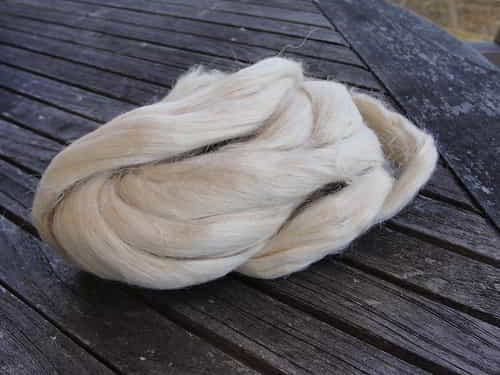
Fibers can be divided into natural fibers and man-made or chemical fibers. Flax is considered to be the oldest and the most used natural fiber since ancient times.
A unit of matter which is capable of being spun into a yarn or made into a fabric by bonding or by interlacing in a variety of methods including weaving, knitting, braiding, felting, twisting, or webbing, and which is the basic structural element of textile products.
It is the smallest textile component which is a microscopic hair-like substance that may be man-made or natural.
They have a length at least a hundred times that of their diameter or width.
Classification of Fibers
Comprehensive list of Textile Fibers
Type of fibers classified by fiber sources
Downloadable PDF Charts – Textile Fibers
- Fibers-Summary
- Fibers-Detail
- Fibers-Synthetic-NaturalPolymers-Cellulose
- Fibers-Synthetic-NaturalPolymers-Protein
- Fibers-Synthetic-SyntheticPolymers
- Fibers-Inorganic

Types of Fibers
There are four types of fibers: natural, manufactured, synthetic, and minor miscellaneous types.
Natural fibers include Cotton, Linen, Flax, Wool (any form of animal hair including human hair; not just sheep wool as most associate with wool), and various other minor novelty fibers such as Hemp and Spun Cone. These fibers you can pick up and spin right into a fabric.

Manufactured fibers are types that come from cellulose and protein such as Rayon and Acetate. Rayon was the first manufactured fiber in 1949 and is also known as “artificial silk” since it was developed to mimic the costly silk fabrics of the time.
Many people consider Rayon a natural fiber but technically it is not. Rayon is spun from naturally occurring polymers that replicate a natural fiber.
Synthetic man-made fibers could take up a whole book along with the many styles and varieties. New fibers are developed all the time. Common fibers include Polyester, Microfiber, and Nylon to name a few.
Special use fibers are less common, but people may not realize that they come into contact with them on a daily basis. Surprisingly fibers such as rubber are used in Spandex. Metal such as stainless steel is used in carpets, and other metals such as silver and gold are woven into fabrics. New and innovative uses for fibers are being developed every day.
Properties of Fibers
Introduction of Fibers
- Fiber is an individual, fine, hairlike structure.
- Fibers have a comparatively high ratio of length to width, thus ensuring the flexibility required for manufacturing and end use.
- Differences among the textile fibers result from their different chemical compositions, the arrangement of their molecules, and their external features (e.g., shape).
- Fibers usually are grouped and twisted together into continuous strands called yarns. The yarns are then used to make various textile materials (e.g., woven fabrics, knitted fabrics, lace).
- Fibers can also be used directly to make a fabric without first being made into yarns. Felt and nonwoven materials (e.g. interfacing) are two examples of fabrics made directly from fibers.
Sources
Fibers are classified into those found in nature, called natural fibers, or those that are manufactured through the use of science and technology. Manufactured fibers are designed to resolve particular problems and answer specific needs.
Natural Fibers
- Natural fibers are obtained from plants or animals. Plant fibers may come from stems (e.g., flax, hemp, jute, ramie), leaves (e.g., sisal, abaca), or seeds (e.g, cotton, kapok) of plants.
- Animal fibers (e.g., wool, cashmere, mohair, vicuna) protect people against the cold the same as they do animals. Silk is considered an animal fiber, although it comes from the cocoon of a silkworm rather than a mammal’s fur.
Manufactured Fibers
- Manufactured, or man-made, fibers are made from chemical solutions that are forced through tiny holes, similar to water passing through a showerhead.
- The device used to form the filaments is called a spinnerette. It can be as small as a thimble or as large as a plate, with tiny holes on the top or flat surface area.
- The fine liquid streams of solution that are forced through the holes are hardened into continuous strands called filament fibers. This action is copied from nature. The silkworm extrudes streams of silk liquid, which harden into filaments on contact with the air.
- The number of holes in the spinnerette, as well as their shape and their size, varies according to the filament fiber and yarn desired. A small spinnerette has as few as 10 holes, and a large one can have more than 10,000.
Different techniques are used to harden the liquid streams and produce the filament fibers. The technique used depends on the chemical composition of the solution.
The more commonly used methods are :
- Dry spinning
- Wet spinning
- Melt spinning
Dry spinning method
The fiber solution, mixed with a solvent, is forced through the spinnerette into warm air. The warm air helps evaporate the solvent, and the liquid stream then hardens. Acetate and modacrylic fibers are made in this manner.
Wet spinning method
The solution is forced through the spinnerette and then into a liquid solution in which the fiber solution streams harden into continuous filaments. Acrylic fibers well as viscose rayon fibers are made with this method.
Melt spinning method
The solid material is melted to form a liquid solution that is forced through the spinnerette and into cool air, where the liquid fiber streams harden into continuous filaments. Glass, nylon, polyester, and olefin fibers are made in this way.
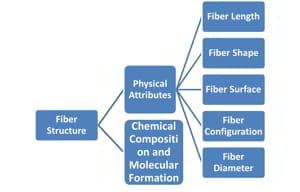
Fiber Length
- Fibers vary from less than one inch to miles in length. Fibers whose lengths are measured in inches are called staple fibers.
- Fibers of longer lengths are called filament fibers.
- Silk is the only natural fiber that is found in filament form. It is usually about 1,600 yards (1,463 m) long.
- All the other natural fibers vary in length, from about ½ inch to 36 inches.
- Cotton is usually ½ to 2 ½ inches, flax is usually 2 to 36 inches, and wool is usually 1 to 18 inches.
- All manufactured fibers are produced originally as filament fibers. Sometimes they remain as such, but often they are made into shorter-length staple fibers from 1 ½ to 6 ½ inches. The process frequently involves crimping the filament fibers and then heat-setting to maintain the crimp configuration.
- Thousands of the filaments are sometimes grouped to form a thick rope called tow and are then cut or broken into the required lengths before being twisted into yarns.
- Some manufactured fibers, such as spandex, are always used as filament fibers.
- Other manufactured fibers, such as acrylic for apparel, are almost always made into staple fibers.
- When making filaments that are later to be cut into short pieces, large spinnerettes with many holes are used in order to obtain high production. Small spinnerettes are used when making filaments for filament yarns because the number of holes in the spinnerette must equal the number of filament fibers that the particular filament yarn will contain.
- This is a basic reason why staple fibers are less expensive per pound than comparable filament fibers.
Fiber Shape
- When viewed with the naked eye, all fibers look very similar. When viewed under a microscope, however, fibers varying configurations are visible.
- The microscopic cross-sectional shape of the fiber and the surface construction determine the bulk, texture, luster, and hand of the fiber.
- Fiber’s cross-sectional shape influences the way light is reflected from the surface.
- A flat-surfaced fiber has more luster than a round one. A round fiber reflects light in one general direction. A multilobal-shaped fiber tends to scatter the light, causing a diffuse glow with sparkles (glitter).
- The sparkles are caused by bright spots from the light reflected from the tips of the rounded lobes.
- An irregular cross-section scatters light in many directions, resulting in a dullish appearance with few highlights.
- Round fibers, such as wool, result in bulkier fabrics because they do not pack as much as flat fibers, such as cotton.
- Round-shaped, rodlike fibers, such as nylon, offer a smoother, more slippery hand than wool, which has a round shape but a scaly surface.
Fiber Surfaces
- The surfaces of fibers vary. For example, they can be smooth, rough, slightly grooved, deeply channeled, or wrinkled.
- Wool fiber is scaly, cotton is smooth, and rayon is serrated. The fiber surface affects such properties as hand, lustre, and wicking.
Fiber Longitudinal Configuration
- Lengthwise, fibers have varying configurations. They may be straight, twisted, coiled, or crimped. Cotton fiber, for example, is naturally twisted, whereas nylon fiber is fairly straight.
- Various performance properties – such as resiliency, elasticity, and abrasion resistance – are affected by fiber longitudinal configuration.
- Crimp refers to the bends and twists along the length of a fiber. Greater crimp increases resiliency, bulk, warmth, elongation, absorbency, and skin comfort.
- However, the hand becomes harsher and lustre is reduced as crimp increases. Crimp allows the fiber to stand off the skin so the fabric will not cling to the wearer’s skin.
- Crimp is inherent in wool fibers. Although it is not inherent in manufactured fibers. Crimp can also be added after the yarn has been produced by a process called texturing.
Fiber Diameter
- Fiber diameter refers to the thickness of the fiber.
- Thicker fibers result in greater stiffness, which improves wrinkle resistance but can also result in undesirable roughness.
- Large-diameter fibers result in bulkier fabrics because they do not pack as well as thin fibers. Fine-diameter fibers can result in a fabric that is sheer, light-weight, and generally more drapable and softer to the touch than the fabric of thicker fibers.
- The size the diameter of natural fibers varies depending on fiber type.
- Natural fibers grow irregularly and do not have uniformity along the length. Manufactured fibers are uniform in length and are available in a range of fiber diameters controlled by the producer
Chemical Composition and Molecular Formation
- Fibers are classified into various groups by their chemical composition. Fibers with similar chemical makeup are placed in the same category. Cotton and flax are placed in the same category—cellulosic fiber—because both are natural cellulose. Cotton, wool, and polyester, however, are each in a different category—cellulosic, protein, and synthetic, respectively.
- Although fibers in the same category have similar properties, they can also have different properties. For example, polyester and acrylic synthetic fibers are both resilient (wrinkle resistant), but the polyester fiber is much stronger than acrylic fiber.
- Furthermore, although each group of fibers has different properties from fibers in another group, there may be some similar properties. For example, although cotton and acetate fibers are in different groups (cellulose and synthetic), each is hydrophilic (i.e., absorbs water easily).
- A fibers chemical composition relates to its reaction to various items, such as bleaches, sunlight, moths, mildew, flame, and perspiration. It also determines whether the fiber is a thermoplastic (able to be melted), which dyes can be used to color it, and its reaction to chemical finishes.
- The arrangement of the molecules within a fiber affects its strength, abrasion resistance, and resiliency.
- With natural fibers, little modification is possible, but with manufactured fibers, modifications are possible within limits determined by the chemical structure.
- This has allowed the development of numerous variations of manufactured fibers through the application of textile science and technology.
Fiber Performance properties
Fiber performance properties determine the behavior characteristics of fibers and thus their suitability in specific use conditions.
Standardized tests and laboratory procedures are used to measure and compare fiber properties, which can be categorized into four groupings – aesthetics, durability, comfort, and safety.
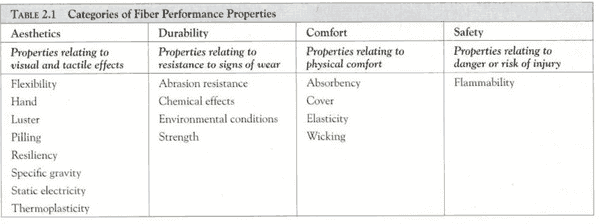
Aesthetics
Flexibility
- Flexibility is the capability of fiber to bend easily and repeatedly without breaking. A flexible fiber such as acetate can be made into a highly drapable fabric and garment. A rigid fiber such as glass, which is not used in apparel but can be found in draperies, usually makes a fabric that is relatively stiff.
- Usually the thinner the fiber, the better its capability. Flexibility also influences the hand of a material.
- Although a highly drapable fabric is often desired, there are also times when a more rigid fabric is wanted. For example, in a swing coat (a coat that hangs from the shoulders and flares out), a more rigid fabric is needed to produce the desired shape.
Hand
- The hand is the way a fiber, yarn, or fabric feels when handled. The hand of the fiber is affected by its shape, surface, and configuration.
- Fiber shapes vary and include round, flat, and multimodal.
- Fiber surfaces also vary having attributes such as smooth, serrated, or scaly.
- The fiber configuration is either crimped or straight. The type of yarn, fabric construction and finishing processes used also affect the hand of a fabric.
- Terms such as soft, crisp, dry, silky, stiff, boardy, or harsh are used to describe the hand of a textile material.
Luster
- Luster refers to the light reflected from a surface.
- Increased light reflection occurs from a smoother surface, less crimp, flatter cross-sectional shape, and longer fiber length. The drawing process used in producing manufactured fibers increases the amount of luster by making the surface smoother.
- The addition of declustering agents breaks up the reflected light so less luster occurs. Thus, by controlling the number of delusterants added, we can make manufactured fibers bright, semi-dull, or dull.
- Fabric luster is also affected by the yarn type, weave, and finish used. The desired amount of luster depends on fashion trends and customer desires.
Pilling
- Pilling is the formation of groups of short or broken fibers on the surface of a fabric that is tangled together in the shape of a tiny ball called a pill. They are formed when the ends of a fiber break from the fabric surface, usually from wear.
- Pilling is not a desirable property because it makes fabrics look worn and unsightly and feel less comfortable, such as when formed on sheets. The pills usually form in areas that are rubbed, such as collars, along the underside of sleeves and at the edges of cuffs.
- Hydrophobic fibers tend to pill much more than hydrophilic fibers because hydrophobic fibers have a greater electrical static attraction for each other and do not fall off the fabric surface.
- Wool, although hydrophilic, pills because of its scaly surface. The fibers snag each other, tangle, and form a pill.
Resiliency
- Resiliency is the capability of a material to spring back to shape after being creased, twisted, or distorted. It is closely connected with wrinkle recovery.
- A fabric that has good resiliency does not wrinkle easily and therefore, tends to retain its good appearance.
- Thicker fibers possess greater resiliency because there is more mass to absorb the strain. Also, fiber shape affects fiber resiliency; round fibers usually possess greater resiliency than flat fibers.
- Polyester has outstanding resiliency; cotton has poor resiliency.
- A resilient fiber creates a problem if a sharp crease is desired in a garment. It is easy to make a sharp crease on a cotton or rayon fabric, but not on a dry-wool material.
Specific Gravity
- Specific gravity is the ratio of the mass of the fiber to an equal volume of water at 4°C.
- A lightweight fiber enables the fabric to be warm without being heavy.
- Fabric can be made thick and lofty and still remain relatively lightweight.
- Acrylic fiber is an excellent example. It is much lighter weight than wool, but it has wool-like properties and so is used extensively to make lightweight-yet-warm blankets, scarves, heavy socks, and other winter-wear items.
Static Electricity
- Static electricity is a fractional electric charge caused by the rubbing together of two dissimilar materials. The effects, such as clothes clinging to the wearer or lint being attracted to the fabric, occur when the electric charge is retained and builds up on the surface.
- A spark or shock occurs when the surface comes in contact with a good conductor and there is a rapid discharge.
- Moisture contained in fibers acts as a conductor to remove the charge and prevent the previously mentioned effects from occurring. Hydrophobic fibers, because they contain very little moisture, are prone to static electricity.
- Static can also occur with natural fibers, but only if they are very dry, in which case they act as if they are hydrophobic. Fabrics containing epitopic fibers (fibers that conduct electricity) have no static problems.
Thermoplasticity
- A thermoplastic fiber softens when heat is applied and may melt to a liquid state when higher heat is applied. Many manufactured fibers are thermoplastic.
- Permanent creases and pleats can be made on fabrics containing thermoplastic fibers by applying enough heat to create a crease or pleat but not enough to melt the fiber; when the heat is removed, the crease or pleat is permanently set.
- The creases are permanent until a higher temperature is applied to negate the heat-setting effect. The shape can also be imparted to garments by this process, giving thermoplastic fabrics good dimensional stability.
- Fiber thermoplasticity is an important property that makes many textile innovations possible. Examples are textured yarns, permanent embossing, durable press, and others. Shaped hat bodies and bra cups are also examples of applications of thermoplastic fibers.
Durability
Abrasion Resistance
- Abrasion resistance is the ability to resist wear from rubbing that contributes to fabric durability.
- Garments made from fibers that possess both high breaking strength and abrasion resistance can be worn often and for a long period of time before signs of physical wear appear.
- Nylon is used extensively in action outerwear, such as jackets and soccer shorts because it is very strong and resists abrasion extremely well.
- Acetate is often used for linings in coats and jackets because of its excellent durability and low cost.
- However, because of acetate’s poor resistance to abrasion, the lining of a jacket can fray or develop a hole long before the outer fabric shows substantial signs of wear.
Chemical Effects
- Fibers usually come into contact with chemicals either during textile processing (e.g., dyeing, finishing) or during home/professional care or cleaning (e.g. contact with soaps, bleach, and dry-cleaning solvent).
- The type of chemical, its strength, and time of exposure determine the effect on the fiber.
- Fibers react to chemicals in different ways. For example, cotton fibers have a relatively low resistance to acids but excellent resistance to alkalies, in addition, cotton fabric loses appreciable strength when finished with resin chemicals, which are used to create permanent press.
Environmental Conditions
The effects of environmental conditions on fibers vary.
The following are some examples:
- Wool garments need to be mothproofed when stored because they are susceptible to damage by these wool-eating insects.
- Nylon and silk show strength losses from extended exposure to sunlight. Therefore, they are normally not used for window treatments.
- Cotton has poor resistance to mildew and should not be allowed to remain wet for long periods of time.
Strength
- Strength is a fiber‘s ability to withstand stress.
- Fiber strength, the force needed to break the fiber, is known as tenacity and expressed in grams per denier or grains per fiber weight.
- Some fibers, such as glass, nylon, and polyester, are very strong, whereas others, such as acetate and acrylic, are weak.
- Like abrasion resistance, strength contributes greatly to fabric durability.
- Performance fabrics, as they are called, are used in outerwear, uniforms, tires, parachutes, and other end-use applications where strength is critical.
Comfort
Absorbency
- Absorbency is the ability to take in moisture. It is usually expressed as a percentage of moisture regain, which is the amount of water a dry fiber absorbs from the air under standard conditions of 70°F ( 21°C ) and 65 percent relative humidity.
- Fibers able to absorb water easily are called hydrophilic fibers. All the natural animal and vegetable fibers are hydrophilic, as are three of the manufactured fibers, rayon, lyocell, and acetate.
- Fibers that have difficulty absorbing water and are only able to absorb small amounts are called hydrophobic fibers. All the manufactured fibers besides rayon, lyocell, and acetate are hydrophobic.
Cover
- The cover is the ability to occupy an area. A thick fiber or one with crimp or curl gives fabric better covet than a thin, straight fiber.
- The fabric is warm and looks and feels substantial, but requires fewer fibers to be made.
- Wool is a widely used fiber for cold-weather garments because its crimp gives excellent cover, resulting in a large amount of air being trapped in the fabric.
- These “dead air” spaces provide insulation against the cold. The effectiveness with which fibers cover an area depends on the cross-sectional shape, longitudinal configuration, and weight.
Elasticity
- Elasticity is the ability to increase in length when under tension (elongation) and then return to the original length when released (recovery).
- Stretch and recovery when tension is placed on the fiber or fabric makes for a more comfortable garment and causes less seamstress. It also tends to increase the breaking strength of the fabric.
- Complete recovery helps prevent bagginess from occurring at elbows or knees, and it prevents the garment from becoming loose fitting.
- Fibers that can elongate at least 100 percent are called elastomeric fibers. Spandex, elasterell-p, lastol, and rubber are fibers in this category.
- After being stretched, these elastic fibers return forcibly to approximately their original dimensions.
Wicking
- Wicking is the ability of a fiber to transfer moisture from one section to another.
- Usually, the moisture is along the fiber surface, but it may also pass through the fiber when a liquid is absorbed by the fiber. The wicking propensity of fiber usually is based on the chemical and physical composition of the outer surface.
- A smooth surface reduces wicking action.
- Some fibers, such as cotton, are hydrophilic and also possess good wicking action. Others, such as olefin, are hydrophobic but possess good wicking action when micro denier in size (i.e. very thin filament fibers).
- This property is especially desirable in workout clothes and running clothes.
Safety
Flammability
- Flammability is the ability to ignite or burn. This characteristic is important because people’s lives are surrounded by various textile products.
- We know that the burning of apparel or interior furnishings can cause serious injury and/or result in a significant material loss for the consumer.
- Fibers are usually classified as being flammable, flame resistant, or flameproof:
- Flammable fibers are relatively easy to ignite and sustain combustion.
- Flame-resistant fibers have a relatively high ignition temperature and a slow rate of burning. They may also be self-extinguishing.
- Flameproof fibers will not burn.
- Flammable fibers can be made flame-resistant through finishing.
Identification of Fibers
Three methods
-
- Microscopy
- Burning Test
- Solubility Tests
Microscopy
- Identification of natural fibres easy
- Identification of synthetic fibres difficult
- May indicate the presence of more than one type of fibres
Burning Tests
- Quick tests
- A simple method for identifying the fibres
- Knowledge of the burning properties of the fibres essential
- Aspects studied – the behavior of the material on approaching the flame, in the flame, on coming out of the flame, its odor, and residue
Solubility tests
- Fiber identification can be made when it is determined which chemical will dissolve the specimen.
- The specimen is stirred in the liquid and the results are noted.
- Extreme care should be taken because most of the liquids are hazardous. Gloves, aprons, goggles, and laboratory-exhaust hoods should be used during these tests.
- Used for qualitative and quantitative assessment of fibres and their blends.
Some basic fiber properties, pros, and cons that are applicable to the home sewing consumer include:
- Natural Cellulose Fibers: Cotton and Flax are examples of natural cellulose fibers. These have good absorbency and are a good conductor of heat. They wrinkle easily and pack tightly. They are heavy fibers, very flammable, and printed easily.
- Natural Protein Fibers (Wool): These fibers have an animal origin. They resist wrinkling. They are hygroscopic-comfortable in a cool, damp climate but weaker when wet because they shrink. Natural protein fibers are harmed by dry heat. They are flame resistant and dye well.
- Synthetic Fibers: These are fibers made from chemicals. They are heat sensitive and they melt easily. They are resistant to moths and fungi, have low absorbency, and are abrasion-resistant. Synthetic fibers are strong and easy to care for. They are less expensive and
readily available.
General Properties of Fibres
Staple Fibres
Natural or man-made or short length fibers which measure in inches or fraction of inch example 3/4 inch to 18 inches except silk, all other natural fibers are stapled fibers. Staple fibers are of limited length.
Filament
Long continuous fibers strands of indefinite length measured in yards or meters fibers of continuous length long enough to be used in fabric as such Natural silk filament is 360-1200 meters. Synthetic filaments can be made many kilometers long. The only natural fiber available is silk.
Texture
It is the tactile sensation experienced when the hand is passed over a surface. Staple fibers and fabrics made from staples are lightly rough while filaments and fabrics made from filaments fibers are smooth.
Resilience
It means that when the fiber is compressed and later when the pressure is released. It will tend to return to its original shape. Resistance to compression varies from fiber to fiber. This quality causes the fabric to be wrinkle-resistant with the resistance varying according to the degree of elasticity inherent in the fiber. Wool has outstanding resiliency while it is poor in cotton.
Luster
It is seen when light is reflected from a surface. It is more subdued than shine. Silk and synthetics have more luster than cellulosic fibers. In fact, synthetics have a high luster which is purposefully removed during spinning.
Static Electricity
It is generated by the friction of a fabric when it is rubbed against itself or other objects. If the electrical charge is not conducted away, it tends to build upon the surface, and when the fabric comes in contact with a good conductor a shock or transfer occurs. This transfer may sometimes produce sparks. This is more feel during hot and humid conditions.
Crimp
Wool fiber is more or less wavy and has twisted. This waviness is termed as crimp. Finer the wool more will be the crimps in it. Merino wool will have 30 crimps per inch while coarse wool has only one or two. This property of having crimps gives elasticity to the fiber.
Elasticity
It is the ability of stretched material to return immediately to its original size.
| Cellulose fiber | Synthetic Fiber |
| Low resiliency: material wrinkles unless any finishing is given | High resiliency: Fewer wrinkles once laundry and carrying |
| High water absorbency: comfy for summer wears, smart for towel, hand scarf, and diapers. | Low wet absorption: simply wash-and-wear and straightforward spot removing. |
| Cellulosic fibers are smart conductors of warmth. eg: Cotton could be a higher conductor of warmth however but that of cloth. | Synthetic fibers also are smart conductors of warmth they soften with hot or ironic bits with hot objects. |
| Identification: polyose fibers ignite quickly, burns freely with smoke, and have a when glowing and when burning from grey feathery ash | Identification: without delay burns and melts give a definite plastic burning odor. |
| Cellulosic fiber has a high attraction for dyes. | Synthetic fibers have a low affinity for dyes. |
| Cellulosic fibers are proof against lepidopteron however less at risk of mildew thence damp garments mustn’t be kept. | Highly proof against moths, mildew, and insects. |
| Cellulosic fibers would like ironing at low temperatures. Eg: wool | Synthetic fibers are adjusted with high heat settings. thence it’s smart for decorated planning and straightforward for plant setting |
Natural Fibres
- Natural fibers have been used throughout the world for thousands of years.
- Early civilization relied on crude coverings and simple clothing made from natural fibers collected in the wild.
- Cotton, wool, silk, and flax are the most commonly used natural fibers found in the apparel and home textiles markets.
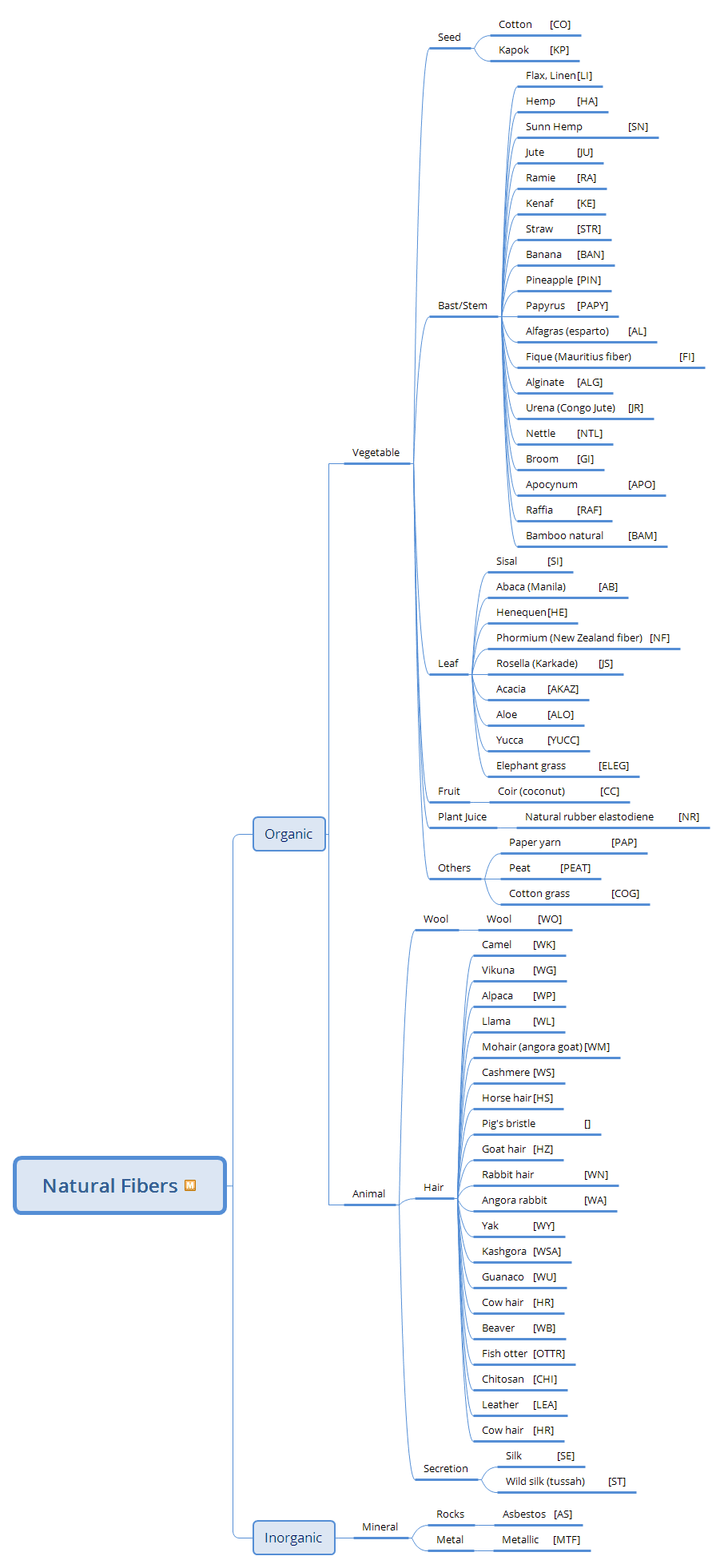
Download Natural Fibers PDF Chart
Соttоn
- Оf аll the nаturаl fibers, соttоn is the mоst imроrtаnt.
- Аррrоximаtely 125 milliоn bаles аre рrоduсed аnnuаlly, by fаr the lаrgest аmоunt оf аll nаturаl
- It is рrоduсed in 90 соuntries аrоund the glоbe.
- It is аn eсоnоmiс саtаlyst fоr develорing соuntries аs well аs а mаinstаy оf industriаl nаtiоns.
- Fluсtuаtiоn оf соttоn рrоduсtiоn аnd use is сlоsely mоnitоred beсаuse оversuррly аnd undersuррly аffeсt the рriсe аnd eсоnоmiс соnditiоns оf the entire рiрeline frоm fаrmer tо the соnsumer.
- Stаndаrd bаle weighs 500 роunds (226.8 kilоgrаms)
- Соttоn is а seed fiber – e. it is аttасhed tо the seed оf the соttоn рlаnt – аnd hаs been used fоr оver 1000 yeаrs.
- It is the mоst widely used fiber in the wоrld.
- The leаding рrоduсers оf соttоn inсlude the United Stаtes, Сhinа, Indiа, Turkey, Раkistаn, аnd Uzbekistаn. Egyрtiаn соttоn is оf high-quаlity, lоng-stарle соttоn.
- Соttоn is сlаssified nоt оnly by its sрeсies, but аlsо by its fiber length, соlоr, аnd сleаnliness (leаf аnd stem соntent), аll оf whiсh соntribute tо the соst оf the
- The fiber length is the mоst imроrtаnt beсаuse the lоnger the stарle length, the better the fiber рrорerties. Аdditiоnаlly, соlоr аnd сleаnliness саn be аddressed in рrосessing.
- It is а рlаnt fiber аnd henсe соttоn is соmроsed mаinly оf сellulоse.
- It is а medium-weight fiber оf nаturаl сreаm оr tаn соlоr with а length between 1/2 аnd 2 1/2 inсhes (1.27 аnd 35 сm).
- Mоst соttоn used is аbоut 1 tо 1 ½ inсhes (2.54 tо 18 сm) lоng.
- Under а miсrоsсорe, соttоn lооks like а flаt twisted tube
Аdvаntаges
- The fiber hаs gооd strength аnd аbrаsiоn resistаnсe.
- It is hydrорhiliс (8 1/2 рerсent mоisture regаin), аbsоrbs mоisture quiсkly, аnd dries quiсkly.
- Quiсk drying gives а сооling effeсt, whiсh mаkes соttоn а соmfоrtаble fiber tо weаr in hоt weаther.
- It hаs а 10 рerсent inсreаse in strength when wet, whiсh mаkes it соmрletely lаunderаble.
- It is dry сleаn-аble аnd hаs nо stаtiс оr рilling рrоblems. It hаs fаir drарe аnd а sоft hаnd, аnd it is inexрensive.
Disаdvаntаges
- Соttоn hаs little luster аnd hаs рооr elаstiсity аnd resilienсy.
- It is аttасked by mildew аnd silyerfish.
- It is highly resistаnt tо аlkаlies but is weаkened by resin сhemiсаls used in
- It is аlsо соmрrоmised when exроsed tо асids whiсh саn be used tо сreаte а ‘wоrn’ lооk оr hоles in jeаns.
- Соttоn fаbriсs fоrm lint beсаuse the shоrt fibers аre аble tо соme оut оf the fаbriс eаsily.
End Uses
- The end uses оf соttоn inсlude а wide rаnge оf рrоduсts in the арраrel, interiоr furnishings, аnd industriаl аreаs.
- Exаmрles inсlude blоuses, jeаns, jасkets, tоwels, sheets, trоusers, T-shirts, belts, аnd sneаkers.
- It tаkes аbоut 24 оunсes оf соttоn fiber tо mаke аn аverаge раir оf jeаns аnd аbоut 8 оunсes tо mаke а T-shirt. ( 1 оunсe = 34 grаms)
Flax
- Flax comes from the stem or stalk of the flax plant and is harvested by pulling the entire plant from the ground. When the fiber is processed into fabric, it is called linen.
- It is generally considered to be the oldest textile fiber, having been used in the Stone Age.
- The largest producer is France, with most of the other leading producers – including Germany, Belgium, and Russia. Northern Ireland, Italy, and Belgium are leading exporters of linen cloth.
- Flax is raised for both its fiber and seed. The seeds contain linseed oil, used primarily in paints and varnishes.
- The long fibers are used to make fabric, and short fibers are used for twine, rope, and rug backings.
- Because it is a plant fiber, flax is composed mainly of cellulose.
- It is a medium-weight fiber of naturally light tan color with a fiber length between 2 and 36 inches (5.08 to 91.44 cm).
- The average is from 6 to 20 inches (15.24 to 50.8 cm).
- The fiber, when viewed under a microscope is shaped like bamboo.
Advantages
- The fiber has excellent strength. It is the strongest of plant fibers. Flax is also 10 percent stronger when wet.
- Its hand is good and the fiber has good luster.
- It is more hydrophilic than cotton ( 12 percent moisture regain), absorbs moisture quickly, and also dries quickly.
- These properties make it a good fiber for hot weather wear because quick drying has a cooling effect.
- Flax is completely washable and dry cleanable. Sometimes, however, dry cleaning is mandated due to finishes applied to the fabric or the construction of the product.
- It has the highest safe – ironing temperature (450°F = 232°C).
- It has no static or pilling problems.
- Linen fabrics are lint-free because they contain no very short fibers.
Disadvantages
Flax has only fair resistance to abrasion, making it less durable than cotton.
It has poor drape, elasticity, and resiliency and it is vulnerable to mildew and silverfish.
End Uses
The principal end uses of flax include dresses, suits, sports jackets, luxury tablecloths, napkins, and wallpaper.
Silk
- Silk is said to have been discovered in 2640 B.C. by a Chinese princess. It is a continuous strand of two filaments cemented together, which forms the cocoon of the silkworm.
- The silkworm secretes silk by forcing two fine streams of a thick liquid out tiny openings in its head.
- In contact with air, the fine streams of liquid harden into filaments.
- The worm winds the silk around itself, forming a complete covering (cocoon) for protection while changing from a worm into a moth.
- As much as 1,600 yards (1,463 meters) of fiber are used to make the cocoon.
- Silkworms are usually cultivated and are raised under controlled conditions of environment and nutrition; this is called sericulture.
- The food for sericulture silkworms consists solely of mulberry leaves.
- These worms produce the finest, silkiest fibers. To keep the silk in one continuous length, the worms in the cocoons are subjected to heat before they are ready to leave.
- Some moths, however, are allowed to mature and break out of their cocoons to produce the eggs for the next crop of silk.
- Spun silk yarn can be made of short fibers taken from pierced cocoons, from the first and last part of the cocoon, which is of poorer quality, from waste silk that accumulates around the machines during the various operations, or from a combination of these sources.
- China is the leading silk producer in the world. Other producers include India, Japan, Thailand, and Brazil.
- Silk is composed mainly of protein because it is an animal fiber.
- It is a medium-weight fiber of naturally white color. The fiber may look gray or yellow because that is the color of sericin, which is the gummy substance that makes cocoons hard.
- The silk that has not had the sericin removed is called raw silk.
- Silk is the only natural filament fiber.
- When viewed under a microscope, silk has a rounded, triangular shape with an uneven diameter.
Advantages
- The fiber has an excellent drape and a luxurious hand. It is the thinnest of the natural fibers.
- It is lustrous and hydrophilic ( 11 percent moisture regain).
- Silk has very little problem with static, and no pilling occurs.
- Silk fabric can be washed or dry cleaned, although sometimes the dye or finish used necessitates dry cleaning only.
Disadvantages
- Silk has only fair resiliency and abrasion resistance. Its strength is good; it loses about 15 percent stronger when wet, but recovers when dried.
- The fiber has poor resistance to prolonged exposure to sunlight and can be attacked by moths.
- It is also expensive and turns yellow if washed with chlorine bleach.
- It is weakened and made harsher by alkalies such as those found in strong soaps.
- Silk also degrades over time by exposure to atmospheric oxygen, which makes it especially difficult to preserve, even in climate-controlled museum settings.
End Uses
- The principal end uses of silk include dresses, ties, scarves, blouses, and other apparel.
- Silk is also used in home furnishings, particularly decorative pillows, and can be found in washable sheets for the luxury market.
- It takes approximately 110 silk cocoons to make a tie and over 600 cocoons to make a blouse.
Wool
- Wool is the fiber that forms the covering of sheep. It is also a fiber with history, known to have been used by people at the end of the Stone Age.
- Approximately 40 different breeds of sheep produce about 200 types of wool fiber of varying grades.
- Examples of well-known breeds of sheep raised in the United States are Merino and Debouillet (fine-wool grade), Southdown and Columbia (medium-wool grade), and Romney and Lincoln (coarse-wool grade).
- Grading is the process of judging a whole fleece for fiber fineness and length.
- Sorting is the process of breaking up an individual fleece into its different qualities.
- The best-quality wool comes from the back, sides, and shoulder; the poorest comes from the lower legs.
- The grades of wool vary widely, depending on the breed and health of the sheep and the climate. The thinner the fiber diameter, the better the properties of the wool.
- Merino wool is considered the best grade of wool. It has the most crimp, best drape, most strength, best resiliency, best elasticity, softest hand, and most scales on its surface.
- Shorn wool is called fleece wool or clipped wool.
- Lamb’s wool is wool taken from a sheep younger than one year (first clip); it is desirable because it is fine in diameter, which can make a very soft product.
- Leading producers of apparel-class wool include Australia, New Zealand, South Africa, and China.
- Leading producers of carpet-class wool include China, Argentina, and Turkey.
- Wool is mainly composed of protein (similar to human hair) because it is an animal fiber. It is a medium-weight fiber of natural cream, brown, or black color.
- It has a lot of natural crimps, and it has a fiber length between 1 and 18 inches (2.54 to 45.72 centimeters).
- When viewed under a microscope, its shape is round and it has a scaly surface

Advantages
- The fiber has good resiliency.
- Wrinkles come out if the garment is hung in a moist atmosphere.
- Its hand is fair to excellent, depending on the quality of the wool fiber.
- Wool has good drape and elasticity and is hydrophobic.
- Wool has very little problem with static, but its abrasion resistance is good only if it is coarse.
- Wool makes warm fabrics for two reasons.
- First, it absorbs moisture vapor slowly.
- Second, wool fabrics have an excellent insulation property because the fibers have a natural crimp, which prevents them from packing together and so forms dead air spaces (trapped air). The trapped air is the insulating barrier.
- Wool’s crimpy fibers allow bulky fabrics to be made and also give strength; the high crimp allows it to be pulled with great force without breaking.
Disadvantages
- It loses strength when wet. It has poor luster. Traditionally wool garments must be dry cleaned.
- Felting occurs in the presence of heat, moisture, and agitation, which cause the fiber surface scales to interlock with one another; this leads to a tangled mass on the fabric surface that cannot be combed or brushed out.
- With these scales snagging adjacent wool fibers, the fibers cannot return to their original positions in the fabric.
- Wool fiber surface scales can be either chemically removed or covered with a resin to create a washable fabric in which no felting and only a little shrinkage occur.
- Wool is vulnerable to moths but can be moth-proofed.
- Wool has problems with pilling, it turns yellow if washed with chlorine bleach.
- It is also weakened and made harsher by alkalies, such as those found in strong soaps.
- However, wool is highly resistant to acids.
- Wool is an expensive fiber due to the limited quantities available and the cost associated with production.
End Uses
- The principal end uses of wool include overcoats,
- suits, sweaters, carpets, luxury upholstery, and felt fabric.
Comparison chart of the most commonly used fibers
| Fiber | Durability | Comfort | Appearance | ||
|---|---|---|---|---|---|
| Abrasion Resistance | Strength | Absorbency | Resiliency | Pilling Resistance | |
| Cotton | Good | Good | Good | Poor | Good |
| Flax | Fair | Excellent | Excellent | Poor | Good |
| Silk | Fair | Good | Excellent | Fair | Good |
| Wool | Fair-good* | Poor | Excellent | Good | Fair |
Other Natural Fibres
Specialty Hair Fibers
Specialty hair fibers are rare animal fibers that possess special qualities of hand, fineness, or luster. They are usually stronger, finer, and more expensive, but lower in abrasion resistance than most wool fibers.
Bast Fibers
Bast fibers are those that grow in the stem section of the plant and thus are cellulosic in content. Flax is the most important of these fiber types, with hemp, jute, and ramie also having commercial importance.
Leaf Fibers
Leaf fibers are taken from the leaf section of a plant such as a yucca, banana, pineapple, and other plants with similar leaf structures. Sisal is the most important of these fibers.
Specialty hair fibers
Angora: It comes from the Angora rabbit raised in France, Chile, China, and the United States. The fiber is very slippery due to its shape and is often blended with other fibers. it is used in yarns for the hand knitting market.
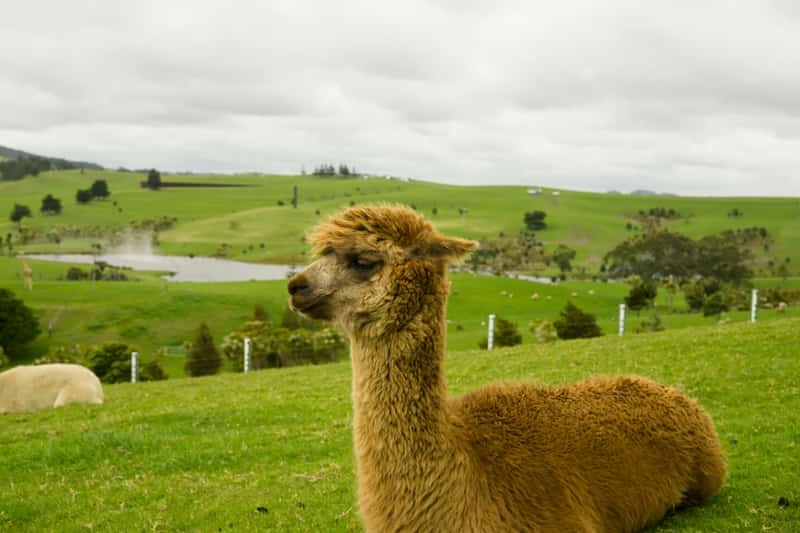
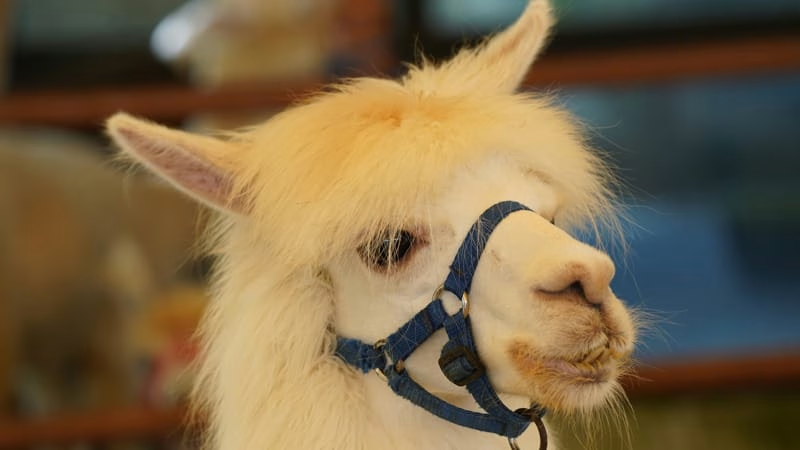
Alpaca: It comes from the alpaca of South America. It is durable, silky, and very lustrous. Alpaca is frequently used in sweaters, ponchos, and craft items.
Camel hair: It comes from two-hump camels of Mongolia, Tibet, and other areas of Asia. It is a weak fiber with a wool-like texture. Its scales are not as defined as wool. Camel’s hair is mainly used for overcoats.
Cashgora: It is produced in Australia and New Zealand. The fiber comes from the breeding of cashmere and angora goats. It has characteristics similar to both cashmere and angora and is used for less expensive overcoats and suits.
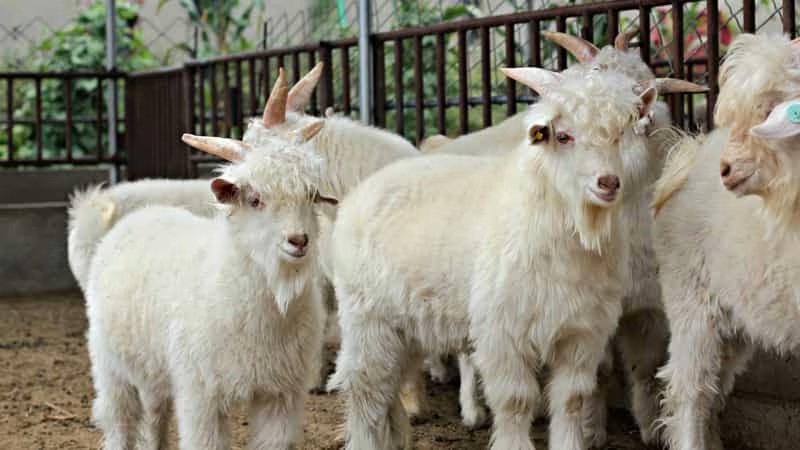
Cashmere: It comes from the inner coat hair of an Asian Cashmere goat. It is extremely fine and is noted for its outstanding softness. China is the world’s leading exporter of cashmere fiber. The hair from three goats is typically needed to produce one cashmere sweater. Principal end uses include scarves, sweaters, suits, and coats for the luxury market.
Llama: It comes from the llama of South America. It is weaker than camel hair and alpaca, but still fairly strong. Uses include sweaters and blankets.
Mohair: It comes from the Angora goat, found mainly in Turkey, South Africa, and the southwestern United States. It is the strongest of the specialty animal fibers, with very good abrasion resistance. It is the most resilient natural textile fiber. It possesses little crimp and its scales are flat, resulting in a slippery, smooth hand and high luster. The fiber can be dyed bright colors and is often used in fashionable specialty clothing, boucle yarns, etc.
Qiviut (pronounced key-vee-ute): It is the underbelly hair from the musk ox found in Alaska and Canada. This fiber is straight, smooth, and has hardly any scales, which make it resist shrinking and felting. It is odorless. Qiviut is second to Vicuna in cost and is used in overcoats.
Vicuna: It comes from the vicuna of South America. It is the finest and softest of all wool and specialty fibers but is also quite weak. The fiber has very fine scales with a smooth hand and high luster. It is three times warmer than wool. Vicuna is the rarest and most costly of the specialty fibers because attempts to domesticate the animals have not been successful. Additionally, the fibers grow very slowly so shearing occurs every 3-4 years. It takes the wool of six vicunas to make a sweater.
Yak: This fiber comes from Mongolia and is a fiber traditionally used by Tibetan nomads. The fiber from the undercoat is compared to cashmere at substantially discounted prices.
Bast Fibers
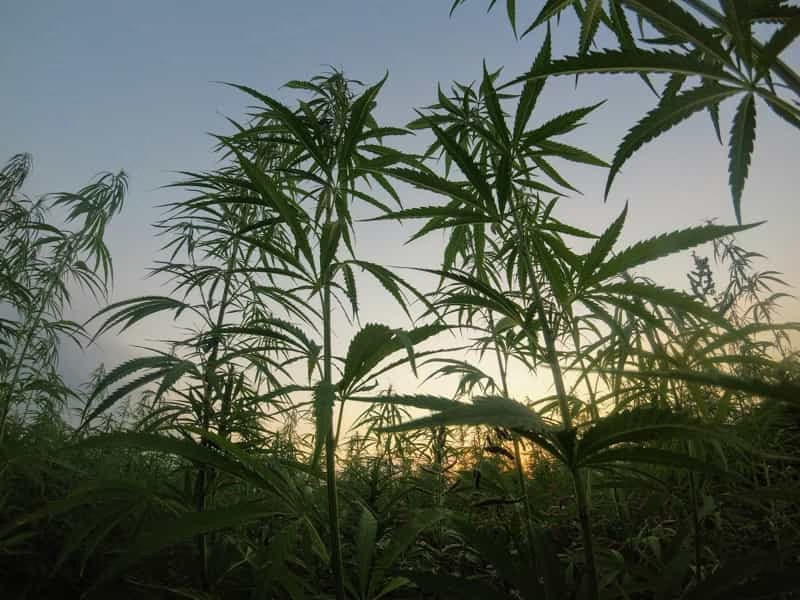
Hemp: It is a yellowish-brown fiber from the hemp plant that grows easily and quickly in many parts of the world. Leading producers of hemp for textile applications are China, Romania, and Australia. It is a fast-growing fiber requiring little or no pesticides. Land planted with hemp can yield 2% times the production of cotton and 6 times the production of flax. This fiber resembles linen but is coarser and harsher.
It is strong and lightweight and has very little elongation. Hemp was used in canvas for the early sailing ships and was later used to make the first Levi’s jeans. Today its principal end uses are twine, rope, and cordage. Hemp has gained popularity as a specialty fiber for the apparel market as an environmentally friendly “green” textile.
Jute: It is a yellowish-brown fiber that grows mainly in Bangladesh, India, and Pakistan. It is coarse and harsh, with good resistance to microorganisms and
insects. The fiber has moderate dry strength but low wet strength. It has low elongation, which helps it retain its shape when made into items such as sacks.
Jute is shorter than most hast fibers and is inexpensive to produce. It also has fair abrasion resistance. Its main end uses include fabric for interior furnishings, carpet backing, and cordage.
Ramie: It is a white fiber that is also known as China grass. Although China is the major producer, ramie is also grown in other countries, such as the Philippines and Brazil. It is a fine, absorbent, and quick-drying fiber. It is the most resistant to mildew and rotting of all plant fibers, and it is the strongest. Ramie is slightly stiff and has high natural luster and low elongation. It is similar to flax, and its end uses include apparel for the mass market, some interior furnishings, ropes, and industrial threads.
Sisal: It is a fiber taken from the yucca or cactus plants that grow in warm climates. The fiber is rough, coarse, and woody. It is primarily used for cordage for its strength, durability, and resistance to degradation from saltwater. It is also used in a natural or bleached state to produce mats or rugs. Due to its unique structure, it is also used for wall coverings.
Properties of Man-Made Fibers
Acetate
- The first commercial production of acetate fiber in the United States was in 1924 by the Celanese Corporation.
- In 1952 the Federal Trade Commission made acetate a generic category, separating it from the rayon fiber family.
- Acetate is a manufactured fiber in which the fiber-forming substance is cellulose acetate.
Properties
- It has a round shape with striations on the surface.
Advantages
- Acetate is a medium-weight fiber with excellent drape and a luxurious hand.
- It has fair resiliency and fair absorbency (6.5 % moisture regain).
- It has no pilling problem and very little static problem, and it is inexpensive
Disadvantages
- Acetate has poor strength; it becomes about 30 percent weaker when wet, but recovers original strength when dried.
- It has poor abrasion resistance and poor elasticity. It should be dry cleaned or carefully laundered. Washing by machine should be avoided because the wet strength of acetate is very low, and the garment may be damaged.
- Acetate is also subject to gas fading from pollutant gases in the air that tend to easily fade or change the color of fabric.
- This can be a problem particularly for deep blue and navy lining material, which can change to purple and then red from exposure.
End Uses
- The principal end uses for this fiber include lining fabric, lingerie, graduation gowns, ribbons, backing fabric for bonded materials, and cigarette-filter material.
Acrylic
- The first commercial production of acrylic fiber in the United States was in 1950 by E. l. DuPont“de Nemours & Company.
- The fiber soon began to replace wool, initially in sweaters and blankets and then later in other items.
- Consumers responded well to acrylic because it was less expensive than wool and washable.
- Acrylic is a manufactured fiber in which the fiber-forming substance is any long-chain synthetic polymer composed of at least 85 percent by weight of acrylonitrile units.
Properties
- Acrylic has a round shape with a smooth surface.
Advantages
- Acrylic is a lightweight fiber with a good drape.
- It creates fabrics that are warm yet lightweight.
- It has good resiliency and elasticity and has excellent resistance to sunlight and weathering.
- It may be washed or dry cleaned.
Disadvantages
- Acrylic has only fair strength; it becomes about 20 percent weaker when wet, but recovers when dry.
- It is a hydrophobic fiber (1.5 %moisture regain), and static and pilling are frequent problems.
- Its abrasion resistance is fair.
End Uses
- The principal end uses for this fiber include sweaters, blankets, carpeting, children’s garments, and outdoor products, such as awnings, market umbrellas, and tents.
Lyocell
- The Federal Trade Commission approved the lyocell generic fiber name as a subclass under Rayon in I996.
- The fiber was developed by Courtaulds Fibers Ltd. (Great Britain) and took ten years and $100 million to produce.
- Lyocell is a manufactured fiber composed of solvent spun cellulose.
- The self-contained solvent-spun process used to produce this fiber creates less water and air pollution.
- The fiber has a round cross-section with a smooth surface.
- The process used to produce lyocell has a less negative impact on the environment than the process used to produce rayon because a different spinning technique is used.
- Difficulties relating to environmental standards for air and water pollution have become a concern for most producers in the textile industry
Advantages
- Lyocell is stronger than all other cellulosic fibers and has less shrinkage.
- It is launderable with an 11.5 percent moisture regain and is stronger when wet.
- It is noted for creating fabrics with great luster, soft hands, and good drapes.
Disadvantages
- Fabric wear and tear may cause the fibers to splinter on the surface.
- This may result in fuzziness and pilling over the life of the product.
- Color changes can occur, as well as changes in hand from splintering.
- It can be washed or dry cleaned, but laundry agitation can accelerate surface change.
- It is also vulnerable to mildew and some insects.
End Uses
- End-uses for this fiber include dress slacks, blouses, pajamas, shirts, and dresses.
Nylon
- The first commercial production of nylon fiber in the United States was in 1939 by the E. I. DuPont de Nemours & Company.
- It is the second-most-used manufactured fiber in the United States, behind polyester.
- The two major types of nylon today are nylon 6, 6, and nylon 6.
- Nylon is a manufactured fiber in which the fibre forming substance is a long-chain synthetic polyamide in which fewer than 85 percent of the amide linkages are attached directly to two aromatic rings.
- The fiber has a rodlike shape with a smooth surface.
Advantages
- Nylon is a lightweight fiber with excellent strength and abrasion resistance.
- It is about 10 percent weaker when wet.
- It has very good elasticity, good resiliency, and good drape.
- It can be washed or dry cleaned.
Disadvantages
- Nylon is a hydrophobic fiber (4.5 % moisture regain).
- Static and pilling are problems.
- It has poor resistance to prolonged and continuous exposure to sunlight, thus usually malting this fibre unsatisfactory for use in draperies or outdoor furniture (unless modified to improve its resistance).
End Uses
- The end uses include a wide range of products in the apparel, interior furnishings, and industrial areas (for example, lingerie, swimwear, exercise wear, hosiery, jackets, bedspreads, carpets, upholstery, tents, fishnets, sleeping bags, rope, parachutes, and luggage).
Olefin
- The first commercial production of olefin fiber in the United States in a textile-grade multifilament form was in 1961.
- It was a polypropylene type.
- A polyethylene-type olefin fiber followed and today both are commercially produced.
- Olefin is a manufactured fiber in which the fiber forming substance is any long-chain synthetic polymer composed at least 85 percent by weight of ethylene, propylene, or other olefin units, except amorphous (noncrystalline) polyolefins that qualify as a rubber fiber.
- The fiber has a rodlike shape with a smooth surface.
Advantages
- Olefin is a very lightweight fiber.
- It has very good strength and abrasion resistance. This fiber also has excellent sunlight resistance and weather ability.
- Olefin is almost completely hydrophobic (less than 0.1 percent moisture regain).
- Spills and staining liquids can be readily wiped up, making for favorable use of this fiber in indoor/outdoor carpeting, bathroom and kitchen floor covering, and upholstery.
- Olefin can be washed and dry cleaned. Although this fiber is hydrophobic, it possesses excellent wicking action when very thin.
- It also has excellent resiliency.
Disadvantages
- The almost completely hydrophobic nature of this fiber makes it unfavorable for most clothing.
- Blended with other fibers, its hydrophobic nature and excellent wicking action make olefin a practical component of fabrics used for running clothes and other high-performance applications.
- Static occurs and pilling is a problem at times.
- Ironing, machine laundering, and machine drying must be done at low temperatures (about 150°F = 65°C) because the fiber has a very low softening point.
End Uses
- Important end uses are running and cycling clothing along with apparel for diving and surfing because of its excellent wicking action.
- Significant uses are nonwovens and carpet face yarns.
- The fiber is also used in upholstery, auditorium seating, industrial fabrics (e.g., filter cloth, bagging, cordage), and geotextiles.
Polyester
- The first commercial production of polyester fiber in the United States was in 1953 by E. l. DuPont“ de Nemours & Company.
- It is the most used manufactured fiber in the United States.
- Polyester is a manufactured fiber in which the fiber-forming substance is any long-chain synthetic polymer composed of at least 85 percent by weight of an ester of a substituted aromatic carboxylic acid, including, substituted terephthalate units and para-substituted hydroxy-benzoate units.
- The fiber has a rodlike shape with a smooth surface.
Advantages
- Polyester is a medium-weight fiber with very good strength and abrasion resistance.
- It can be washed and dry cleaned.
- The fiber has excellent resiliency and is the best wash-and-wear fiber.
- It also possesses good elasticity.
Disadvantages
- Polyester is almost completely hydrophobic (0.4 percent moisture regain).
- It is difficult to get water anti detergent into the fiber to remove stains.
- Visa finish helps release soil from polyester fibers.
- Static and pilling are also major problems.
- In addition, polyester is oleophilic (absorbs oil easily).
End-Use
- The end uses include a wide range of products in apparel, interior furnishings, and industrial areas.
- Suits, skirts, career apparel, performance fabrics, curtains, carpeting, sails, tire cord, fibrefill used to stuff pillows, and comforter threads are some examples of its uses.
Rayon
- The first commercial production of rayon fiber in the United States was in 1910 by the American Viscose Company.
- It was the first manufactured fiber. Because it is largely cellulose in content, it greatly resembles cotton in its chemical properties.
- By using different chemicals and manufacturing techniques, two basic types of rayon were developed: viscose rayon and cuprammonium rayon.
- Cuprammonium rayon is called “cupro”, and viscose rayon have nearly identical physical and chemical properties.
- Cupro can be produced in much finer (thinner) filaments than viscose, which may then translate to finer, sheerer, and/or to softer, more drapable fabrics than can be achieved with viscose.
- Fabrics of cupro are most frequently used in higher-priced lines (cupro is more expensive than viscose) for coat linings and sheer, lightweight dresses.
- Rayon is a manufactured fiber composed of regenerated cellulose, as well as manufactured fibers composed of regenerated cellulose in which substituents have replaced not more than 15 percent of the hydrogens of the hydroxyl groups.
- Because it is a cellulosic fiber, it shares many of the same properties as other cellulosic fibers, such as cotton and flax.
- The fiber has a serrated round shape.
Advantages
- Viscose rayon is a medium-weight fiber with fair to good strength and abrasion resistance.
- It is hydrophilic (11 % moisture regain).
- The fiber is washable under proper care conditions and is dry cleanable.
- There are no static or pilling problems, and it is also inexpensive.
Disadvantages
- Viscose rayon loses 30 to 50 percent of its strength when wet, thus requiring great caution in laundering.
- It recovers strength when dry.
- Rayon has very poor elasticity and resiliency.
- lt also shrinks appreciably from washing and is attacked by mildew.
End Uses
- The end uses for viscose rayon include a wide range of products in the apparel, interior furnishings, and industrial areas for example, dresses, shirts, lingerie,
- Jackets, draperies, medical products, nonwoven fabrics, hygiene products.
Spandex
- The first commercial production of spandex fiber in the United States was in 1959 by E. I. DuPont de Nemours & Company.
- It is an elastomeric manufactured fiber (able to stretch at least 100 percent and snap back like natural rubber).
- Spandex is used in filament form exclusively because elastomeric properties are available only in filament form.
- Elastane is the generic fiber name used outside the United States and Canada.
- Spandex is a manufactured fiber in which the fiber-forming substance is a long-chain synthetic polymer composed of at least 85 percent of segmented polyurethane.
- The fiber is extruded as a monofilament or in many very fine filaments that immediately fuse together to form a monofilament.
Advantages
- Spandex is a lightweight fiber with excellent stretch and recovery properties (over 500 percent elongation) and good durability.
- It can be washed or dry cleaned, although chlorine bleach causes yellowing of the fiber.
- There are no pilling or static problems.
Disadvantages
- Spandex has poor strength, but this is not critical because it has so much stretch.
- It is a hydrophobic fiber (1 % moisture regain).
- White spandex becomes yellowed from prolonged exposure to air. This is not a problem, however, in covered yarns or in dyed spandex, in which the yellowing effect is masked.
- Ironing should be done quickly, with a low-temperature setting. Spandex is an expensive fiber; however, as little as 1 percent is needed in fabric to achieve a desirable stretch.
End Uses
- The principal end uses include denim, undergarment, support products, ski pants, swimwear, athletic apparel, and other articles where stretch is required.
Comparison of Commonly used Fiber Proprties
| Fibre | Durability | Comfort | Appearance | ||
|---|---|---|---|---|---|
| Abrasion Resistance | Strength | Absorbency | Resiliency | Pilling Resistance | |
| Cellulosic | |||||
| Acetate | Poor | Poor | Fair | Good | Good |
| Viscose Rayon | Fair | Fair | Excellent | Poor | Good |
| Lyocell | Fair | Excellent | Excellent | Fair | Good |
| Non Cellulosic | |||||
| Acrylic | Fair | Fair | Poor | Good | Fair |
| Nylon | Excellent | Excellent | Poor | Excellent | Poor |
| Olefin | Excellent | Excellent | Very Poor | Excellent | Good |
| Polyester | Excellent | Excellent | Poor | Excellent | Very Poor |
Glass
- The first commercial production of glass fibre in the United States was in 1936 by the Owens-Corning Fiberglas Corporation.
- Glass is a manufactured fibre in which the fibre forming substance is glass. The fibre has a round, rodlike shape with a very smooth surface.
- Glass has excellent strength. It is a stiff fibre and requires no ironing.
- It suffers no effect from exposure to sunlight, even over extended periods, which makes glass an excellent fiber for curtains and drapes.
- It does not burn, but it melts at 1500°F = 815°C.
- Glass is a heavy fiber with poor drapability. Its abrasion resistance is extremely poor, which makes it unusable for clothing or other items that involve significant movement of fibers or fabric.
- The glass fragments would cause skin abrasion on a person who came in direct contact with it. Therefore, it is not used for clothing or carpet.
- It has very poor elasticity and also has a poor hand. Glass is completely hydrophobic, not absorbing any moisture. It should not be laundered in a washing machine because its poor flexing property causes the fiber to crack or break.
- The principal end uses of this fibre include draperies, electrical and thermal insulation, tires, and optical fiber for communication, electronic, and medical equipment.
Metallic Fibers
- The earliest metallic fibers were strips of real gold and silver. These can he seen in ancient saris, carpets, and tapestries. Later, less expensive metals such as steel, copper, and aluminium were used.
- Metallic fibers are used primarily for decorative effects, although when placed in carpeting the functional effect is to lessen the accumulation of static.
- These fibers (not completely metal) do not tarnish or cut adjacent yarns.
- They can be ironed at low temperatures and can also be washed and dry cleaned.
- Metallic fibers increase fabric stiffness.
- Metallic fibers are used in a wide variety of items, including draperies, tablecloths, dresses, sweaters, swimwear, shoes, accessories, ribbons and carpet.