
Underwear’s history spans over 7,000 years, from prehistoric loincloths to modern sustainable designs. Ancient civilizations like Egypt and Rome used linen and leather undergarments, while the Middle Ages introduced braies and chemises. The Renaissance brought corsets, and the Victorian era emphasized modesty with layered designs. The 20th century saw the bra, briefs, and boxer briefs, driven by women’s emancipation and fabric innovations like nylon. Today, sustainable materials and inclusivity shape underwear, with brands using organic cotton and recycled fibers. This article explores these developments, highlighting global perspectives and eco-friendly trends.
Introduction to the History of Underwear
Underwear, an essential yet often overlooked component of human attire, has a rich history that spans thousands of years, reflecting cultural norms, technological advancements, and societal values. From the rudimentary loincloths of prehistoric times to the high-tech, sustainable fabrics of today, underwear has evolved from a basic necessity to a symbol of fashion, status, and personal expression. This evolution is intertwined with shifts in hygiene practices, gender roles, and environmental consciousness, making it a fascinating lens through which to view human history. This comprehensive article delves into the global history and evolution of underwear, exploring its origins, transformations across cultures, and its role in sustainable textiles, while highlighting key milestones and modern trends.
Ancient Origins of Underwear
Underwear’s history begins with the simplest forms of clothing designed to protect and cover the body. These early garments were shaped by the materials available and the cultural priorities of ancient civilizations.
Prehistoric and Early Civilizations
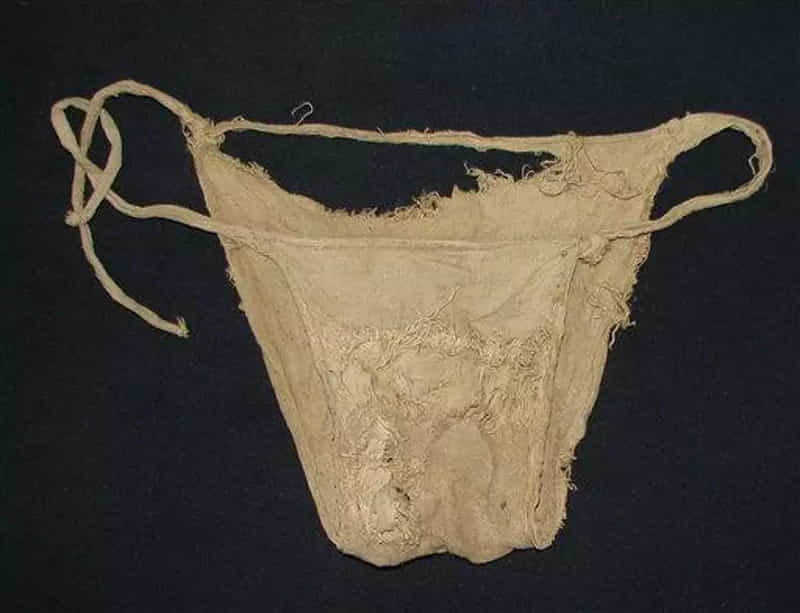
The earliest form of underwear was the loincloth, dating back over 7,000 years. Crafted from animal hides, woven grasses, or plant fibers, loincloths were practical, providing modesty and protection. Archaeological evidence from prehistoric cultures across Africa, Asia, and Europe shows their widespread use. In hotter climates, loincloths often served as outer garments, while in colder regions, they were layered under furs or skins.
In ancient Egypt (circa 4400 BCE), the schenti, a triangular linen garment, emerged as a refined loincloth. Worn by both men and women, schenti varied in design based on social status, with pharaohs like Tutankhamun buried with elaborate versions—145 were found in his tomb, signifying their cultural importance. Linen was favored for its breathability, while leather schenti were used during menstruation for their absorbency.
In ancient Rome, the subligaculum, a loincloth or shorts-like garment, was worn by men and women, particularly athletes and gladiators, for functionality during physical activity. Roman women also used strophia, leather or fabric breastcloths, to support the chest during exercise. Silk underwear, a luxury for the wealthy, highlighted social status, while enslaved people and gladiators often wore loincloths as outer garments, reflecting Rome’s conservative approach to nudity compared to ancient Greece, where underwear was less common.
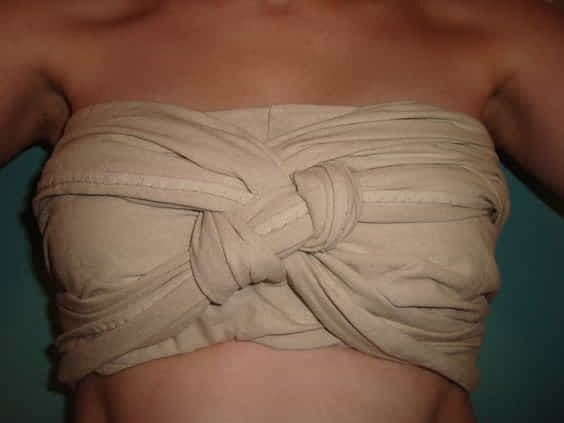
In ancient China, during the Han Dynasty (206 BCE–220 CE), the xieyi, a tunic-style undergarment, was worn, while the Northern Dynasty (420–588 CE) introduced the moxiong, a one-piece breastcloth that flattened the chest for modesty. These garments were made from silk or cotton, reflecting China’s advanced textile traditions.
Cultural Variations
Across the globe, underwear varied based on climate and culture. In Arctic regions, Indigenous women used seal fur for its airy, waterproof properties, preventing sweat from freezing—a practice that highlights early sustainable textile use. In India, the langot, a cotton loincloth, was worn by men for wrestling and physical labor, designed for flexibility and breathability. In Mesoamerica, loincloths made from cotton or maguey fibers were common, often adorned with decorative elements among the elite.
Underwear in the Middle Ages
The Middle Ages (5th–15th centuries) saw underwear evolve as hygiene and social class became more prominent influences. In Europe, men wore braies, loose-fitting linen trousers tied at the waist and knees. Initially outer garments, braies became underwear by the late Middle Ages, featuring a front flap (codpiece) for practicality. Wealthier men paired braies with chausses, individual leggings that evolved into tights by the Renaissance.
Women wore chemises, close-fitting linen shirts that served as a hygienic barrier between the skin and heavy outer garments. Chemises were critical in an era of limited bathing, absorbing sweat and oils to keep outer clothing clean. During menstruation, aristocratic women used rudimentary pads or moss, though irregular cycles due to malnutrition were common among lower classes.
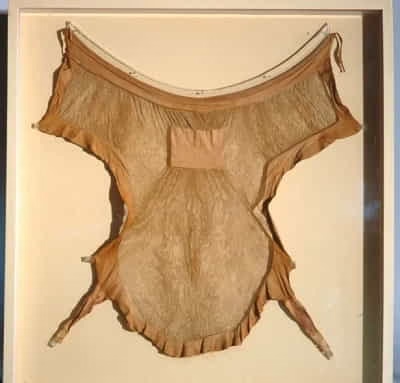
In China, the dudou, a diamond-shaped breastcloth, emerged during the Ming Dynasty (1368–1644) and continued through the Qing Dynasty (1644–1912). Designed to flatten the chest for modesty, the dudou was made from silk or cotton and extended to cover the belly, reflecting cultural preferences for a slim silhouette.
Renaissance and the Rise of Corsetry
The Renaissance (14th–17th centuries) marked a shift toward structured underwear, particularly for women, as fashion emphasized idealized body shapes. The corset, attributed to Caterina de Medici in the 1500s, became a defining garment. Made with baleen (whalebone), wood, or metal busks, corsets created a cone-shaped torso, symbolizing beauty and status. Caterina reportedly introduced them to the French court to achieve a slimmer waist, setting a trend across Europe.
Women also wore farthingales and guardinfanti, stiffened petticoats that gave skirts a rounded shape, and garters, initially used by men to hold up stockings, became decorative elements in women’s wardrobes. Underwear became a status symbol, with silk, lace, and embroidery reserved for the elite.
Men continued wearing braies, but codpieces evolved into padded, decorative pieces by the 1540s, symbolizing wealth and virility. King Henry VIII famously wore elaborate codpieces, which transitioned from underwear to outerwear before declining by the 1590s.
The Victorian Era: Layers and Modesty
The Victorian era (1837–1901) was defined by extreme modesty and complex layering, with women’s underwear consisting of up to 13 pieces weighing nearly 10 pounds. Key garments included:
- Chemise: A linen underlayer for hygiene.
- Drawers: Split-leg pants for practicality, especially before indoor plumbing.
- Petticoats: Multiple layers to shape skirts, including panniers (side-extending frames) and crinolines (hoop skirts).
Corsets, reinforced with whalebone or steel, were central to achieving the hourglass figure through tightlacing, though medical concerns about organ displacement and respiratory issues emerged by the late 19th century. The bustle, a smaller frame worn at the back, replaced crinolines in the 1870s but was equally restrictive.
Men wore union suits, one-piece garments with a buttoned flap for convenience, which evolved into long johns, named after boxer John L. Sullivan. These were made from cotton or wool, offering warmth and hygiene.
Underwear reflected Victorian moral values, with layers symbolizing modesty and social status. Working-class women wore simpler liberty bodices, while the elite showcased wealth through intricate designs.
The 20th Century: Comfort and Innovation
The 20th century revolutionized underwear, driven by technological advancements, social changes, and women’s emancipation.
Early 20th Century: The Birth of the Bra
In 1914, Caresse Crosby patented the modern bra, created from two handkerchiefs and a ribbon to replace the restrictive corset. Her invention, inspired by the need for freedom of movement, gained popularity after women observed its practicality at a ball. Designers like Paul Poiret and Lucy Christiana Duff Gordon embraced the bra, promoting a natural silhouette.
Knickerbockers, shortened versions of men’s drawers, became women’s panties by the 1920s, reflecting the need for practical clothing during World War I, when women entered the workforce. The introduction of nylon in the 1930s made bras and panties more affordable and durable, with cup sizes (A–E) standardizing fit.
Men’s underwear saw the introduction of briefs in 1935 by Arthur Kneibler of the Cooper Underwear Company (later Jockey). Styled after jockstraps (introduced in 1874 for cyclists), briefs offered support and became an instant hit. Boxers, popularized during World War II as military issue, provided a looser alternative.
Mid-20th Century: Fashion and Feminism
The 1950s emphasized sensuality, with balconette bras and guêpières accentuating curves, popularized by pin-up culture. The 1960s, however, saw feminists burning bras to protest restrictive beauty standards, leading to softer, more natural designs. The miniskirt shifted focus to colorful briefs, and underwear became a symbol of emancipation.
In the 1980s, underwear became outerwear, with Madonna’s iconic pointed bras and corsets symbolizing empowerment. Brands like Victoria’s Secret, founded in 1977, mainstreamed lingerie, while Calvin Klein’s 1990s campaigns with models in branded boxers and briefs made underwear a fashion statement.
The 1990s also saw the rise of the Wonderbra, a push-up bra popularized by Eva Herzigova’s “Hello Boys” campaign, which sparked debates about objectification but solidified underwear’s role in pop culture. Boxer briefs, a hybrid of boxers and briefs, emerged in the early 1990s, credited to Calvin Klein’s John Varvatos, blending comfort and style.
Modern Era: Sustainability and Inclusivity
Today, underwear reflects advancements in fabric technology, sustainability, and inclusivity. Micro-modal, bamboo, and organic cotton are popular for their softness, breathability, and eco-friendly properties, aligning with the demand for sustainable textiles. Brands like Shinesty emphasize comfort with innovations like the Ball Hammock® pouch, while offering bold prints and matching his-and-hers sets.
Sustainability is a key focus, with companies using recycled polyester and biodegradable fibers to reduce environmental impact. Certifications like GOTS and OEKO-TEX® ensure eco-friendly production, minimizing water and chemical use.
Inclusivity has transformed underwear design, with brands offering extended size ranges, gender-neutral options, and adaptive designs for diverse body types. Lingerie is no longer hidden but celebrated on runways by Prada, Versace, and Dior, reflecting a shift toward self-expression.
Regional Perspectives
Asia
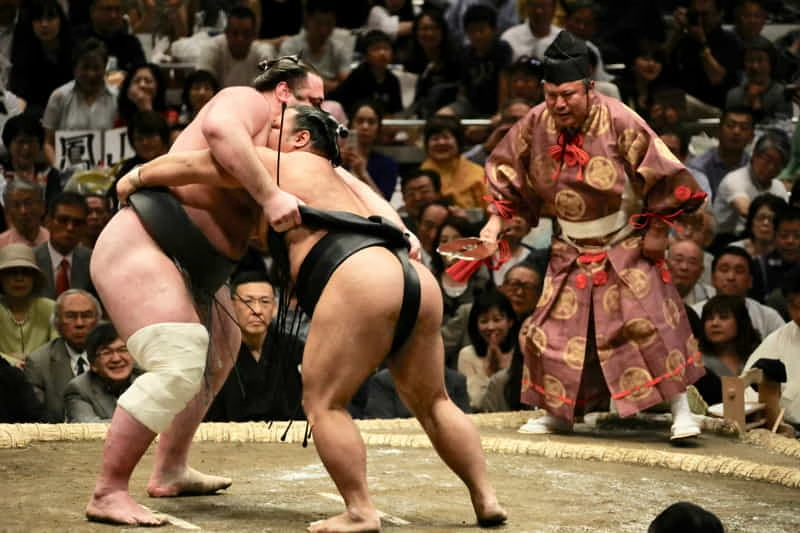
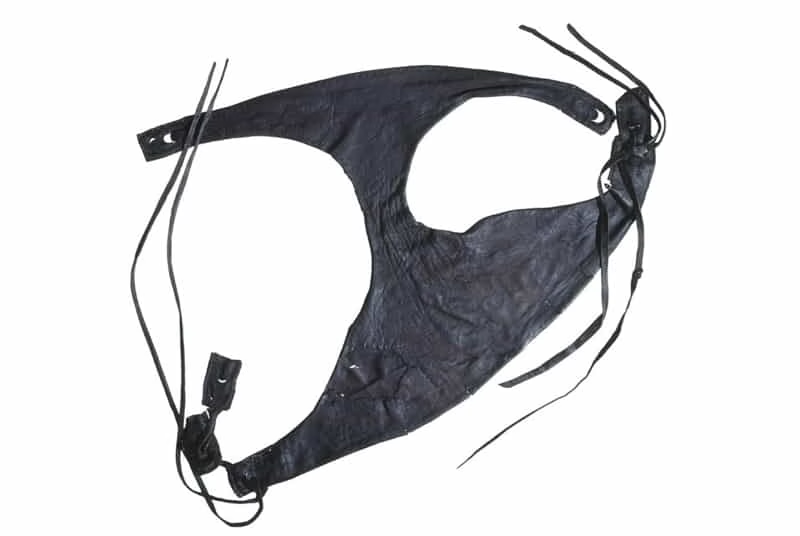
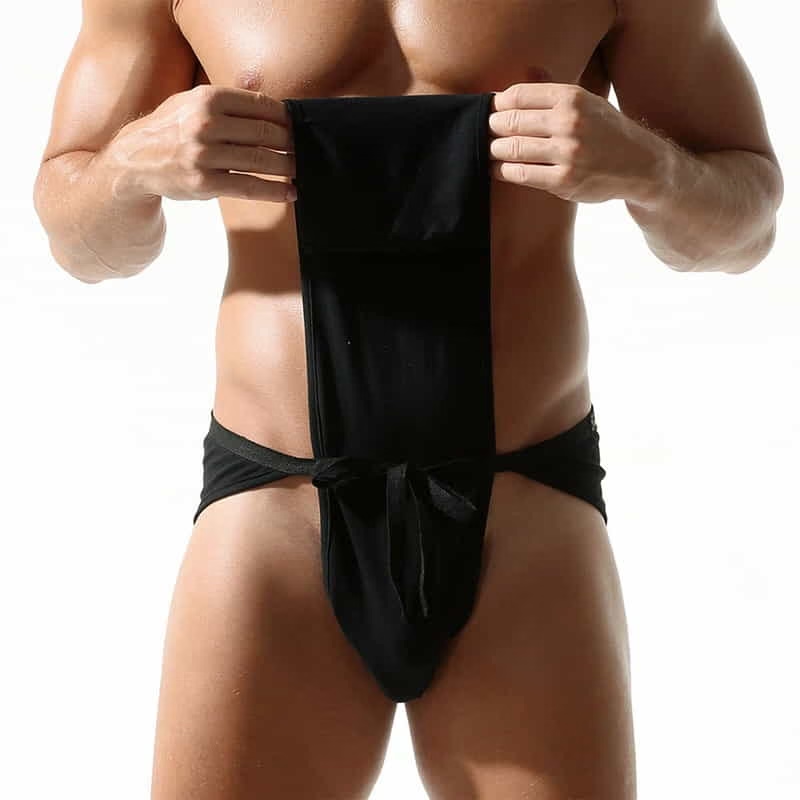
In Japan, fundoshi, a traditional loincloth, was worn by men until the 20th century, while modern underwear adopts Western styles with a focus on lightweight fabrics. In India, the langot persists in rural areas, but urban consumers favor global brands using sustainable materials.
Africa
Traditional loincloths and beaded undergarments remain in some regions, but urban areas embrace modern designs. South African brands like Seamless Thread focus on eco-friendly fabrics, reflecting global sustainability trends.
Americas
Indigenous cultures used cotton or hide loincloths, while modern North American brands like Fruit of the Loom and Everlast dominate with innovative designs. Latin American markets emphasize vibrant colors and form-fitting styles.
Europe
Europe’s history of corsets and codpieces has evolved into a focus on luxury and sustainability, with brands like Intimissimi using organic cotton and recycled lace.
Sustainability in Underwear Production
Sustainable textiles are central to modern underwear production. Key practices include:
- Eco-Friendly Materials: Organic cotton, bamboo, and recycled polyester reduce environmental impact.
- Low-Impact Dyeing: Waterless and plant-based dyes minimize pollution.
- Circular Economy: Biodegradable fabrics and recycling programs support waste reduction.
- Ethical Production: Fair labor practices and certifications ensure transparency.
For example, Patagonia uses recycled polyester in its underwear, while Levi’s incorporates sustainable cotton, aligning with consumer demand for eco-conscious products.
Challenges and Solutions
- Cost: Sustainable materials are expensive. Solution: Scale production and invest in cost-effective technologies like digital printing.
- Durability: Natural fibers may wear faster. Solution: Blend with durable synthetics like recycled nylon.
- Consumer Awareness: Limited demand for sustainable options. Solution: Educate through marketing and certifications.
Case Studies
Case Study 1: Victoria’s Secret and Inclusivity
Victoria’s Secret revamped its brand in the 2020s to focus on inclusivity, offering extended sizes and gender-neutral designs. Its use of organic cotton and recycled materials aligns with sustainable textile trends, boosting its market appeal.
Case Study 2: Shinesty’s Ball Hammock®
Shinesty’s innovative pouch underwear uses micro-modal for comfort and sustainability, reducing chafing and environmental impact. Its bold designs reflect modern self-expression, making underwear a statement piece.
Future Trends
- Smart Textiles: Underwear with embedded sensors for health monitoring or temperature regulation.
- Biotechnology: Microbial dyes and bio-based fibers for zero-waste production.
- Personalization: 3D knitting and AI-driven designs for custom fits.
- Sustainability: Increased use of closed-loop systems and biodegradable materials.
Conclusion
The history of underwear is a tapestry of human ingenuity, cultural shifts, and technological progress. From ancient loincloths to sustainable, inclusive designs, underwear has evolved to meet practical, aesthetic, and environmental needs. As the industry embraces eco-friendly materials and innovative technologies, underwear continues to reflect societal values, offering comfort, confidence, and sustainability. For more insights into textile history, visit TextileSchool.com, a leading resource for industry professionals and enthusiasts.
Citations
- Paleari, Laura. “The History of Underwear: Between Past, Present, and Inclusiveness.” TheItalianReve.com, 11 Jun. 2021, www.theitalianreve.com/the-history-of-underwear-between-past-present-and-inclusiveness/. Accessed 9 Aug. 2025.
- Beyer, Greg. “The History of Underwear: Loincloths, Petticoats, Boxers, & Briefs.” TheCollector.com, 30 Nov. 2023, www.thecollector.com/history-of-underwear-loincloths-petticoats-boxers-briefs/. Accessed 9 Aug. 2025.
- Sartore, Melissa. “You’ve Seen the Ads. Do You Know the History of Underwear?” NationalGeographic.com, 9 Jan. 2024, www.nationalgeographic.com/history/article/history-of-underwear. Accessed 9 Aug. 2025.
- Ebeling, Michael. “The Story of How Underwear Was Invented: The Foundation of All Fashion.” InventorSpot.com, 16 Jul. 2025, inventorspot.com/articles/story-how-underwear-was-invented-foundation-all-fashion. Accessed 9 Aug. 2025.
- Bill M. “When Was Underwear Invented? The Surprising History.” Shinesty.com, 10 Jul. 2025, www.shinesty.com/blogs/news/when-was-underwear-invented. Accessed 9 Aug. 2025.
- “The Evolution of Underwear: A Historical Journey.” SunInner.com, suninner.com/blogs/innerwear-insights/the-evolution-of-underwear-a-historical-journey. Accessed 9 Aug. 2025.





Who knew! Absolutely fascinating.