

Technical textiles are engineered for performance, safety, and durability, while conventional textiles focus on comfort and aesthetics. This guide compares their purpose, materials, manufacturing, performance, and applications.
Introduction: More Than Meets the Eye
When most people think of textiles, they picture clothing, curtains, or upholstery—soft materials designed for comfort and aesthetics. These are conventional textiles, the kind that define our daily lives through fashion, home décor, and personal style.
But there’s a whole other universe of textiles that you might not notice at first glance—materials engineered to solve problems, protect lives, and perform under extreme conditions. These are technical textiles.
While conventional textiles might be judged by their color or softness, technical textiles are evaluated on tensile strength, flame resistance, filtration efficiency, or conductivity.
In this article, we’ll break down the fundamental differences between technical and conventional textiles, exploring their design priorities, material choices, manufacturing methods, performance characteristics, and applications.
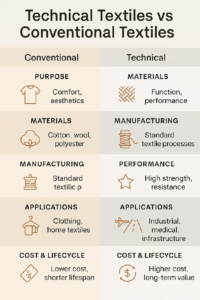
1. Definitions
Conventional Textiles
Conventional textiles are fabrics primarily designed for aesthetic appeal, comfort, and general use. They are commonly used in clothing, home furnishings, and decorative items.
Examples:
- Cotton shirts
- Silk sarees
- Wool blankets
- Polyester curtains
Key focus: Style, comfort, affordability.
Technical Textiles
Technical textiles are engineered materials created for functional and performance-driven applications. Their primary goal is to fulfill a technical requirement, not to look good.
Examples:
- Geotextiles for road reinforcement
- Kevlar body armor
- Medical bandages
- Fire-resistant workwear
Key focus: Performance, safety, durability.
2. Purpose & Design Philosophy
| Aspect | Conventional Textiles | Technical Textiles |
|---|---|---|
| Primary Goal | Aesthetics & comfort | Function & performance |
| Design Driver | Color, texture, style trends | Technical requirements, regulations |
| Consumer Expectation | Attractive appearance, comfortable feel | Reliability, safety, long-term performance |
| Testing Emphasis | Shrinkage, colorfastness, softness | Tensile strength, chemical resistance, flame retardancy |
Example:
A conventional polyester jacket may be valued for its softness and trendy look.
A technical polyester firefighter jacket is evaluated on how well it withstands heat, flames, and water penetration—style is irrelevant.
3. Materials Used
Conventional Textile Materials
- Natural fibers: Cotton, wool, silk, linen
- Synthetic fibers: Polyester, nylon, acrylic, rayon
- Blends for improved comfort & cost efficiency
Technical Textile Materials
- High-performance synthetics: Aramids (Kevlar, Nomex), UHMWPE, polyimide
- Specialty fibers: Glass, carbon, metallic fibers
- Biodegradable performance fibers for environmental applications
- Nanofiber composites for filtration and medical use
Key Difference:
Technical textiles often use engineered or composite fibers to achieve properties like fire resistance, high tensile strength, or chemical stability—features unnecessary in conventional fabrics.
4. Manufacturing Techniques
While both types use weaving, knitting, and nonwoven processes, technical textiles require additional engineering:
Conventional Textiles
- Woven, knitted, printed, dyed for style
- Fabric finishing aimed at softness, drape, and colorfastness
Technical Textiles
- Nonwoven bonding for filtration masks
- 3D weaving for aerospace composites
- Coating & lamination for waterproof barriers
- Braiding for high-strength ropes and cables
- Nanotechnology integration for antimicrobial properties
5. Performance Characteristics
| Performance Factor | Conventional Textiles | Technical Textiles |
|---|---|---|
| Strength | Moderate (for daily wear) | High (structural reinforcement) |
| Durability | Seasonal to multi-year | Long-term under harsh conditions |
| Resistance | Basic stain or fade resistance | Fire, chemical, UV, abrasion resistance |
| Functionality | Comfort & style | Specific engineering purpose |
| Maintenance | Easy washing & ironing | Specialized cleaning or care |
| Cost | Low to medium | Medium to high (due to R&D and materials) |
Example:
A home curtain might fade after years in the sun—acceptable for conventional textiles.
A geotextile under a highway must maintain UV stability for decades.
6. Applications
Conventional Textiles
- Fashion: Clothing, accessories
- Home: Upholstery, curtains, bed linens
- Decor: Rugs, wall hangings
Technical Textiles (based on Techtextil categories):
- Agrotech: Crop covers, shade nets
- Buildtech: Roofing membranes, scaffolding nets
- Geotech: Erosion control fabrics, drainage systems
- Medtech: Surgical gowns, wound dressings
- Mobiltech: Airbags, seat belts
- Protech: Bulletproof vests, fire-resistant suits
7. Testing & Standards
Conventional Textile Testing
- Colorfastness
- Shrinkage control
- Pilling resistance
- Softness
Technical Textile Testing
- Tensile and tear strength
- Flammability tests (NFPA, ISO standards)
- Chemical resistance
- UV exposure durability
- Filtration efficiency
8. Lifecycle & Sustainability
- Conventional textiles often have shorter lifespans and are replaced for fashion reasons rather than failure.
- Technical textiles are built to last, which can mean higher initial environmental costs but fewer replacements over time.
- Sustainable technical textiles are emerging, with biodegradable geotextiles and recycled PET medical gowns.
9. Cost Considerations
While technical textiles may cost more initially due to specialized fibers, advanced manufacturing, and testing, they often deliver lower lifetime cost because they:
- Last longer
- Reduce maintenance
- Prevent costly failures (e.g., bridge collapse, medical infection)
10. Summary Table: Quick Comparison
| Feature | Conventional | Technical |
|---|---|---|
| Purpose | Comfort, aesthetics | Function, performance |
| Materials | Natural/synthetic blends | High-performance fibers |
| Manufacturing | Standard textile processes | Specialized engineering methods |
| Durability | Seasonal–multi-year | Long-term extreme durability |
| Cost | Lower upfront | Higher upfront, better lifetime value |
| Applications | Fashion, home, décor | Industrial, medical, environmental |
Conclusion: Different Worlds, Different Goals
Conventional textiles and technical textiles both play essential roles—but they are fundamentally different in design, purpose, and performance.
- Conventional textiles enrich our lives aesthetically and provide everyday comfort.
- Technical textiles operate behind the scenes, enabling safer travel, cleaner water, stronger infrastructure, and more effective healthcare.
As industries evolve and sustainability becomes critical, expect more overlap between these worlds—like eco-friendly performance fabrics for both sportswear and industrial use.
FAQ
Technical textiles are designed for functional performance such as strength, durability, and resistance, while conventional textiles focus on aesthetics and comfort.
Yes, technical textiles often cost more upfront due to specialized materials and testing, but they offer better long-term value through durability and reduced replacement needs.
Yes, some fabrics blend performance and aesthetics—like flame-resistant upholstery or moisture-wicking fashion wear.
Technical textiles use high-performance fibers such as aramids, carbon fiber, UHMWPE, and specialty coatings, unlike conventional textiles that rely on cotton, wool, and polyester blends.
Technical textiles undergo rigorous tests for tensile strength, chemical resistance, UV stability, and flammability, while conventional fabrics are tested mainly for comfort, shrinkage, and colorfastness.




This really clarifies the distinction between everyday fabrics and those engineered for specific, often extreme, functions. I was particularly struck by the emphasis on *performance* over aesthetics for technical textiles – it makes sense when you think about things like airbags or aerospace materials. It got me thinking about how this same shift towards purpose-driven design is happening in other areas, even home design. I’ve been playing around with AI tools to help visualize room layouts, and it’s fascinating how much they focus on functionality and how a space *works* before even considering the decorative elements. It’s a similar idea, just applied to interiors instead of materials. I came across RoomRedesign AI recently, and it’s been pretty amazing for mapping out how different furniture and layouts actually function in a space.
Choosing a restaurant can be so hit-or-miss, especially when avoiding common mistakes. It reminds me of how hard it is to find a good daily puzzle, until I discovered the jeff goldblum wordle—it’s a fun twist that actually sticks. Thanks for the useful checklist, I’ll definitely reference it next time.
Great article—the distinction between conventional and technical textiles really comes down to intent. One thing I’d add is that the shift toward performance metrics isn’t limited to fabrics; it’s happening in digital communities too. For example, in gaming, players increasingly rely on data-driven tier lists and stat comparisons to optimize their builds. The Slayers 2 Wiki is a good example: it maintains a detailed performance tier list resource for all 24 clans, including roll odds and a clan roll calculator. It’s updated every patch, which mirrors how technical textiles evolve with new regulations and materials. The common thread is that both fields value measurable outcomes over aesthetics.
The article does a great job distinguishing technical textiles’ performance-driven design from conventional fabrics’ aesthetic focus. It’s interesting how the same principle—engineering for a specific purpose rather than appearance—applies in other fields. For instance, in information retrieval, efficiency and route optimization matter more than visual appeal. I’ve found that a fun way to test that mindset is free Wikipedia race game, where you race from one article to another using only links. It has daily challenges, leaderboards, and even multiplayer modes. Just as technical textiles are evaluated on tensile strength or flame resistance, this game evaluates your ability to find the shortest path under constraints. Worth a try if you enjoy strategic problem-solving.
The framing here is useful — the point that conventional textiles get judged on colourfastness and softness while technical textiles are evaluated on tensile strength, flame retardancy and chemical resistance really is the dividing line. One thing I’d add from the prototyping side: the design-to-cut step is often underestimated when you’re applying patterns, coatings or resist pastes onto performance fabrics. Whether you’re masking coated nylon for a conductive trace or spraying identification marks onto geotextile samples, the stencil has to hold fine linework without tearing or bleeding at the edges. For repeat sampling runs I’ve had good results with this cut-ready stencil maker, which turns artwork or lettering into SVG and DXF files that feed straight into a vinyl cutter — far more consistent than hand-cutting Mylar, and it saves a lot of wasted substrate. Small detail, but it matters when the base fabric itself is expensive.
The comparison is useful because it avoids treating all textiles as variations of the same goal. Technical textiles prioritize measurable performance, safety, and durability, whereas conventional fabrics are often selected for comfort and appearance. A concise comparison table could make the distinction even clearer by pairing material choices with end uses, such as protection, filtration, medical applications, apparel, or interiors. That would help readers see why design requirements drive different manufacturing decisions.
The comparison is most helpful when it avoids treating the two categories as a hierarchy. Conventional fabrics often prioritize comfort and appearance, while technical textiles are engineered around a defined performance requirement such as safety or durability. The decisive question is therefore the application: clothing, medical use, transport, construction, or protective equipment may demand very different material choices and testing standards. A short side-by-side example would make that distinction even easier to apply.
The polyester jacket example really clarifies how conventional and technical textiles differ in purpose. For anyone curious to see these materials featured in action, the link for fmovies offers a convenient way to find relevant films or documentaries. related note
A thorough and well-structured breakdown—contrasting aesthetic-driven conventional fabrics with function-first technical textiles makes the core engineering philosophy immediately clear. When presenting material science concepts or lab demonstration clips (like tensile stress tests or microscopic weave inspections), running lower-resolution footage through an AI video upscaler is a great way to ensure fine fiber textures and measurement overlays remain sharp and detailed for viewers.
Technical textiles trade aesthetics for performance traits like tensile strength, which is a practical approach different from selecting clothes based on softness. That focus on getting the job done reminds me of why you’d prefer a platform to simply watch fmovies when you don’t feel like wasting time on complicated setups.
It’s wild how fabrics can be built for such specific jobs—like keeping firefighters safe or filtering tiny particles in medical masks. Makes me wonder if there’s a game that actually teaches you how materials work in real life, kind of like how poople game breaks down complex stuff into fun challenges.
The distinction is clearest when the intended job comes before the material itself. A conventional fabric can be chosen mainly for comfort, appearance, or drape, while a performance textile may need to meet a specific safety, durability, or functional requirement. That framing also helps readers see why manufacturing choices and applications differ rather than treating all fabrics as interchangeable. The comparison makes purpose a useful starting point for understanding innovation.
The distinction you made regarding design philosophy—performance vs. aesthetics—is a great way to frame the difference. In technical textiles, every fiber is engineered for a specific functional requirement. This focus on efficiency is something we see in digital media too; for instance, when sharing technical fabric demos or manufacturing processes via GIF, using a tool like GIF Compressor helps maintain that balance by optimizing file size for performance without losing the visual clarity required for technical analysis.
Good article. The ideas in “The Difference Between Technical and Conventional Textiles – Textile School” connect well with what I have been researching recently.
The detailed comparison between technical and conventional textiles is fascinating, especially the emphasis on performance over aesthetics. I’m curious how AI-driven tools could help visualize the design process for technical textiles, perhaps by generating simulations of material behavior under stress or creating virtual prototypes for testing. This could potentially accelerate innovation in fields like geotextiles or protective gear.
reference to video
The way Specialty is explained here feels pretty natural, and They are commonly used in clothing, home furnishings, and decorative items makes it feel less generic. When I circle back, AI Virtual Try On will be easy to grab.
This note on Specialty reads naturally, and technical textiles vs conventional textiles Download 1 is what gives it a real-world feel. I’ll probably revisit Image to Video when I need it.
What stood out to me about Specialty was how calm it feels, and technical textiles vs conventional textiles Download 1 is the detail I’d remember. I’d stash picture translate in my notes for a later pass.
The way Specialty is explained here feels pretty natural, and Manufacturing Techniques While both types use weaving, knitting, and nonwoven proces makes it feel less generic. When I circle back, piceditr will be easy to grab.
What stood out to me about Specialty was how calm it feels, and Their primary goal is to fulfill a technical requirement, not to look good is the detail I’d remember. I’d stash family photo editing ai in my notes for a later pass.
This note on this topic reads naturally, and the details on the page is what gives it a real-world feel. I’ll probably revisit marketing poster when I need it.
Good article. The ideas in “The Difference Between Technical and Conventional Textiles – Textile School” connect well with what I have been researching recently.
This is a fantastic and really insightful breakdown! It’s so easy to overlook how much technical textiles impact our daily lives, far beyond just comfort and fashion. I especially appreciate how you distinguished them based on purpose, materials, and overall performance. It makes me think differently about everything from car interiors to outdoor gear. This article perfectly explains why these specialized fabrics are so crucial. It’s a great read for anyone interested in textile innovation, and it even helps put into perspective the specialized measurements needed for projects, much like how a Square Feet Calculator helps with precise area.
A great event bringing together language education and technology experts.
This really clarifies the distinction between everyday fabrics and those “hidden” performance materials. I was particularly struck by the idea of technical textiles being engineered to “solve problems”—it makes me think of those fire-resistant suits firefighters wear, or even the materials in a high-performance tent that can withstand serious weather. It’s a far cry from just wanting a soft sweater! It makes me wonder about the innovation happening in less obvious places. Speaking of engineered systems, I was just looking at some info on Paper Pepper’s SOFTMONEY Games – it’s fascinating how they’ve built out a whole platform around a specific concept, almost like a technical textile for digital interaction. Pretty neat stuff to explore.
I found the point about technical textiles being performance-driven rather than appearance-driven really clarifying. It makes sense why conventional fabrics wouldn’t work for things like protective gear when you think about that fundamental difference in design purpose.
nano-bananapro
Fascinating breakdown — I never thought about how a geotextile under a highway needs decades of UV stability while my curtains fading is just mildly annoying. I came at this from the fashion side since I collect handbags, and material quality is exactly why I refuse to pay reseller markups; I use restockalerts.com to get emailed when Hermès restocks online instead. Understanding what goes into the materials makes the craftsmanship easier to appreciate.
The point about technical textiles being judged on tensile strength and flame resistance rather than color or softness really crystallizes the difference — great teaching material. As a textile design student I mostly live on the conventional side, and I’ve been using renderflowai.com to mock up mood boards and fabric print visuals for my portfolio projects in a fraction of the time. Articles like this are pushing me to explore performance fabrics next.
This is a fantastic and really insightful breakdown! It’s so easy to overlook the incredible innovation happening in technical textiles when we’re so used to conventional fabrics. I especially appreciate how you highlight their role in solving problems and protecting lives. It makes you think about all the unseen applications around us. Thanks for shedding light on this fascinating topic! It’s kind of like how understanding a material’s properties can be as crucial as knowing how to use a square feet calculator for a project.
textiles continue to enhance
This is a very clear and informative post that effectively explains the difference between technical and conventional textiles. I appreciate how the content breaks down complex material concepts into an easy-to-understand comparison, making it accessible for both students and professionals in the textile industry. The structure feels organized, educational, and relevant, helping readers quickly grasp the key distinctions and applications of each type. A well-written and insightful article that successfully enhances understanding of an important topic in textile science.
thanks you so much
Great post! It’s very informative and easy to understand.
This is a great overview of the differences between technical and conventional textiles! I especially appreciated the clear distinction between performance-based evaluation versus aesthetics-based evaluation. It really highlights how far textile engineering has come and the diverse applications these materials have beyond just clothing and home goods. It’s eye-opening to consider the problem-solving aspect of technical textiles. Thanks for sharing this informative piece!
This is a great overview of the differences between technical and conventional textiles! I especially appreciate the clear distinction made between focusing on aesthetics versus performance and durability. It really highlights how much innovation goes into the textiles we often take for granted, the ones keeping us safe or solving problems behind the scenes. I never realized there was such a different world of textiles beyond clothing and home decor. Thanks for shedding light on this fascinating subject!
This is a great overview of the key differences between technical and conventional textiles! I never really thought about the engineering that goes into fabrics designed for performance and safety. It’s fascinating to see how much innovation is driving the technical textiles industry, far beyond just aesthetics and comfort. The comparison of purpose, materials, and applications was particularly helpful in understanding the distinctions. Thanks for shedding light on this often-overlooked area of textiles!
This is a really insightful article! I never realized how much engineering goes into technical textiles. It’s fascinating to see the stark contrast between fabrics designed for comfort and those built for specific performance needs. The comparison of purpose, materials, and applications really clarified the differences. I especially liked that you pointed out we often don’t even *see* technical textiles, even though they’re all around us improving safety and solving problems. Thanks for shedding light on this often-overlooked area!
nice post!!
geometry dash
This is an excellent breakdown of how technical textiles prioritize function over aesthetics—something many overlook when comparing performance fabrics to conventional ones. I’ve seen similar contrasts in other fields where purpose-driven design takes precedence. For instance, just as engineers test geotextiles or aramids for specific failure points, there are now tools that analyze personal attributes in a structured way. If you’re curious about how AI can decode traits from a simple palm image, this AI-driven personality analysis tool offers insights into your temperament and future tendencies, much like how technical textiles are designed for specific performance outcomes.
Thanks for the detailed breakdown of technical versus conventional textiles—especially the material science angles. For anyone in this field who needs to read Chinese-language research or standards documents on protective fabrics, building a solid foundation in Chinese characters and pronunciation is essential. I’ve found that using a game-based Chinese practice site makes the drilling much more engaging and effective for picking up technical vocabulary. The interactive exercises help reinforce tones and character recognition without feeling like rote memorization. It’s a practical tool for staying current with Asian technical textile developments.
Your breakdown of purpose-driven design in technical textiles is spot on—performance metrics like tensile strength and flame resistance truly set them apart from conventional fabrics. In my own work developing smart textiles, I’ve found that communicating these performance differences to stakeholders often requires clear visuals. That’s where technical textile data visualization becomes invaluable: Figcanvas lets you upload experimental data, generate publication-ready plots like volcano charts, and even build flowcharts without any coding. The ability to export as SVG for further editing has streamlined our lab reports and presentations, cutting down what used to take a full day to just minutes. For anyone working with engineered fabrics, having a tool that handles both illustration and data visualization in one smooth interface is a game-changer.
nice post!!
It’s fascinating how much engineering actually goes into materials we rarely think about, like geotextiles or medical bandages. I never realized how different the testing metrics are compared to standard fashion fabrics until reading this breakdown. This really highlights why technical textiles are so vital for safety and infrastructure.
Excellent breakdown of how technical textiles prioritize performance, safety, and durability over aesthetics. I especially liked the comparison of material choice and testing standards, since it clearly shows why technical fabrics serve such different purposes from conventional ones. On a totally different but similarly practical note, I’ve found free Roblox piano sheets at vpsheet really useful because they’re easy to copy and paste and organized for quick access. Different field, of course, but the same idea applies: good resources should be functional, accessible, and designed around real user needs.
The breakdown of technical vs. conventional textiles is really well explained—especially how performance requirements completely reshape material choices and manufacturing. It’s fascinating how textiles serve such different purposes depending on their application.
Technical textiles sound super cool, but honestly, who’s gonna notice the tensile strength over a comfy cotton tee? That said, if you’re into that sort of thing, check this out for music that’ll really get your creativity flowing—it’s a nice little bonus to explore while working on your projects.
The detailed comparison between conventional and technical textiles is enlightening. It’s impressive how technical textiles have evolved to serve critical functions while conventional textiles continue to enhance our daily lives aesthetically. Great summary!
As industries evolve and sustainability becomes critical, expect more overlap between these worlds