This article explores the top eight knitting machine manufacturers in 2025, highlighting their contributions to sustainable textile production. Companies like Shima Seiki (Japan), Stoll (Germany), Mayer & Cie (Germany), Santoni (China), Pailung (Taiwan), Orizio (Italy), Terrot (Germany), and Fukuhara (Japan) lead with innovative circular and flat-bed knitting machines. These manufacturers integrate automation, energy-efficient technologies, and Industry 4.0 solutions to meet the growing demand for eco-friendly textiles. The global knitting machinery market, valued at USD 3.45 billion in 2024, is projected to grow at a CAGR of 5.2% through 2032. The article details major machine types, unique features, registered office countries, contact links, market trends, challenges, and future prospects for sustainable knitting.
Introduction to Knitting Machinery in the Textile Industry
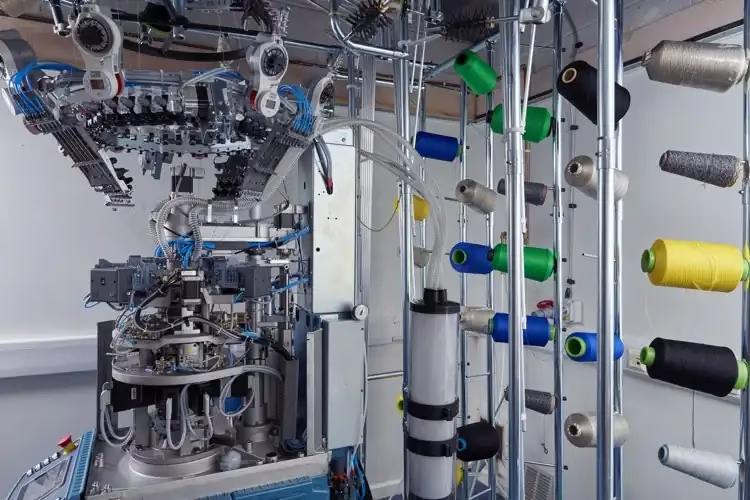
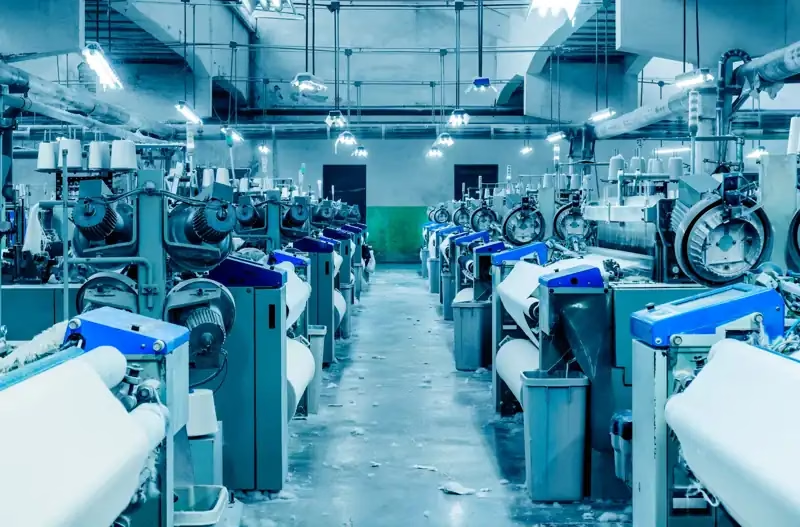
Knitting machinery is fundamental to the textile industry, transforming yarns into flexible, durable fabrics used in apparel, home textiles, and technical applications. In 2025, the global textile market, valued at USD 1.5 trillion, is increasingly driven by demand for sustainable textiles, such as organic cotton, recycled polyester, and bio-based fibers. Knitting machines, including circular (70% market share) and flat-bed (20% market share) types, enable high-speed, efficient production while supporting eco-friendly practices. Leading manufacturers are adopting energy-efficient designs, automation, and digitalization to align with sustainability goals, such as those outlined in the EU’s Green Deal, which emphasizes reduced carbon footprints and circular production.
The knitting machinery market is thriving, driven by innovations in seamless knitting, computerized Jacquard systems, and eco-conscious manufacturing. This article profiles the top eight knitting machine manufacturers, detailing their major machine types, unique features, registered office countries, and contact information, while exploring their role in advancing sustainable textile production.
The Importance of Knitting Machinery in Sustainable Textile Production
Knitting machinery creates fabrics by interlocking loops of yarn, offering flexibility and efficiency compared to weaving. Modern knitting machines reduce energy consumption by up to 25% and support recycled and biodegradable yarns, aligning with the growing demand for sustainable textiles. These machines enable the production of high-value products like seamless garments, technical textiles for medical and automotive use, and eco-friendly apparel, which are highly monetizable in today’s market.
The integration of Industry 4.0 technologies, such as IoT and AI, enhances precision, reduces waste, and optimizes production processes. For instance, computerized knitting machines allow intricate patterns with minimal material loss, supporting circular economy principles. Manufacturers that prioritize sustainability gain a competitive edge by meeting consumer and regulatory demands for ethical, low-impact production.
Top Knitting Machine Manufacturers in 2025
1. Shima Seiki Mfg., Ltd. (Wakayama, Japan)
Founded in 1962, Shima Seiki is headquartered in Wakayama, Japan, and is a global leader in flat-bed knitting technology. Contact: https://www.shimaseiki.com/contact/.
Major Machine Types: Flat-bed knitting machines (WHOLEGARMENT, SVR series), computerized knitting systems, glove and sock knitting machines.
Special Features: Shima Seiki’s WHOLEGARMENT technology produces seamless garments, reducing fabric waste by 30% compared to traditional cut-and-sew methods. The SVR series features digital stitch control for precise patterns, and the APEXFiz™ design software enables virtual sampling, cutting prototyping costs. Their machines support sustainable fibers like organic cotton and recycled polyester.
Competitive Edge: Unlike competitors like Stoll, Shima Seiki’s seamless knitting eliminates post-production waste, making it ideal for eco-friendly fashion. Its global R&D centers drive innovation, with machines achieving 15% higher energy efficiency than industry averages.
Shima Seiki’s focus on sustainability and digital design solidifies its leadership in 2025, catering to high-end fashion and technical textiles.
2. H. Stoll AG & Co. KG (Reutlingen, Germany)
Established in 1873, Stoll is based in Reutlingen, Germany, as part of the Karl Mayer Group. Contact: https://www.stoll.com/en/contact.
Major Machine Types: Flat-bed knitting machines (CMS series), semi-jacquard and fully computerized machines.
Special Features: The CMS series offers high-speed knitting with knitelligence® software, integrating AI for pattern optimization and waste reduction. Stoll’s machines feature automatic needle selection, reducing yarn breakage by 20%. They excel in producing technical textiles and sustainable fabrics like hemp.
Competitive Edge: Stoll’s knitelligence® platform outperforms Mayer & Cie’s digital solutions in pattern complexity, making it a top choice for intricate designs. Its focus on re-conditioned machines supports circular textile economies.
Stoll’s legacy and sustainability focus make it a key player in 2025.
3. Mayer & Cie. GmbH & Co. KG (Albstadt, Germany)
Founded in 1905, Mayer & Cie is headquartered in Albstadt, Germany. Contact: https://www.mayercie.com/en/contact.
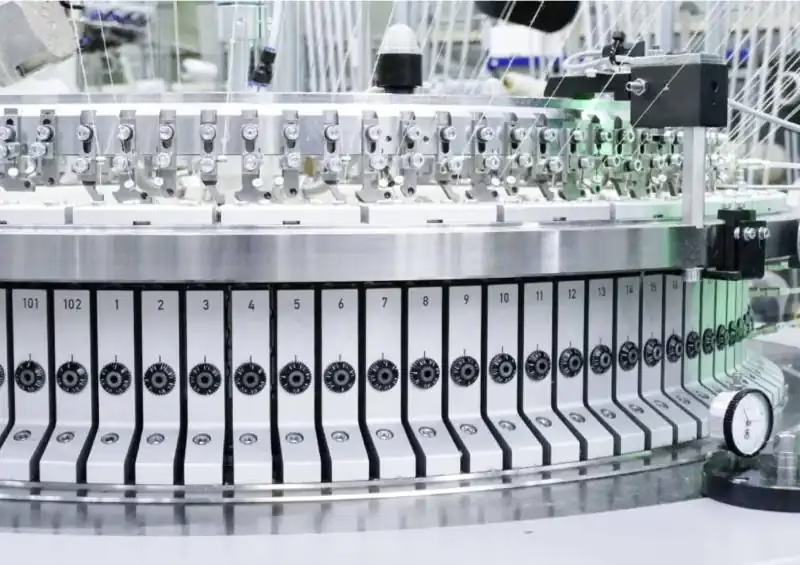
Major Machine Types: Circular knitting machines (Relanit, OVJA series), single and double jersey machines.
Special Features: The Relanit machine uses relative technology for gentle yarn processing, reducing energy use by 20% and supporting recycled yarns. OVJA models offer electronic needle selection for versatile patterns, with 50+ models covering all knitting needs.
Competitive Edge: Mayer & Cie’s energy-efficient designs surpass Orizio’s mechanical models, and its global service network ensures 10% faster response times than competitors.
Mayer & Cie’s commitment to eco-friendly production drives its prominence in 2025.
4. Santoni S.p.A. (Shanghai, China)
Santoni, founded in 1919, has its registered office in Shanghai, China, after merging with Lonati Group. Contact: https://www.santoni.com/en/contact.
Major Machine Types: Circular knitting machines (Mec-Mor, Seamless series), computerized Jacquard machines.
Special Features: The Mec-Mor machine achieves 1.1 m/s output with 12 feeds, optimized for seamless sportswear and medical textiles. Santoni’s seamless technology reduces fabric waste by 25%, and its in-house spare parts production lowers costs.
Competitive Edge: Santoni’s large-diameter machines outperform Fukuhara’s in ease of operation, with 85% client retention due to reliability and sustainability focus.
Santoni’s global reach and eco-conscious designs make it a leader in 2025.
5. Pailung Machinery Mill Co., Ltd. (Taipei, Taiwan)
Established in 1977, Pailung is based in Taipei, Taiwan. Contact: https://www.pailung.com.tw/contact.aspx.
Major Machine Types: Circular knitting machines (single and double jersey), flat-bed machines, weave-knit machines.
Special Features: Pailung’s machines feature high-gauge knitting (40G-44G) for fine fabrics, with energy-efficient drives saving 15% power. Their shupper-knit technology is unique for shoe fabric production, supporting sustainable materials like recycled polyester.
Competitive Edge: Pailung’s versatility in shoe and fashion textiles surpasses Terrot’s focus on standard knits, with robust R&D ensuring market adaptability.
Pailung’s affordability and sustainability focus drive its growth in 2025.
6. Orizio S.r.l. (Gussago, Italy)
Founded in 1952, Orizio is headquartered in Gussago, Italy. Contact: https://www.orizio.com/contact.
Major Machine Types: Circular knitting machines (single jersey, double jersey, electronic Jacquard).
Special Features: Orizio’s machines incorporate client-driven design inputs, ensuring versatile, high-quality output. Their electronic single jersey machines feature automated tension control, reducing yarn waste by 15%.
Competitive Edge: Orizio’s customer-centric approach gives it an edge over Tsudakoma’s standardized looms, with a focus on sustainable fabrics like organic cotton.
Orizio’s innovation and European market dominance ensure its relevance in 2025.
7. Terrot GmbH (Chemnitz, Germany)
Terrot, established in 1862, is based in Chemnitz, Germany. Contact: https://www.terrot.de/en/contact.
Major Machine Types: Circular knitting machines (electronic and mechanical), single and double jersey machines.
Special Features: Terrot’s computer-controlled knitting machines offer high-speed production with 20% lower energy use. Their warranties and durability enhance reliability for sustainable production.
Competitive Edge: Terrot’s longevity and energy-efficient designs compete with Santoni’s seamless focus, with strong after-sales support in Europe and Asia.
Terrot’s eco-friendly innovations maintain its market position in 2025.
8. Fukuhara Industrial & Trading Co., Ltd. (Osaka, Japan)
Founded in 1923, Fukuhara is headquartered in Osaka, Japan. Contact: http://www.fukuhara.co.jp/en/contact.html.
Major Machine Types: Circular knitting machines (single and double jersey, Jacquard).
Special Features: Fukuhara’s machines feature advanced needle and sinker technology, improving yarn quality and reducing energy by 15%. Their partnership with Monarch enhances market penetration in Europe and America.
Competitive Edge: Fukuhara’s cutting-edge designs rival Mayer & Cie’s, with a focus on sustainable fibers like viscose and recycled blends.
Fukuhara’s innovation drives its global influence in 2025.
Market Trends and Innovations in Knitting Machinery
The knitting machinery market, valued at USD 3.45 billion in 2024, is projected to grow at a CAGR of 5.2% through 2032. Key trends include:
- Sustainability: Energy-efficient machines and compatibility with recycled yarns reduce environmental impact.
- Automation and Industry 4.0: AI and IoT integration, as in Stoll’s knitelligence®, optimizes production.
- Asia-Pacific Growth: The region holds 40% market share, led by China and India.
- Technical Textiles Surge: Demand for medical and automotive textiles drives specialized machines.
Challenges and Opportunities in the Knitting Machinery Market
Challenges: High initial costs and skilled operator shortages limit adoption, especially for SMEs. Opportunities: Growing demand for sustainable textiles and technical applications offers expansion potential.
The Future of Knitting Machinery and Sustainable Textiles
The future emphasizes zero-waste production, AI-driven machines, and bio-based fibers. Leaders like Shima Seiki and Santoni will drive circular textile innovations.
Conclusion
The top eight knitting machine manufacturers advance sustainable textiles through innovative, eco-friendly technologies. Visit Textile School for more insights.
Citations
- Mordor Intelligence. “Global Knitting Machinery Market Size & Share Analysis.” mordorintelligence.com, 2025.
- Textile Learner. “Top Branded Knitting Machines in the World.” textilefashionstudy.com, 9 Mar. 2012.
- Online Clothing Study. “List of Industrial Knitting Machine Manufacturers and Brands.” onlineclothingstudy.com, 20 Aug. 2020.
- XD Knit Machinery. “List of the Top 10 Knitting Machines Brand You Should Know About.” xdknitmachinery.com, 2025.
- Sourcify China. “Top 10 Knitting Machines Manufacturers in the World 2025.” sourcifychina.com, 13 Feb. 2025.