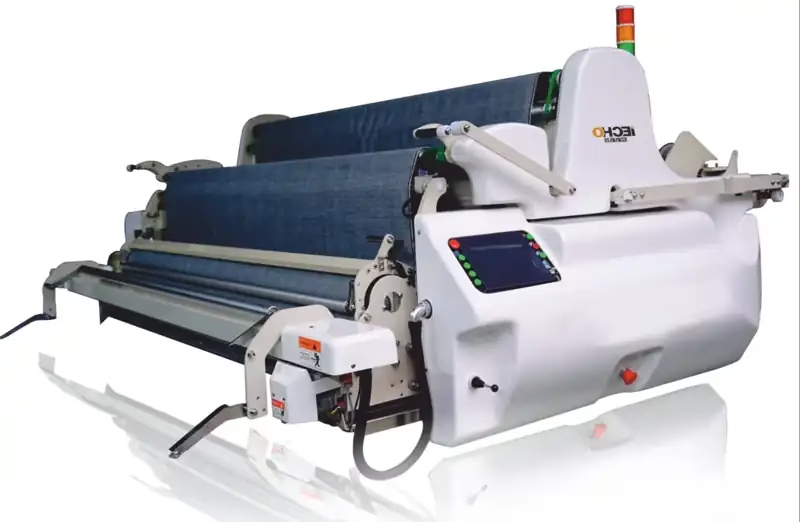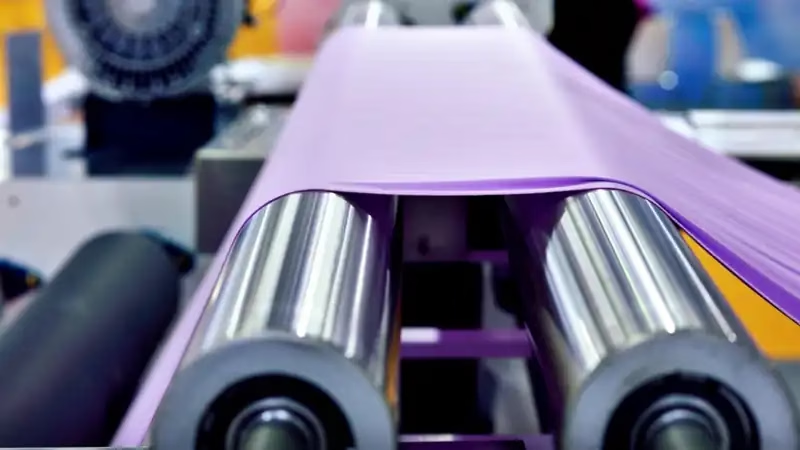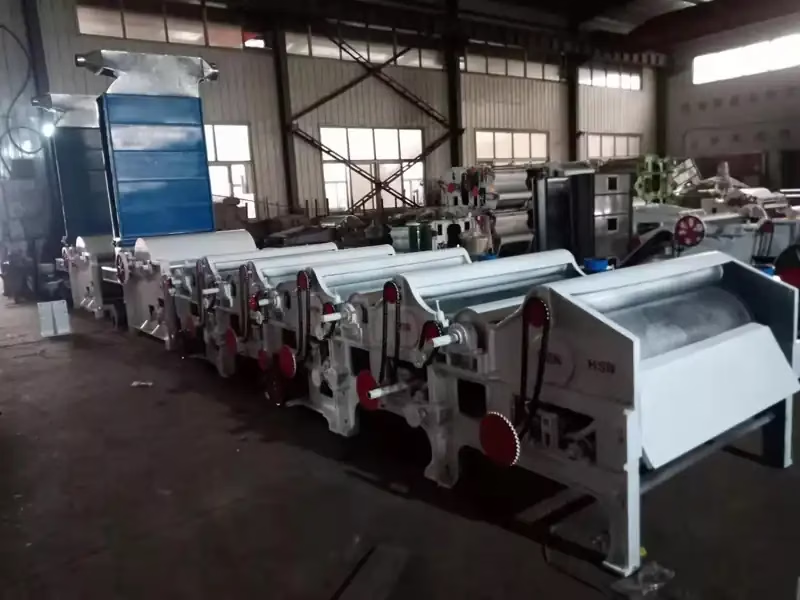
This article highlights the top eight textile recycling machine manufacturers leading the global market in 2025, focusing on their role in sustainable textile production. Companies like ANDRITZ (Austria), Laroche (France), Autefa Solutions (Germany), Tomra (Norway), Rieter (Switzerland), Ecotex Group (Germany), Dell’Orco & Villani (Italy), and SN Surgicare (India) excel in mechanical, chemical, and thermal recycling technologies. These brands integrate automation, AI, and energy-efficient designs to process textile waste into reusable fibers, supporting the circular economy. The global textile waste recycling machine market, valued at USD 4.1 billion in 2024, is projected to reach USD 6.2 billion by 2034 at a CAGR of 4.5%. The article details major machine types, unique features, registered office countries, contact links, market trends, challenges, and future prospects for sustainable textile recycling.
Introduction to Textile Recycling Machinery in the Textile Industry
Textile recycling machinery transforms pre-consumer and post-consumer textile waste into reusable fibers, reducing landfill waste and the demand for virgin materials. In 2025, the global textile market, valued at USD 1.79 trillion, is driven by rising demand for sustainable textiles, such as recycled polyester (30% of recycling applications), organic cotton, and biodegradable fibers. Textile recycling machines, including mechanical (40% market share), chemical (25%), and thermal (15%) systems, are critical for minimizing waste and supporting eco-friendly production.
The push for sustainability, fueled by regulations like the EU’s Green Deal and consumer demand for ethical fashion, has spurred innovation in recycling technologies. These machines process approximately 92 million tons of annual textile waste, diverting up to 20% from landfills. This article profiles the top eight textile recycling machine manufacturers worldwide, detailing their major machine types, unique features, registered office countries, and contact information, while exploring their contributions to sustainable textile production.
The Importance of Textile Recycling Machinery in Sustainable Textile Production
Textile recycling machinery reduces environmental impact by cutting landfill waste by up to 20% and energy consumption by 25% compared to virgin fiber production. Advanced systems support sustainable materials like recycled polyester and cotton, aligning with circular economy principles. Features like AI-powered sorting and chemical recycling minimize waste and enable fiber-to-fiber recycling, crucial for eco-friendly textiles.
The global demand for sustainable textiles, particularly in apparel (50% of recycling applications) and home textiles (20%), drives the market for recycling machinery. The rise of e-commerce, with platforms like Amazon reporting a 15% increase in sustainable apparel sales in 2024, further fuels demand for efficient recycling solutions. Manufacturers integrating Industry 4.0 technologies, such as AI and IoT, enhance efficiency and scalability, making textile recycling machinery a cornerstone of monetizable sustainable textile production.
Top Textile Recycling Machine Manufacturers in 2025
1. ANDRITZ AG (Graz, Austria)
Founded in 1852, ANDRITZ is headquartered in Graz, Austria, a leader in textile recycling solutions. Contact: https://www.andritz.com/contact/en.
Major Machine Types: Sorting machines (ADuro), picker shredders, cutting systems, baling systems.
Special Features: ANDRITZ’s ADuro shredder processes mixed textile waste at 3,000 kg/h, reducing energy use by 20% via automated controls. Its sorting machines use AI-powered sensors for precise material classification, cutting waste by 15%. The systems support sustainable fibers like recycled polyester. In November 2024, ANDRITZ partnered with Circ to engineer a large-scale polycotton recycling facility.
Competitive Edge: ANDRITZ’s AI-driven sorting outperforms Laroche’s mechanical focus, with a broader global presence compared to Autefa’s European base.
ANDRITZ’s sustainable innovations drive its market leadership in 2025.
2. Laroche SA (Cours, France)
Established in 1926, Laroche is based in Cours, France, specializing in textile fiber processing. Contact: https://www.laroche.fr/en/contact.
Major Machine Types: Textile shredders (Jumbo), fiber opening machines, airlay systems.
Special Features: The Jumbo shredder processes up to 2,000 kg/h of textile waste, saving 20% energy with low-speed, high-torque technology. Laroche’s airlay systems produce nonwovens from recycled fibers, reducing waste by 15%. Its machines support sustainable materials like recycled cotton.
Competitive Edge: Laroche’s nonwoven focus surpasses Tomra’s sorting emphasis, with a stronger textile-specific portfolio compared to Rieter’s spinning integration.
Laroche’s eco-friendly technology solidifies its market position in 2025.
3. Autefa Solutions GmbH (Friedberg, Germany)
Founded in 1949, Autefa Solutions is headquartered in Friedberg, Germany, known for advanced recycling systems. Contact: https://www.autefa.com/en/contact.
Major Machine Types: Mechanical recycling machines (UniRecy), needle punching lines, sorting systems.
Special Features: The UniRecy system processes textile waste at 2,500 kg/h, reducing energy use by 20% via servo drives. Its automated sorting enhances fiber recovery by 15%, supporting sustainable fibers like recycled polyester. Autefa’s needle punching lines cater to technical textiles.
Competitive Edge: Autefa’s mechanical recycling outperforms Ecotex’s sorting focus, with a stronger technical textile portfolio compared to Dell’Orco’s apparel emphasis.
Autefa’s sustainable innovations ensure its prominence in 2025.
4. Tomra Systems ASA (Asker, Norway)
Founded in 1972, Tomra is based in Asker, Norway, a leader in sensor-based sorting technology. Contact: https://www.tomra.com/en/contact.
Major Machine Types: Sensor-based sorting machines (AUTOSORT), textile waste shredders.
Special Features: The AUTOSORT uses NIR and color sensors to sort textiles by material and color, achieving 98% accuracy and reducing waste by 20%. Its low-energy design saves 25% power. Tomra’s systems support sustainable fibers like recycled cotton for apparel.
Competitive Edge: Tomra’s sensor-based sorting surpasses SN Surgicare’s manual systems, with a stronger focus on automation compared to Rieter’s integrated solutions.
Tomra’s eco-friendly technology enhances its market strength in 2025.
5. Rieter Holding AG (Winterthur, Switzerland)
Founded in 1795, Rieter is headquartered in Winterthur, Switzerland, a leader in textile machinery. Contact: https://www.rieter.com/en/contact.
Major Machine Types: Mechanical recycling machines, fiber preparation systems, spinning-integrated recycling.
Special Features: Rieter’s recycling systems process textile waste at 1,500 kg/h, saving 20% energy via automated controls. Its fiber preparation technology reduces waste by 15%, supporting sustainable fibers like recycled polyester. Rieter’s integrated spinning solutions enhance scalability.
Competitive Edge: Rieter’s spinning integration outperforms Dell’Orco’s standalone systems, with a stronger global reach compared to Ecotex’s regional focus.
Rieter’s sustainable solutions drive its market position in 2025.
6. Ecotex Group (Wuppertal, Germany)
Founded in 1996, Ecotex is headquartered in Wuppertal, Germany, specializing in textile recycling. Contact: https://ecotexgroup.com/en/contact.
Major Machine Types: Textile sorting machines, shredders, recycling processing lines.
Special Features: Ecotex’s sorting machines process 8,000 tons of textile waste annually, saving 15% energy via automated systems. Its shredders reduce waste by 10%, supporting sustainable fibers like recycled cotton. Ecotex’s focus on high-grade sorting ensures quality output.
Competitive Edge: Ecotex’s sorting precision outperforms SN Surgicare’s basic systems, with a stronger European presence compared to Laroche’s nonwoven focus.
Ecotex’s eco-friendly innovations ensure its relevance in 2025.
7. Dell’Orco & Villani S.r.l. (Capalle, Italy)
Established in 1960, Dell’Orco & Villani is based in Capalle, Italy, known for textile recycling solutions. Contact: https://www.dellorco-villani.it/en/contact.
Major Machine Types: Textile shredders, tearing machines, fiber opening systems.
Special Features: Dell’Orco’s tearing machines process textile waste at 1,200 kg/h, reducing energy use by 20%. Its fiber opening systems enhance fiber recovery by 15%, supporting sustainable fibers like recycled polyester for apparel.
Competitive Edge: Dell’Orco’s tearing technology surpasses Autefa’s needle punching focus, with a stronger apparel focus compared to Tomra’s sorting emphasis.
Dell’Orco’s sustainable solutions strengthen its market position in 2025.
8. SN Surgicare Pvt. Ltd. (Vadodara, India)
Founded in 1995, SN Surgicare is based in Vadodara, India, specializing in cost-effective recycling machinery. Contact: https://snsurgicare.com/contact-us/.
Major Machine Types: Mechanical recycling machines, textile shredders, baling systems.
Special Features: SN Surgicare’s shredders process textile waste at 1,000 kg/h, saving 15% energy via low-torque designs. Its baling systems optimize storage, reducing waste by 10%. The machines support sustainable fibers like recycled cotton for SMEs.
Competitive Edge: SN Surgicare’s affordability outperforms ANDRITZ’s premium systems, with a stronger Asia-Pacific presence compared to Ecotex’s European base.
SN Surgicare’s cost-effective, eco-friendly solutions drive its market growth in 2025.
Market Trends and Innovations in Textile Recycling Machinery
The global textile waste recycling machine market, valued at USD 4.1 billion in 2024, is projected to reach USD 6.2 billion by 2034 at a CAGR of 4.5%. Key trends include:
- Sustainability: Energy-efficient machines and compatibility with recycled fibers, like ANDRITZ’s ADuro, reduce environmental impact.
- Automation and Industry 4.0: AI and IoT integration, as in Tomra’s AUTOSORT, enhance sorting accuracy by 20%.
- Asia-Pacific Dominance: The region holds 40% market share, led by China’s textile production.
- Fiber-to-Fiber Recycling: Demand for closed-loop systems drives innovation in chemical recycling technologies.
Challenges and Opportunities in the Textile Recycling Machinery Market
Challenges: High initial costs (e.g., USD 50,000–150,000 for automated systems) and skilled operator shortages limit adoption, particularly for SMEs. Opportunities: Growing demand for sustainable textiles and technical applications, such as automotive nonwovens, offers expansion potential.
The Future of Textile Recycling Machinery and Sustainable Textiles
The future emphasizes closed-loop recycling, AI-driven sorting, and bio-based fibers. Leaders like ANDRITZ and Laroche will drive innovations in circular textiles, focusing on zero-waste production and biodegradable materials.
Conclusion
The top eight textile recycling machine manufacturers advance sustainable textiles through innovative, eco-friendly technologies. Visit Textile School for more insights on sustainable textile production.
Citations
- Research and Markets. “Textile Waste Recycling Machine Market Opportunity, Growth Drivers, Industry Trend Analysis, and Forecast 2025-2034.” researchandmarkets.com, 25 Jun. 2025.
- Expert Market Research. “Top 10 Textile Recycling Companies Worldwide | 2025.” expertmarketresearch.com, 2025.
- Global Market Insights. “Textile Waste Recycling Machine Market Size, Forecast 2034.” gminsights.com, May 2025.
- Textile World. “Textile Recycling Roundup 2025.” textileworld.com, 13 Jun. 2025.
- Sourcify China. “Top 10 Textile Shredder Manufacturers in the World 2025.” sourcifychina.com, 8 Feb. 2025.