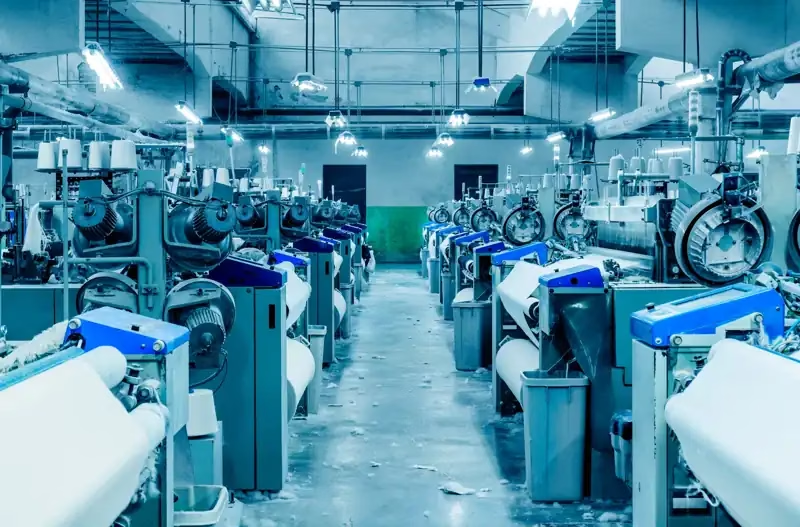
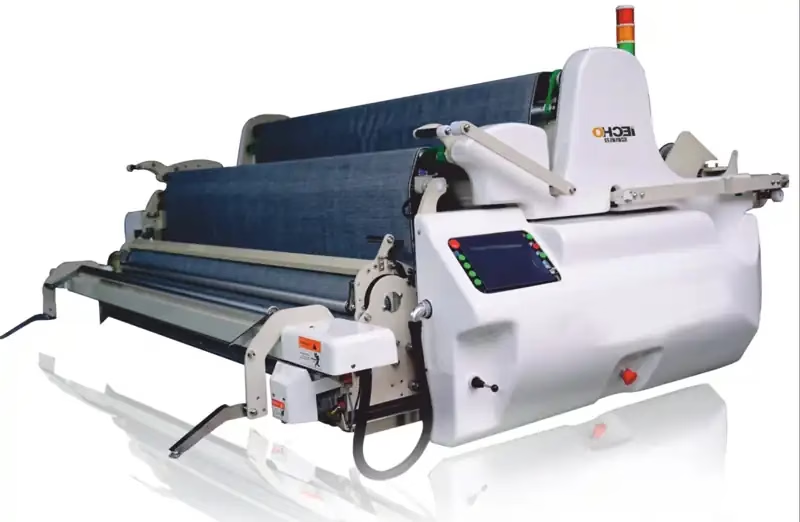
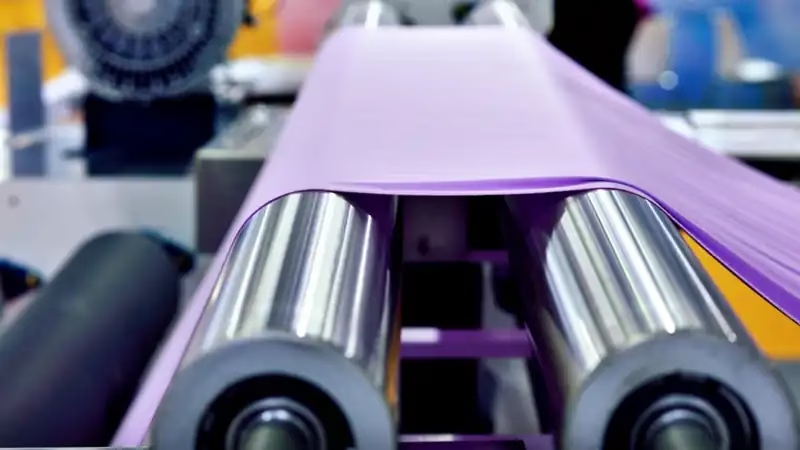
This article profiles the top eight textile printing machinery leaders in 2025, highlighting their role in advancing sustainable textile production. Companies like Kornit Digital (Israel), Epson (Japan), Mimaki (Japan), Durst (Italy), M&R (USA), Zimmer Austria (Austria), SPGPrints (Netherlands), and Atexco (China) lead with innovative digital, screen, and sublimation printing technologies. These manufacturers integrate automation, eco-friendly inks, and Industry 4.0 solutions to meet the growing demand for sustainable textiles. The global textile printing machinery market, valued at USD 5.79 billion in 2025, is projected to reach USD 7.20 billion by 2030 at a CAGR of 4.46%. The article details major machine types, unique features, registered office countries, contact links, market trends, challenges, and future prospects for sustainable textile printing.
Introduction to Textile Printing Machinery in the Textile Industry
Textile printing machinery is a cornerstone of the textile industry, enabling vibrant designs and functional patterns on fabrics for apparel, home decor, and technical applications. In 2025, the global textile market, valued at USD 1.79 trillion, is propelled by rising demand for sustainable textiles, such as organic cotton, recycled polyester, and biodegradable fabrics. Textile printing machines, including direct-to-garment (DTG, 25% market share), dye-sublimation (30%), and screen printing (35%), are critical for achieving precision, efficiency, and sustainability in production.
The push for eco-friendly practices, driven by initiatives like the EU’s Green Deal and consumer demand for ethical fashion, has prompted manufacturers to innovate with waterless printing, energy-efficient designs, and eco-friendly inks. These advancements reduce environmental impact while meeting the needs of fast fashion, e-commerce, and technical textile sectors. This article profiles the top eight textile printing machinery leaders worldwide, detailing their major machine types, unique features, registered office countries, and contact information, while exploring their contributions to sustainable textile production.
The Importance of Textile Printing Machinery in Sustainable Textile Production
Textile printing machinery applies colors and patterns to fabrics, enhancing aesthetic and functional properties while prioritizing sustainability. Modern machines reduce water consumption by up to 90% (e.g., waterless DTG systems) and energy use by 30%, supporting sustainable materials like recycled polyester and organic cotton. Features like automated ink delivery and digital design software minimize waste, aligning with circular economy principles.
The global demand for customized apparel, home textiles, and technical applications, such as automotive and medical textiles, drives the textile printing machinery market. Manufacturers integrating Industry 4.0 technologies, such as IoT and AI, enhance productivity and precision, making textile printing a key component of monetizable eco-friendly production. The rise of e-commerce, with platforms like Amazon reporting a 15% increase in custom apparel sales in 2024, further fuels demand for advanced printing solutions.
Top Textile Printing Machinery Leaders in 2025
1. Kornit Digital Ltd. (Rosh HaAyin, Israel)
Founded in 2002, Kornit Digital is headquartered in Rosh HaAyin, Israel, a pioneer in sustainable digital printing. Contact: https://www.kornit.com/contact-us/.
Major Machine Types: Direct-to-garment (DTG) printers (Atlas MAX), direct-to-fabric (DTF) printers (Presto S), hybrid printers.
Special Features: The Atlas MAX uses waterless NeoPigment™ inks, reducing water use by 90% and energy by 25%. It offers a print resolution of 1,200 DPI and supports sustainable fabrics like organic cotton. Kornit’s MAX technology enables single-step printing, cutting production time by 20%. Its cloud-based workflow software optimizes design-to-print efficiency.
Competitive Edge: Kornit’s waterless technology surpasses Epson’s dye-sublimation in sustainability, with a focus on on-demand production ideal for e-commerce, unlike Mimaki’s broader application range.
Kornit’s eco-friendly innovations solidify its market leadership in 2025.
2. Seiko Epson Corporation (Suwa, Japan)
Established in 1942, Epson is based in Suwa, Japan, renowned for precision printing technology. Contact: https://global.epson.com/contact.html.
Major Machine Types: Dye-sublimation printers (SureColor F-Series), DTG printers (SureColor F2100), wide-format textile printers.
Special Features: The SureColor F10000 offers high-speed printing (255 m²/h) with 25% energy savings via PrecisionCore printheads. Its eco-friendly inks support recycled polyester, reducing environmental impact. Epson’s automated fabric handling and self-maintaining systems enhance productivity by 20%.
Competitive Edge: Epson’s precision and affordability outperform Durst’s high-end systems, with a stronger presence in Asia-Pacific compared to M&R’s U.S.-centric focus.
Epson’s reliable, eco-conscious solutions drive its market dominance in 2025.
3. Mimaki Engineering Co., Ltd. (Nagano, Japan)
Founded in 1975, Mimaki is headquartered in Nagano, Japan, known for versatile textile printing solutions. Contact: https://mimaki.com/en/contact/.
Major Machine Types: Dye-sublimation printers (TS100-1600), DTG printers (Tx300P), UV and hybrid printers.
Special Features: The TS100-1600 delivers vibrant prints at 70 m²/h with 20% less energy via eco-friendly inks. Mimaki’s Core Technologies ensure precise color management, supporting sustainable fabrics like hemp. Its IoT-enabled Mimaki Job Controller optimizes workflow efficiency.
Competitive Edge: Mimaki’s hybrid printing capabilities surpass M&R’s screen printing focus, offering versatility for creative industries compared to Kornit’s DTG specialization.
Mimaki’s innovation and sustainability focus enhance its market position in 2025.
4. Durst Group AG (Brixen, Italy)
Founded in 1936, Durst is headquartered in Brixen, Italy, a leader in advanced digital printing. Contact: https://www.durst-group.com/en/contact.
Major Machine Types: Large-format textile printers (Alpha Series), dye-sublimation printers, soft signage printers.
Special Features: The Alpha Series offers high-speed printing (460 m²/h) with 30% energy savings via water-based inks. Its multi-pass technology supports sustainable fabrics like recycled polyester, with automated maintenance reducing downtime by 15%. Durst’s Analytics Platform provides real-time production insights.
Competitive Edge: Durst’s high-volume capabilities outperform Zimmer Austria’s digital focus, with a stronger emphasis on sustainability than SPGPrints’ traditional systems.
Durst’s eco-friendly technology ensures its prominence in 2025.
5. M&R Companies (Roselle, USA)
Established in 1985, M&R is based in Roselle, Illinois, USA, specializing in screen printing equipment. Contact: https://www.mrprint.com/contact-us/.
Major Machine Types: Screen printing presses (M&R Sportsman EX), DTG printers (M&R M-Link-X), hybrid printing systems.
Special Features: The M-Link-X DTG printer offers high-resolution printing (1,440 DPI) with 20% less ink waste via digital squeegee systems. M&R’s automatic presses support eco-friendly water-based inks, reducing environmental impact. Its modular designs enhance scalability for high-volume production.
Competitive Edge: M&R’s hybrid systems bridge traditional and digital printing, outperforming Atexco’s digital-only focus. Its affordability appeals to SMEs compared to Durst’s premium systems.
M&R’s versatility and sustainability focus drive its market strength in 2025.
6. Zimmer Austria (Kufstein, Austria)
Founded in 1878, Zimmer Austria is headquartered in Kufstein, Austria, a leader in digital textile printing. Contact: https://www.zimmer-austria.com/en/contact.
Major Machine Types: Digital textile printers (Chromojet), screen printing machines, finishing systems.
Special Features: The Chromojet printer uses high-pressure jet technology for vibrant prints on sustainable fabrics, saving 25% energy. Its modular design supports multiple ink types, reducing waste by 15%. Zimmer’s digital control systems ensure precise pattern alignment.
Competitive Edge: Zimmer’s digital printing precision surpasses SPGPrints’ rotary screen focus, with a stronger emphasis on technical textiles compared to Mimaki’s apparel focus.
Zimmer’s sustainable innovations ensure its relevance in 2025.
7. SPGPrints (Boxmeer, Netherlands)
Founded in 1947, SPGPrints is based in Boxmeer, Netherlands, known for rotary screen printing. Contact: https://www.spgprints.com/en/contact.
Major Machine Types: Rotary screen printers (Pegasus EVO), digital textile printers (PIKE), inkjet printers.
Special Features: The PIKE digital printer offers high-speed printing (150 m²/h) with 20% less energy via eco-friendly reactive inks. SPGPrints’ SmartLex technology ensures precise ink application, reducing waste by 15%. Its systems support sustainable nonwovens for medical applications.
Competitive Edge: SPGPrints’ rotary screen expertise outperforms Atexco in high-volume production, with a focus on sustainable inks compared to M&R’s hybrid systems.
SPGPrints’ eco-conscious solutions enhance its market position in 2025.
8. Hangzhou Atexco Digital Technology Co., Ltd. (Hangzhou, China)
Founded in 1992, Atexco is headquartered in Hangzhou, China, specializing in digital textile printing. Contact: https://www.atexco.com/contact-us/.
Major Machine Types: Dye-sublimation printers (VEGA series), DTG printers, high-speed digital printers.
Special Features: The VEGA 3180D offers ultra-high-speed printing (1800 m²/h) with 25% energy savings via Kyocera printheads. Its eco-friendly inks support recycled polyester, reducing environmental impact. Atexco’s automated color calibration cuts ink waste by 20%.
Competitive Edge: Atexco’s high-speed digital printers compete with Kornit’s DTG systems in affordability, with a stronger presence in Asia compared to Durst’s European focus.
Atexco’s cost-effective, sustainable solutions drive its market growth in 2025.
Market Trends and Innovations in Textile Printing Machinery
The textile printing machinery market, valued at USD 5.79 billion in 2025, is projected to reach USD 7.20 billion by 2030 at a CAGR of 4.46%. Key trends include:
- Sustainability: Waterless printing and eco-friendly inks reduce environmental impact, as seen in Kornit’s NeoPigment™ technology.
- Automation and Industry 4.0: IoT and AI integration, like Durst’s Analytics Platform, enhance efficiency by 25%.
- Asia-Pacific Dominance: The region holds 40% market share, driven by China and India.
- Customization Surge: Demand for personalized apparel and home decor fuels DTG and dye-sublimation growth.
Challenges and Opportunities in the Textile Printing Machinery Market
Challenges: High initial costs and skilled operator shortages limit adoption, especially for SMEs. Opportunities: Growing demand for sustainable textiles and technical applications, such as soft signage, offers expansion potential.
The Future of Textile Printing Machinery and Sustainable Textiles
The future emphasizes waterless printing, AI-driven automation, and bio-based inks. Leaders like Kornit and Epson will drive circular textile innovations, with a focus on zero-waste production and biodegradable materials.
Conclusion
The top eight textile printing machinery leaders advance sustainable textiles through innovative, eco-friendly technologies. Visit Textile School for more insights on sustainable textile production.
Citations
- Mordor Intelligence. “Textile Printing Market Size & Share Analysis – Growth Trends.” mordorintelligence.com, 2025.
- Intellectual Market Insights. “Top Leading Companies in the T-Shirt Printing Machines Market.” intellectualmarketinsights.com, 9 Jan. 2025.
- Sourcify China. “Top 10 Textile Printing Machine Manufacturers in the World 2025.” sourcifychina.com, 8 Feb. 2025.
- GM Insights. “Digital Textile Printing Equipment Market Share, Outlook 2025-2034.” gminsights.com, Apr. 2025.
- Kohan Textile Journal. “Top Textile Machinery Manufacturers: Innovation and Quality.” kohantextilejournal.com, 13 Jul. 2021.
- DataInsightsMarket. “Textile Printing Machinery Market Trends and Forecast 2025-2033.” datainsightsmarket.com, 2025.