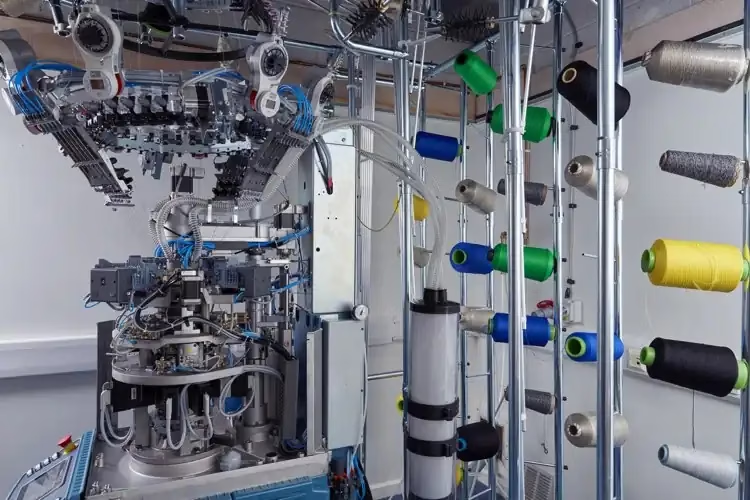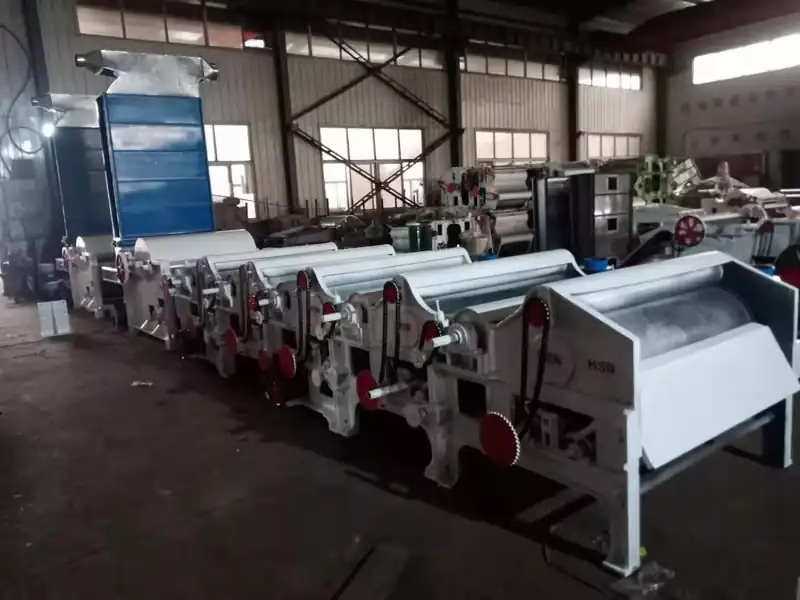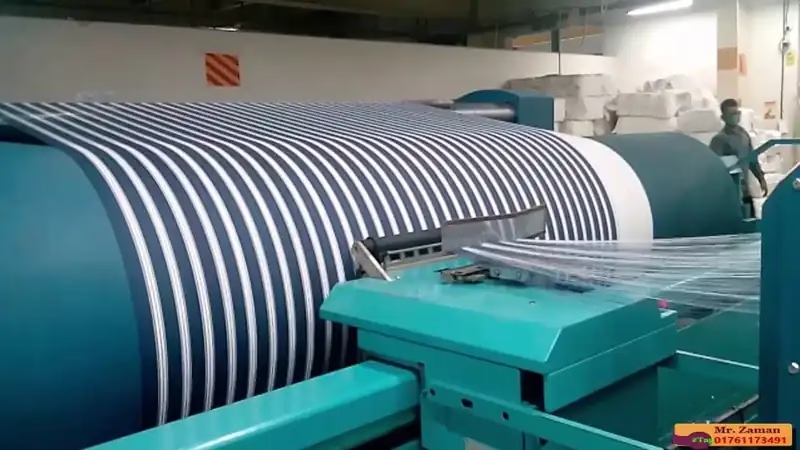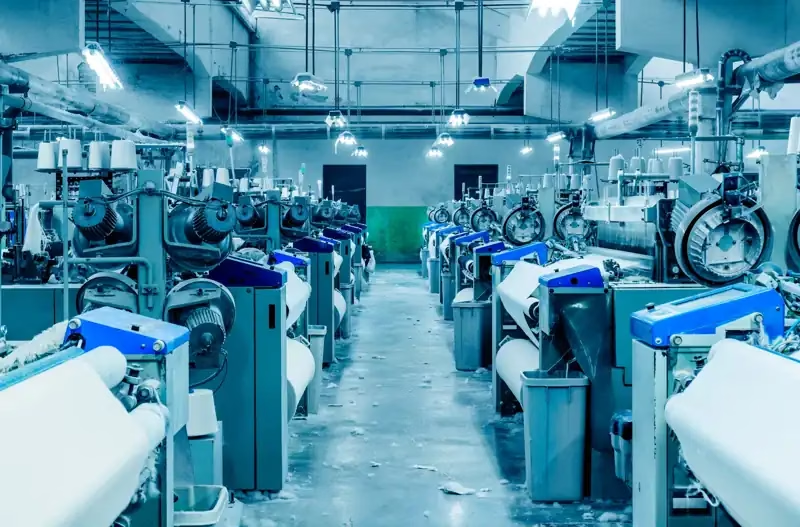
This article profiles the top eight yarn winding machine manufacturers dominating the global market in 2025, emphasizing their contributions to sustainable textile production. Companies like Murata Machinery (Japan), SSM (Switzerland), Rieter (Switzerland), Savio (Italy), Vandewiele (Belgium), Fadis (Italy), TMT Machinery (India), and Peass Industrial Engineers (India) lead with advanced precision, cone, skein, and cross winder technologies. These manufacturers integrate automation, energy-efficient designs, and Industry 4.0 solutions to meet the demand for eco-friendly textiles. The global yarn winding machine market, valued at USD 8.52 billion in 2025, is projected to reach USD 11.39 billion by 2029 at a CAGR of 7.5%. The article details major machine types, unique features, registered office countries, contact links, market trends, challenges, and future prospects for sustainable yarn winding.
Introduction to Yarn Winding Machinery in the Textile Industry
Yarn winding machinery is essential for transforming raw yarn into uniform packages, ensuring proper tension, quality, and readiness for weaving, knitting, or embroidery. In 2025, the global textile market, valued at USD 1.79 trillion, is driven by rising demand for sustainable textiles, such as organic cotton, recycled polyester, and biodegradable fibers. Yarn winding machines, including precision winders (30% market share), cone winders (25%), skein winders (15%), and cross winders (20%), are critical for enhancing yarn quality and reducing waste.
The push for eco-friendly practices, supported by regulations like the EU’s Green Deal, has led manufacturers to innovate with energy-efficient and waste-reducing technologies. These advancements align with consumer demand for sustainable apparel and technical textiles. This article profiles the top eight yarn winding machine manufacturers globally, detailing their major machine types, unique features, registered office countries, and contact information, while exploring their role in advancing sustainable textile production.
The Importance of Yarn Winding Machinery in Sustainable Textile Production
Yarn winding machinery ensures uniform yarn packages, reducing defects by up to 20% and energy consumption by 25% compared to traditional methods. Modern machines support sustainable materials like recycled polyester and organic cotton, minimizing environmental impact through features like automated tension control and waste-reducing designs. These align with circular economy principles, crucial for eco-friendly textile production.
The global demand for sustainable textiles, particularly in apparel (50% of winding applications) and technical textiles (20%), drives the yarn winding machinery market. The rise of e-commerce, with platforms like Etsy reporting 96.48 million active buyers in 2023, fuels demand for high-quality yarn packaging. Manufacturers integrating Industry 4.0 technologies, such as IoT and AI, enhance efficiency and precision, making yarn winding machines a key component of monetizable sustainable textile production.
Top Yarn Winding Machine Manufacturers in 2025
1. Murata Machinery, Ltd. (Kyoto, Japan)
Founded in 1935, Murata Machinery is headquartered in Kyoto, Japan, a leader in textile automation. Contact: https://www.muratec.net/textile/contact/.
Major Machine Types: Precision winders (Muratec Process Coner II QPRO EX), cone winders, automatic winders.
Special Features: The Process Coner II QPRO EX offers high-speed winding (2,000 m/min) with 20% energy savings via servo motors. Its Visual On-Demand System (VOS) reduces yarn defects by 15% through AI-driven monitoring. Murata’s machines support sustainable fibers like recycled polyester.
Competitive Edge: Murata’s high-speed automation surpasses SSM’s precision focus, with a broader global presence compared to Savio’s European-centric operations.
Murata’s sustainable innovations drive its market leadership in 2025.
2. SSM Schärer Schweiter Mettler AG (Horgen, Switzerland)
Established in 1980, SSM is based in Horgen, Switzerland, known for precision winding. Contact: https://www.ssm.ch/en/contact.
Major Machine Types: Precision winders (NEO-YW), dye package winders (PWX), hank-to-cone winders.
Special Features: The NEO-YW uses DIGICONE 2 technology for precise package buildup, reducing waste by 20%. Its user-friendly interface eliminates mechanical adjustments, saving 15% energy. SSM’s machines support eco-friendly yarns like organic cotton with high unwinding performance.
Competitive Edge: SSM’s precision winding outperforms Rieter’s spinning focus, with a stronger emphasis on sustainability compared to Fadis’ versatile systems.
SSM’s eco-friendly technology ensures its prominence in 2025.
3. Rieter Holding AG (Winterthur, Switzerland)
Founded in 1795, Rieter is headquartered in Winterthur, Switzerland, a leader in textile machinery. Contact: https://www.rieter.com/en/contact.
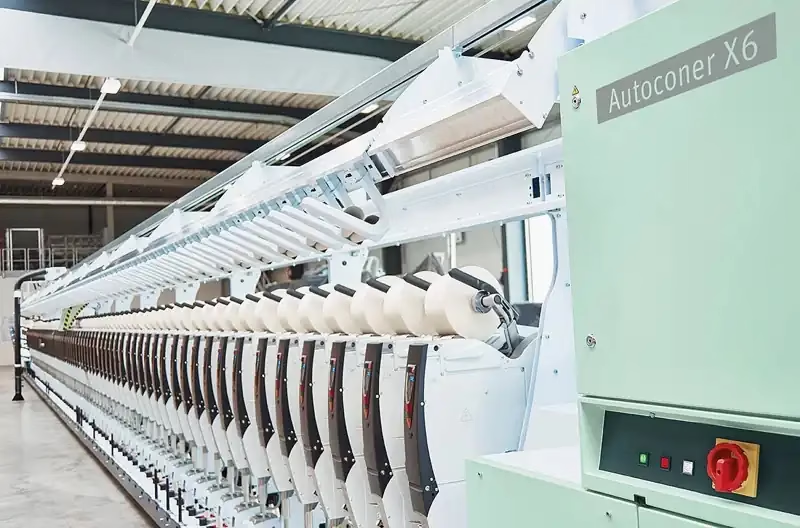
Major Machine Types: Automatic winders (Autoconer 7), precision winders, rotor winders.
Special Features: The Autoconer 7 offers AI-driven tension control, reducing yarn breakage by 15% and energy use by 20%. Its modular design supports sustainable fibers like recycled polyester. Rieter’s acquisition of Saurer’s winding businesses in 2022 expanded its portfolio.
Competitive Edge: Rieter’s integrated spinning and winding solutions surpass Vandewiele’s weaving focus, with a stronger global reach than TMT Machinery’s Asian base.
Rieter’s sustainability focus solidifies its market position in 2025.
4. Savio Macchine Tessili S.p.A. (Pordenone, Italy)
Founded in 1911, Savio is based in Pordenone, Italy, specializing in automated winding. Contact: https://www.saviotex.com/en/contact.
Major Machine Types: Automatic winders (Polar Evolution), cone winders, skein winders.
Special Features: The Polar Evolution winds at 1,800 m/min with 20% energy savings via eco-pneumatic systems. Its Smart Winder technology reduces yarn waste by 15% through automated splicing. Savio’s machines support sustainable yarns like hemp.
Competitive Edge: Savio’s automation outperforms Peass’ manual systems, with a focus on high-volume production compared to Fadis’ smaller-scale solutions.
Savio’s eco-friendly innovations enhance its market strength in 2025.
5. Vandewiele NV (Marke, Belgium)
Established in 1875, Vandewiele is headquartered in Marke, Belgium, known for integrated textile solutions. Contact: https://www.vandewiele.com/en/contact.
Major Machine Types: Precision winders, cross winders, tufting and weaving winders.
Special Features: Vandewiele’s precision winders offer IoT-enabled monitoring, reducing energy use by 20%. Its automated tension control cuts yarn waste by 15%. The company’s machines support sustainable fibers like recycled polyester for technical textiles.
Competitive Edge: Vandewiele’s integrated weaving and winding systems surpass TMT Machinery’s standalone winders, with a stronger focus on technical textiles than Murata’s apparel focus.
Vandewiele’s sustainable solutions drive its market presence in 2025.
6. Fadis S.p.A. (Ronco Biellese, Italy)
Founded in 1960, Fadis is based in Ronco Biellese, Italy, specializing in versatile winding solutions. Contact: https://www.fadis.it/en/contacts.
Major Machine Types: Soft winders (Sincro), hank-to-cone winders, precision winders.
Special Features: The Sincro winder offers high-speed winding (1,500 m/min) with 20% energy savings via electronic tension control. Its modular design reduces waste by 15% and supports sustainable yarns like organic cotton. Fadis’ machines are ideal for small-scale eco-friendly production.
Competitive Edge: Fadis’ versatility outperforms Peass’ basic systems, with a focus on niche markets compared to Savio’s high-volume production.
Fadis’ sustainable innovations ensure its relevance in 2025.
7. TMT Machinery Pvt. Ltd. (Ahmedabad, India)
Founded in 1970, TMT Machinery is based in Ahmedabad, India, a leader in cost-effective winding solutions. Contact: https://www.tmtmachinery.com/contact-us.
Major Machine Types: Precision winders, cone winders, automatic winders (CYGNUS).
Special Features: The CYGNUS winder offers high-speed winding (1,600 m/min) with 15% energy savings. Its automated splicing system reduces yarn waste by 10%. TMT’s machines support sustainable fibers like recycled polyester, catering to Asia-Pacific markets.
Competitive Edge: TMT’s affordability outperforms Rieter’s premium systems, with a stronger regional presence compared to Vandewiele’s European focus.
TMT’s cost-effective, eco-friendly solutions drive its market growth in 2025.
8. Peass Industrial Engineers Pvt. Ltd. (Navsari, India)
Founded in 1960, Peass is headquartered in Navsari, India, known for affordable winding machinery. Contact: https://www.peassindia.com/contact-us.
Major Machine Types: Cone winders (Vega), skein winders, soft package winders.
Special Features: The Vega winder offers semi-automatic winding with 15% energy savings. Its simple design reduces maintenance costs by 10% and supports sustainable yarns like organic cotton. Peass’ machines are ideal for SMEs in emerging markets.
Competitive Edge: Peass’ affordability surpasses Murata’s high-end systems, with a focus on small-scale production compared to SSM’s precision focus.
Peass’ cost-effective, sustainable solutions enhance its market position in 2025.
Market Trends and Innovations in Yarn Winding Machinery
The yarn winding machine market, valued at USD 8.52 billion in 2025, is projected to reach USD 11.39 billion by 2029 at a CAGR of 7.5%. Key trends include:
- Sustainability: Energy-efficient machines and compatibility with recycled fibers reduce environmental impact, as seen in SSM’s NEO-YW.
- Automation and Industry 4.0: IoT and AI integration, like Murata’s VOS, enhance efficiency by 25%.
- Asia-Pacific Dominance: The region holds 41% market share, led by China and India.
- Customization Surge: Demand for tailored yarn packages drives precision winder growth.
Challenges and Opportunities in the Yarn Winding Machinery Market
Challenges: High initial costs (e.g., USD 20,000–50,000 for automated winders) and skilled operator shortages limit adoption, particularly for SMEs. Opportunities: Growing demand for sustainable textiles and technical applications, such as medical fabrics, offers expansion potential.
The Future of Yarn Winding Machinery and Sustainable Textiles
The future emphasizes zero-waste winding, AI-driven automation, and bio-based yarns. Leaders like Murata and SSM will drive circular textile innovations, focusing on closed-loop systems and biodegradable materials.
Conclusion
The top eight yarn winding machine manufacturers advance sustainable textiles through innovative, eco-friendly technologies. Visit Textile School for more insights on sustainable textile production.
Citations
- The Business Research Company. “Yarn Winding Machine Global Market Report 2025.” thebusinessresearchcompany.com, 26 Mar. 2025.
- Research and Markets. “Yarn Winding Machine Market Report 2025.” researchandmarkets.com, May 2025.
- Sourcify China. “Top 10 Textile Winding Machine Manufacturers in the World 2025.” sourcifychina.com, 9 Feb. 2025.
- QYResearch. “Global Yarn Winding Machine Market Research Report 2025.” qyresearch.com, 2025.
- DataInsightsMarket. “Yarn Winding Machinery Market Trends and Forecast 2025-2033.” datainsightsmarket.com, 2025.