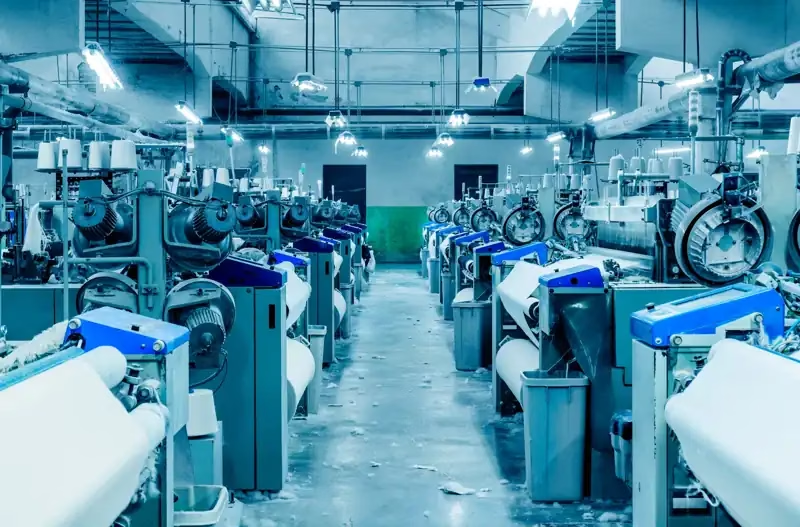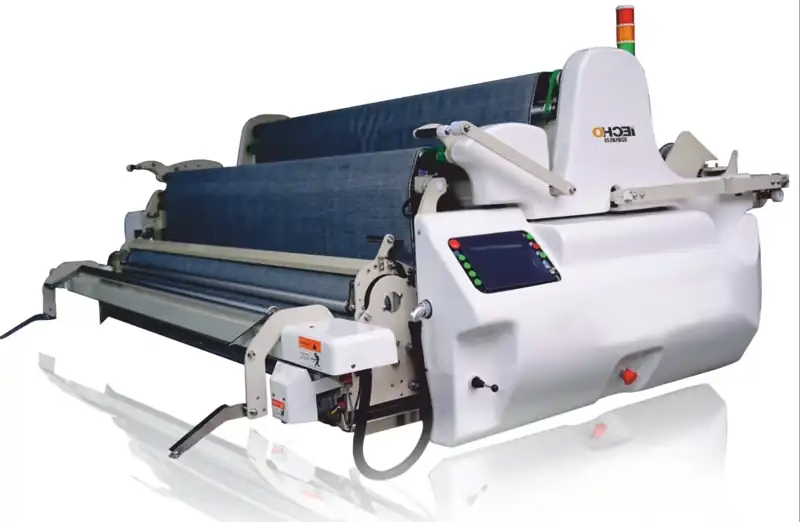
This article highlights the top seven weaving machinery manufacturers worldwide in 2025, focusing on their contributions to sustainable textile production. Companies like Picanol (Belgium), Itema (Italy), Dornier (Germany), Tsudakoma (Japan), Toyota Industries (Japan), Saurer (Switzerland), and Stäubli (Switzerland) lead with innovative shuttle, rapier, air-jet, and projectile looms. These manufacturers integrate automation, energy-efficient technologies, and Industry 4.0 solutions to meet the growing demand for sustainable textiles. The global weaving machinery market, valued at USD 6.89 billion in 2024, is projected to reach USD 10.08 billion by 2032 at a CAGR of 4.87%. The article details major machine types, unique features, registered office countries, contact links, market trends, challenges, and future prospects.
Introduction to Weaving Machinery in the Textile Industry
Weaving machinery is the cornerstone of fabric production, interlacing warp and weft yarns to create textiles for apparel, home furnishings, and technical applications. In 2025, the global textile industry, valued at USD 1.5 trillion, is increasingly driven by demand for sustainable textiles, such as organic cotton, recycled polyester, and biodegradable fabrics. Weaving machinery manufacturers are pivotal in this shift, integrating eco-friendly technologies, automation, and digitalization to reduce environmental impact while enhancing productivity.
The weaving machinery market is diverse, encompassing shuttle looms (10% market share), shuttle-less looms like rapier (40%), air-jet (35%), and projectile looms (10%), each suited for specific fabric types. With sustainability at the forefront, manufacturers are adopting energy-efficient designs and smart technologies to align with global initiatives like the EU’s Green Deal. This article profiles the top seven weaving machinery manufacturers, detailing their major machine types, unique features, registered office countries, and contact information, while exploring their role in shaping sustainable textile production.
The Importance of Weaving Machinery in Sustainable Textile Production
Weaving machinery transforms yarns into fabrics, directly influencing quality, efficiency, and sustainability in textile manufacturing. Modern looms reduce energy consumption by up to 30% compared to older models, minimize waste through precise yarn handling, and support eco-friendly materials like recycled fibers. These advancements align with the rising demand for sustainable textiles, which prioritize low-carbon production, water conservation, and circular economy principles.
The global push for sustainability, coupled with consumer demand for ethical fashion and technical textiles for automotive and medical sectors, drives innovation in weaving machinery. Manufacturers are leveraging Industry 4.0 technologies, such as IoT and AI, to optimize production, reduce downtime, and enhance fabric quality, making weaving machinery a critical component in the monetizable sustainable textile market.
Top Weaving Machinery Manufacturers in 2025
1. Picanol Group (Ypres, Belgium)
Picanol Group, founded in 1936, is headquartered in Ypres, Belgium, and is a global leader in weaving machinery. Contact: https://www.picanol.be/en/contact-us.
Major Machine Types: Air-jet looms (OmniPlus-i Connect), rapier looms (OptiMax-i Connect).
Special Features: Picanol’s OmniPlus-i Connect air-jet loom integrates IoT via PicConnect, enabling real-time monitoring and predictive maintenance, reducing energy use by 20% compared to competitors. The OptiMax-i Connect rapier loom offers Guided Positive Grippers for precise weft insertion, ideal for complex fabrics like sustainable denim. Picanol’s Blue22 EasySet temples reduce waste by ensuring uniform fabric edges.
Competitive Edge: Unlike competitors like Itema, Picanol’s looms feature advanced digital platforms and energy-efficient designs, supporting sustainable textiles like organic cotton. Their global service network ensures rapid support, enhancing uptime by 15% over industry standards.
Picanol’s focus on sustainability includes eco-friendly gear oils and compatibility with recycled yarns, making it a top choice for green textile production in 2025.
2. Itema S.p.A. (Colzate, Italy)
Itema S.p.A., established in 2000, is based in Colzate, Italy, known for versatile weaving solutions. Contact: https://www.itemagroup.com/en/contact.
Major Machine Types: Rapier looms (R9500²), air-jet looms (A9500²), projectile looms (P7300HP).
Special Features: The R9500² rapier loom features the iSAVER system, reducing weft waste by 30% through electronic weft management, a unique offering compared to Picanol’s grippers. The A9500² air-jet loom achieves high-speed weaving with low air consumption, saving 25% energy. Itema’s SKYFRAME technology enhances loom stability for heavy fabrics.
Competitive Edge: Itema’s ability to offer all three weft insertion technologies (rapier, air-jet, projectile) sets it apart from Tsudakoma, which focuses primarily on air-jet looms. Its machines support sustainable textiles like hemp and recycled polyester, with a new Istanbul facility boosting production capacity in 2025.
Itema’s commitment to eco-friendly weaving and global distribution in 100 countries ensures its leadership in sustainable textile machinery.
3. Lindauer Dornier GmbH (Lindau, Germany)
Lindauer Dornier GmbH, founded in 1950, is registered in Lindau, Germany. Contact: https://www.lindauerdornier.com/en/contact.
Major Machine Types: Rapier looms (P2), air-jet looms (A2), projectile looms.
Special Features: The P2 rapier loom produces complex fabrics like carbon fiber and aramid for technical textiles, with precision tension control reducing yarn breakage by 20%. The A2 air-jet loom features EcoAirJet technology, lowering air consumption by 30% versus competitors like Toyota. Dornier’s SynchroDrive ensures synchronized shedding for high-quality weaves.
Competitive Edge: Dornier’s focus on technical textiles, such as airbags and bulletproof fabrics, gives it an edge over Saurer, which emphasizes apparel. Its sustainability efforts include waterless dyeing compatibility and energy-efficient designs, aligning with green textile trends.
Dornier’s robust engineering and global exports (90% of production) solidify its position in 2025.
4. Tsudakoma Corp. (Kanazawa, Japan)
Tsudakoma Corp., established in 1909, is based in Kanazawa, Japan. Contact: https://www.tsudakoma.co.jp/english/contact/.
Major Machine Types: Air-jet looms (ZAX9200i), rapier looms, water-jet looms.
Special Features: The ZAX9200i air-jet loom offers high-speed weaving (up to 2,000 RPM) with the Weave Navigation System, optimizing fabric quality and reducing energy use by 15%. Tsudakoma’s water-jet looms are unique for synthetic fiber weaving, using 50% less energy than air-jet competitors.
Competitive Edge: Tsudakoma’s water-jet technology is unmatched by Picanol or Itema, excelling in lightweight, sustainable fabrics like polyester. Its compact looms save factory space, a key advantage for smaller mills.
Tsudakoma’s global reach and eco-efficient designs make it a leader in 2025.
5. Toyota Industries Corporation (Kariya, Japan)
Toyota Industries, founded in 1926, is headquartered in Kariya, Japan. Contact: https://textile-machinery.toyota-industries.com/en/contact/.
Major Machine Types: Air-jet looms (JAT910), ring spinning frames (used in weaving preparation).
Special Features: The JAT910 air-jet loom features the E-shed electronic shedding system, enabling intricate patterns with 20% less energy than traditional looms. Toyota’s Factory Management System monitors production, reducing downtime by 25%.
Competitive Edge: Toyota’s focus on automation surpasses Stäubli’s dobby-centric looms, with seamless integration for sustainable textile production. Its looms support recycled yarns, enhancing eco-friendliness.
Toyota’s legacy of innovation ensures its prominence in 2025.
6. Saurer Intelligent Technology AG (Arbon, Switzerland)
Saurer, established in 1853, is registered in Arbon, Switzerland. Contact: https://saurer.com/en/contacts.
Major Machine Types: Air-jet looms, rapier looms, shuttle looms (for specialized applications).
Special Features: Saurer’s air-jet looms feature IntelliWeave technology, optimizing air pressure for 20% energy savings. Their rapier looms include SmartShed for precise fabric control, ideal for sustainable fashion fabrics.
Competitive Edge: Saurer’s integration of spinning and weaving solutions offers a holistic approach, unlike Dornier’s focus on weaving alone. Its machines support biodegradable fibers, aligning with circular textile trends.
Saurer’s global service network enhances its market position in 2025.
7. Stäubli International AG (Pfäffikon, Switzerland)
Stäubli, founded in 1892, is based in Pfäffikon, Switzerland. Contact: https://www.staubli.com/en/global/contact-us/.
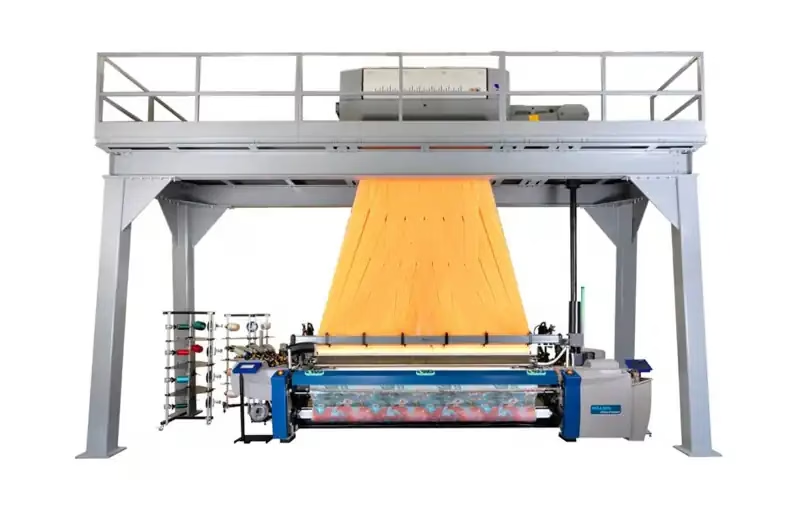
Major Machine Types: Dobby looms, Jacquard looms.
Special Features: Stäubli’s Jacquard SX Pro offers high-speed weaving for complex patterns, with 15% lower energy use than competitors. The S3000 dobby system ensures precision for technical textiles.
Competitive Edge: Stäubli’s expertise in dobby and Jacquard looms surpasses Toyota’s air-jet focus, catering to niche, high-value sustainable textiles like silk and organic cotton.
Stäubli’s innovation drives its leadership in specialized weaving.
Market Trends and Innovations in Weaving Machinery
The weaving machinery market, valued at USD 6.89 billion in 2024, is projected to reach USD 10.08 billion by 2032, with a CAGR of 4.87%. Key trends include:
- Sustainability: Energy-efficient looms and compatibility with recycled yarns reduce environmental impact.
- Automation and Industry 4.0: IoT and AI integration, as in Picanol’s PicConnect, enhances efficiency.
- Asia-Pacific Dominance: The region holds 22.3% market share, led by China and India.
- Technical Textiles Growth: Demand for automotive and medical fabrics drives specialized looms.
Challenges and Opportunities in the Weaving Machinery Market
Challenges: High initial costs and skilled labor shortages hinder adoption, particularly for SMEs. Opportunities: Rising demand for sustainable textiles and technical applications offers growth potential.
The Future of Weaving Machinery and Sustainable Textiles
The future lies in zero-waste production, AI-driven looms, and bio-based fabrics. Manufacturers like Itema and Dornier will lead with circular economy innovations.
Conclusion
The top seven weaving machinery manufacturers drive sustainable textile innovation with advanced, eco-friendly looms. Visit Textile School for more insights.
Citations
- Mordor Intelligence. “Global Weaving Machinery Market Size & Share Analysis.” mordorintelligence.com, 2025.
- MarketsandData. “Weaving Machine Market Size, Share, Growth 2032.” marketsandata.com, 2025.
- World Manufactures. “Top 10 Loom Brand & Manufacturers.” worldmanufactures.com, 2025.
- The Most 10. “Top 10 Textile Machinery Manufacturers In The World.” themost10.com, 2025.
- Global Info Research. “Global Weaving Machines Market 2024.” globalinforesearch.com, 2024.