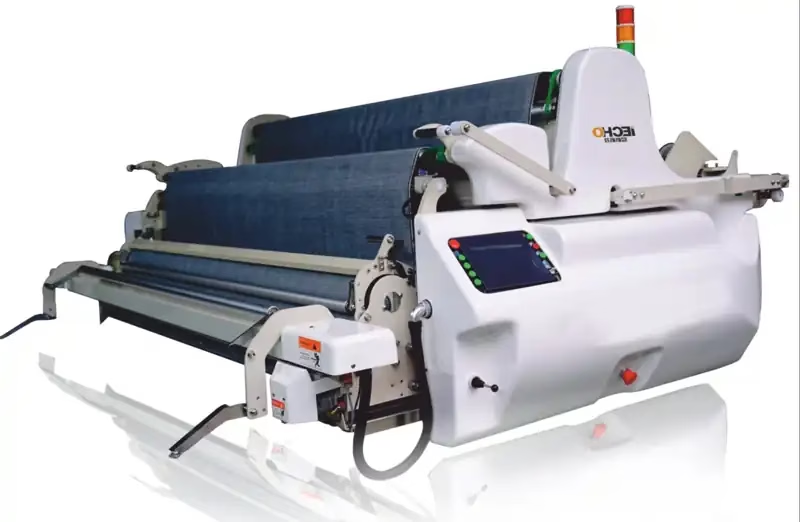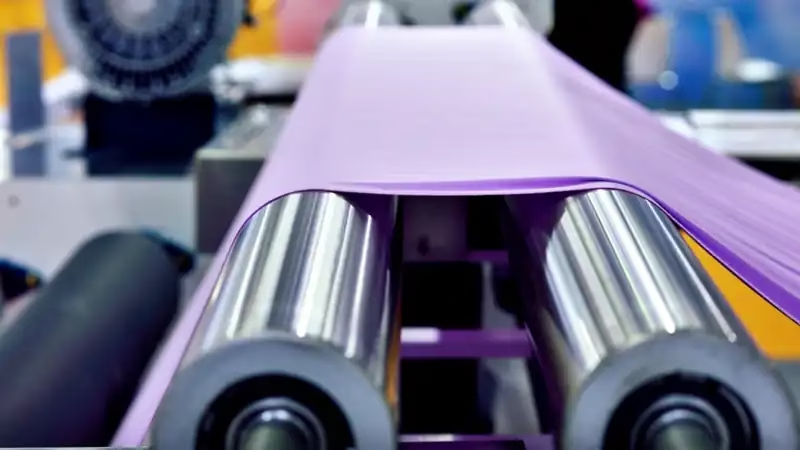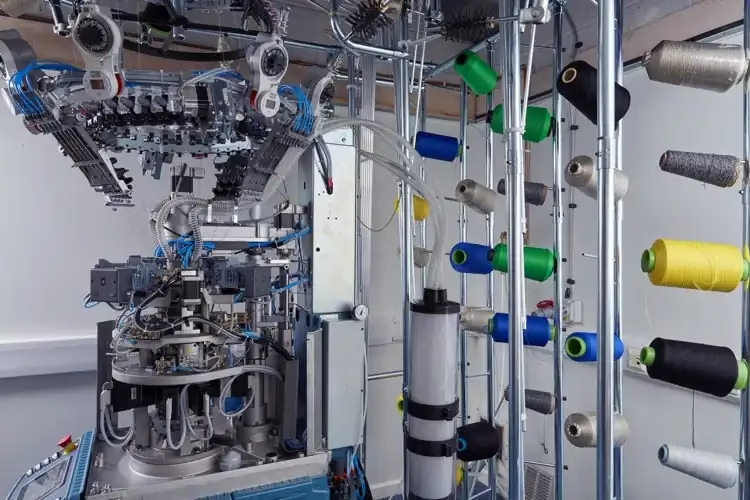
This article profiles the top eight smart textile machinery innovators leading the global market in 2025, emphasizing their role in sustainable textile production. Companies like Karl Mayer (Germany), Lectra (France), ANDRITZ (Austria), Sewbo (USA), SoftWear Automation (USA), Murata Machinery (Japan), Benninger (Switzerland), and Tsudakoma (Japan) excel in AI-driven, IoT-enabled, and robotic technologies for weaving, cutting, sewing, and recycling. These innovators integrate Industry 4.0 solutions to enhance efficiency and support eco-friendly textiles like recycled polyester and organic cotton. The global smart textile machinery market, valued at USD 5.2 billion in 2025, is projected to reach USD 8.1 billion by 2030 at a CAGR of 9.3%. The article details major machine types, unique features, registered office countries, contact links, market trends, challenges, and future prospects for sustainable smart textile production.
Introduction to Smart Textile Machinery in the Textile Industry
Smart textile machinery leverages advanced technologies like artificial intelligence (AI), the Internet of Things (IoT), robotics, and data analytics to revolutionize textile production. These machines enable precise, efficient, and sustainable manufacturing processes for weaving, cutting, sewing, dyeing, and recycling. In 2025, the global textile market, valued at USD 1.79 trillion, is driven by rising demand for sustainable textiles, including recycled polyester (30% market share), organic cotton (20%), and biodegradable fibers (15%). Smart textile machinery, such as AI-powered weaving (25% market share), robotic sewing (20%), and IoT-enabled recycling (15%), reduces waste and energy use while meeting the needs of apparel, technical textiles, and home decor sectors.
The push for sustainability, supported by regulations like the EU’s Green Deal and consumer demand for ethical fashion, has spurred innovation in smart machinery. These technologies reduce water consumption by up to 50%, energy use by 30%, and material waste by 20%, aligning with circular economy principles. This article profiles the top eight smart textile machinery innovators worldwide, detailing their major machine types, unique features, registered office countries, and contact information, while exploring their contributions to sustainable textile production.
The Importance of Smart Textile Machinery in Sustainable Textile Production
Smart textile machinery enhances production efficiency, precision, and sustainability, critical for meeting the global demand for eco-friendly textiles. By integrating AI, IoT, and robotics, these machines optimize processes like weaving, cutting, and recycling, reducing environmental impact and supporting sustainable materials like recycled polyester and organic cotton. For instance, AI-driven quality control minimizes defects by 20%, while IoT-enabled predictive maintenance cuts downtime by 15%, saving energy and resources.
The rise of e-commerce, with platforms like Amazon reporting a 15% increase in sustainable apparel sales in 2024, and the growth of technical textiles (projected market size of USD 270 billion by 2027) drive demand for smart machinery. These technologies enable customization, reduce overproduction, and align with consumer preferences for ethical and personalized products, making smart textile machinery a cornerstone of monetizable sustainable textile production.
Top Smart Textile Machinery Innovators in 2025
1. Karl Mayer (Obertshausen, Germany)
Founded in 1937, Karl Mayer is headquartered in Obertshausen, Germany, a leader in smart weaving and warping solutions. Contact: https://www.karlmayer.com/en/contact/.
Major Machine Types: Smart weaving machines (PROWARP), sectional warping machines (MULTI-MATIC), sizing machines (PROSIZE).
Special Features: The PROWARP integrates AI-driven tension control, reducing yarn waste by 15% and energy use by 20% via servo drives. Its KM.ON platform uses IoT for real-time production monitoring, enhancing efficiency by 25%. Karl Mayer’s machines support sustainable fibers like organic cotton and recycled polyester for technical textiles.
Competitive Edge: Karl Mayer’s AI and IoT integration surpasses Tsudakoma’s weaving focus, with a stronger global presence compared to Benninger’s regional dominance. Its KM.ON platform offers superior data analytics for smart factories.
Karl Mayer’s smart, sustainable innovations drive its market leadership in 2025.
2. Lectra (Paris, France)
Founded in 1973, Lectra is based in Paris, France, specializing in smart cutting and sewing solutions. Contact: https://www.lectra.com/en/contact.
Major Machine Types: CNC cutting machines (Vector iX6), automated sewing systems, cutting room software (Kaledo).
Special Features: The Vector iX6 uses AI-powered nesting to reduce fabric waste by 15% and energy by 20% via servo motors. Lectra’s Kubix Link platform integrates IoT for real-time production tracking, boosting efficiency by 25%. Its systems support sustainable fabrics like recycled polyester for apparel.
Competitive Edge: Lectra’s integrated cutting and sewing solutions outperform Sewbo’s sewing-only focus, with stronger Industry 4.0 capabilities compared to SoftWear Automation’s vision-based systems.
Lectra’s smart, eco-friendly technology solidifies its market dominance in 2025.
3. ANDRITZ AG (Graz, Austria)
Founded in 1852, ANDRITZ is headquartered in Graz, Austria, a leader in smart textile recycling solutions. Contact: https://www.andritz.com/contact/en.
Major Machine Types: AI-powered sorting machines (ADuro), picker shredders, baling systems.
Special Features: The ADuro shredder processes textile waste at 3,000 kg/h, using AI sensors for precise material sorting, reducing waste by 15% and energy by 20%. ANDRITZ’s IoT-enabled systems enable predictive maintenance, cutting downtime by 15%. Its machines support recycled polyester and cotton.
Competitive Edge: ANDRITZ’s AI-driven sorting outperforms Laroche’s mechanical focus, with a broader global presence compared to Autefa’s European base. Its partnership with Circ in 2024 enhances polycotton recycling capabilities.
ANDRITZ’s smart, sustainable solutions drive its market leadership in 2025.
4. Sewbo Inc. (Seattle, USA)
Founded in 2012, Sewbo is headquartered in Seattle, Washington, USA, pioneering smart robotic sewing. Contact: https://www.sewbo.com/contact.
Major Machine Types: Robotic sewing systems, fabric stiffening technology.
Special Features: Sewbo’s proprietary stiffening agent enables robotic sewing of flexible fabrics, reducing labor costs by 30% and energy use by 20%. Its AI-driven systems integrate with standard robotic arms, minimizing waste by 15%. Sewbo supports sustainable fabrics like organic cotton.
Competitive Edge: Sewbo’s unique stiffening technology surpasses SoftWear Automation’s Sewbot in fabric versatility, offering cost-effective solutions compared to ABB’s premium systems.
Sewbo’s innovative, eco-friendly sewing solutions enhance its market position in 2025.
5. SoftWear Automation (Atlanta, USA)
Founded in 2012, SoftWear Automation is based in Atlanta, Georgia, USA, known for its Sewbot technology. Contact: https://softwearautomation.com/contact/.
Major Machine Types: Sewbot robotic sewing systems, vision-guided robots, automated material handling.
Special Features: The Sewbot uses computer vision and AI to sew complex patterns, reducing fabric waste by 20% and energy by 25%. Its IoT-enabled systems optimize stitch precision, supporting sustainable fibers like recycled polyester for fast fashion.
Competitive Edge: SoftWear’s vision-guided sewing outperforms KUKA’s general-purpose robots in textile-specific applications, with a stronger apparel focus compared to ANDRITZ’s recycling emphasis.
SoftWear’s smart, sustainable solutions drive its market strength in 2025.
6. Murata Machinery, Ltd. (Kyoto, Japan)
Founded in 1935, Murata Machinery is headquartered in Kyoto, Japan, a leader in smart winding and spinning. Contact: https://www.muratec.net/textile/contact/.
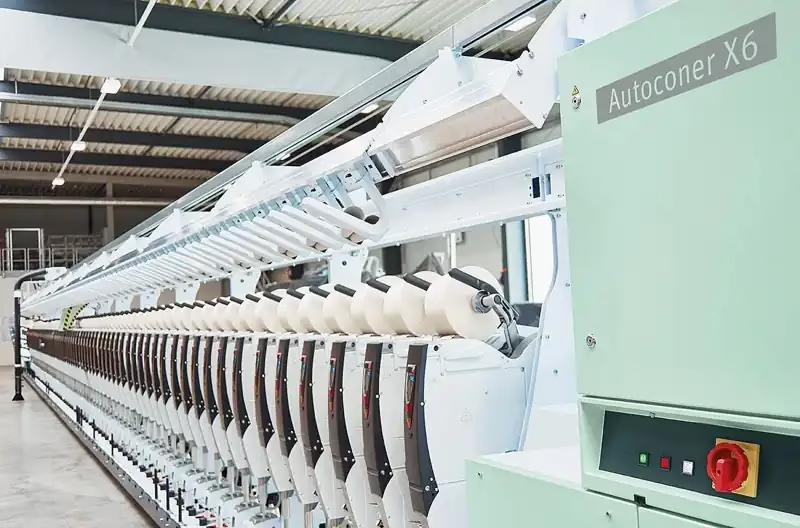
Major Machine Types: Precision winders (Process Coner II QPRO EX), automatic winders, spinning machines.
Special Features: The Process Coner II QPRO EX uses AI-driven Visual On-Demand System (VOS) to reduce yarn defects by 15% and energy by 20%. Its IoT-enabled monitoring enhances efficiency by 25%, supporting sustainable yarns like recycled polyester.
Competitive Edge: Murata’s smart winding solutions surpass Rieter’s spinning focus, with a stronger Asia-Pacific presence compared to Savio’s European base.
Murata’s eco-friendly, smart technology ensures its prominence in 2025.
7. Benninger AG (Uzwil, Switzerland)
Founded in 1859, Benninger is headquartered in Uzwil, Switzerland, specializing in smart textile processing. Contact: https://www.benningergroup.com/en/contact.
Major Machine Types: Continuous dyeing machines (CPB), sectional warping machines (BEN-DIRECT), sizing machines (BEN-SIZE).
Special Features: The BEN-DIRECT warping machine uses IoT for real-time tension control, reducing yarn waste by 15% and energy by 20%. Benninger’s TRIBUTE system integrates AI for production optimization, supporting sustainable fibers like organic cotton.
Competitive Edge: Benninger’s eco-friendly sizing and warping outperform Tsudakoma’s weaving focus, with a stronger technical textile portfolio compared to Sewbo’s apparel emphasis.
Benninger’s smart, sustainable innovations strengthen its market position in 2025.
8. Tsudakoma Corp. (Kanazawa, Japan)
Founded in 1909, Tsudakoma is based in Kanazawa, Japan, known for smart weaving and warping solutions. Contact: https://www.tsudakoma.co.jp/en/contact/.
Major Machine Types: Air-jet looms (ZAX-N), direct warping machines (T-WARP), sizing machines (ZAX series).
Special Features: The ZAX-N loom uses AI-driven pattern control, reducing fabric waste by 15% and energy by 20%. Its IoT-enabled T-WARP warping machine optimizes yarn alignment, supporting sustainable fibers like recycled polyester for technical textiles.
Competitive Edge: Tsudakoma’s smart weaving systems outperform Benninger’s dyeing focus, with a stronger Asia-Pacific presence compared to Lectra’s European base.
Tsudakoma’s eco-friendly, smart technology drives its market relevance in 2025.
Market Trends and Innovations in Smart Textile Machinery
The global smart textile machinery market, valued at USD 5.2 billion in 2025, is projected to reach USD 8.1 billion by 2030 at a CAGR of 9.3%. Key trends include:
- Sustainability: Energy-efficient machines and compatibility with recycled fibers, like ANDRITZ’s ADuro, reduce environmental impact by 25%.
- Industry 4.0 Integration: AI and IoT, as in Lectra’s Kubix Link, enhance efficiency by 25% through real-time monitoring and predictive maintenance.
- Asia-Pacific Dominance: The region holds 45% market share, driven by China and India’s textile production.
- Customization Surge: Demand for personalized apparel and technical textiles, such as medical nonwovens, fuels smart machinery adoption.
Challenges and Opportunities in the Smart Textile Machinery Market
Challenges: High initial costs (e.g., USD 50,000–200,000 for smart systems) and skilled operator shortages limit adoption, particularly for SMEs. Opportunities: Growing demand for sustainable textiles and technical applications, like automotive fabrics, offers expansion potential. The rise of circular fashion and regulatory support for eco-friendly production create new market opportunities.
The Future of Smart Textile Machinery and Sustainable Textiles
The future emphasizes AI-driven automation, soft robotics for delicate fabrics, and zero-waste production. Innovations like blockchain for supply chain transparency, as seen in ANDRITZ’s systems, and bio-based materials will drive circular textile production. Leaders like Karl Mayer and Lectra will pioneer closed-loop systems, enhancing sustainability and scalability.
Conclusion
The top eight smart textile machinery innovators are transforming the industry with AI, IoT, and robotics, advancing sustainable textile production. Their technologies reduce waste, energy use, and environmental impact, meeting global demand for eco-friendly textiles. Visit Textile School for more insights on sustainable textile production.
Citations
- StartUs Insights. “Textile Technology: Top 10 Innovations in 2025 & Beyond.” startus-insights.com, 2025.
- Kohan Textile Journal. “Latest Technologies in the Textile Industry 2025.” kohantextilejournal.com, 2025.
- Grey Exim. “Textile Trends 2025: What’s Shaping the Fabric World This Year?” greyexim.com, 14 Feb. 2025.
- Datatex. “Digital Transformation 2025: Key Trends in Textile Manufacturing.” datatex.com, 2025.
- Mordor Intelligence. “Textile Machinery Market Size & Share Analysis – Growth Trends.” mordorintelligence.com, 2025.
- DataInsightsMarket. “Smart Textile Machinery Market Trends and Forecast 2025-2033.” datainsightsmarket.com, 2025.