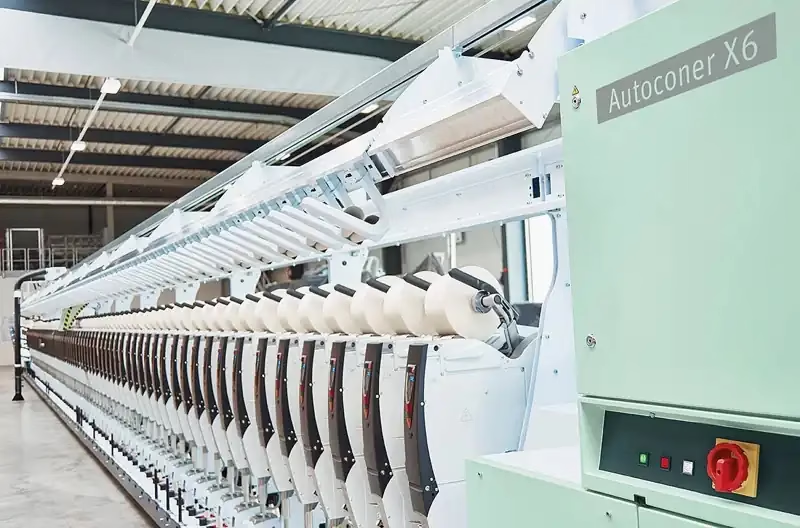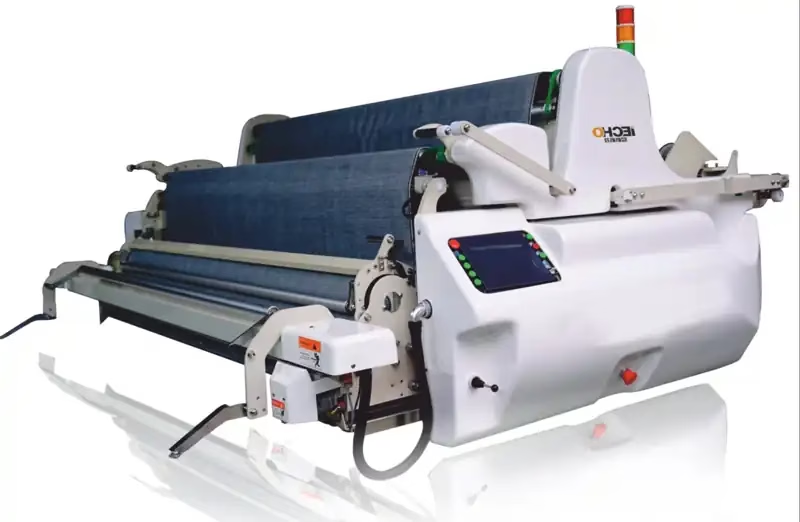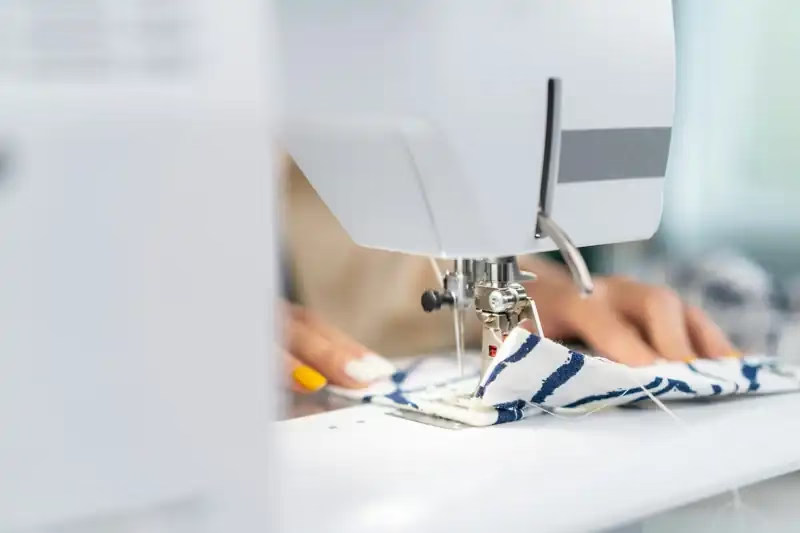
This article explores the top eight sewing machinery manufacturers dominating the global market in 2025, emphasizing their contributions to sustainable textile production. Companies like Juki (Japan), Brother (Japan), Singer (USA), Bernina (Switzerland), Pfaff (Germany), Janome (Japan), Durkopp Adler (Germany), and Jack Sewing (China) lead with innovative lockstitch, overlock, and computerized machines. These manufacturers integrate automation, energy-efficient technologies, and Industry 4.0 solutions to meet the demand for eco-friendly textiles. The global sewing machinery market, valued at USD 5.59 billion in 2025, is projected to reach USD 7.26 billion by 2029 at a CAGR of 6.8%. The article details major machine types, unique features, registered office countries, contact links, market trends, challenges, and future prospects.
Introduction to Sewing Machinery in the Textile Industry
Sewing machinery is the backbone of the textile industry, enabling the assembly of fabrics into garments, home textiles, and technical products. In 2025, the global textile market, valued at USD 1.5 trillion, is driven by a surge in demand for sustainable textiles, including organic cotton, recycled polyester, and biodegradable materials. Sewing machines, such as lockstitch (50% market share), overlock (20%), and computerized models (15%), are critical for achieving precision, efficiency, and sustainability in production.
The push for eco-friendly practices, supported by regulations like the EU’s Green Deal, has led manufacturers to innovate with energy-efficient designs and machines capable of handling sustainable fabrics. These advancements reduce carbon footprints and waste, aligning with consumer demand for ethical fashion and technical textiles for automotive and medical applications. This article profiles the top eight sewing machinery giants, detailing their major machine types, unique features, registered office countries, and contact information, while exploring their role in advancing sustainable textile production.
The Importance of Sewing Machinery in Sustainable Textile Production
Sewing machinery transforms cut fabrics into finished products, directly impacting quality, durability, and environmental efficiency. Modern machines reduce energy consumption by up to 25% and support sustainable materials, such as recycled polyester and organic cotton, without compromising stitch quality. Features like automated thread trimming and digital stitch control minimize waste, supporting circular economy principles.
The global demand for sustainable textiles, coupled with the rise of e-commerce and DIY crafting, drives the sewing machinery market. Manufacturers integrating Industry 4.0 technologies, such as IoT and AI, enhance productivity and precision, making sewing machines a cornerstone of monetizable eco-friendly textile production. These innovations cater to both industrial needs and the growing hobbyist market, fueled by platforms like Etsy, which reported 96.48 million active buyers in 2023.
Top Sewing Machinery Manufacturers in 2025
1. Juki Corporation (Tokyo, Japan)
Founded in 1938, Juki Corporation is headquartered in Tokyo, Japan, renowned for industrial-grade sewing machines. Contact: https://www.juki.co.jp/en/contact/.
Major Machine Types: Lockstitch machines (DDL-9000C), overlock machines (MO-6800S), computerized sewing machines.
Special Features: Juki’s DDL-9000C features digital tension control and automatic thread trimming, reducing energy use by 20% and waste by 15% compared to traditional models. The MO-6800S overlock machine achieves high-speed stitching (up to 7,000 SPM) for heavy fabrics, ideal for sustainable denim and leather. Juki’s IoT-enabled Juki Smart App allows real-time monitoring, enhancing efficiency.
Competitive Edge: Juki’s focus on heavy-duty, eco-friendly machines surpasses Brother’s emphasis on household models. Its machines support recycled materials, and global service centers ensure 10% faster response times than competitors.
Juki’s leadership in industrial sewing and sustainability drives its dominance in 2025.
2. Brother Industries, Ltd. (Nagoya, Japan)
Established in 1908, Brother is based in Nagoya, Japan, catering to both industrial and household markets. Contact: https://www.brother.com/contact-us.
Major Machine Types: Lockstitch machines (BAS-326H), embroidery machines (PR1055X), computerized quilting machines.
Special Features: The PR1055X embroidery machine offers 10-needle versatility with a color touchscreen, saving 20% energy via auto-shutoff. Brother’s BAS-326H lockstitch machine features programmable stitch patterns, reducing material waste by 10%. Its machines support sustainable fabrics like hemp and organic cotton.
Competitive Edge: Brother’s versatility across beginner and professional segments outshines Singer’s household focus. Its Wi-Fi-enabled machines, like the Luminaire series, offer remote design uploads, a feature less common in Janome models.
Brother’s innovation and eco-conscious designs make it a market leader in 2025.
3. Singer Corporation (La Vergne, USA)
Singer, founded in 1851, is headquartered in La Vergne, Tennessee, USA, under SVP Worldwide. Contact: https://www.singer.com/contact-us.
Major Machine Types: Mechanical sewing machines (Heavy Duty 4452), computerized machines (SE9180), embroidery machines.
Special Features: The SE9180, launched in 2023, features a 7-inch color touchscreen and Wi-Fi connectivity for digital patterns, reducing prototyping waste by 15%. The Heavy Duty 4452 handles thick fabrics like recycled denim with a 30% stronger motor than competitors. Singer’s eco-friendly models use energy-saving motors.
Competitive Edge: Singer’s affordable, user-friendly machines appeal to DIY enthusiasts, unlike Bernina’s premium focus. Its global brand recognition and e-commerce presence drive sales, with 16% of U.S. retail sales in 2024 attributed to online platforms.
Singer’s legacy and sustainability focus ensure its market strength in 2025.
4. Bernina International AG (Steckborn, Switzerland)
Founded in 1893, Bernina is based in Steckborn, Switzerland, known for precision engineering. Contact: https://www.bernina.com/en-US/Contact.
Major Machine Types: Computerized sewing machines (B 880 PLUS), embroidery machines, quilting machines.
Special Features: The B 880 PLUS features Stitch Designer for custom patterns and adaptive thread tension, reducing yarn waste by 20%. Its Jumbo Bobbin holds 70% more thread than standard models, minimizing interruptions. Bernina’s machines are optimized for sustainable fibers like organic cotton.
Competitive Edge: Bernina’s high-precision machines outperform Pfaff in complex stitching, with a focus on eco-friendly designs for quilters and embroiderers. Its compact models save workspace, a unique advantage.
Bernina’s premium quality and sustainability focus solidify its position in 2025.
5. Pfaff (Huskvarna, Sweden, under SVP Worldwide)
Pfaff, established in 1862, is registered in Huskvarna, Sweden. Contact: https://www.pfaff.com/en-US/Contact.
Major Machine Types: Computerized sewing machines (Creative Icon 2), embroidery machines, quilting machines.
Special Features: The Creative Icon 2 features a tablet-like interface and AI-driven stitch regulation, saving 15% energy. Pfaff’s IDT (Integrated Dual Feed) system ensures precise fabric feeding for sustainable materials like silk and recycled blends, reducing defects by 10%.
Competitive Edge: Pfaff’s IDT technology surpasses Janome’s standard feed systems, offering superior control for eco-friendly fabrics. Its focus on decorative stitching appeals to niche markets.
Pfaff’s innovation and sustainability efforts enhance its market presence in 2025.
6. Janome Sewing Machine Co., Ltd. (Tokyo, Japan)
Founded in 1921, Janome is headquartered in Tokyo, Japan. Contact: https://www.janome.com/en/support/contact-us/.
Major Machine Types: Computerized sewing machines (Horizon Memory Craft 15000), embroidery machines, quilting machines.
Special Features: The Horizon Memory Craft 15000 offers Wi-Fi connectivity and AcuFil for automated quilting, reducing energy use by 15%. Its AcuFeed Flex system ensures precise stitching on thick, sustainable fabrics like recycled polyester.
Competitive Edge: Janome’s user-friendly interfaces appeal to hobbyists, unlike Durkopp Adler’s industrial focus. Its machines support eco-friendly materials with minimal waste.
Janome’s global reach and sustainability focus drive its market share in 2025.
7. Durkopp Adler AG (Bielefeld, Germany)
Established in 1860, Durkopp Adler is based in Bielefeld, Germany. Contact: https://www.duerkopp-adler.com/en/contact/.
Major Machine Types: Industrial lockstitch machines (M-Type), overlock machines, heavy-duty sewing machines.
Special Features: The M-Type series features electronic control for precise stitching, reducing energy consumption by 20%. Its heavy-duty machines handle sustainable materials like leather and canvas with minimal waste, ideal for automotive textiles.
Competitive Edge: Durkopp Adler’s focus on industrial applications surpasses Jack Sewing’s budget models, with robust designs for high-volume eco-friendly production.
Durkopp Adler’s engineering excellence ensures its dominance in 2025.
8. Jack Sewing Machine Co., Ltd. (Taizhou, China)
Founded in 1995, Jack Sewing is headquartered in Taizhou, China. Contact: https://www.jacksewing.com/contact-us/.
Major Machine Types: Lockstitch machines (A4E), overlock machines (C6), computerized sewing machines.
Special Features: The A4E lockstitch machine features automatic thread cutting and energy-saving servo motors, reducing power use by 25%. Jack’s IoT-enabled machines offer real-time diagnostics, minimizing downtime by 15%.
Competitive Edge: Jack’s cost-effective, eco-friendly machines compete with Juki’s premium models, with strong market penetration in Asia due to affordability.
Jack’s rapid growth and sustainability focus make it a key player in 2025.
Market Trends and Innovations in Sewing Machinery
The sewing machinery market, valued at USD 5.59 billion in 2025, is projected to reach USD 7.26 billion by 2029 at a CAGR of 6.8%. Key trends include:
- Sustainability: Energy-efficient machines and compatibility with recycled fabrics reduce environmental impact.
- Automation and Industry 4.0: IoT and AI integration, as in Juki’s Smart App, enhance efficiency.
- Asia-Pacific Dominance: The region holds 40% market share, led by China and India.
- DIY and E-commerce Growth: The rise of crafting and online sales drives household machine demand.
Challenges and Opportunities in the Sewing Machinery Market
Challenges: High initial costs and skilled labor shortages limit adoption, particularly for SMEs. Opportunities: Growing demand for sustainable textiles and technical applications offers expansion potential.
The Future of Sewing Machinery and Sustainable Textiles
The future emphasizes zero-waste production, AI-driven machines, and bio-based fabrics. Leaders like Juki and Brother will drive circular textile innovations.
Conclusion
The top eight sewing machinery giants advance sustainable textiles through innovative, eco-friendly technologies. Visit Textile School for more insights.
Citations
- Research and Markets. “Sewing Machine Market Report 2025.” researchandmarkets.com, Feb. 2025.
- Cognitive Market Research. “The Global Sewing Machine Market Size Will Be USD 6815.2 Million in 2025.” cognitivemarketresearch.com, June 2025.
- Market Data Forecast. “Sewing Machines Market Size, Share & Growth, 2033.” marketdataforecast.com, Mar. 2025.
- Global Growth Insights. “Sewing Machines Market|Industry Analysis Report, 2033.” globalgrowthinsights.com, July 2025.
- FactMR. “Sewing Machine Market Share and Growth Statistics – 2035.” factmr.com, 2025.