Home » Articles

Textile engineering articles

Page 38 of 84

Effluent Treatment Plant

Effluent Treatment Process in Garment Manufacturing

The textile industry is one of the leading sectors in the economy as it contributes to total industrial production. The untreated textile wastewater can cause rapid depletion of dissolved oxygen if it is directly discharged into the surface water sources due to its high BOD value. The effluents with high levels of BOD and COD values are highly toxic to biological life.

The high alkalinity and traces of chromium which is employed in dyes adversely affect the aquatic life and also interfere with the biological treatment processes. The quality of such effluent can be analyzed by their physicochemical and biological analysis. Monitoring of the environmental parameters of the effluent would allow having, at any time, a precise idea on performance evaluation of ETP and if necessary, appropriate measures may be undertaken to prevent adverse impact on the environment. The obtained results will be very much useful in the identification and rectification of operational and maintenance problems and they can be also utilized to establish methods for improvement.

Read more »

Article

Ergonomic Improvements in Textile Industry

Apparel manufacturing is a labor-intensive assembly line process requiring significant amounts of repetitive and skilled manipulations. Therefore, like any other manufacturing industry, it has its own share of ergonomic problems where poorly designed and unorganized workstations contribute to musculoskeletal discomfort among the sewing operators. Research has found that ergonomic interventions including redesign and proper adjustment of workstations, use of ergonomically-designed seating, and training in low-risk methods and posture substantially improve workers’ efficiency.

Read more »

Article

Yarn to Fabric Manufacturing

SPINNING A Yarn is usually of substantial length & of a small cross-section. In the cross-section of yarn, there are usually multiple numbers of Staple fibers (short fibers) or Filaments (long fibers) of unlimited length. Spinning is the process of creating yarn (or thread, rope, cable) from various raw fiber materials. Several fibers are twisted […]

Read more »

Article

Airbag Woven Fabrics for Automobiles

The air bags are of greater importance in today’s vehicles since safety of human life is of prior importance. Since the count of automobiles is increasing tremendously on our roads, the probability of accidents is also more.

So far a safe riding and for saving the precious life the safety bags must be implemented. Today it is the privilege of the high class people who own high priced cars. Let’s hope every automobile manufacturer implement the same since safety for life is inevitable. The number of persons killed or injured in traffic has dropped continuously since the development of air bag system.

Over the time, the development of seat belt becomes an indisputable matter of course. Today, the 3- point automatic seat belt, seat belt tensioner and airbag constitute a carefully matched passenger protection system. Implementation of these safety restraint systems with due care and regulation can further drop the fatality rate and serious injuries at the time of road accidents.

Read more »

Article

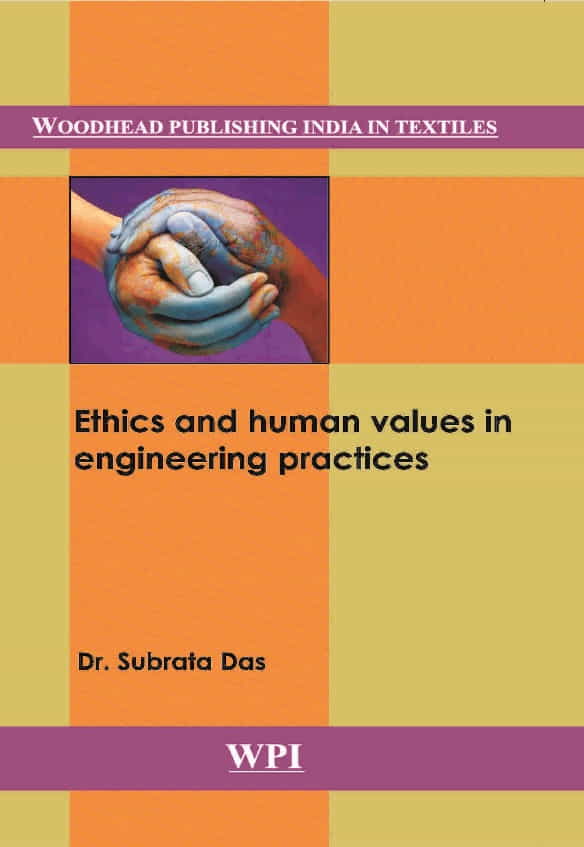
Ethics and Human Values in Engineering Practices

The Book “Ethics and Human Values in Engineering Practices”, emphasis on basic human values and engineering ethics which deal with understanding the moral values that ought to guide the engineering profession, resolve the moral issues in the profession and justify the moral judgment concerning the profession and professionalism which require certain attitudes and typical qualities that are expected from a professional.

Engineering is viewed as an experimental process on a social scale involving human subjects. Human rights are defined in this book as moral entitlements that place obligations on other people to treat one with dignity and respect. Employee rights underlying professional rights, basic human rights, institutional rights, and non-contractual employee rights are discussed . The role of Multinational organizations, ethics in computers, internet functions, military development, and environmental ethics have been emphasized towards sustenance and progress for the engineers.

Read more »

Article

VISUAL MERCHANDISING ON IMPULSE BUYING BEHAVIOUR OF CONSUMER

The Indian retail industry is one of the most dynamic and fastest-growing sectors in the world. Visual merchandising performs a key role in enticing the customers in the retail store, thereby. helps in increasing the sales of the store and to succeed in the competitive marketplace. Impulse buying is an important factor in visual merchandising. It arouses the consumers’ desire to buy the product which has been presented in an exciting & impressive manner.

In this investigation, the impact of visual merchandising on the impulse buying behavior of consumers is studied in the Coimbatore region, Tamil Nadu, India, and the results are interpreted statistically to understand the significance of various factors affecting the attitude of the customers in buying. The results of this work suggest that all the elements of visual merchandising – window displays, store interior, mannequin display, and signage have a positive impact on impulse buying according to the perceptions of the people in the Coimbatore region, Tamil Nadu, India. Among all the four elements, store interior has the highest positive impact on impulse buying behavior.

Read more »

Article

Importance of Nanotechnology in Textile Industry

Nanotechnology continues to grow as an interdisciplinary technology, and many people consider it the start of a new industrial revolution. This technology deals mainly in studying materials with 1-100 nanometers in length. It is fundamentally based on the fact that some materials have properties that change drastically when the dimensions are cut down to a […]

Read more »

Article

Electrospinning as a nanoscale technology of the twenty-first century

ELECTROSPINNING PROCESS Electrospinning is from the academic as well as technical perspective presently the most versatile technique for the preparation of continuous nanofibers obtained from numerous materials including polymers, metals, and ceramics.  Electrospinning is a physical process used for the formation of thin fibers in which a viscous liquid is subjected to electrical shear stress […]

Read more »

Article

Scroll to Top