Apparel product development from tech packs to fit. Pattern, grading, sewing line balancing, quality, and compliance for brands and OEMs. This section explains practical decision criteria, typical test methods, and failure modes that matter in real production. Readers get checklists, calculation steps, and case examples connecting specifications to cost, reliability, and compliance. Links map core concepts to upstream inputs and downstream processes so choices remain consistent across sourcing, manufacturing, and end-use performance. Each article includes definitions, diagrams where helpful, and plain-language notes to help newcomers ramp quickly while giving experienced professionals the depth needed to troubleshoot and optimize. Standards references are cited with context, and whenever trade-offs exist, we make them explicit so you can defend decisions.
Industrial sewing machines are specialized machines that are designed to perform specialized tasks in high volumes. Various industrial sewing machines and their components and features are explained in this article.
The textile industry is one of the leading sectors in the economy as it contributes to total industrial production. The untreated textile wastewater can cause rapid depletion of dissolved oxygen if it is directly discharged into the surface water sources due to its high BOD value. The effluents with high levels of BOD and COD values are highly toxic to biological life.
The high alkalinity and traces of chromium which is employed in dyes adversely affect the aquatic life and also interfere with the biological treatment processes. The quality of such effluent can be analyzed by their physicochemical and biological analysis. Monitoring of the environmental parameters of the effluent would allow having, at any time, a precise idea on performance evaluation of ETP and if necessary, appropriate measures may be undertaken to prevent adverse impact on the environment. The obtained results will be very much useful in the identification and rectification of operational and maintenance problems and they can be also utilized to establish methods for improvement.
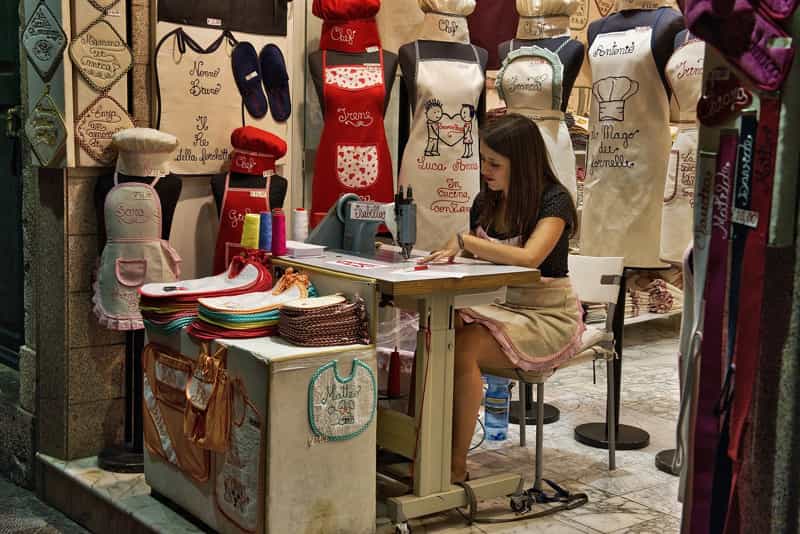
Apparel manufacturing is a labor-intensive assembly line process requiring significant amounts of repetitive and skilled manipulations. Therefore, like any other manufacturing industry, it has its own share of ergonomic problems where poorly designed and unorganized workstations contribute to musculoskeletal discomfort among the sewing operators. Research has found that ergonomic interventions including redesign and proper adjustment of workstations, use of ergonomically-designed seating, and training in low-risk methods and posture substantially improve workers’ efficiency.
SPINNING A Yarn is usually of substantial length & of a small cross-section. In the cross-section of yarn, there are usually multiple numbers of Staple fibers (short fibers) or Filaments (long fibers) of unlimited length. Spinning is the process of creating yarn (or thread, rope, cable) from various raw fiber materials. Several fibers are twisted […]
Garment production is an organized activity consisting of sequential processes such as laying, marking, cutting, stitching, checking, finishing, pressing, and packaging. This is a process of converting raw materials into finished products. It will be difficult to maintain the industry if production is not, up to the mark if the preproduction phase of preparation of material is not properly carried out.
Ready-to-wear apparel or garment manufacturing involves many processing steps, beginning with the idea or design concept and ending with a finished product. The apparel manufacturing process involves Product Design, Fabric Selection, and Inspection, Patternmaking, Grading, Marking, Spreading, Cutting, Bundling, Sewing, Pressing or Folding, Finishing, and Detailing, Dyeing, and Washing, QC, etc.
INTRODUCTION Method study is a systematic method of analysing the method of doing a job including human movements involved in it. So, it is the process of analysing the methods involved in a workflow to increase productivity. It deals with doing the work in a better way, with less time and effort. That is why […]
Men’s shirt manufacturing processes, major components of shirts, types of shirts, types of pockets, types of plackets, types of cuffs, types of collars
Nanotechnology has ample potential to enhance the clothing we live, work and play in, but it is not without its drawbacks. From lightweight specialist high-endurance clothing to suits that don’t get wet in the rain, nano-enhanced clothing will become a more and more visible part of our lives in the future.
It may seem difficult to find gifts for people who enjoy fishing. But not as difficult as you may think; here are 31 unique gifts for your fishing buddies!
Struggling with summer outfits? Men might wear linen shirts and pants, leg jeans and flip-flops, whereas women might wear midi skirts, maxi dresses, baggy jeans, and more.