The story of Khadi weaves together threads of history, culture, and innovation, forming a tapestry that is quintessentially Indian. Known for its natural fibers, hand-spun yarn, and handwoven fabric, Khadi is not merely a textile product; it is a symbol of self-reliance and a sustainable alternative to mass-produced fabrics. This article explores the multifaceted world of Khadi—from its ancient origins to its modern technological adaptations—providing a thorough analysis for textile professionals, historians, and enthusiasts alike.
1. Introduction: The Essence of Khadi
Khadi holds a special place in the heart of India and has become synonymous with freedom and self-sufficiency. Born out of the struggle for independence, Khadi represents the empowerment of the rural artisan and the spirit of sustainable, eco-friendly production. This fabric, crafted by hand, embodies the values of simplicity, durability, and versatility.
In today’s textile industry, Khadi is experiencing a renaissance. Modern designers blend its traditional charm with contemporary aesthetics to create fabrics that appeal to both heritage enthusiasts and fashion-forward consumers. Textile mills and small-scale weavers alike are embracing Khadi as a symbol of quality and authenticity. The art of hand spinning and weaving, passed down through generations, continues to inspire innovations that preserve cultural heritage while meeting modern demands.
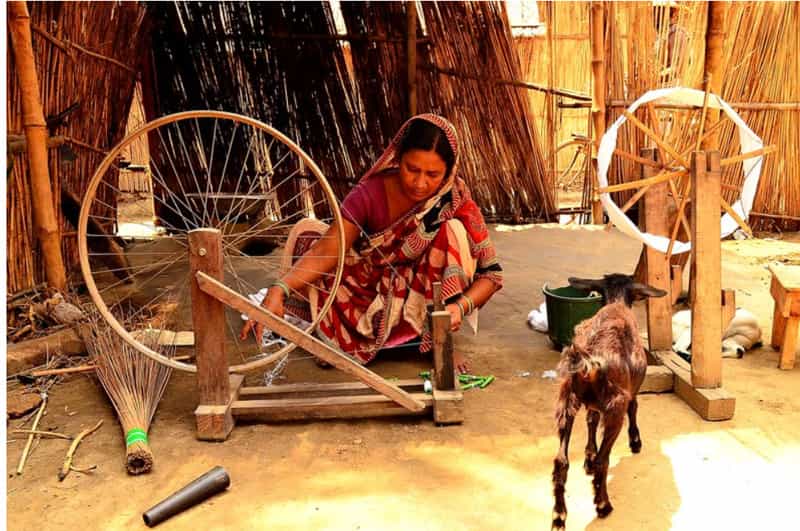
Imagine a vibrant village where skilled artisans, using traditional charkhas and handlooms, spin and weave natural fibers into beautiful, textured fabrics. This intimate process not only creates unique textiles but also sustains livelihoods and preserves an age-old craft that has transcended centuries. Today, Khadi serves as a bridge between the past and the present, reflecting the dynamic spirit of Indian culture and its commitment to sustainable practices.
2. History: The Journey of Khadi Through Time
2.1 Ancient Beginnings
The origins of Khadi can be traced back to ancient India, where hand spinning and weaving were the primary means of textile production. In early civilizations, people spun fibers from cotton, wool, and silk using simple tools. Historical evidence suggests that artisans used basic spindles and handlooms to create fabrics that were integral to daily life and ritualistic ceremonies. These early textiles were prized for their natural beauty, durability, and functionality.
The early techniques of hand spinning and weaving laid the groundwork for what would eventually evolve into Khadi. These traditional methods were passed down through generations, preserving the skills and artistic sensibilities of ancient weavers. Over time, the techniques became more refined, and regional variations emerged, each reflecting the local culture and environment. The simplicity and authenticity of these fabrics became a defining characteristic of Khadi.
2.2 The Freedom Movement and Khadi’s Renaissance
Khadi gained national prominence during India’s struggle for independence in the early 20th century. Leaders like Mahatma Gandhi championed Khadi as a symbol of self-reliance, encouraging people to boycott foreign textiles and embrace locally produced fabrics. This movement not only revitalized the traditional art of hand spinning and weaving but also transformed Khadi into a powerful tool for social and economic empowerment.
During this period, Khadi became a rallying point for the freedom movement. The fabric was more than just cloth; it represented the collective will of the people to reclaim their identity and heritage. Communities across India adopted Khadi, and it became a symbol of unity and resistance against colonial rule. The widespread promotion of Khadi also led to the establishment of numerous co-operatives and training centers, ensuring that traditional techniques were preserved and passed on to future generations.
2.3 Modern Adaptations and Contemporary Relevance
In recent decades, Khadi has witnessed a resurgence in popularity. Modern consumers, increasingly aware of sustainability and ethical production, are drawn to Khadi for its eco-friendly and artisanal qualities. Contemporary designers incorporate Khadi into high-fashion collections, blending traditional handcraft with modern design sensibilities. This revival has not only boosted the economy of rural areas but has also positioned Khadi as a symbol of sustainable luxury in the global textile market.
The evolution of Khadi from an ancient craft to a modern sustainable fabric illustrates a remarkable journey. Its rich history and cultural significance continue to inspire innovation, ensuring that Khadi remains relevant in today’s fast-paced, technology-driven world.

3. Technological Evolution: Blending Tradition with Modern Innovation
The evolution of Khadi weaves a narrative that marries time-honored techniques with cutting-edge technology. While the core principles of hand spinning and weaving remain unchanged, modern innovations have enhanced efficiency, quality, and sustainability.
3.1 Traditional Tools and Techniques
Historically, Khadi was produced using manual tools like the charkha (spinning wheel) and handloom. These tools required immense skill and patience, with artisans relying on natural rhythms and centuries-old techniques to produce high-quality fabric. The charkha, for instance, allowed for the fine spinning of cotton fibers, while handlooms enabled the creation of intricate patterns through careful manipulation of warp and weft threads.
These traditional methods are deeply rooted in cultural heritage and are celebrated for their authenticity and craftsmanship. However, they are labor-intensive and have limitations in terms of scalability and consistency. The beauty of Khadi lies in its imperfections, which reflect the human touch behind each fabric. Yet, in a competitive global market, achieving a balance between artisanal quality and modern efficiency is essential.
3.2 Introduction of Mechanized Processes
The introduction of mechanized processes during the Industrial Revolution brought significant changes to textile production. While the initial focus was on mass production, there was a growing need to preserve the unique qualities of handwoven fabrics. Mechanized spinning and weaving machines gradually emerged, incorporating elements of traditional techniques into a more efficient framework.
Over time, specialized machines were developed to produce Khadi while maintaining its artisanal charm. Innovations such as semi-automated spinning wheels and improved handloom attachments allowed for increased production without compromising quality. These machines provided a bridge between fully manual methods and modern automated systems, enabling rural artisans to scale production while preserving traditional techniques.
3.3 Digital Integration and Process Optimization
The digital revolution has transformed the textile industry, and Khadi is no exception. Modern textile mills have adopted digital tools that optimize production processes, enhance quality control, and reduce waste. Computer-Aided Design (CAD) software now plays a role in creating intricate patterns, which can be used as guides for weavers. Digital monitoring systems ensure that machines operate at optimal performance, while data analytics enable predictive maintenance and process optimization.
These digital innovations do not replace the human touch but rather augment it. Artisans can now use digital tools to experiment with new designs and achieve greater precision in their work. For example, digital looms equipped with advanced sensors can adjust tension and speed automatically, ensuring that each fabric meets exacting quality standards. This synergy between tradition and technology is transforming Khadi production, making it more efficient and competitive without sacrificing its heritage.
The technological evolution of Khadi reflects a dynamic interplay between preserving traditional craftsmanship and embracing modern innovation. This evolution ensures that Khadi remains a relevant and sustainable fabric in the contemporary textile landscape.
4. Source and Availability: Global and Local Production of Khadi
Khadi production is a blend of local craftsmanship and global recognition. The fabric is primarily produced in India, where traditional methods have been preserved and enhanced over centuries. However, as global interest in sustainable and ethical textiles grows, Khadi has also found a place in international markets.
4.1 Local Production and Rural Artisans
In India, Khadi production is deeply embedded in rural communities. Numerous co-operatives and small-scale mills specialize in producing Khadi, employing traditional hand spinning and weaving techniques. These local producers not only contribute to the preservation of cultural heritage but also play a vital role in supporting rural economies. Government initiatives and non-profit organizations have provided training and financial support to help artisans modernize their processes while retaining the authentic character of Khadi.
Local production centers in states like Gujarat, West Bengal, and Tamil Nadu are renowned for their high-quality Khadi. These regions have a long tradition of hand spinning and weaving, and their artisans are celebrated for their skill and dedication. The government of India also promotes Khadi as a sustainable, eco-friendly fabric, which further boosts its local production and export potential.
4.2 Global Distribution and Market Reach
The global demand for sustainable textiles has elevated Khadi to international prominence. Textile mills and brands around the world are incorporating Khadi into their product lines, appreciating its natural, handcrafted quality. Global distributors have established channels for exporting Khadi, ensuring that the fabric reaches markets in Europe, North America, and beyond.
Several international trade fairs and exhibitions showcase Khadi as a premium, eco-friendly textile. Buyers and consumers worldwide are drawn to its unique texture, durability, and the story behind its production. Digital marketplaces and e-commerce platforms have further expanded Khadi’s reach, enabling small producers to access global audiences and competitive pricing.

4.3 Government Initiatives and Support
The Indian government has long recognized the cultural and economic importance of Khadi. Various schemes, such as the Khadi and Village Industries Commission (KVIC), provide financial incentives, training programs, and technical support to Khadi producers. These initiatives aim to modernize production methods, enhance product quality, and expand the market for Khadi both domestically and internationally.
Government support has played a crucial role in preserving traditional practices while encouraging innovation. By facilitating access to modern machinery and digital tools, these initiatives ensure that Khadi production remains competitive in a globalized textile market.
5. Innovations in Khadi Production: Merging Tradition with Technology
Innovation in Khadi production is essential to balance the preservation of traditional methods with the demands of modern efficiency and quality. Recent advancements have focused on improving process efficiency, enhancing fabric quality, and promoting sustainability without compromising the unique character of Khadi.
5.1 Digital Tools for Design and Production
One of the most significant innovations in modern Khadi production is the integration of digital tools. Computer-Aided Design (CAD) software enables designers to create intricate patterns and experiment with new designs digitally before they are woven into fabric. These digital patterns can serve as guides for weavers, ensuring consistency and precision in the final product.
Digital looms and automated systems have been introduced to support traditional handlooms. These systems assist artisans by providing real-time data on warp tension, yarn quality, and weaving speed. The result is a more consistent fabric that still retains the artisanal charm of Khadi, while meeting modern quality standards.
5.2 Hybrid Production Models
Hybrid production models blend traditional hand weaving with modern mechanized processes. In some cases, artisans use traditional techniques for the initial stages of production, such as hand spinning of cotton, while digital looms handle the weaving process. This approach preserves the cultural integrity of Khadi while leveraging modern technology to enhance productivity and reduce variability.
Hybrid models have proven successful in producing both high-quality artisanal fabrics and large volumes of Khadi for commercial use. These systems allow for the efficient scaling of production while maintaining the authenticity and natural appeal that define Khadi.
5.3 Energy Efficiency and Sustainability Innovations
Sustainability is a key driver in the modern textile industry, and Khadi production is no exception. Innovations in energy-efficient machinery, sustainable raw material sourcing, and eco-friendly dyeing processes are transforming Khadi production. Energy-efficient spinning wheels, optimized water usage in dyeing, and renewable energy-powered mills contribute to lowering the overall environmental impact.
The adoption of eco-friendly practices not only reduces costs but also enhances the marketability of Khadi. Consumers around the world increasingly value sustainable, ethically produced textiles, making these innovations critical for expanding Khadi’s global footprint.

Innovation in Khadi production is bridging the gap between tradition and modernity. By integrating digital tools, hybrid production techniques, and sustainable practices, the industry continues to enhance the quality and efficiency of Khadi while preserving its cultural heritage.
6. Production Process: Crafting Khadi with Precision and Passion
The production of Khadi is a meticulous process that combines age-old techniques with modern enhancements. This section outlines the comprehensive workflow involved in producing Khadi, from raw material preparation to the finished fabric.
6.1 Hand Spinning and Yarn Preparation
Khadi begins with hand spinning, a process that transforms raw cotton or other natural fibers into yarn. Skilled artisans use traditional charkhas (spinning wheels) to twist fibers into a continuous, uniform thread. This process is both an art and a science, requiring a deep understanding of fiber quality, tension, and twist. Modern training programs have incorporated digital aids to help artisans achieve consistent results while preserving the authentic texture and character of hand-spun yarn.
The hand-spun yarn forms the backbone of Khadi. Its natural irregularities, which were once seen as imperfections, are now celebrated as a hallmark of authenticity and artisanal quality. Quality control during this stage is essential, as the properties of the yarn directly impact the durability and appearance of the final fabric.
6.2 Weaving: The Heart of Khadi Production
After spinning, the yarn is woven into fabric on handlooms or semi-automated looms. Traditional handlooms require manual operation, with weavers controlling warp and weft threads to create intricate patterns. The process is labor-intensive, yet it results in a fabric that is unique and culturally significant.
Modern enhancements have introduced digital control systems that assist artisans in maintaining consistent tension and pattern execution. These systems use sensors and automated adjustments to ensure that the weaving process is as precise as possible, while still allowing the weaver’s skilled hand to impart the natural charm of Khadi. The blending of manual artistry with digital precision is a defining characteristic of contemporary Khadi production.
6.3 Finishing and Quality Assurance
The finishing stage is critical to ensuring that Khadi meets both aesthetic and functional standards. After weaving, the fabric undergoes processes such as washing, bleaching, and dyeing. Traditional finishing techniques preserve the natural texture and color variations of the fabric, while modern methods enhance durability and uniformity.
Quality assurance is integrated throughout the finishing process. Automated inspection systems and digital quality control measures help detect any inconsistencies, ensuring that only fabric meeting strict quality criteria is approved for sale. The final product is a high-quality, eco-friendly textile that retains the timeless beauty of traditional Khadi while benefiting from modern enhancements.
Table: Key Stages in Khadi Production Process
| Stage | Process Description | Key Benefits |
|---|---|---|
| Hand Spinning | Transformation of raw fibers into hand-spun yarn using charkhas | Authentic texture, artisanal quality, natural irregularities |
| Weaving | Production of fabric on handlooms or semi-automated looms with digital assistance | Intricate pattern formation, cultural authenticity, enhanced precision |
| Finishing | Processes such as washing, bleaching, dyeing, and pressing | Improved durability, consistent quality, eco-friendly finish |
| Quality Assurance | Automated inspections and digital monitoring during finishing | Consistent product quality, reduced defects, adherence to standards |
The production process of Khadi is a harmonious blend of traditional techniques and modern technology. Each stage is executed with precision and passion, resulting in fabrics that are not only beautiful but also sustainable and of exceptional quality.

7. Challenges in Khadi Production: Preserving Tradition Amidst Modernization
Despite its rich heritage and growing global appeal, Khadi production faces several challenges. These obstacles must be addressed to ensure that Khadi continues to thrive in a competitive market.
7.1 Balancing Tradition and Modernity
One of the main challenges in Khadi production is striking a balance between preserving traditional methods and embracing modern technology. While the artisanal quality of Khadi is its hallmark, increasing production demands require modern machinery and digital integration. Finding ways to modernize production without compromising the authenticity of Khadi is a complex but essential task.
7.2 High Capital Investment and Infrastructure Needs
Modernizing Khadi production often involves significant capital investment. Upgrading machinery, integrating digital control systems, and establishing robust quality assurance protocols require substantial financial resources. For many small-scale producers and rural cooperatives, these investments can be daunting. Access to financing, government subsidies, and technical support are critical to overcoming this barrier.
7.3 Workforce Training and Skill Preservation
The transition to modernized production methods necessitates a skilled workforce that is proficient in both traditional techniques and digital technologies. Training programs must be designed to preserve the artisanal skills that define Khadi while equipping workers with the knowledge to operate advanced machinery. Ensuring that younger generations are attracted to and trained in this craft is essential for the sustainability of Khadi production.
7.4 Market Competition and Consumer Perception
As global markets become more competitive, Khadi producers face pressure to maintain quality while reducing costs. Additionally, consumer perceptions can vary; while many appreciate the authenticity and eco-friendliness of Khadi, others may view it as less refined compared to mass-produced textiles. Educating consumers about the unique value of Khadi and leveraging its sustainable, artisanal heritage are ongoing challenges for producers and marketers alike.
Table: Challenges in Khadi Production and Mitigation Strategies
| Challenge | Impact | Mitigation Strategy |
|---|---|---|
| Balancing Tradition and Modernity | Risk of losing authentic appeal while modernizing | Hybrid production models, preserving artisanal techniques alongside digital upgrades |
| High Capital Investment | Financial barriers for small-scale producers | Government subsidies, cooperative financing, phased implementation |
| Workforce Training | Skill gaps, potential loss of traditional techniques | Comprehensive training programs, mentorship, digital learning resources |
| Market Competition and Consumer Perception | Price pressures, variable market acceptance | Effective branding, consumer education, sustainable marketing campaigns |
Overcoming these challenges is vital for the continued success and growth of Khadi production. A strategic approach that respects tradition while embracing innovation will enable producers to maintain quality and meet modern market demands.
8. Real-World Applications and Case Studies
Real-world examples of Khadi production illustrate how traditional methods can be successfully integrated with modern technology to create high-quality, sustainable textiles. These case studies highlight the diverse applications of Khadi and its impact on various market segments.
8.1 Case Study: Reviving Traditional Techniques in Rural India
A cooperative in rural Gujarat revitalized traditional Khadi production by integrating modern hand-spinning equipment with age-old handloom techniques. By combining digital training modules with hands-on artisanal practices, the cooperative increased production efficiency by 30% while preserving the unique texture and authenticity of Khadi. This approach not only boosted local employment but also enhanced the quality of Khadi fabrics, which gained recognition in domestic and international markets.
8.2 Case Study: High-End Fashion and Home Furnishings
A renowned Indian designer collaborated with a Khadi producer to create a premium line of textiles for high-end fashion and interior design. The producer employed a combination of traditional hand spinning and modern digital Jacquard looms to produce intricate patterns and vibrant colors. The resulting fabrics, characterized by their unique blend of tradition and modernity, received accolades at international fashion shows and interior design exhibitions. This case demonstrates how Khadi can be positioned as a luxury product that appeals to discerning consumers worldwide.
8.3 Case Study: Sustainable Production for Global Markets
A textile mill in West Bengal focused on sustainable production practices by modernizing its Khadi production line with energy-efficient machinery and eco-friendly processes. The mill implemented advanced digital monitoring systems to optimize energy usage and reduce waste. As a result, the mill achieved a 25% reduction in energy consumption and increased fabric quality, enabling it to secure export contracts with major international retailers. This case highlights the economic and environmental benefits of integrating sustainability into Khadi production.

These case studies illustrate the transformative power of integrating traditional Khadi techniques with modern innovations. They showcase how producers can achieve greater efficiency, maintain quality, and tap into global markets by preserving the heritage of Khadi while embracing technology.
9. End-Users and Stakeholders: Impact Across the Textile Value Chain
The benefits of Khadi production extend across the entire textile value chain, impacting a diverse group of stakeholders who all play a vital role in the success of this sustainable textile.
9.1 Textile Manufacturers and Mill Operators
Textile manufacturers and mill operators are at the forefront of Khadi production. They benefit from the high quality and sustainability of Khadi, which enable them to cater to both domestic and international markets. Modern production methods, combined with traditional craftsmanship, result in fabrics that command premium pricing and foster brand loyalty.
9.2 Artisans and Skilled Weavers
For artisans and skilled weavers, Khadi is more than a product—it is a cultural legacy. These craftsmen maintain traditional hand spinning and weaving techniques while adapting to modern innovations. Their expertise ensures that every piece of Khadi fabric carries the authenticity and artistry of centuries-old practices. Empowering artisans through training and technical support is crucial for preserving this heritage and sustaining local economies.
9.3 Designers and Fashion Brands
Designers and fashion brands appreciate Khadi for its unique texture, natural appeal, and eco-friendly qualities. The versatility of Khadi enables designers to create innovative, trend-setting garments and home furnishings that stand out in a crowded market. The ability to customize and incorporate traditional patterns into modern designs has made Khadi a sought-after material in high-end fashion and sustainable design.
9.4 Global Buyers and Consumers
Global buyers and end consumers benefit from the superior quality and sustainability of Khadi textiles. As consumer awareness of eco-friendly products grows, Khadi’s reputation as a sustainable, ethical fabric enhances its market appeal. Consistent quality and unique design elements build consumer trust, ensuring that Khadi remains competitive in both local and international markets.
Table: Stakeholders and Benefits in Khadi Production
| Stakeholder | Role/Impact | Benefits |
|---|---|---|
| Manufacturers/Mill Operators | Oversee production and drive operational efficiency | Increased output, higher quality, competitive pricing |
| Artisans/Skilled Weavers | Maintain traditional techniques with modern enhancements | Preservation of heritage, artisanal quality, community empowerment |
| Designers/Fashion Brands | Create innovative products using authentic Khadi fabrics | Unique design possibilities, sustainable production, market differentiation |
| Global Buyers/Consumers | Purchase high-quality, eco-friendly textiles | Consistent quality, ethical production, enhanced brand trust |
The comprehensive benefits of Khadi production extend throughout the textile ecosystem, creating a positive impact on production, cultural preservation, and market dynamics.
10. Market Trends, Economic Impact, and Global Dynamics
The textile market is undergoing a significant transformation driven by sustainability, digital integration, and consumer demand for authentic, high-quality products. Khadi, with its rich heritage and eco-friendly production methods, is uniquely positioned to capitalize on these trends.
10.1 Market Trends
Global trends indicate an increasing demand for sustainable, ethically produced textiles. Consumers and designers alike are drawn to Khadi for its natural appeal and cultural authenticity. In addition, modern textile mills are embracing digital technology to enhance production efficiency and quality. The convergence of these trends is fueling a resurgence in Khadi, with both traditional and modern production methods contributing to its renewed popularity.
Trends in fashion, home decor, and industrial applications are pushing manufacturers to innovate in their use of Khadi. Whether it’s for high-end fashion garments, sustainable home furnishings, or functional industrial textiles, the versatility of Khadi makes it a sought-after material. This trend is further supported by government initiatives and global sustainability standards that promote eco-friendly production.
10.2 Economic Impact
The economic benefits of Khadi production are multifaceted. On one hand, the preservation of traditional methods supports rural economies and empowers local artisans. On the other hand, the integration of modern technologies increases production efficiency, reduces waste, and lowers energy consumption. Mills that produce Khadi can command premium prices due to the fabric’s quality, authenticity, and sustainability. These factors collectively contribute to increased profitability and long-term growth in both domestic and export markets.
Economic studies have shown that investments in digital and sustainable textile production lead to higher returns on investment (ROI) and improved market competitiveness. By adopting advanced production methods, textile mills can reduce operational costs while enhancing the value of their products.
10.3 Global Trade Dynamics
Global trade in textiles is increasingly influenced by production quality, sustainability, and ethical manufacturing practices. Khadi’s reputation as a sustainable, hand-spun, and handwoven fabric gives it a competitive edge in international markets. Manufacturers that embrace modern production techniques while preserving traditional methods are better positioned to meet global standards and secure lucrative export contracts.
Transparent production processes, backed by robust quality control and digital monitoring systems, build trust with global buyers. As international trade regulations become more stringent, textile mills that invest in advanced Khadi production are likely to see expanded market opportunities and stronger trade relationships.

The convergence of market trends, economic performance, and global trade dynamics underscores the strategic importance of Khadi in the modern textile industry. As consumer preferences shift toward sustainable and authentic products, Khadi’s unique value proposition continues to drive market growth and economic success.
11. Future Trends and Emerging Opportunities in Khadi Production
The future of Khadi is bright, with emerging trends and innovations poised to transform the way this traditional fabric is produced and perceived in the global market.
11.1 Digital Transformation and Innovation
The integration of digital technologies into Khadi production is set to accelerate further. Advanced CAD tools, IoT sensors, and digital control systems will enhance the precision and efficiency of traditional hand-spinning and hand-weaving processes. Digital platforms will enable real-time monitoring and predictive maintenance, reducing downtime and improving fabric consistency.
Innovative production models that combine traditional techniques with digital automation will offer greater scalability and customization. These advancements will help bridge the gap between artisanal quality and industrial efficiency, ensuring that Khadi remains competitive in a globalized market.
11.2 Sustainability and Eco-Friendly Practices
Sustainability will continue to be a driving force in the textile industry. Future trends in Khadi production will emphasize eco-friendly practices, from the use of organic cotton and natural dyes to energy-efficient machinery and water recycling systems. As global environmental standards become more rigorous, sustainable Khadi production will appeal to consumers and international markets, reinforcing its reputation as a green, ethical textile.
11.3 Market Expansion and Global Collaboration
The renewed global interest in sustainable, artisanal products presents significant opportunities for Khadi. Textile mills in India and other regions are likely to expand their export markets, targeting eco-conscious consumers and high-end fashion brands worldwide. Global collaborations between government agencies, textile cooperatives, and international organizations will further support the growth and promotion of Khadi as a premium, sustainable fabric.
11.4 Hybrid Production Models
The future of Khadi production may also involve hybrid production models that integrate traditional techniques with modern digital systems. Such models offer the flexibility to maintain the authenticity of Khadi while leveraging the efficiencies of digital technology. Hybrid systems will enable small-scale artisans to scale their production gradually, making it easier to meet increasing market demand without sacrificing quality.

The future trends in Khadi production promise a convergence of tradition and innovation that will drive growth, sustainability, and global competitiveness. As textile mills embrace digital tools, eco-friendly practices, and hybrid production methods, Khadi will continue to evolve as a symbol of cultural heritage and modern ingenuity.
12. Summary and Conclusion
Khadi, the revered Indian fabric produced through traditional hand spinning and weaving, stands as a testament to the enduring power of craftsmanship and sustainable production. This comprehensive article has explored the multifaceted world of Khadi—from its ancient origins and rich historical legacy to its modern technological evolution, innovative production processes, and global market impact.
We began by introducing Khadi as more than just a fabric; it is a cultural symbol of self-reliance and sustainable craftsmanship. Historical perspectives traced its evolution from early handlooms and artisanal techniques to its pivotal role in the Indian freedom movement and its modern resurgence in both domestic and global markets.
Technological evolution has seen Khadi embrace digital tools and automation, enhancing the precision and efficiency of traditional processes without compromising authenticity. Innovations in digital design, predictive maintenance, and sustainable manufacturing have transformed how Khadi is produced, ensuring that it meets contemporary quality standards while preserving its timeless appeal.
The article detailed the production process—from hand spinning and weaving to finishing and quality control—highlighting how each stage is carefully managed to deliver fabrics that are both beautiful and durable. We addressed the challenges of modernizing Khadi production, including high capital investment, integration with legacy systems, workforce training, and market competition. Real-world case studies illustrated the transformative impact of advanced production methods, demonstrating significant improvements in efficiency, quality, and sustainability.
Stakeholders across the textile value chain, including manufacturers, artisans, designers, and global buyers, benefit from the unique qualities of Khadi. Market trends and economic analyses confirm that Khadi remains a competitive and sustainable textile, poised for further growth in an increasingly eco-conscious global market.
Looking to the future, the integration of digital technologies, the emphasis on sustainability, and the development of hybrid production models promise to further enhance Khadi’s production processes and market appeal. As the textile industry continues to evolve, Khadi stands as a symbol of innovation and cultural heritage, bridging the gap between ancient traditions and modern advancements.
In conclusion, Khadi is not only a fabric but a living legacy of Indian hand spinning and weaving. Its journey from ancient handlooms to modern digital production reflects the resilience and ingenuity of its makers. By embracing both tradition and innovation, Khadi continues to inspire and empower communities, making it a vital part of the global textile industry. Textile manufacturers, designers, and consumers alike can look forward to a future where Khadi not only preserves its rich heritage but also adapts to meet the demands of a sustainable, digital world.