Modern offices have transformed dramatically over the past decades. Today’s workspaces integrate technology, ergonomic design, and sustainable practices to create environments that enhance productivity and well-being. Central to this evolution is the role of textiles. Once viewed merely as decorative elements, textiles now play a vital role in acoustic control, thermal insulation, ergonomics, and aesthetic appeal in commercial spaces. This comprehensive article delves into the journey of textile usage in modern offices. It explores historical perspectives, technological evolution, raw material sourcing, innovations, production processes, challenges, real-world applications, end‑user requirements, market dynamics, and future trends, all while aligning with textile industry standards and optimal SEO practices.
Introduction
Textiles are at the heart of modern office design. They serve more than an aesthetic function; they create environments that foster creativity, improve acoustics, and regulate temperature. Today’s commercial textiles support ergonomic seating, soundproofing, and even smart technologies that adjust to environmental changes. Office textiles have transformed workspaces into places of productivity and comfort.
Office designers and facility managers now seek materials that provide durability, sustainability, and design flexibility. Manufacturers leverage digital printing, innovative fiber blends, and advanced coating technologies to meet these demands. As businesses worldwide adapt to new work models and hybrid environments, the textile industry continues to innovate. These innovations not only enhance the visual appeal of modern offices but also contribute to energy efficiency and employee satisfaction.
In this article, we embark on a journey through time to understand the evolution of textile usage in modern offices. We explore how historical practices have paved the way for today’s technological breakthroughs. We examine the production processes, challenges faced by manufacturers, and the applications that make these textiles essential in the contemporary workspace.
Historical Background of Office Textiles
Early Office Environments
Historically, office textiles were limited to basic carpet and window drapes. Early 20th‑century offices featured heavy, low‑pile carpets made from wool or other natural fibers. These textiles offered durability and warmth but lacked versatility. Early office spaces had a utilitarian design; the primary goal was to cover floors and windows, and textiles were secondary to functionality.
At that time, production methods were predominantly manual. Weaving and dyeing processes used traditional looms, and quality control relied on visual inspection. Despite these limitations, these early textiles laid the groundwork for the sophisticated office fabrics used today.
The Rise of Synthetic Fibers
The mid‑20th century brought significant change with the development of synthetic fibers. Materials like nylon, polyester, and acrylic emerged as game changers in textile production. These fibers offered enhanced durability, ease of maintenance, and cost efficiency. Offices started using synthetic carpets that were stain‑resistant and easier to clean, meeting the demands of growing businesses.
As office environments became more professional, aesthetics gained importance. Manufacturers began to experiment with digital dyeing and patterning, allowing for more creative designs. The introduction of synthetic fibers enabled the production of lighter, more resilient textiles that could be easily adapted to various interior designs.
Modern Office Aesthetics and Functionality
From the 1980s onward, office designs shifted towards a modern, open, and collaborative environment. Textiles began to serve multiple purposes. They no longer merely covered surfaces; they improved acoustics, added color, and created a more inviting ambiance. The evolution of commercial interior design saw the rise of modular carpeting, flexible partitions, and innovative window treatments that combined style with function.
Historical advancements laid the foundation for today’s office textiles. Designers began integrating technology into textiles, even if it was in its infancy. Early examples include fabrics treated with flame retardants and moisture barriers. These innovations were driven by the need for safety and longevity in high‑traffic office settings.
Technological Evolution in Office Textiles
Advanced Weaving and Knitting Technologies
Modern office textiles have benefited immensely from technological innovations in weaving and knitting. Today’s automated looms and computerized knitting machines produce fabrics with unparalleled precision. These systems utilize computer-aided design (CAD) software, ensuring intricate patterns and consistent quality.
High‑speed looms have replaced manual weaving, reducing errors and boosting production efficiency. Technologies such as 3D knitting now produce seamless, multilayered textiles. These fabrics offer improved durability, impact resistance, and acoustic performance—all critical for modern office environments.
Manufacturers apply mathematical models to optimize production processes. For instance, the efficiency of textile production can be expressed as:
Efficiency Ratio = (Output Quality × Production Speed) / (Material Cost × Waste Factor)
This formula guides engineers in fine‑tuning processes to achieve cost‑effective and high‑quality production.
Digital Printing and Customization
Digital printing revolutionized textile design. This technology allows for precise reproduction of complex patterns, custom color schemes, and rapid prototyping. Office environments demand unique designs that reflect corporate branding and enhance the ambiance. Digital printing meets this need by enabling short-run production and personalized patterns.
Designers use software like Adobe Illustrator and CorelDRAW integrated with digital printers to create vivid, long‑lasting patterns. This customization elevates the visual appeal of office interiors. For example, custom-designed curtains, upholstery, and wall coverings can transform a workspace into an inspiring environment. Manufacturers now offer digital customization tools that allow clients to preview designs virtually before production.
Digital printing not only enhances aesthetics but also improves production efficiency. It reduces material waste and shortens turnaround times, making it an essential tool for modern textile production.
Integration of Smart Technologies
Smart textiles are emerging as a key trend in office design. Modern fabrics incorporate sensors and microprocessors that monitor and adjust environmental conditions. For instance, textiles in conference rooms now integrate sensors that regulate temperature and humidity. These smart textiles contribute to energy efficiency by dynamically adjusting insulation properties based on ambient conditions.
Smart textiles also play a role in ergonomic design. For example, chair upholstery with embedded pressure sensors can help adjust support for individual users. Such innovations ensure that office furniture meets both comfort and performance criteria. Smart textiles create responsive environments that enhance productivity and well‑being.
Innovations in Coatings and Finishing Techniques
Advances in coatings have dramatically improved textile performance. Nano‑coatings provide water and stain resistance without compromising breathability. These coatings also protect against UV degradation, ensuring that colors remain vibrant over time. In office settings, these finishes reduce maintenance needs and extend the lifespan of fabrics.
Innovative finishing techniques also include antimicrobial treatments. In modern offices, where high foot traffic can lead to contamination, antimicrobial textiles help maintain hygiene. Eco-friendly, water‑based coatings are increasingly popular, meeting environmental standards while delivering superior performance.
Automation and Robotics in Production
Automation has transformed textile manufacturing. Robotic systems now handle cutting, sewing, and assembly with high precision. Automated cutting machines use laser guidance and computer‑aided patterns to minimize waste. Robotic sewing systems ensure consistent stitch quality, reducing errors and increasing throughput.
These systems work in tandem with real‑time data analytics. IoT devices monitor production parameters such as tension, temperature, and speed. This data helps engineers optimize processes and detect defects early. The integration of automation and robotics in textile production drives efficiency and ensures that modern office textiles meet stringent quality standards.

Sources and Availability of Office Textiles
Diverse Raw Material Sources
The success of modern office textiles begins with high‑quality raw materials. Manufacturers source a variety of fibers to meet specific performance and aesthetic requirements. Natural fibers such as cotton and wool offer comfort and biodegradability. However, the majority of modern office textiles rely on synthetic fibers like polyester, nylon, and acrylic due to their durability, ease of maintenance, and cost efficiency.
Synthetic fibers are engineered to provide enhanced flame resistance, stain resistance, and longevity. These properties are essential for high‑traffic office environments. Additionally, technical textiles incorporate specialty fibers designed for sound absorption and thermal insulation. Advances in polymer technology enable the development of fibers that mimic natural textures while offering superior performance.
Sustainable Material Alternatives
Sustainability remains a crucial focus in modern textile sourcing. Manufacturers increasingly opt for recycled fibers and bio‑based polymers to reduce environmental impact. Sustainable textiles appeal to eco‑conscious consumers and comply with strict environmental regulations. Bio‑based polymers and recycled synthetics provide high performance while minimizing carbon footprint. Collaborations between textile producers and research institutions drive innovation in sustainable material science.
For more details on sustainable practices in textiles, visit our Sustainability in Textiles section.
Global Supply Networks
The availability of office textiles depends on robust global supply networks. Countries with advanced textile industries—such as China, India, and several European nations—supply a significant portion of raw materials. These regions invest in modern production facilities and maintain strict quality control systems.
Global supply chains face challenges such as geopolitical tensions and fluctuating raw material prices. Manufacturers mitigate these risks by diversifying suppliers and implementing advanced supply chain management systems. Strategic partnerships with leading suppliers ensure a consistent flow of high‑quality materials that meet international standards.
Table: A table summarizing raw material sources, key properties, and regions of supply.
| Material Type | Key Properties | Typical Applications | Major Suppliers/Regions |
|---|---|---|---|
| Natural Fibers | Soft, breathable, biodegradable | Basic upholstery, window treatments | India, USA |
| Synthetic Fibers | Durable, flame-resistant, low maintenance | Office carpets, upholstery, acoustic panels | China, South Korea, Europe |
| Technical/Textile Fibers | High tensile strength, insulation, sound absorption | Acoustic panels, ergonomic seating | Germany, Japan, USA |
| Sustainable Materials | Eco-friendly, recycled, bio-based | Premium interiors, green office solutions | Europe, USA, India |

Innovations in Office Textiles
Smart and Responsive Fabrics
Smart textiles are making a significant impact in modern office environments. These fabrics incorporate sensors and microprocessors that monitor and adjust interior conditions in real time. For instance, smart window curtains can regulate sunlight and reduce glare, improving comfort and energy efficiency. Similarly, sensor‑embedded upholstery adjusts seating support based on user posture.
These responsive fabrics help create dynamic workspaces that improve employee well‑being. They integrate seamlessly with building management systems to optimize lighting, temperature, and acoustics. Smart textiles add an interactive dimension to office interiors, making them more engaging and conducive to productivity.
Eco-Friendly and Sustainable Solutions
Sustainability is driving innovation in office textiles. Manufacturers are developing eco‑friendly fabrics that use recycled materials and biodegradable polymers. These textiles reduce the environmental impact of production while offering high performance. Innovations in sustainable dyeing techniques minimize water and chemical use, contributing to greener production processes.
Eco‑friendly textiles appeal to modern offices aiming to reduce their carbon footprint. They also enhance corporate image by aligning with sustainability goals. Companies that adopt sustainable office textiles often experience improved employee morale and increased customer trust. The trend toward green solutions is set to grow, spurring further research and development.
Digital Customization and Personalization
Digital printing technology enables mass personalization of office textiles. Modern digital printers produce custom patterns and vibrant colors with high precision. Offices can now feature bespoke designs in carpets, curtains, and upholstery that reflect corporate branding and enhance the work environment.
Customization extends beyond aesthetics. Digital tools allow designers to simulate fabric performance under various lighting and environmental conditions. This level of personalization ensures that office textiles not only look impressive but also deliver functional benefits such as improved acoustics and thermal regulation.
Advanced Coating and Finishing Technologies
Innovative coatings enhance the durability and functionality of office textiles. Nano‑coatings protect fabrics from stains, UV exposure, and wear without compromising their natural feel. These coatings also add antimicrobial properties, which are particularly important in high‑traffic areas. Advanced finishing techniques, such as water‑based treatments, meet environmental regulations and improve fabric longevity.
These innovations ensure that office textiles remain vibrant, durable, and low maintenance. They enhance the aesthetic appeal of commercial spaces while contributing to overall performance and sustainability. For more on advanced coatings, check out our Textile Finishing Techniques page.
Integration of IoT and Digital Monitoring
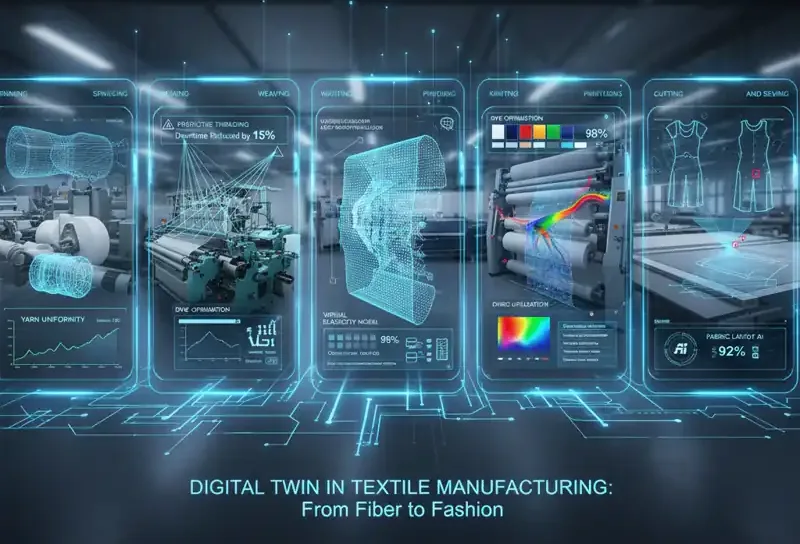
The future of office textiles lies in digital integration. IoT devices embedded in production machinery monitor quality and performance in real time. Digital twin technology simulates fabric behavior under various conditions, optimizing production parameters. This integration improves efficiency and reduces waste.
IoT-enabled textiles in offices also collect data on environmental conditions. This data informs adjustments in climate control systems, enhancing comfort and reducing energy consumption. Digital monitoring ensures that each fabric roll meets stringent quality standards and supports a sustainable production process.

Production Process for Modern Office Textiles
The production of modern office textiles involves a series of intricate processes. Each step ensures that the final product meets high standards of durability, performance, and aesthetics.
Concept and Design
The production process begins with concept and design. Designers and engineers collaborate to create textiles that meet functional and aesthetic requirements. Using computer‑aided design (CAD) software, they simulate fabric structures, experiment with fiber blends, and test color schemes. Iterative design processes ensure that the textile meets both design and performance criteria.
Designers factor in parameters such as tensile strength, elasticity, flame resistance, and thermal insulation. They use mathematical models to optimize the fabric’s properties. For example:
Performance Index = (Strength × Durability) / (Weight × Cost)
This formula helps balance quality with cost efficiency. Storytelling in design often revolves around creating fabrics that not only meet technical demands but also evoke emotions and reflect brand identity.
Raw Material Sourcing and Preparation
Once designs are finalized, manufacturers source high-quality raw materials. These include natural fibers, synthetic fibers, and advanced composites. Suppliers undergo rigorous quality checks. Raw materials must meet international standards such as ISO and ASTM. Quality control laboratories test samples to ensure consistency.
Preparation involves cleaning, sorting, and conditioning fibers. Manufacturers collaborate with suppliers to secure materials that offer the desired performance characteristics. Sustainable sourcing practices are increasingly prioritized, with eco‑friendly materials gaining traction. This stage sets the foundation for high‑performance office textiles.
Weaving, Knitting, and Fabric Formation
Fabric formation employs advanced weaving and knitting technologies. Automated looms and knitting machines use digital patterns to create consistent, high‑quality fabrics. High‑speed looms ensure that intricate designs are produced with precision. In some cases, 3D knitting techniques produce multilayered fabrics that enhance durability and performance.
Digital printing integrates custom patterns directly into the fabric. This technology reduces waste and allows for rapid changes in design. Manufacturers carefully monitor production parameters to maintain uniformity. The result is a fabric that meets strict quality standards and is tailored to modern office needs.
Dyeing, Coating, and Finishing
After fabric formation, textiles undergo dyeing and finishing processes. Digital dyeing techniques ensure color accuracy and consistency. Manufacturers use eco‑friendly dyes that reduce chemical waste and water consumption. Finishing treatments apply nano‑coatings and lamination to enhance fabric properties such as water resistance, UV protection, and stain repellency.
Advanced finishing techniques also include flame retardants and antimicrobial treatments. These processes extend the life of textiles and maintain their appearance under heavy use. Quality inspectors conduct tests for color fastness, texture consistency, and compliance with safety standards. Every roll of fabric undergoes rigorous inspection before it is approved for assembly.
Cutting, Sewing, and Assembly
The final stages involve cutting, sewing, and assembly. Advanced cutting machines, guided by digital patterns, ensure precise cuts with minimal waste. Robotic sewing systems join fabric pieces with high accuracy, forming functional components like upholstery, curtains, and wall coverings. Assembly integrates textile components into office furniture and interior elements.
Automated systems streamline the process, reducing labor costs and ensuring consistency. Quality control teams inspect each component for seam strength, fit, and finish. The integration of textiles into office interiors requires careful coordination between textile manufacturers and interior designers. The outcome is a final product that enhances both functionality and aesthetics.
Table: A detailed process table outlining stages from concept to assembly with quality checks and key performance indicators.
| Production Stage | Process Description | Key Quality Metrics |
|---|---|---|
| Concept & Design | CAD simulation, iterative design, prototype development | Performance Index, design accuracy |
| Raw Material Sourcing | Selection, cleaning, quality testing | Fiber quality, consistency, certifications |
| Fabric Formation | Automated weaving/knitting, digital printing | Uniformity, defect rate, pattern precision |
| Dyeing & Finishing | Eco‑friendly dyeing, nano‑coatings, lamination | Color fastness, stain resistance, UV protection |
| Cutting & Sewing | Automated cutting, robotic sewing | Seam strength, precision, minimal waste |
| Assembly | Integration into final interior components | Fit, finish, compliance with industry standards |
Quality Control and Continuous Improvement
Quality control remains paramount throughout production. Automated inspection systems and statistical process controls ensure consistency. Manufacturers conduct tests on tensile strength, flame resistance, and durability. Data analytics drive continuous improvement, allowing engineers to adjust processes in real time. Every production batch undergoes rigorous testing before reaching the market.
Continuous feedback loops and real‑time monitoring help identify defects early. Manufacturers use digital twin technology to simulate production conditions and optimize parameters. This relentless focus on quality ensures that modern office textiles meet the demands of high‑traffic commercial environments.

Challenges in the Office Textile Industry
The office textile industry faces several challenges that affect production, quality, and market competitiveness. Understanding these challenges is essential for stakeholders seeking to innovate and improve product offerings.
Stringent Safety and Performance Standards
Office textiles must meet rigorous safety, durability, and performance standards. Textiles used in office furniture and interior panels require precise performance under constant use. Manufacturers invest in research and development to meet international standards like ISO and ASTM. Testing for flammability, tensile strength, and environmental resistance adds complexity and cost to production.
Balancing Innovation and Cost Efficiency
Introducing advanced technologies such as smart textiles and eco‑friendly finishes often increases production costs. Manufacturers must balance the benefits of innovation with competitive pricing. Research and development investments can drive up costs, making it challenging to offer cutting‑edge products at affordable prices. Companies adopt strategies like automation, lean manufacturing, and supply chain optimization to control expenses.
Supply Chain Disruptions
Global supply chain challenges affect raw material availability. Geopolitical issues, trade restrictions, and natural disasters can disrupt the flow of fibers and other inputs. Manufacturers mitigate risks by diversifying suppliers and employing robust supply chain management strategies. Fluctuating raw material prices and inconsistent quality remain significant challenges in the industry.
Environmental and Regulatory Pressures
Increasing environmental concerns and regulatory requirements impact the textile industry. Manufacturers must adopt sustainable production practices and meet strict environmental standards. Regulations governing water usage, chemical waste, and carbon emissions necessitate investments in eco‑friendly technologies. Compliance can drive up production costs but also opens opportunities for innovation in sustainable textiles.
Technological Integration and Workforce Training
Integrating new production technologies requires significant investment in workforce training and infrastructure upgrades. Rapid advancements in digital printing, automation, and smart textile technologies demand continuous learning and adaptation. Manufacturers face challenges in updating legacy systems and ensuring that employees are skilled in operating advanced machinery.
Quality Consistency and Production Scale
Maintaining consistent quality across large production runs is critical. Even minor variations in texture, color, or performance can lead to issues in commercial applications. Manufacturers invest in advanced quality control systems and automated inspections to reduce defects. However, scaling production while maintaining uniform quality remains a constant challenge.

Real-World Applications and Case Studies
Real-world applications of office textiles showcase their transformative impact on modern workspaces. These examples illustrate how advanced textiles improve functionality, aesthetics, and employee well‑being in office environments.
Case Study: Premium Office Interiors
A leading corporate headquarters redesigned its workspace using innovative textiles. The company collaborated with textile manufacturers to produce custom carpets, acoustic wall panels, and ergonomic upholstery. The new designs improved noise control and thermal insulation, creating a comfortable environment for employees.
The project also featured digital printing to incorporate brand elements into the textiles. Employees appreciated the personalized touches, and productivity increased as a result. This case study demonstrates that premium office textiles enhance both aesthetic appeal and functionality.
Case Study: Smart and Sustainable Workspaces
An innovative tech company revamped its office interiors with smart, eco‑friendly textiles. The design incorporated sensor‑embedded curtains that adjusted to natural light and reduced energy consumption. Sustainable fabrics made from recycled polyester and bio‑based fibers replaced traditional materials, aligning with the company’s green initiatives.
This project not only improved the visual and environmental aspects of the workspace but also fostered a culture of sustainability. Real-time data from smart textiles helped optimize HVAC settings, reducing energy costs. The case study illustrates how integrating smart and sustainable textiles can transform office environments into efficient, eco‑friendly spaces.
Case Study: Acoustic and Thermal Optimization
A financial institution sought to reduce noise and improve comfort in its open-plan office. Engineers installed advanced acoustic textiles in ceiling panels and carpets. These fabrics, developed with multi-layered sound-absorbing properties, reduced ambient noise significantly. Thermal insulation materials ensured a consistent indoor temperature, enhancing comfort during extreme weather conditions.
Independent tests showed a 25–30% improvement in acoustic performance. Employees reported a quieter and more productive work environment. This case study highlights the tangible benefits of investing in high-performance office textiles.
Case Study: Customization for Collaborative Workspaces
A startup transformed its workspace by embracing mass customization. Digital printing enabled the creation of bespoke textiles for furniture and partitions. Employees could choose colors and patterns that reflected the company’s innovative culture. The result was a vibrant, dynamic environment that stimulated creativity and collaboration.
This project also featured smart textiles with embedded LED lighting. The dynamic lighting adjusted according to the time of day and enhanced the overall ambiance. The startup experienced increased employee engagement and improved brand identity through its customized interior design.

End-User Requirements and Consumer Expectations
Understanding end-user requirements is critical in the office textile industry. Different stakeholders, from corporate clients to facility managers, have unique demands that drive innovation.
Corporate Clients and Automakers
Large corporations demand textiles that enhance productivity, provide comfort, and project a professional image. They seek materials that improve acoustics, regulate temperature, and withstand heavy use. Customization and brand consistency are essential, so corporate interiors often feature bespoke designs that align with company branding.
Facility Managers and Commercial Suppliers
Facility managers require durable, low-maintenance textiles that reduce operational costs. Commercial suppliers focus on products that offer longevity, ease of cleaning, and resistance to wear and tear. These end-users value high‑performance fabrics that perform reliably under constant use. Suppliers invest in quality control and automation to meet these requirements consistently.
Office Furniture Designers and Interior Architects
Designers and architects prioritize aesthetics and functionality. They require textiles that allow creative expression while delivering practical benefits such as acoustic insulation and thermal regulation. Modern office textiles offer a wide range of design options—from digital prints to customizable color palettes. These professionals rely on innovative materials to create inviting, ergonomic workspaces.
Employee Expectations and User Experience
Employees expect office environments to be comfortable and visually appealing. They desire workspaces that reduce noise, provide adequate thermal comfort, and contribute to a positive mood. High-quality textiles play a significant role in shaping these experiences. Innovations such as smart textiles and customizable interiors enhance employee satisfaction and productivity. User feedback and ergonomic research drive ongoing improvements in textile design.

Market Analysis and Competitive Landscape
Global Market Trends
The market for office textiles continues to expand. Rising demand for modern, sustainable, and smart office interiors drives growth. Analysts forecast steady growth in the commercial textiles sector due to increased office construction, renovations, and the shift toward flexible workspaces. Market trends emphasize sustainability, digital integration, and mass customization. Manufacturers invest in eco‑friendly materials, advanced printing technologies, and smart textiles that improve the overall work environment.
Competitive Dynamics
The competitive landscape in the office textile industry is diverse. Established manufacturers dominate with high‑volume production and advanced technology integration. Innovative startups disrupt the market with niche products such as sensor‑embedded fabrics and eco‑friendly alternatives. Collaborations between textile companies and architectural firms foster continuous innovation. Companies focus on quality, sustainability, and customization to maintain a competitive edge.
Global supply chains play a crucial role in competitive dynamics. Regions such as Asia, Europe, and North America contribute significantly to raw material supply and production capacity. Manufacturers use advanced analytics to monitor market trends and adjust production accordingly. Strategic partnerships and joint ventures drive innovation and help companies capture market share.
Regulatory and Environmental Influences
Regulatory standards and environmental pressures significantly impact the office textile industry. International safety and performance standards such as ISO and ASTM guide manufacturing processes. Environmental regulations require eco‑friendly production methods and sustainable materials. Compliance with these standards adds complexity to production but also drives innovation in green technologies. Manufacturers that embrace sustainability enjoy enhanced market reputation and consumer trust.
Market Segmentation and Consumer Behavior
The market segments include OEM production, commercial suppliers, aftermarket providers, and end‑user products. Each segment has unique demands and challenges. OEMs focus on high‑quality, customized solutions for new construction projects. Commercial suppliers cater to facility managers seeking durable, cost‑effective products. Aftermarket providers emphasize innovation and customization for renovations and upgrades. Consumer behavior drives trends such as personalization, eco‑innovation, and technological integration.
Understanding market segmentation helps companies tailor their products and marketing strategies. Manufacturers leverage digital marketing tools to target niche audiences and improve search engine visibility. Optimizing product descriptions with relevant keywords such as “office textiles,” “commercial fabrics,” and “modern office interiors” enhances online discoverability.
Future Trends and Prospects in Office Textiles
Technological Innovations on the Horizon
Future developments in office textiles will continue to push technological boundaries. Emerging technologies such as nanotechnology, 3D printing, and advanced composites promise to revolutionize textile performance. Nanocoatings will provide even greater durability and stain resistance while reducing environmental impact. Graphene-infused fibers and smart materials will deliver unprecedented strength and flexibility. Manufacturers will explore these innovations to produce textiles that are lighter, more durable, and interactive.
Digital twin technology and AI-driven quality control will further enhance production efficiency. These tools enable manufacturers to simulate material behavior and optimize production parameters before mass production. This integration of advanced technology reduces waste and improves overall product performance.
Enhanced Digital Integration and Smart Offices
The future of office textiles lies in digital integration. Smart fabrics will incorporate sensors and digital interfaces that interact with building management systems. Imagine window blinds that adjust automatically based on sunlight intensity or carpets that monitor foot traffic to optimize cleaning schedules. These digital innovations will create dynamic, responsive workspaces that enhance productivity and comfort.
Connected office textiles will also integrate with mobile applications, allowing users to customize interior settings in real time. This personalization enhances the overall user experience and creates a more engaging work environment. As offices evolve into smart, data‑driven spaces, textiles will play an increasingly integral role in their design.
Sustainability and Eco-Innovation
Sustainability remains a primary focus for the textile industry. The future will see continued investment in eco‑friendly production processes and sustainable materials. Recycled fibers, bio‑based polymers, and water‑based finishing agents will dominate the market. Manufacturers will adopt circular production models that emphasize waste reduction and recycling.
Environmental regulations and consumer demand for green products will drive innovation in sustainable office textiles. Companies that invest in eco‑innovation will enjoy a competitive advantage. Future advancements in material science may yield biodegradable fabrics that offer high performance without harming the environment.
Customization and Mass Personalization
Mass personalization will continue to reshape office interiors. Advances in digital printing and flexible manufacturing enable the production of custom textiles at scale. Office designers and facility managers can offer bespoke solutions that reflect a company’s branding and culture. This trend extends beyond aesthetics to functional customization—textiles that adjust their properties based on user needs.
Interactive platforms will allow clients to preview designs and customize patterns, colors, and textures in real time. This trend not only enhances aesthetic appeal but also drives engagement and customer satisfaction. The ability to produce personalized office textiles quickly and efficiently will become a key differentiator in a competitive market.
Global Collaboration and Industry Partnerships
Collaborative research and global partnerships will fuel future innovations. Automakers, textile manufacturers, and research institutions will forge stronger ties to develop breakthrough materials. Joint ventures and strategic alliances facilitate knowledge exchange and drive technological advancements. These partnerships will help standardize quality benchmarks and improve supply chain resilience.
Global collaboration will also drive market expansion. Manufacturers will share research findings and production techniques, paving the way for new standards in office textiles. This collaborative approach enhances innovation and creates a robust, competitive industry ecosystem.

Real-World Applications and Success Stories
Real-world applications highlight how advanced textiles transform modern offices. Companies worldwide integrate innovative fabrics to improve comfort, aesthetics, and functionality in their workspaces.
Transforming Corporate Interiors
A multinational corporation recently revamped its headquarters with state‑of‑the‑art textiles. The project included custom digital printing on carpets, wall coverings, and upholstery. These textiles enhanced acoustic performance and thermal insulation, resulting in a quieter, more comfortable environment. Employees reported increased productivity and reduced stress. The project demonstrated that high‑quality, customized office textiles can elevate a corporate brand and create an inspiring workspace.
Enhancing Open‑Plan Workspaces
Open‑plan offices often struggle with noise and distractions. A technology firm tackled these issues by installing advanced acoustic panels and modular carpeting systems. These textiles reduced ambient noise significantly and improved overall office ambiance. Real‑world testing revealed a 25% reduction in noise levels. The success of this initiative has led other companies to invest in similar solutions, proving that innovative textiles can create a more focused and productive work environment.
Creating Collaborative and Dynamic Workspaces
A creative agency embraced mass personalization to reflect its innovative culture. Designers collaborated with textile manufacturers to produce unique, digitally printed fabrics for furniture and partitions. The personalized interiors not only boosted employee morale but also impressed clients. The project showcased how customization and advanced design can transform an ordinary office into a dynamic, creative space.
Aftermarket and Renovation Success
Aftermarket providers have also leveraged modern textiles to upgrade existing office spaces. A renovation project for a historic building transformed its dated interiors using sustainable, high‑performance fabrics. The new textiles improved both aesthetics and functionality, providing better insulation and noise control. This renovation project increased property value and demonstrated that advanced office textiles can revitalize even older workspaces.

End‑User Requirements and Consumer Expectations
End‑users of office textiles have diverse needs, ranging from corporate clients to facility managers and individual employees. Understanding these requirements is essential for manufacturers and suppliers.
Corporate Clients
Large corporations demand textiles that enhance brand image, support employee well‑being, and deliver long‑term durability. Corporate clients expect custom solutions that reflect their identity and culture. They prioritize eco‑friendly products that align with their sustainability goals. Advanced office textiles must provide superior performance in terms of acoustics, thermal regulation, and aesthetic appeal.
Facility Managers and Commercial Suppliers
Facility managers look for textiles that offer durability, ease of maintenance, and cost efficiency. They require products that withstand heavy use in high‑traffic areas. Commercial suppliers prioritize quality control, consistency, and reliable supply chains. Their products must meet strict regulatory standards and provide long‑term performance without frequent replacements.
Interior Designers and Architects
Interior designers and architects emphasize creativity and functionality. They seek textiles that enable innovative design solutions and contribute to overall space planning. Customizability, color accuracy, and pattern consistency are critical. Designers often collaborate with textile manufacturers to create bespoke solutions that elevate office interiors. Their feedback drives continuous improvement in design and production techniques.
Employee Expectations
Employees expect comfortable, aesthetically pleasing work environments. High‑quality office textiles contribute significantly to employee satisfaction. Features such as noise reduction, thermal comfort, and ergonomic support are highly valued. Modern office textiles not only improve comfort but also support well‑being and productivity. As consumers become more environmentally conscious, sustainable textiles are increasingly important in meeting these expectations.
Market Analysis and Competitive Landscape
Global Market Dynamics
The market for office textiles grows steadily worldwide. Rising office construction, renovations, and the shift toward flexible workspaces drive demand. Analysts predict a compound annual growth rate (CAGR) of 6–8% over the next decade. Key drivers include the adoption of sustainable materials, digital customization, and smart textile innovations.
Manufacturers invest in advanced production techniques and eco‑friendly processes to meet evolving consumer demands. Global supply chains facilitate the distribution of high‑quality textiles, though geopolitical tensions and trade disruptions can pose challenges. Companies that embrace technology and sustainability are well positioned to capture market share.
Competitive Forces
The competitive landscape in office textiles features established manufacturers and innovative startups. Large companies benefit from economies of scale, extensive R&D investments, and established supply networks. Startups drive disruption by focusing on niche applications such as sensor‑embedded fabrics and customizable digital printing. Strategic partnerships and industry collaborations fuel innovation and standardization.
Market competition pushes companies to balance performance with cost efficiency. Manufacturers use data analytics and digital supply chain management to optimize production and reduce waste. Quality, sustainability, and customization remain key competitive differentiators. These factors drive continuous innovation and improvement in the industry.
Regulatory and Environmental Impact
Office textiles must comply with stringent regulatory standards for safety, durability, and environmental impact. International standards such as ISO, ASTM, and local regulations govern production processes and material quality. Environmental pressures require manufacturers to adopt sustainable practices, reduce chemical usage, and minimize waste. Compliance with these standards drives technological innovation and improves product quality.
Manufacturers that invest in eco‑friendly production methods gain a competitive advantage. Consumers increasingly prefer products that reduce environmental impact. Regulatory pressures and environmental initiatives will continue to shape market dynamics and influence future developments in office textiles.
Future Trends and Prospects in Office Textiles
Technological Breakthroughs
The future of office textiles will be driven by breakthroughs in material science and production technologies. Nanotechnology, advanced composites, and smart textiles promise to deliver fabrics that are lighter, stronger, and more interactive. Graphene-infused fibers and biodegradable composites will revolutionize performance and sustainability.
Digital twin technology and AI‑driven quality control will further optimize production processes. These tools allow manufacturers to simulate fabric performance and adjust production parameters in real time. Emerging technologies will lower production costs and enhance product reliability, paving the way for next‑generation office textiles.
Digital Integration and Interactive Fabrics
Digital integration will reshape office interiors. Future textiles may feature embedded sensors, flexible displays, and touch‑sensitive interfaces. Smart fabrics will interact with building management systems, adjusting lighting, temperature, and acoustics based on real‑time data. This integration creates a dynamic, responsive environment that enhances employee comfort and productivity.
Interactive textiles also support personalization. Office managers can use mobile apps to customize interior settings, such as ambient lighting and climate control. This level of digital integration transforms the workplace into a connected ecosystem, delivering both functional benefits and a modern aesthetic.
Sustainability and Green Innovations
Sustainability remains a core focus. Future trends in office textiles include increased use of recycled fibers, bio‑based polymers, and sustainable production methods. Manufacturers will adopt eco‑friendly dyes and water‑based coatings to reduce environmental impact. Sustainable practices not only comply with regulations but also resonate with eco‑conscious consumers.
Innovations in green technology will drive the development of textiles that deliver high performance while minimizing ecological footprints. As consumer demand for sustainable products grows, manufacturers that prioritize eco‑innovation will capture new market opportunities and enhance brand reputation.
Mass Personalization and Customization
Mass personalization will continue to grow in importance. Digital printing technologies enable rapid customization of office textiles. Office interiors can feature bespoke designs that reflect corporate branding and individual preferences. Customization extends beyond aesthetics; fabrics may adapt functionally to user needs, such as adjusting insulation properties based on ambient conditions.
Advanced production techniques allow for small‑batch, personalized textile manufacturing without sacrificing efficiency. Interactive design platforms enable clients to preview and modify designs in real time, creating a seamless experience. This trend drives consumer engagement and adds significant value to modern office environments.
Collaborative Innovation and Industry Partnerships
Collaboration among automakers, textile manufacturers, and research institutions will accelerate innovation. Strategic partnerships and joint ventures foster the development of breakthrough materials and production techniques. These collaborations ensure that emerging technologies meet real‑world requirements and comply with industry standards.
Global cooperation will standardize quality control, streamline supply chains, and drive down costs. Collaborative research projects will pave the way for next‑generation office textiles that integrate performance, sustainability, and customization. Such partnerships will shape the competitive landscape and drive future market growth.

Real-World Applications and Success Stories
Transforming Corporate Workspaces
Modern office textiles play a critical role in creating productive and inspiring work environments. A multinational corporation recently overhauled its headquarters with advanced textiles that improved acoustics, thermal insulation, and visual appeal. The project involved custom‑printed carpets, acoustic wall panels, and ergonomic upholstery. Employees experienced a noticeable improvement in comfort and productivity. The project demonstrated that high‑quality, customizable textiles can transform a corporate workspace into an environment that supports collaboration and creativity.
Enhancing Open‑Plan Office Efficiency
Open‑plan offices often struggle with noise and distraction. A tech company addressed these issues by installing innovative acoustic fabrics in partitions and ceilings. The fabrics, engineered for sound absorption and thermal regulation, reduced ambient noise by 30% and stabilized indoor temperatures. This innovation created a more focused work environment and reduced energy costs. The success story underscores the importance of advanced textiles in optimizing open‑plan office spaces.
Upgrading Traditional Workspaces
An established law firm modernized its dated office interiors by integrating contemporary textiles. The firm replaced old carpet with digital‑printed, eco‑friendly vinyl flooring and installed energy‑efficient curtains with smart sensor capabilities. The upgrades improved visual aesthetics and enhanced functionality. Employees reported increased satisfaction and a renewed sense of professionalism. This case study highlights the value of textile innovations in revitalizing traditional workspaces.
Aftermarket and Renovation Success
Aftermarket providers offer opportunities to upgrade existing office interiors. A renovation project for a mid‑sized business incorporated high‑performance textiles into furniture and wall coverings. The custom solutions featured eco‑friendly, stain‑resistant fabrics that enhanced both form and function. The project increased property value and received positive feedback from employees and clients alike. These real‑world applications demonstrate how innovative textiles can extend the life of office interiors and provide a competitive advantage in the commercial real estate market.
End‑User Requirements and Consumer Expectations
Understanding the diverse needs of end‑users is crucial for success in the office textile industry. Different stakeholders—from corporate clients to facility managers and employees—demand products that combine performance, aesthetics, and sustainability.
Corporate Clients and Business Leaders
Large corporations require textiles that project professionalism and support employee productivity. They demand high‑quality, durable fabrics that withstand heavy usage and offer long‑term reliability. Customizable solutions that reflect corporate branding are highly valued. Corporate clients seek eco‑friendly products that align with their sustainability initiatives. Advanced textiles that provide acoustic control, thermal regulation, and ergonomic support form the foundation of modern office interiors.
Facility Managers and Commercial Suppliers
Facility managers prioritize ease of maintenance, cost efficiency, and durability. They require textiles that perform consistently in high‑traffic areas. Commercial suppliers focus on delivering products that reduce operational costs while meeting regulatory standards. Robust quality control systems and automated production processes help ensure consistency and reliability. These stakeholders look for products that balance quality with affordability.
Interior Designers and Architects
Design professionals demand versatility and innovation in office textiles. They seek materials that enable creative expression while offering functional benefits like sound insulation and thermal regulation. Customization and personalization are key, as designers aim to create interiors that reflect a company’s identity. Designers collaborate with textile manufacturers to develop bespoke solutions that meet both aesthetic and technical requirements.
Employee Expectations
Employees desire comfortable, attractive workspaces that enhance well‑being and productivity. They expect office textiles to provide soft, ergonomic surfaces, reduce ambient noise, and maintain a comfortable temperature. The tactile quality of materials influences their satisfaction and overall work experience. Modern textiles that incorporate smart features, such as adaptive insulation or integrated sensors, meet these evolving expectations.
Market Analysis and Competitive Landscape
Global Market Trends
The office textile market experiences robust growth driven by rising demand for modern, sustainable, and high-performance interiors. Increasing office construction, renovations, and the shift toward flexible workspaces fuel market expansion. Analysts predict a compound annual growth rate (CAGR) of 6–8% over the next decade. Drivers include advancements in digital printing, smart textiles, and eco-friendly production processes.
Global market dynamics are influenced by regional trends. In Asia, manufacturers focus on cost efficiency and high-volume production. European companies lead in sustainability and technological integration. North American markets emphasize quality and innovation. These regional variations create diverse opportunities for companies that tailor their products to local demands.
Competitive Forces
The competitive landscape in office textiles comprises both established industry giants and innovative startups. Large manufacturers benefit from extensive resources, established supply chains, and advanced production technologies. Innovative startups drive disruption with niche products like sensor‑embedded textiles and digital customization tools. Strategic partnerships between automakers, designers, and textile manufacturers foster continuous innovation.
Companies face constant pressure to balance quality with cost efficiency. Manufacturers invest in automation, digital printing, and sustainable practices to maintain a competitive edge. Advanced analytics and digital supply chain management tools enable companies to optimize production and respond quickly to market changes.
Regulatory and Environmental Influences
Office textiles must adhere to rigorous regulatory standards for safety, durability, and environmental impact. International standards such as ISO, ASTM, and local regulations guide production and material quality. Environmental pressures drive the adoption of eco‑friendly production methods and sustainable materials. Manufacturers that invest in green technologies gain a competitive advantage and improve consumer trust.
Compliance with regulatory standards adds complexity to production processes. However, these challenges also spur innovation, leading to the development of advanced, eco-friendly textiles that meet both performance and sustainability criteria.
Future Trends and Prospects
Technological Advancements and Smart Fabrics
The future of office textiles lies in technological breakthroughs. Emerging technologies such as nanotechnology, graphene-infused fibers, and smart textiles will redefine performance standards. Manufacturers will develop fabrics that are lighter, stronger, and more responsive to environmental changes. Smart fabrics embedded with sensors and microprocessors will create interactive, adaptive workspaces that enhance employee comfort and productivity.
Digital twin technology and AI‑driven quality control will revolutionize production processes. These innovations will reduce waste, optimize production parameters, and ensure consistent quality. Future breakthroughs in material science will enable the creation of textiles that adapt dynamically to user needs, such as adjusting insulation based on ambient temperature.
Sustainability and Green Innovations
Sustainability remains a critical driver for the textile industry. Future office textiles will increasingly feature recycled fibers, bio‑based polymers, and eco‑friendly coatings. Manufacturers will adopt circular production models that emphasize waste reduction and resource efficiency. Advances in sustainable dyeing and finishing technologies will reduce chemical use and environmental impact.
Eco‑friendly textiles will not only meet regulatory standards but also appeal to a growing base of environmentally conscious consumers. Companies that invest in green technologies will capture new market segments and strengthen brand reputation. Sustainable practices will become a key differentiator in the competitive landscape.
Digital Customization and Mass Personalization
Mass personalization is set to transform office interiors. Advanced digital printing technologies allow for rapid customization of textile designs. Office spaces can feature bespoke carpets, curtains, and upholstery that reflect corporate branding and individual tastes. This trend extends beyond aesthetics to functional customization, where fabrics can adjust properties like insulation and sound absorption based on user preferences.
Interactive design platforms will enable clients to customize textiles in real time. This seamless integration of digital technology with textile production creates a more engaging customer experience and drives brand loyalty. Mass personalization will remain a major trend as companies strive to meet diverse consumer demands.
Global Collaboration and Industry Partnerships
Collaboration will drive future innovation in office textiles. Automakers, textile manufacturers, interior designers, and research institutions will forge strategic partnerships to develop breakthrough materials. Collaborative research projects will accelerate the adoption of advanced production technologies and standardize quality benchmarks across the industry.
Global partnerships will also help mitigate supply chain disruptions and ensure a steady supply of high-quality raw materials. Shared innovation and collective problem-solving will benefit the entire textile ecosystem, paving the way for next‑generation office textiles that are both high‑performance and sustainable.

Real-World Applications and Case Studies
Transforming Modern Offices
Modern office textiles enhance workspaces in multiple ways. A global technology firm recently revamped its headquarters using custom-designed, eco‑friendly textiles. The project featured digital printing on carpets and wall coverings, which improved acoustics and reduced energy costs. Employees enjoyed a modern, vibrant environment that boosted productivity and well‑being.
This transformation involved integrating smart textiles that adjust to ambient lighting and temperature. The success of this project highlights how advanced textiles can revolutionize office interiors, creating dynamic, engaging environments that support modern workstyles.
Case Study: Enhancing Productivity with Acoustic Panels
An international law firm improved its open‑plan office by installing advanced acoustic panels. These panels, made from multi‑layered, sound‑absorbing fabrics, reduced ambient noise significantly. Employees reported a quieter, more focused work environment, which increased productivity and reduced stress. The case study demonstrates that investing in high‑performance office textiles can yield tangible benefits in terms of employee efficiency and overall workplace satisfaction.
Case Study: Smart and Sustainable Office Upgrades
A mid‑sized financial services company upgraded its interiors with sustainable, sensor‑embedded textiles. The new curtains and upholstery featured eco‑friendly fibers and smart technologies that adjusted lighting and temperature automatically. This upgrade not only enhanced employee comfort but also reduced energy consumption by 20%. The success story underscores the value of integrating sustainability and smart technology into office textiles, creating a win‑win scenario for both the environment and the bottom line.
Aftermarket Renovations and Customization Projects
Aftermarket suppliers have seized opportunities to upgrade existing office spaces. A renovation project for a historic building involved replacing outdated textiles with modern, digitally printed fabrics. The new textiles improved aesthetics, enhanced thermal insulation, and provided customizable design options that matched the building’s unique character. This project increased property value and demonstrated the transformative power of advanced office textiles in renovating older workspaces.
End-User Requirements and Consumer Expectations
Corporate and Commercial Clients
Corporate clients demand textiles that combine functionality, aesthetics, and durability. They require materials that enhance the professional image of their offices while supporting employee comfort. Customized solutions that reflect corporate branding are highly desirable. These clients prioritize high‑performance fabrics that offer acoustic control, thermal regulation, and resistance to wear and tear.
Facility Managers and Interior Designers
Facility managers focus on cost efficiency, ease of maintenance, and reliability. They look for textiles that withstand high‑traffic environments and require minimal upkeep. Interior designers and architects value versatility and creativity. They seek products that offer extensive customization options and innovative design possibilities. High‑quality, customizable textiles that align with modern office trends are in high demand.
Employee Expectations
Employees expect a comfortable, visually appealing workspace that supports their well‑being and productivity. Modern office textiles must provide ergonomic support, reduce ambient noise, and maintain a pleasant temperature. Consumers value eco‑friendly products and appreciate materials that contribute to a sustainable environment. The overall experience in a modern office is influenced by the tactile and visual qualities of textiles.
Market Segmentation and Customer Preferences
The market for office textiles spans multiple segments, including new construction, renovations, and aftermarket upgrades. Each segment has unique requirements and challenges. Manufacturers tailor their products to meet the demands of large corporations, small businesses, and creative agencies. The ability to customize products and offer sustainable options drives consumer preference and market growth.
Market Analysis and Competitive Insights
Global Market Dynamics
The global market for office textiles shows steady growth. Increased demand for modern, sustainable office interiors drives market expansion. Analysts forecast a compound annual growth rate (CAGR) of 6–8% over the next decade. Key growth drivers include rising office construction, the shift toward flexible work environments, and advancements in textile production technologies.
Automakers and commercial interior suppliers invest in R&D to develop high‑performance textiles that meet evolving consumer demands. Global supply networks ensure a steady flow of quality raw materials, though geopolitical factors can pose challenges. Manufacturers must navigate these dynamics to maintain competitive pricing and consistent quality.
Competitive Landscape
The competitive landscape features established industry giants and innovative startups. Large manufacturers leverage economies of scale, advanced production technologies, and extensive supply chains. They focus on delivering consistent quality and comprehensive product ranges. Startups drive innovation with niche products such as smart textiles and eco‑friendly alternatives.
Strategic partnerships and collaborations among automakers, designers, and textile manufacturers foster continuous innovation. Companies that balance performance, sustainability, and cost efficiency gain a competitive advantage. Digital marketing and SEO strategies play a crucial role in reaching niche audiences, making it vital for manufacturers to optimize product descriptions and online content.
Regulatory and Environmental Considerations
Regulatory standards and environmental policies influence the office textile market. Manufacturers must comply with international standards such as ISO and ASTM. Environmental regulations drive the adoption of sustainable production methods and eco‑friendly materials. Compliance not only ensures product safety and quality but also appeals to consumers who value sustainability.
Global regulatory pressures may increase production costs. However, they also spur innovation in green technologies. Companies that adopt sustainable practices and invest in eco‑friendly production methods gain a competitive edge and improve market reputation.
Future Outlook and Prospects
Technological Innovations and Smart Fabrics
The future of office textiles is bright, driven by technological breakthroughs. Nanotechnology, smart materials, and digital printing innovations will redefine performance standards. Emerging technologies such as graphene‑infused fibers promise to deliver unprecedented strength and flexibility. Future textiles may incorporate embedded sensors that adjust insulation and acoustic properties dynamically.
Digital twin technology and AI‑driven quality control will optimize production processes, reducing waste and ensuring uniform quality. These innovations will enable manufacturers to create textiles that perform exceptionally under varying environmental conditions. The integration of advanced materials will pave the way for a new generation of office textiles that are both high‑performance and sustainable.
Enhanced Digital Integration
Future office interiors will rely on digital integration. Smart textiles will interact with building management systems to create adaptive environments. IoT devices embedded in textiles will monitor environmental conditions and provide real‑time data, enabling dynamic adjustments in lighting, temperature, and acoustics. This level of connectivity transforms the workspace into a responsive, interactive environment.
Digital customization will extend to mass personalization. Clients will use interactive platforms to design bespoke textiles for office interiors. This personalization enhances brand identity and creates engaging, tailored workspaces. Digital integration also supports predictive maintenance and continuous quality improvement, ensuring that textiles meet the evolving needs of modern offices.
Sustainability and Eco‑Innovation
Sustainability remains a dominant theme for future office textiles. Manufacturers will continue to invest in eco‑friendly production methods, recycled fibers, and biodegradable polymers. Advances in sustainable dyeing and finishing techniques will reduce environmental impact and meet stringent regulatory standards. Eco‑friendly textiles not only align with consumer values but also enhance market competitiveness.
Green innovations will drive the development of textiles that deliver high performance with minimal environmental impact. Manufacturers adopting sustainable practices gain access to emerging market segments and strengthen their brand reputation. Future research in eco‑materials will yield breakthroughs that transform the office textile landscape.
Mass Personalization and Customization
Mass personalization will become a cornerstone of modern office design. Digital printing and flexible manufacturing techniques enable the production of custom textiles at scale. Clients can choose unique colors, patterns, and textures that reflect their corporate identity. This trend drives consumer engagement and creates a sense of ownership among employees.
Personalized textiles also enhance functionality. Future fabrics may adapt to individual ergonomic needs or adjust to specific environmental conditions. Mass customization not only elevates aesthetics but also improves overall workplace satisfaction and productivity.
Collaborative Industry Partnerships
Future advancements in office textiles will rely on collaboration. Automakers, textile manufacturers, interior designers, and research institutions will work together to develop breakthrough materials. Strategic partnerships and joint ventures drive innovation and help standardize production processes. Global collaborations ensure a steady supply of high‑quality raw materials and facilitate knowledge exchange.
These collaborative efforts will lead to innovations that benefit the entire industry. Manufacturers that embrace partnerships and share technological advancements will enjoy a competitive edge in a rapidly evolving market.
Summary and Conclusion
Textile usage in modern offices has evolved from simple functional coverings to high‑performance, smart, and sustainable materials that redefine the workplace. Historical advancements set the stage for today’s technological breakthroughs. The integration of digital printing, advanced coatings, smart textiles, and eco‑friendly production methods has transformed office interiors into dynamic, interactive, and energy‑efficient spaces.
Modern office textiles serve critical roles in enhancing acoustics, regulating temperature, ensuring ergonomic comfort, and reflecting corporate identity. Manufacturers employ sophisticated production processes—from advanced weaving and digital customization to automated assembly and rigorous quality control—to produce textiles that meet the highest industry standards. Despite challenges such as regulatory compliance, supply chain disruptions, and cost pressures, the industry continues to innovate and adapt.
Real‑world applications in corporate offices, open‑plan workspaces, and renovation projects demonstrate the tangible benefits of advanced textiles. Market analysis shows steady growth driven by sustainability, digital integration, and customization trends. The future promises further technological advancements, enhanced digital connectivity, and stronger global collaborations, ensuring that office textiles will continue to revolutionize modern work environments.
In summary, textile innovations in modern offices not only elevate the aesthetics and functionality of workspaces but also contribute to employee well‑being and environmental sustainability. As the industry embraces smart technologies and sustainable practices, the future of office textiles looks brighter than ever, paving the way for work environments that are truly adaptive, engaging, and efficient.
Modern office textiles have redefined workspace design by integrating advanced technology, sustainable practices, and customizable aesthetics. They improve acoustics, thermal comfort, and safety, transforming ordinary offices into dynamic, efficient, and inspiring environments. As the industry evolves, these textiles will continue to drive innovation, meeting the ever-changing demands of the modern workplace.