
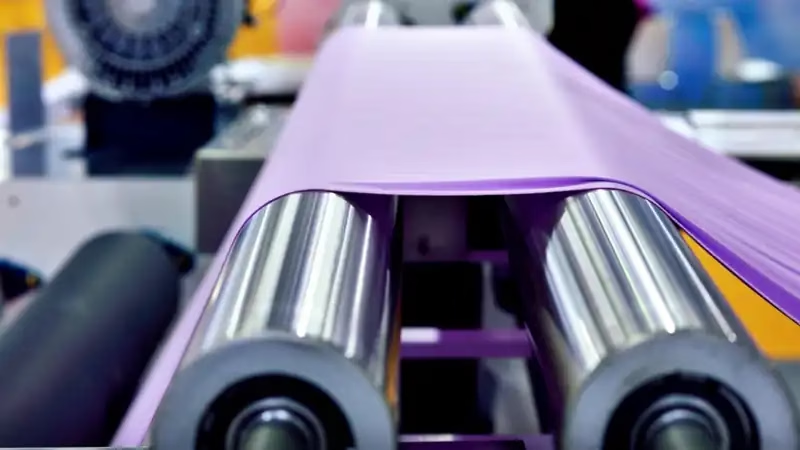
This article highlights the top eight dyeing and finishing machinery suppliers dominating the global market in 2025, emphasizing their contributions to sustainable textile production. Companies like Thies (Germany), Benninger (Switzerland), Loris Bellini (Italy), Santex Rimar (Italy), A. Monforts (Germany), Brazzoli (Italy), Sclavos (Greece), and Fong’s (Hong Kong) lead with advanced machinery for jet dyeing, continuous dyeing, and finishing processes. These suppliers integrate automation, energy-efficient technologies, and Industry 4.0 solutions to meet the rising demand for eco-friendly textiles. The global dyeing and finishing machinery market, valued at USD 4.73 billion in 2025, is projected to reach USD 6.23 billion by 2030 at a CAGR of 5.6%. The article details major machine types, unique features, registered office countries, contact links, market trends, challenges, and future prospects for sustainable dyeing and finishing.
Introduction to Dyeing and Finishing Machinery in the Textile Industry
Dyeing and finishing machinery is essential for transforming raw textiles into vibrant, functional fabrics used in apparel, home textiles, and technical applications. In 2025, the global textile market, valued at USD 1.5 trillion, is driven by increasing demand for sustainable textiles, such as organic cotton, recycled polyester, and biodegradable materials. Dyeing and finishing machines, including jet dyeing (25% market share), continuous dyeing (30%), and finishing systems (35%), enable precise color application and functional enhancements while reducing environmental impact.
The push for eco-friendly practices, supported by regulations like the EU’s Green Deal, has led suppliers to innovate with water-saving, energy-efficient technologies. These advancements align with consumer demand for ethical fashion and high-performance textiles for medical and automotive sectors. This article profiles the top eight dyeing and finishing machinery suppliers worldwide, detailing their major machine types, unique features, registered office countries, and contact information, while exploring their role in advancing sustainable textile production.
The Importance of Dyeing and Finishing Machinery in Sustainable Textile Production
Dyeing and finishing machinery applies color and functional properties to fabrics, directly impacting quality, durability, and sustainability. Modern machines reduce water consumption by up to 50% and energy use by 30% compared to traditional methods, supporting sustainable materials like recycled fibers and natural dyes. Features like automated dye dosing and closed-loop systems minimize waste, aligning with circular economy principles.
The global demand for sustainable textiles, particularly in apparel and hygiene products, drives the dyeing and finishing machinery market. Suppliers integrating Industry 4.0 technologies, such as IoT and AI, enhance efficiency and precision, making these machines critical for monetizable eco-friendly textile production. The rise of technical textiles, with a projected market size of USD 270 billion by 2027, further underscores the importance of advanced dyeing and finishing solutions.
Top Dyeing and Finishing Machinery Suppliers in 2025
1. Thies GmbH & Co. KG (Coesfeld, Germany)
Founded in 1892, Thies is headquartered in Coesfeld, Germany, renowned for innovative dyeing solutions. Contact: https://www.thiestextilmaschinen.com/en/contact.
Major Machine Types: Jet dyeing machines (iMaster H2O), soft flow machines, yarn dyeing machines (iCone).
Special Features: The iMaster H2O jet dyeing machine features a low liquor ratio (1:3.5), reducing water use by 50% and energy by 30%. Thies’ DyeControl system offers real-time monitoring, minimizing chemical waste by 20%. The iCone yarn dyeing machine supports sustainable fibers like organic cotton with high repeatability.
Competitive Edge: Thies’ ultra-low liquor ratio technology surpasses Benninger’s systems in water efficiency, and its global export network (90% of products exported) ensures robust support compared to Loris Bellini.
Thies’ focus on sustainability and precision drives its market leadership in 2025.
2. Benninger AG (Uzwil, Switzerland)
Established in 1859, Benninger is based in Uzwil, Switzerland, a leader in textile finishing. Contact: https://www.benninger.ch/en/contact.
Major Machine Types: Continuous dyeing machines (CPB), mercerizing machines, infrared dyeing machines (IRD-IV).
Special Features: The CPB dyeing system offers uniform color application with 25% less energy via optimized heat recovery. Benninger’s TRIKOFLEX washing system reduces water consumption by 40%, ideal for sustainable fabrics like recycled polyester. The IRD-IV infrared dyeing machine heats fabrics evenly, saving 20% energy.
Competitive Edge: Benninger’s continuous dyeing systems outperform Monforts’ in energy efficiency, with a broader range of finishing solutions. Its global subsidiaries ensure 10% faster service response than Santex Rimar.
Benninger’s eco-friendly innovations solidify its position in 2025.
3. Loris Bellini S.p.A. (Bollate, Italy)
Founded in 1949, Loris Bellini is headquartered in Bollate, Italy, specializing in yarn and fabric dyeing. Contact: https://www.lorisbellini.com/en/contact.
Major Machine Types: Yarn dyeing machines (RBNV), fabric dyeing machines (Pulsar), drying systems.
Special Features: The Pulsar fabric dyeing machine features a low liquor ratio (1:4), reducing water use by 40%. Its automated dye dosing cuts chemical waste by 15%. Loris Bellini’s RBNV yarn dyeing system supports sustainable fibers like hemp, with high-temperature precision (up to 140°C).
Competitive Edge: Loris Bellini’s yarn dyeing precision surpasses Sclavos’ fabric focus, with a stronger emphasis on eco-friendly processes compared to Brazzoli’s rope dyeing systems.
Loris Bellini’s sustainability and quality focus ensure its prominence in 2025.
4. Santex Rimar Group (Trissino, Italy)
Established in 1977, Santex Rimar is headquartered in Trissino, Italy, known for advanced finishing solutions. Contact: https://www.santexrimar.com/en/contacts/.
Major Machine Types: Finishing machines (Compas, 2FAST weaving), coating and laminating systems, IR dyeing machines.
Special Features: The Compas open-width finishing machine optimizes fabric shrinkage, reducing energy use by 25%. Santex Rimar’s CO2 heat pump dryer saves 30% energy, supporting sustainable nonwovens. Its 2FAST shuttleless technology enhances finishing speed for eco-friendly fabrics.
Competitive Edge: Santex Rimar’s eco-friendly finishing systems surpass Fong’s in nonwoven applications, with innovative drying technology unmatched by Monforts.
Santex Rimar’s sustainability focus drives its market strength in 2025.
5. A. Monforts Textilmaschinen GmbH & Co. KG (Mönchengladbach, Germany)
Founded in 1884, Monforts is based in Mönchengladbach, Germany, a leader in finishing machinery. Contact: https://www.monforts.de/en/contact/.
Major Machine Types: Stenters (Montex), continuous dyeing ranges (Thermax), coating machines.
Special Features: The Montex stenter features heat recovery systems, reducing energy use by 30%. Monforts’ Eco Line dyeing range cuts water consumption by 40%, supporting sustainable fabrics like organic cotton. Its Qualitex 800 control system offers AI-driven process optimization.
Competitive Edge: Monforts’ heat recovery systems outperform Brazzoli’s in energy efficiency, with a stronger focus on technical textiles compared to Thies’ apparel focus.
Monforts’ eco-conscious innovations ensure its leadership in 2025.
6. Brazzoli S.r.l. (Senago, Italy)
Founded in 1961, Brazzoli is headquartered in Senago, Italy, specializing in rope dyeing. Contact: https://www.brazzoli.it/en/contact.
Major Machine Types: Jet dyeing machines (Innova), rope dyeing systems, continuous dyeing machines.
Special Features: The Innova jet dyeing machine achieves a low liquor ratio (1:4), saving 40% water. Its high-speed dye penetration (1,200 m/min) reduces processing time by 20%. Brazzoli’s machines support sustainable fabrics like recycled polyester with minimal chemical use.
Competitive Edge: Brazzoli’s rope dyeing systems are more efficient than Sclavos’ soft flow machines, with a focus on high-volume eco-friendly production compared to Fong’s.
Brazzoli’s sustainability focus enhances its market position in 2025.
7. Sclavos S.A. (Athens, Greece)
Established in 1948, Sclavos is based in Athens, Greece, known for fabric dyeing solutions. Contact: https://www.sclavos.eu/contact/.
Major Machine Types: Soft flow dyeing machines (Apollo), jet dyeing machines, yarn dyeing systems.
Special Features: The Apollo soft flow machine features a low liquor ratio (1:5), reducing water use by 35%. Its automated control system minimizes chemical waste by 15%. Sclavos’ machines support sustainable fibers like organic cotton, with high repeatability.
Competitive Edge: Sclavos’ soft flow technology offers gentler fabric handling than Loris Bellini’s systems, with a focus on eco-friendly apparel dyeing unmatched by Benninger’s continuous systems.
Sclavos’ innovation and sustainability focus ensure its relevance in 2025.
8. Fong’s National Engineering Co., Ltd. (Hong Kong, China)
Founded in 1963, Fong’s is headquartered in Hong Kong, China, a leader in dyeing technology. Contact: https://www.fongs.com/en/contact-us/.
Major Machine Types: Jet dyeing machines (THEN-AIRFLOW), yarn dyeing machines, continuous dyeing systems.
Special Features: The THEN-AIRFLOW jet dyeing machine uses air-flow technology, reducing water use by 50% and energy by 30%. Its THEN-SMART control system optimizes dye application, cutting waste by 20%. Fong’s supports sustainable fibers like recycled polyester.
Competitive Edge: Fong’s air-flow technology surpasses Thies’ jet dyeing in water efficiency, with a stronger presence in Asia compared to Monforts’ European focus.
Fong’s eco-friendly innovations drive its market dominance in 2025.
Market Trends and Innovations in Dyeing and Finishing Machinery
The dyeing and finishing machinery market, valued at USD 4.73 billion in 2025, is projected to reach USD 6.23 billion by 2030 at a CAGR of 5.6%. Key trends include:
- Sustainability: Water-saving technologies like low liquor ratio dyeing and closed-loop systems reduce environmental impact.
- Automation and Industry 4.0: IoT and AI integration, as in Monforts’ Qualitex 800, enhance efficiency.
- Asia-Pacific Dominance: The region holds 40% market share, led by China and India.
- Technical Textiles Surge: Demand for medical and automotive textiles drives specialized machinery.
Challenges and Opportunities in the Dyeing and Finishing Machinery Market
Challenges: High initial costs and stringent environmental regulations increase compliance costs for manufacturers. Opportunities: Growing demand for sustainable textiles and technical applications offers expansion potential.
The Future of Dyeing and Finishing Machinery and Sustainable Textiles
The future emphasizes waterless dyeing, AI-driven automation, and bio-based dyes. Leaders like Thies and Fong’s will drive circular textile innovations.
Conclusion
The top eight dyeing and finishing machinery suppliers advance sustainable textiles through innovative, eco-friendly technologies. Visit Textile School for more insights.
Citations
- FYI Tester. “Top 10 IR Dyeing Machine Manufactures in 2025.” fyitester.com, 21 Feb. 2025.
- Business Research Insights. “Textile Dyeing Machines Market Report | Forecast From 2025 To 2033.” businessresearchinsights.com, 12 May 2025.
- Sourcify China. “Top 10 Textile Machinery Manufacturers in the World 2025.” sourcifychina.com, 6 May 2025.
- Kohan Textile Journal. “Top Fabric Dyeing Machine Manufacturers in the World.” kohantextilejournal.com, 12 Oct. 2023.
- DataInsightsMarket. “Dyeing and Finishing Equipment’s Role in Shaping Industry Trends 2025-2033.” datainsightsmarket.com, 20 Mar. 2025.
- World Manufactures. “Top 10 Dyeing Machine Brand & Manufacturers.” worldmanufactures.com, 2025.
- Market Report Analytics. “Dyeing and Finishing Equipment Market’s Evolution: Key Growth Drivers 2025-2033.” marketreportanalytics.com, 27 Jul. 2025.
- DataIntelo. “Dyeing And Finishing Market Report | Global Forecast From 2025 To 2032.” dataintelo.com, 2025.

Truly excellent with thorough research